The Wealth of Nations in 10 Brutally Simple Ideas:
1. Wealth attracts wealth. Capital, talent, and opportunity flow toward prosperous cities.
2. Fortunes aren't built on luck alone. Hard work, discipline, saving, and smart business decisions matter.
3. Income comes from three main sources: wages, profits, and property.
4. People naturally admire success and strive to climb the social ladder.
5. Wages are driven by labor supply and demand, not simply government decrees.
6. Lower prices and higher sales volumes can create enormous markets.
7. It's not how much you make. It's how much you keep.
8. Capital drives production, manufacturing, transportation, and trade.
9. Money follows opportunity. Capital naturally flows toward higher returns.
10. When millions pursue their own interests, they can collectively drive economic growth. That's the invisible hand.
Nearly 250 years later, Adam Smith's ideas still shape how we understand capitalism.
#AdamSmith #TheWealthOfNations #Economics #Capitalism #FreeMarket
The U.S.-China honeymoon is dead. Xi’s 2026 visit is a stall tactic. Time to ditch the naive engagement policy & pivot to a pragmatist strategy to protect the free world. History proves we aren't friends.
#USChina#Geopolitics#ForeignPolicy#FreeWorld https://t.co/DYXRBpkPHB
As the U.S. expands its Arctic reach through Greenland, an economically weaker Canada faces a stark choice: reform, cooperate, or decline. #Canada#USA#Greenland#Arctic#Geopolitics https://t.co/WAvyRgWVjs
An examination of controversies surrounding Huawei’s “Far Ahead” image, from marketing and product disputes to aggressive PR, regulatory cases, semiconductor controls, and HarmonyOS.
#Huawei#HarmonyOS#TechEthics#ConsumerRights https://t.co/Xz22h7lY2u
The U.S. mistakenly shipped a batch of military parts to Hong Kong. After discovering the error, it tried to recover them, but Chinese social media revealed that Chinese sellers were already offering the parts online for ¥396,999.38 (about US$59,300).
#F35#Pentagon#USMilitary #HongKong #China #MilitaryParts #Defense #NationalSecurity
Japan's borrowing costs just hit a 31-year high.
On Sept. 18, the BOJ raised its policy rate from 1% to 1.25% in a 7-2 vote to curb inflation risks. The next question: how much further will it tighten?
#Japan#BOJ
https://t.co/nW3IJcsVEq
China's military reach extends far beyond Taiwan.
A new CSIS report says upgrades at its Djibouti base could expand surveillance across the Middle East and Africa. Actual interception remains unconfirmed.
#China#Defense
https://t.co/4yXTug854S
Russia sanctions could hit China's and India's trade next.
Congress sent Trump a bill allowing tariffs up to 100% on major buyers of Russian energy. Watch the signature, exemptions and enforcement.
#Russia#Trade
https://t.co/k7N8sbEHrv
Weeks after a Hero of Russia award, Maj. Gen. Anton Grunis is dead.
A Russian commander confirmed his death today. Ukraine says a Sept. 12 drone strike killed him in occupied Donetsk.
#Ukraine#Russia
https://t.co/LM12FNshno
Borrowing just got another headwind.
The Fed raised rates by 0.25 percentage points to 3.75%-4.00%; most policymakers see further tightening this year. Inflation remains the obstacle.
#Fed#Economy
https://t.co/2zfjPMTVy4
China's factories are accelerating. Its shoppers aren't.
August output rose 5.2% year-on-year; retail sales just 0.4%, Reuters reports. Can a tech boom deliver a broader recovery?
#China#Economy
https://t.co/gY6Ijb2DSW
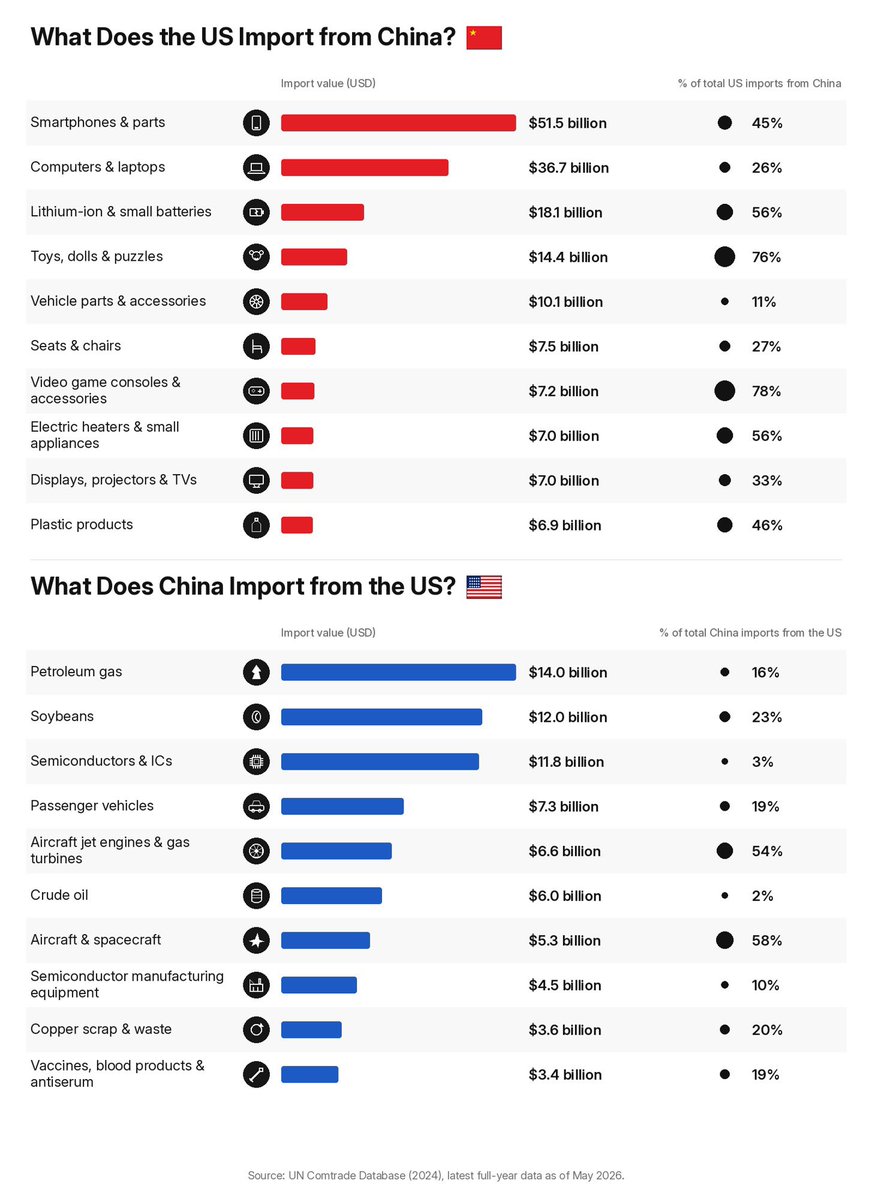
US buys phones, toys, and batteries from China.
China buys soybeans, oil, chips, and jet engines from the US.
Same trade. Very different shopping lists.
U.S. China strategy since 1979 failed: markets were meant to make a partner, and financed one-party rule instead. 1949 ended the ally. 1979 reopened the shop. China got factories. America got no conversion. https://t.co/8tSbKEthKA
Khalid Sheikh Mohammed, the alleged mastermind behind the 9/11 terrorist attacks, has now been held in U.S. custody for a full 23.5 years.
More than $250 million in U.S. taxpayer money has reportedly been spent, yet the legal proceedings against him still have not reached a final conclusion.
Let’s break down that bill.
Spread $250 million over 23.5 years, and that comes to more than $10.6 million a year, or nearly $30,000 every single day. The cost of keeping this case going for just one day is comparable to what an ordinary working family might earn over many months.
More than two decades have passed. The victims’ families are still waiting for a definitive resolution, while the legal process remains trapped in seemingly endless procedural battles. The trial still has no clear finish line, while the case continues consuming public resources year after year.
Twenty-three and a half years without a final gavel—and a $250 million bill that American taxpayers have paid in full.
Remembering Betty Ann Ong.
She grew up in San Francisco’s Chinatown, the youngest of four, the kid who used to watch planes take off at SFO and later made flying her life.
Friends called her Bee.
She collected Beanie Babies, visited seniors in Boston on her days off, and picked up extra trips so she could afford a vacation with her sister.
On September 11, 2001, that extra trip put her on American Airlines Flight 11.
She was not supposed to be on that plane.
From the rear galley she picked up an Airfone and became the first person to tell the ground what was happening: the cockpit would not answer, people had been stabbed, the cabin was filling with something that made it hard to breathe.
“I think we’re getting hijacked,” she said.
Then she stayed on the line for 23 minutes.
She gave seat numbers.
She answered questions.
Near the end she asked them to pray.
That call was the first confirmed warning that the country was under attack.
It helped controllers begin clearing the sky.
The 9/11 Commission later called her a hero.
A recreation center in her old neighborhood now carries her name.
She was 45.
She was doing her job until the last second.
Today is a good day to say her name.