Zcash has unparalleled cryptographers, security engineers, and security researchers. And the community is heavily focused on continuous improvement and hardening the network. That's why it engages world class security researchers to look for bugs. And that's why the recent potential exploit was found. It wasn't by accident and it's a vote of confidence, not a cause for alarm. When it comes to any L1, there will be bugs. What's important is that there are world class researchers focused on hardening the network and staying ahead of the bad guys. This has always been and always will be the dynamic of building software that is secure. Onward.
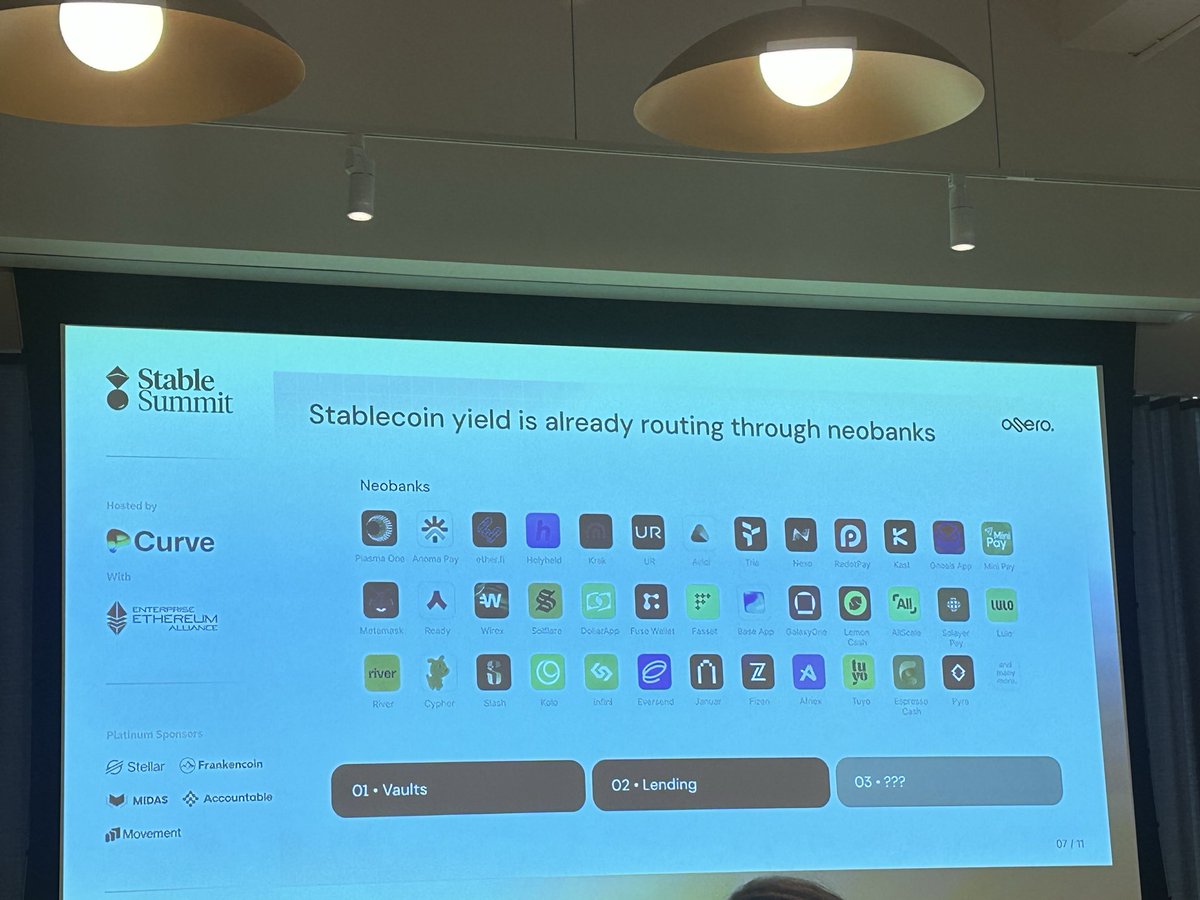
Stablecoin yield is already making its way into neobanks.
Good to see multiple teams on this list secured by @QuillAudits_AI.
As stablecoins move from DeFi into consumer-facing financial products, security becomes infrastructure not a checkbox.
Yield strategies, lending integrations, treasury management, and custody flows all need to work flawlessly.
ClawCash CLI Skills are live.
A new and improved agent credit experience is here.
Your agent can now use ClawCash credit with smoother onboarding, faster execution, and no waiting around for merchant settlements.
Supported across OpenClaw, Hermes, Claude Code, and Cursor.
Crypto isn’t an appealing trade right now.
AI sucked the liquidity and talent out of the room.
Most tokens are fighting for leftover oxygen.
Only 2 trades still feel alive:
$ZEC
$HYPE
Everything else needs to earn attention again.
NFA
crypto's best PMF is access
→ access to companies (pre-IPO)
→ access to better currencies (stablecoins)
→ access to markets (24/7, no broker)
→ access to global markets
→ access to everything you were locked out of
there's a useful way to think about what money actually needs to be free
call it the three properties of freedom money:
> hard scarcity the supply cannot be inflated away by any actor
> censorship resistance no third party can block a transaction
> information asymmetry the transacting parties control what the world knows about the transaction
Bitcoin nailed the first two.
the third property is where it fails, and the failure compounds over time in a specific way
defaults harden into infrastructure. infrastructure fades into the unquestioned background of ordinary life.
a financial system where everything is visible by default doesn't stay controversial. it becomes normal. then it becomes assumed. then the generation that grows up inside it loses the intuition that it could be otherwise, and the political will to change it falls to zero because no one can articulate what was lost.
this is not hypothetical. it is the standard pattern by which surveillance becomes permanent. Orwell's image was a boot stamping on a human face forever. the mechanism is not violence. it is normalization.
Zcash is the only asset I know of that satisfies all three properties simultaneously:
hard scarcity: 21M cap, same as Bitcoin, proof of work
censorship resistance: inherited from Bitcoin's architecture
information asymmetry: zero-knowledge proofs encrypt sender, receiver, and amount. the network validates without learning. this is cryptographic, not policy-based.
the quantum caveat matters here. most current cryptography, including Bitcoin's, will be vulnerable to sufficiently powerful quantum computers. Zcash has a staged roadmap through 2028 to upgrade its cryptographic foundations ahead of that threshold. Bitcoin has no equivalent roadmap.
the AI caveat also matters. what once required a team of analysts to extract from public data can now be done continuously, automatically, at scale, without fatigue. the cost of surveilling a transparent ledger drops toward zero as the models improve.
freedom money that only some subcultures can practically use is not freedom money. it's an aesthetic.
the third property is the one that makes the first two mean something in a world where compute is cheap, AI is tireless, and defaults become infrastructure
Zcash is the only serious attempt to build all three into the base layer at once