@vlad_mihalcea So I know that I am reviving a very old thread here, but do you think this still applies today, 26 years after the original article was written, in the age of Claude and Codex? My company is thinking of converting some really old Legacy code to Java
@Shxlfoun@NHansenArt@0bs3rver116907@TriStar_Tim@777ftdeep The tweets are the beginning of this thread mention 24, 22 and basically early 20’s. I agree that it’s irresponsible to let an 18/19 y/o get their hands on a card with a very high limit but I feel like by the time you’re a college senior you should know this stuff
@Shxlfoun@NHansenArt@0bs3rver116907@TriStar_Tim@777ftdeep Sure, debt is debt. But if you take on that debt responsibly, pay it off in full at the end of every month, making sure not to accrue any interest at all, was that debt harmful to you in any way? Or was it, in fact, beneficial (reward points/cashback/improving credit score)?
People who complain about ORM doing too much Magic are very happy with all the Magic the DB does for them when executing an SQL query.
Abstractions are very useful, and convenience always wins in the long run!
@richardstartin@gunnarmorling Wait why don't people like ORMs? Genuine question. I really like the Django ORM, it helps increase the legibility of my code and abstract away common DB operations
@dan_spratling@matnarca Oh so that's what it means! Turns out I've been using the headless 'principle' at work for the past >1 year without knowing it.
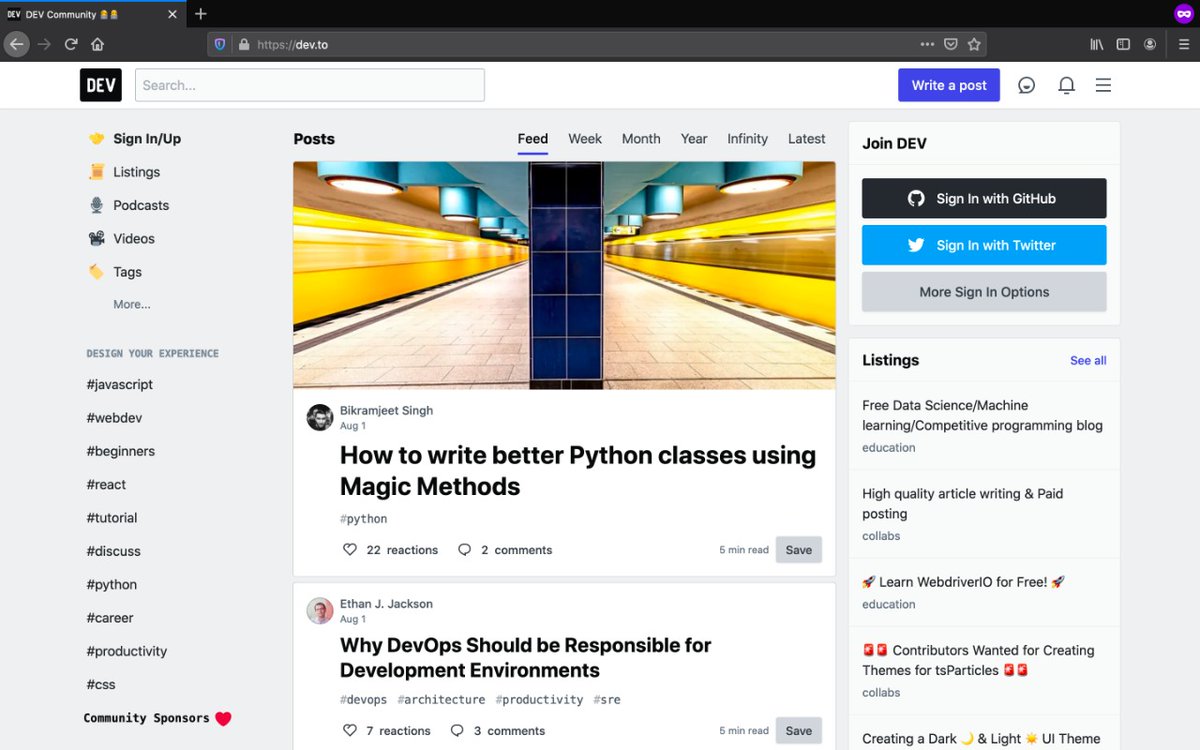
One of the strengths of the Python programming language is that it is both easy for beginners to learn and, at the same time, immensely rewarding for advanced users.
{ author: @bikramjtsingh } #DEVCommunity https://t.co/vsJ0X0L5Ei