We underestimate what Islamists want. In 2003 I reported from Madrid on the train bombings that killed 191. People assumed it was punishment for Spain’s support of the War On Terror. Al Qaeda’s statement demurred. They sought the Islamic reconquest of Andalusia.
My monologue.
Reeves Lied. Reynolds Lied. Haigh Lied. Now Rayner.
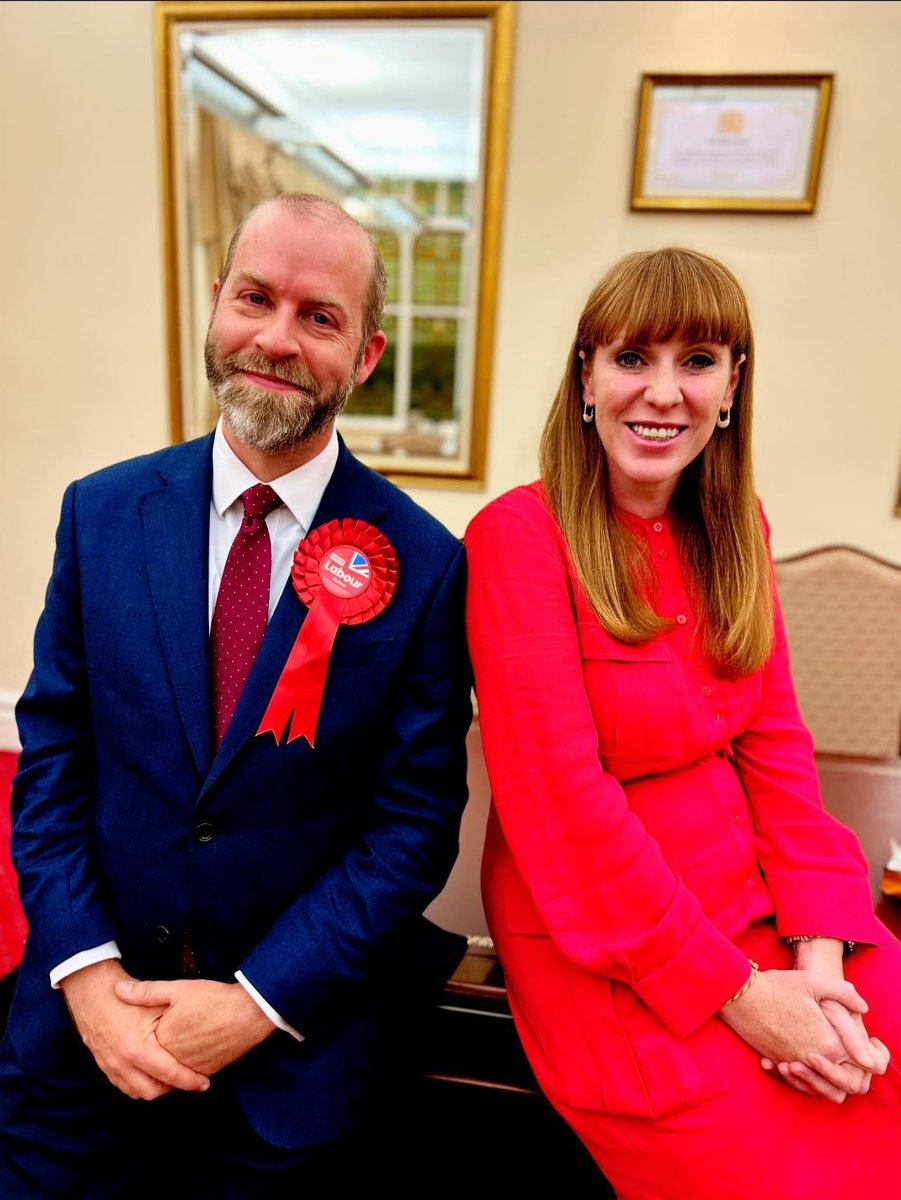
A government's character is not defined by the mistakes of one minister. It is defined by what happens next. Angela Rayner is now the fourth member of this Labour Cabinet to face public questions over an invented or inflated past, and each time the pattern has been the same: deny, minimise, survive, promote.
Rachel Reeves inflated her record at the Bank of England before becoming Chancellor. Jonathan Reynolds allowed the public to believe he was a qualified solicitor, a claim serious enough that his own regulator rebuked him, and he kept his job as Business Secretary regardless. Louise Haigh pleaded guilty to fraud before she ever sat in Cabinet. And now Angela Rayner, reinstated as Housing Secretary within days of settling her stamp duty affair with HMRC, has been caught reshaping her own employment history under direct questioning from the BBC.
Rayner told the public for years that she gave "14 years' service in local government as a home care worker." Stockport council's own records, released under Freedom of Information law, tell a different story. She was a full-time home help for less than five of those years. For six more she split her time between care work and union duties. For the final four she was on full secondment to Unison, doing no council care work at all. Pressed on the discrepancy, she told Radio 4 her roles "kind of get blurred" by journalists. That is not an explanation. It is an admission that the fourteen-year figure was never really about accuracy.
The detail that matters most is not the job title. It is the shift in her own story depending on the audience. When she stood for Parliament in 2014, she described herself as a "trade union official with Unison." Twelve years later, needing a more sympathetic biography, the union years quietly disappear and she becomes a career care worker with over a decade of frontline service. The facts of her working life did not change. The version she found useful did.
Kevin Hollinrake, the Conservative chairman, called this a "credibility crisis" that has run through Labour since it entered government. He is being generous. A single false claim is a mistake. Four ministers, four separate fabrications, and not one meaningful consequence between them, is not a crisis of individuals. It is the operating culture of this government.
Consider what each case shares. Reynolds' regulator rebuke did not end his career. Reeves' inflated CV did not stop her becoming Chancellor. Haigh's fraud conviction did not stop her reaching Cabinet in the first place. And Rayner's exaggerated work history arrives days after Andy Burnham chose to reinstate her despite a resignation forced by a tax scandal only ten months earlier. Each time, the message sent to the next minister tempted to embellish their record is the same: the truth is negotiable, and the cost of being caught is a bad afternoon in the news cycle.
Voters are entitled to assume that the people governing them are who they say they are. That assumption is now four times broken in a single Cabinet. Angela Rayner is not the author of Labour's credibility problem. She is simply its most recent evidence. A government that keeps promoting people whose personal histories do not survive contact with the facts is not asking to be trusted. It is asking to be indulged.
Angela Rayner pictured with Jonathan Reynolds
Today, Spanish police finally started swinging their batons against the crowds on the streets of Ceuta
Unfortunately, they attacked the Spanish locals were protesting against how the government allowed 50 000 illegal migrants cross the border
No batons against migrants
Spain Trained The Wolf That Is Now At Its Door
In 2021, Morocco funnelled 8,000 migrants into Ceuta as punishment over the Western Sahara dispute. Spain's policy on Western Sahara changed not long afterwards. That sequence is the whole story of this week, condensed into one sentence. A state used migrants as a weapon, the target government moved, and the lesson landed exactly as intended.
So when Pedro Sánchez pursued gas deals with Algeria, Morocco's rival, and Rabat grew frustrated, it reached for the same tool. Only this time at nearly eight times the scale. Sixty thousand people crossed into an enclave of 84,000 inhabitants in under 48 hours. At least 57 died. Western intelligence sources believe Moroccan authorities facilitated it, video shows their gendarmerie standing by as trucks disgorged young men near the border, and Spanish guards described their counterparts as "totally inactive" throughout. Sánchez's government did not treat this as an attack. It thanked Rabat for its "co-operation."
Spain built the exploit into its own law before Morocco ever used it. A Supreme Court ruling last month decided that migrants who swim into Ceuta cannot be subject to fast-track return, only those who cross the land fence. That ruling is the precise gap this week's crossing was engineered to test. Tellingly, 48,000 of the 60,000 who arrived had already gone home by Friday night, evidence that most weren't fleeing anything, they were chasing a rumoured loophole, encouraged along the way by traffickers and, on the available footage, by Moroccan police. A government whose own courts hand smugglers a script, and whose president thanks the neighbouring state that exploited it, has not been ambushed. It built the door.
Giorgia Meloni's response is the instructive contrast. Within hours she was threatening to suspend Schengen between Italy and Spain, treating uncontrolled entry as the security threat it plainly is. Whatever the merits of that specific measure, and Italy's own record on migration invites its own scrutiny, it is a government visibly weighing a real trade-off and choosing to act. Sánchez, so far, has chosen the comfort of understatement.
Britain should recognise this story, because it is living a slower version of it. Spain's exploit is one court ruling. Britain's is a system of them: an asylum appeals backlog approaching 100,000, a safe countries list that quietly excludes Afghanistan, Iran, Syria and Somalia, deportation powers used at half the rate Blair once used them, and a £10bn accommodation contract running to 2039 that no government signs for a population it intends to remove. Spain rewards Moroccan "co-operation" with silence. Britain rewards France's collapsing interception rate, down from 46.9 per cent to 33.1 per cent since 2023, with over £1bn and counting. Both governments are paying a counterparty to produce the opposite of what they claim to want.
The difference is pace, and it is not a difference in Britain's favour. Ceuta forces a reckoning in 48 hours, with images no minister can talk past. Britain's failure arrives in monthly tallies and quiet transfers from hotels into permanent housing, nothing dramatic enough to detonate into a crisis a government must answer for in public. A slow-motion version of the same weakness is not the milder case. It is the more durable one, because nothing about it is loud enough to make anyone stop.
Morocco taught Spain that migration works as leverage, and Spain paid the tuition twice. Britain has been paying the same tuition for a decade, to smugglers, to France, and increasingly to itself, and has yet to notice it is enrolled in the same course.
"Britain should recognise this story, because it is living a slower version of it. [...]. The difference is pace, and it is not a difference in Britain's favour."
In the biggest by-election in British history, Restore Britain, a political party founded less than six months ago, just won almost 50,000 votes - we beat the Conservatives and battered the Lib Dems. We more than tripled their vote.
A political party promising to deport millions, without apology, just destroyed mainstream parties.
In Greater Manchester.
Think about that.
The establishment detests it.
Good. I love it.
Restore Britain is now an established national political party and we are here to stay.
We are going to take our country back.
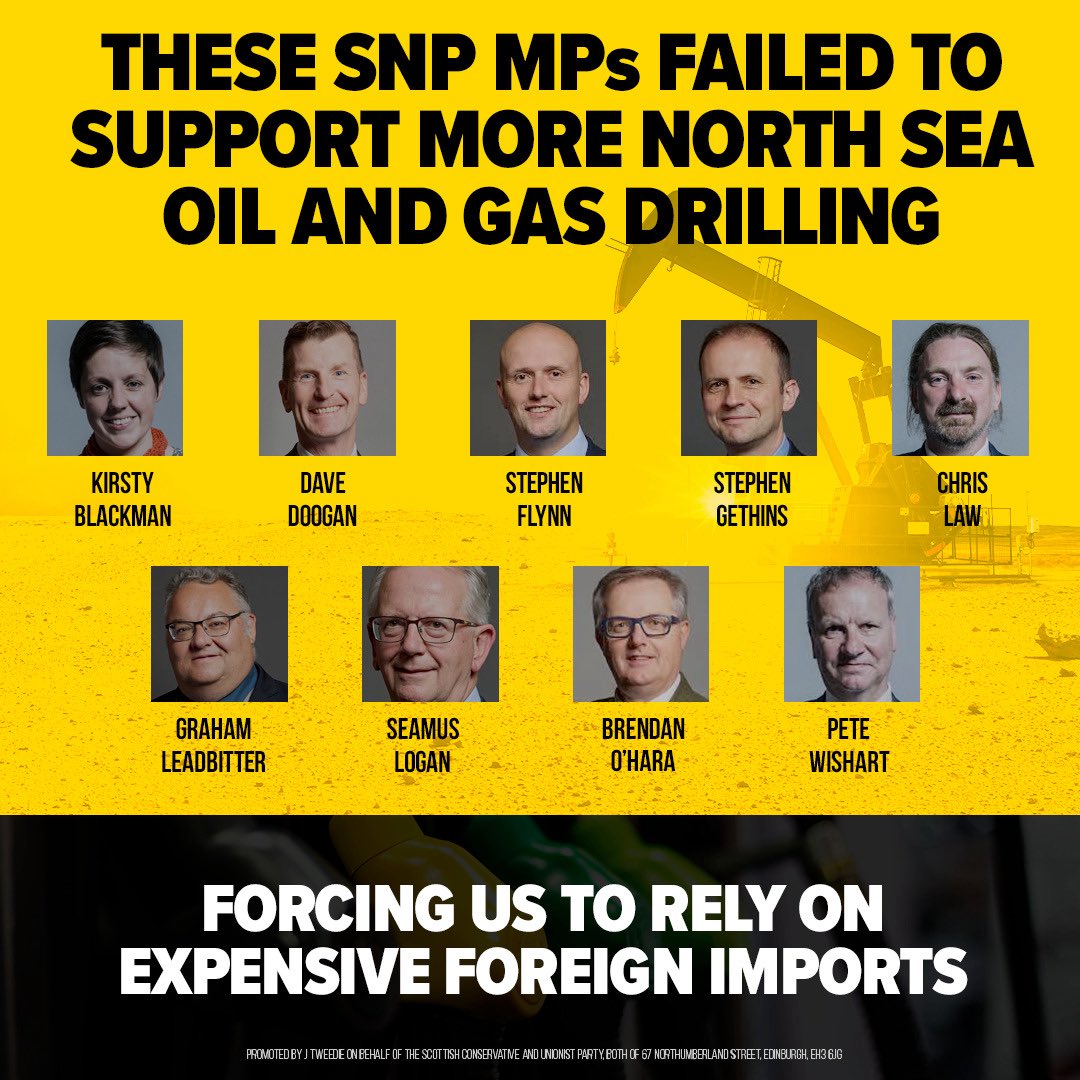
@larabirdsnp@theSNP SNP/Greens policy on "net zero" is responsible for this you vacuous bimbo...the SNP MP's refused to support new oilfield drilling.
If you're going to post SNP propaganda do some research first instead of making an arse of yourself!
Your party backed a supertax on oil companies in the North Sea.
Your party opposed new licenses in the North Sea.
Why are you surprised BP has decided to pack it in?
Nauseating hypocrisy to affect to be now concerned about jobs and communities.
Your party, your Scottish government drove them away with your relentless anti-oil/gas virtue signalling and greenwashing. You put pandering to the left of your base above people.
The Architect Of The Early Release Scheme Just Admitted It Cannot Keep The Public Safe
Almost a third of criminals released under Labour's early release scheme have reoffended, the highest rate on record outside the pandemic cohort. Nearly 25,000 people committed more than 127,000 further offences, a figure that has doubled since the scheme began. Among them: a man freed the same morning he took part in a fatal stabbing, and a 31 year old who sexually assaulted a woman on the same day he walked out of prison.
Liam Matthews shows what the number looks like in practice. He was released from HMP Holme House on the morning of 19 September, having served less than half of a 22 month sentence for violent disorder. That same day, Lewis Bell, a father of one, was hunted and fatally stabbed in Stockton-on-Tees in a dispute over drugs. Matthews was convicted of manslaughter alongside two others, one of whom was convicted of murder. The 31.9 per cent reoffending rate is not an abstraction. It is a man walking out of one prison gate and into a killing on the same day.
The scheme was built to solve one problem: prison capacity. New figures show it is failing on those terms too. Between January and March this year, 13,193 offenders were recalled to prison while 12,977 were released, the first time recalls have outnumbered releases on record. For every 100 prisoners freed, 101 came back. A policy designed to relieve pressure on the prison estate is now generating a return flow larger than its outflow, which is not relief. It is a revolving door running the wrong way.
The pattern is not new, only worse. Recalls rose 73 per cent last year to 51,419, nearly double the number recorded in 2023. The most common reasons were breaching licence conditions, losing contact with probation officers and facing new charges. None of this required a single foreign national or a single sentencing loophole to produce. It is the direct, measured consequence of releasing people earlier than the courts decided was safe.
What makes this harder to dismiss as opposition noise is who is now saying it. David Gauke, the former Conservative justice secretary whose independent report Labour commissioned and then implemented, has warned Andy Burnham that pausing the scheme and promising a review risks raising expectations he cannot meet. Gauke's own words are the more damning part. He said the nature of the prison population makes it impossible to exclude every violent or sexual offender from early release without triggering a capacity crisis. The man who designed this system has just confirmed, in public, that it cannot deliver the safety guarantee ministers are implying it can.
The Ministry of Justice's defence is that it inherited a crisis, 500 net prison places added and 23 prisons closed in the fourteen years before Labour took office. That may be true. It does not explain why the government's chosen fix is producing a rising reoffending rate, a doubling in further offences, and a recall system that has stopped even keeping pace with release. A government cannot claim credit for averting a capacity collapse while the same policy generates a fresh stream of victims to fill the gap it created.
Tagging, sentence extensions and expanded probation are the tools ministers point to when defending the scheme. Lewis Bell's death did not happen because those safeguards failed on the day. It happened because the man convicted alongside his killer was already free, hours into a sentence cut short, before any safeguard had the chance to apply. The numbers published this week are not a warning about what early release might do. They are a record of what it has already done.
"David Gauke warned Andy Burnham that pausing the scheme and promising a review risks raising expectations he cannot meet."
Three charged with the stabbing murder of Christopher Bradbury, 44, in Shelton, Stoke-on-Trent.
Hassan Ahmed, 19
Dhannish Mahmood, 19
Subhan Nadeem, 20
A British man is dead. Three young men are charged with his murder.
And yet this will barely register on the national news.
If the victim and the perpetrators had been reversed, this would have been wall-to-wall coverage for a week. Politicians would be lining up. Every newspaper would be running it on the front page.
The outrage would be endless.
Instead it’s a quiet local story that most people will never hear.
Christopher Bradbury was loved by his family.
His life mattered.
The selective silence says everything about whose lives the media decides are worth mourning.
We now have a Two Tier Media!!
10 years ago, the “breaking point” poster was considered controversial. Now we see invasions at the Moroccan border.
Nigel Farage is right, this isn’t just about numbers. It’s battle for our civilisation.
Surely there is something perverted in any man who thinks ‘chestfeeding’ is a healthy practice, nor can it be in the baby’s best interests. Utterly disgusting that the SNP have been funding this deviant activity with taxpayer money. https://t.co/v3ysmxJ6QQ
The BBC has had thirty eight years and £3.8 billion a year to explain British farming to the British public. The job was eventually done by an American shopping website, in eight episodes, fronted by the man the BBC itself dropped over a row about a steak.
Countryfile first went out on 24 July 1988, and its origin is the part nobody brings up. It replaced Farming, a programme that had spent thirty years making news for the people who actually did the work. The new show was deliberately widened to take in everybody who merely liked the countryside as well as those who lived off it. Widened meant softened. In 2009 it moved to Sunday evenings, where five to six million people still watch, and it has been settled ever since into an hour of scenery, a ramble, a calendar competition and the weather.
Then in June 2021 a company best known for selling doorbells put out a series about a man failing to farm a thousand acres, and within a week the British public understood the subsidy system.
Look at what an American retailer put on screen that thirty eight years of Sunday nights had not. A thousand acres, a full year of work, £144 profit. A crop drowning in the field with nobody coming to help. A farmer selling at a price he is not allowed to set. A council able to shut a restaurant standing on a man's own land. The accounts, open, with jokes over the top.
James Rebanks, who keeps sheep for a living rather than for a segment, reckoned Clarkson did more for farmers in one series than Countryfile had managed in thirty years. The NFU said the same thing in nicer words.
Now the funding, which is where it gets genuinely funny.
Countryfile is paid for by £180 a year, rising on 1 April, taken from every household in Britain that watches live television, on pain of prosecution. Twenty three million licences. Three point eight billion pounds. Guaranteed money, a captive audience, a national mandate and a prime Sunday slot.
Clarkson's Farm is paid for by people voluntarily pressing play, and it goes out in more than 240 countries.
The nation's farmers had one broadcaster legally funded by them, obliged to serve them, sitting on the biggest slot in British television. It gave them a weather forecast and a photography competition, and when a bloke with a Lamborghini tractor did the actual job for free, the same building's stars went on a sofa to complain about his opening credits.
The BBC had the money, the mandate, the Sunday night and thirty eight years.
It used them to film the view.
New diversity barriers have been installed around Trafalgar Square. Looks hideous.
@SadiqKhan are they to protect people from Reform UK? GB News? Or the threat you never mention?
This is unprecedented. Ten boats. Seven hundred fighting-age men. Simultaneous launch from ten different locations on the French coast. A coordinated military-style assault on our borders.
And the response from Burnham's government? Silence. No COBRA meeting. No emergency statement. No media coverage. Just "it's all under control."
It is not under control. This is an invasion in plain sight, and they are pretending it isn't happening.
The full breakdown is in the video. Watch it. Share it. This cannot be ignored.


![JChimirie66677's tweet photo. Spain Trained The Wolf That Is Now At Its Door
In 2021, Morocco funnelled 8,000 migrants into Ceuta as punishment over the Western Sahara dispute. Spain's policy on Western Sahara changed not long afterwards. That sequence is the whole story of this week, condensed into one sentence. A state used migrants as a weapon, the target government moved, and the lesson landed exactly as intended.
So when Pedro Sánchez pursued gas deals with Algeria, Morocco's rival, and Rabat grew frustrated, it reached for the same tool. Only this time at nearly eight times the scale. Sixty thousand people crossed into an enclave of 84,000 inhabitants in under 48 hours. At least 57 died. Western intelligence sources believe Moroccan authorities facilitated it, video shows their gendarmerie standing by as trucks disgorged young men near the border, and Spanish guards described their counterparts as "totally inactive" throughout. Sánchez's government did not treat this as an attack. It thanked Rabat for its "co-operation."
Spain built the exploit into its own law before Morocco ever used it. A Supreme Court ruling last month decided that migrants who swim into Ceuta cannot be subject to fast-track return, only those who cross the land fence. That ruling is the precise gap this week's crossing was engineered to test. Tellingly, 48,000 of the 60,000 who arrived had already gone home by Friday night, evidence that most weren't fleeing anything, they were chasing a rumoured loophole, encouraged along the way by traffickers and, on the available footage, by Moroccan police. A government whose own courts hand smugglers a script, and whose president thanks the neighbouring state that exploited it, has not been ambushed. It built the door.
Giorgia Meloni's response is the instructive contrast. Within hours she was threatening to suspend Schengen between Italy and Spain, treating uncontrolled entry as the security threat it plainly is. Whatever the merits of that specific measure, and Italy's own record on migration invites its own scrutiny, it is a government visibly weighing a real trade-off and choosing to act. Sánchez, so far, has chosen the comfort of understatement.
Britain should recognise this story, because it is living a slower version of it. Spain's exploit is one court ruling. Britain's is a system of them: an asylum appeals backlog approaching 100,000, a safe countries list that quietly excludes Afghanistan, Iran, Syria and Somalia, deportation powers used at half the rate Blair once used them, and a £10bn accommodation contract running to 2039 that no government signs for a population it intends to remove. Spain rewards Moroccan "co-operation" with silence. Britain rewards France's collapsing interception rate, down from 46.9 per cent to 33.1 per cent since 2023, with over £1bn and counting. Both governments are paying a counterparty to produce the opposite of what they claim to want.
The difference is pace, and it is not a difference in Britain's favour. Ceuta forces a reckoning in 48 hours, with images no minister can talk past. Britain's failure arrives in monthly tallies and quiet transfers from hotels into permanent housing, nothing dramatic enough to detonate into a crisis a government must answer for in public. A slow-motion version of the same weakness is not the milder case. It is the more durable one, because nothing about it is loud enough to make anyone stop.
Morocco taught Spain that migration works as leverage, and Spain paid the tuition twice. Britain has been paying the same tuition for a decade, to smugglers, to France, and increasingly to itself, and has yet to notice it is enrolled in the same course.
"Britain should recognise this story, because it is living a slower version of it. [...]. The difference is pace, and it is not a difference in Britain's favour."](https://pbs.twimg.com/media/HOlzwMTWgAAewh9.jpg)





![JChimirie66677's tweet photo. Spain Trained The Wolf That Is Now At Its Door
In 2021, Morocco funnelled 8,000 migrants into Ceuta as punishment over the Western Sahara dispute. Spain's policy on Western Sahara changed not long afterwards. That sequence is the whole story of this week, condensed into one sentence. A state used migrants as a weapon, the target government moved, and the lesson landed exactly as intended.
So when Pedro Sánchez pursued gas deals with Algeria, Morocco's rival, and Rabat grew frustrated, it reached for the same tool. Only this time at nearly eight times the scale. Sixty thousand people crossed into an enclave of 84,000 inhabitants in under 48 hours. At least 57 died. Western intelligence sources believe Moroccan authorities facilitated it, video shows their gendarmerie standing by as trucks disgorged young men near the border, and Spanish guards described their counterparts as "totally inactive" throughout. Sánchez's government did not treat this as an attack. It thanked Rabat for its "co-operation."
Spain built the exploit into its own law before Morocco ever used it. A Supreme Court ruling last month decided that migrants who swim into Ceuta cannot be subject to fast-track return, only those who cross the land fence. That ruling is the precise gap this week's crossing was engineered to test. Tellingly, 48,000 of the 60,000 who arrived had already gone home by Friday night, evidence that most weren't fleeing anything, they were chasing a rumoured loophole, encouraged along the way by traffickers and, on the available footage, by Moroccan police. A government whose own courts hand smugglers a script, and whose president thanks the neighbouring state that exploited it, has not been ambushed. It built the door.
Giorgia Meloni's response is the instructive contrast. Within hours she was threatening to suspend Schengen between Italy and Spain, treating uncontrolled entry as the security threat it plainly is. Whatever the merits of that specific measure, and Italy's own record on migration invites its own scrutiny, it is a government visibly weighing a real trade-off and choosing to act. Sánchez, so far, has chosen the comfort of understatement.
Britain should recognise this story, because it is living a slower version of it. Spain's exploit is one court ruling. Britain's is a system of them: an asylum appeals backlog approaching 100,000, a safe countries list that quietly excludes Afghanistan, Iran, Syria and Somalia, deportation powers used at half the rate Blair once used them, and a £10bn accommodation contract running to 2039 that no government signs for a population it intends to remove. Spain rewards Moroccan "co-operation" with silence. Britain rewards France's collapsing interception rate, down from 46.9 per cent to 33.1 per cent since 2023, with over £1bn and counting. Both governments are paying a counterparty to produce the opposite of what they claim to want.
The difference is pace, and it is not a difference in Britain's favour. Ceuta forces a reckoning in 48 hours, with images no minister can talk past. Britain's failure arrives in monthly tallies and quiet transfers from hotels into permanent housing, nothing dramatic enough to detonate into a crisis a government must answer for in public. A slow-motion version of the same weakness is not the milder case. It is the more durable one, because nothing about it is loud enough to make anyone stop.
Morocco taught Spain that migration works as leverage, and Spain paid the tuition twice. Britain has been paying the same tuition for a decade, to smugglers, to France, and increasingly to itself, and has yet to notice it is enrolled in the same course.
"Britain should recognise this story, because it is living a slower version of it. [...]. The difference is pace, and it is not a difference in Britain's favour."](https://pbs.twimg.com/media/HOlzwsSXAAA9-Rr.jpg)