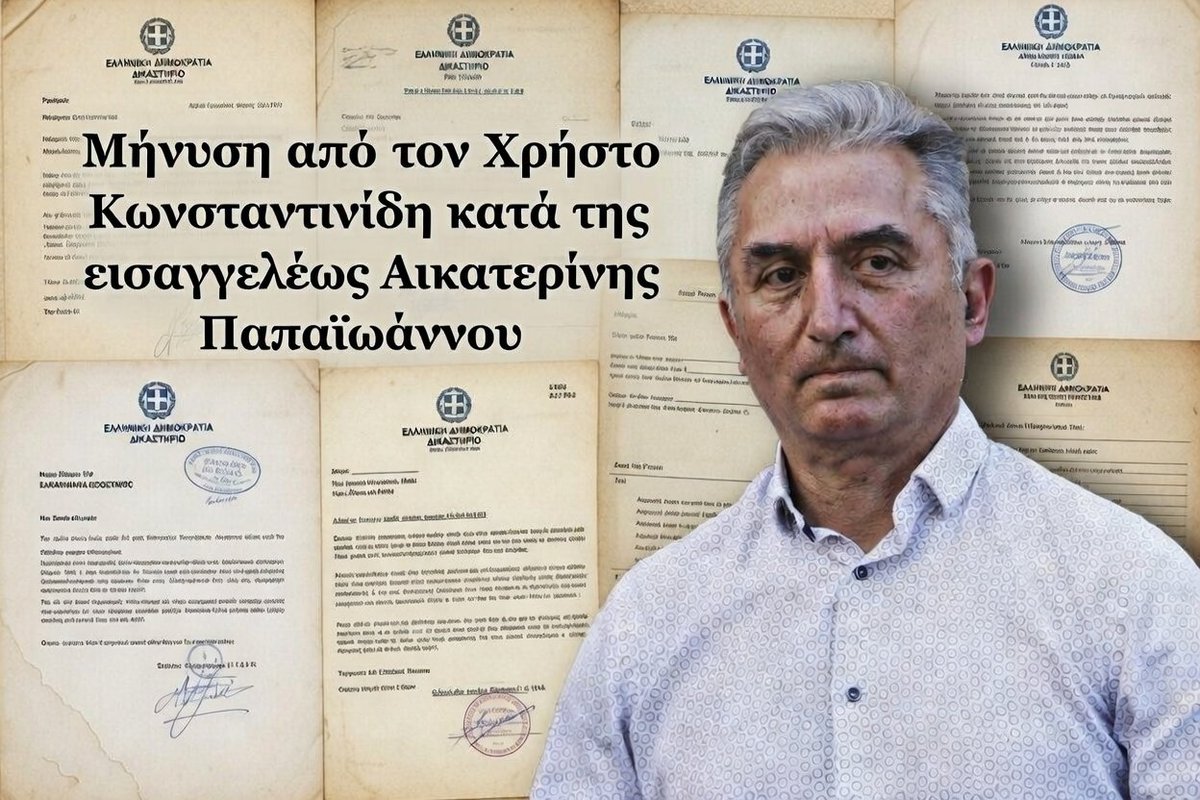
εναντίων οποιουδήποτε διαφθαρμενου λειτουργού της δικαιοσύνης και όχι μόνο.
Αυτός ο άνθρωπος αξίζει την στήριξη του κόσμου !
Δηλώσεις του για το κατηγορητήρι της δίκης των Τεμπών. 👇
https://t.co/LpCtYgQ2cN
#Τεμπη#Τεμπη_Κατηγορητηριο#ΧρηστοςΚωνσταντινιδης
Ο Χρήστος Κωνσταντινίδης δίνει εδώ και καιρό έναν πολύ ειλικρινη, μεθοδικό και συνεχή αγώνα για δικαίωση. Δεν μένει σε λόγια...καταθέτει δικόγραφα κά δείχνει στην πράξη ότι είναι διατεθειμένος να βάλει το μαχαίρι ως το κόκκαλο και να κινηθεί νομικά ...
Durin the Ottoman period, the Muslim Turks, in order to terrorize the Greeks, impaled and roasted alive Athanasios Diakos. But, they gave him a chance: "Will you become a Turk, Diakos? Will you change your faith? Will you pray in the mosque and abandon the church?"
He replied to them: "Go away, you and your faith, may you perish, you renegades! I was born a Greek, and as a Greek I shall die."
According to eyewitness accounts from the time, two Turks lit a fire next to the stable and placed an iron grate and a large copper cauldron filled with oil over it. Then they lifted Diakos, still bound as he was, and made him sit on an old wooden stool. They raised his legs. The Turks began to mock him, asking him various questions. For every negative nod, they drove nails into his feet. Afterwards, they took the boiling oil and first poured it over his bare feet.
When they saw that he did not react, they tore his clothing and began pouring it on his back and chest. He groaned silently in pain, and the soldiers, under orders not to kill him, used needles to burst the blisters that had formed on his skin from the boiling oil. This continued for hours, until the next morning.
Exhausted as he was, they dragged him through the town to execute him. His execution was carried out in public view with the permission of Halil Bey, so that the Greeks would be warned about what would happen to anyone who dared to revolt. Testimonies state that even Diakos’s mother was present at his torture.
After tying him backwards onto a saddle with his legs spread apart, the executioner began pushing the sharp tip of a wooden stake into his groin area and then slowly drove it deeper, going all the way through his body until it emerged near his right ear. The executioner moved carefully, as he had orders not to kill him quickly; with every push of the stake, Diakos’s screams confirmed he was still alive.
Once the executioner had finished his work, the Turks tied the body tightly with the stake so that the skin would not tear, and they propped him up, almost upright, against a tree.
As he was dying, it is said that he uttered these sorrowful verses: "Look at the time Death has chosen to take me, now, when the branches are blossoming and the earth brings forth grass."
Halil Bey gave the order to light a fire beneath him and to turn him slowly, so that he would be roasted alive like an animal. After many hours of torture, the Greek chieftain passed away on April 24, 1821. However, this had the opposite effect from what the Turks had expected.
When the Greeks learned of his story and his martyrdom, they were filled with even greater rage and strength to liberate themselves from the barbarous Muslims and Islam.
Athanasios Diakos is one of the most important heroes in the Greek history.
@Wisdom_HQ No or just a small amount of animal proteins.
No or just a small amount of grains.
No processed food as much as I can.
A lot of fruits, greens and herbs.
@Wisdom_HQ Almost everything can be an addiction.
Addiction is not about the subject...is about the relationship we create, or is been created, between us and the material thing or the emotion. Addiction is a Toxic way of connection.
@LiLa_Blonde_ Το αίτημα το έχει κάνει για την εκταφή κανονικά. Το αν βγήκε για ένα ποτό ή αν έφαγε πιτόγυρο...αυτό είναι δικαίωμα του. Εσύ που δεν βρίσκεις κάτι σοβαρό να του καταλογίσεις, βρίσκεις και γράφεις ότι βλακεία σου κατέβει στο κεφάλι...τρολακι !
@Likaki11 Λες ψέματα. Βλέποντας την δημοσίευση σου, επικοινωνησα προσωπικά μαζί του και με διαβεβαίωσε όταν το αίτημα έχει γίνει. Ντροπή σου να κάνεις προπαγάνδα για έναν άνθρωπο που έχασε το παιδί του.