A spike in on-chain activity is coming.
New narratives are already emerging around the long-awaited release of GTA 6.
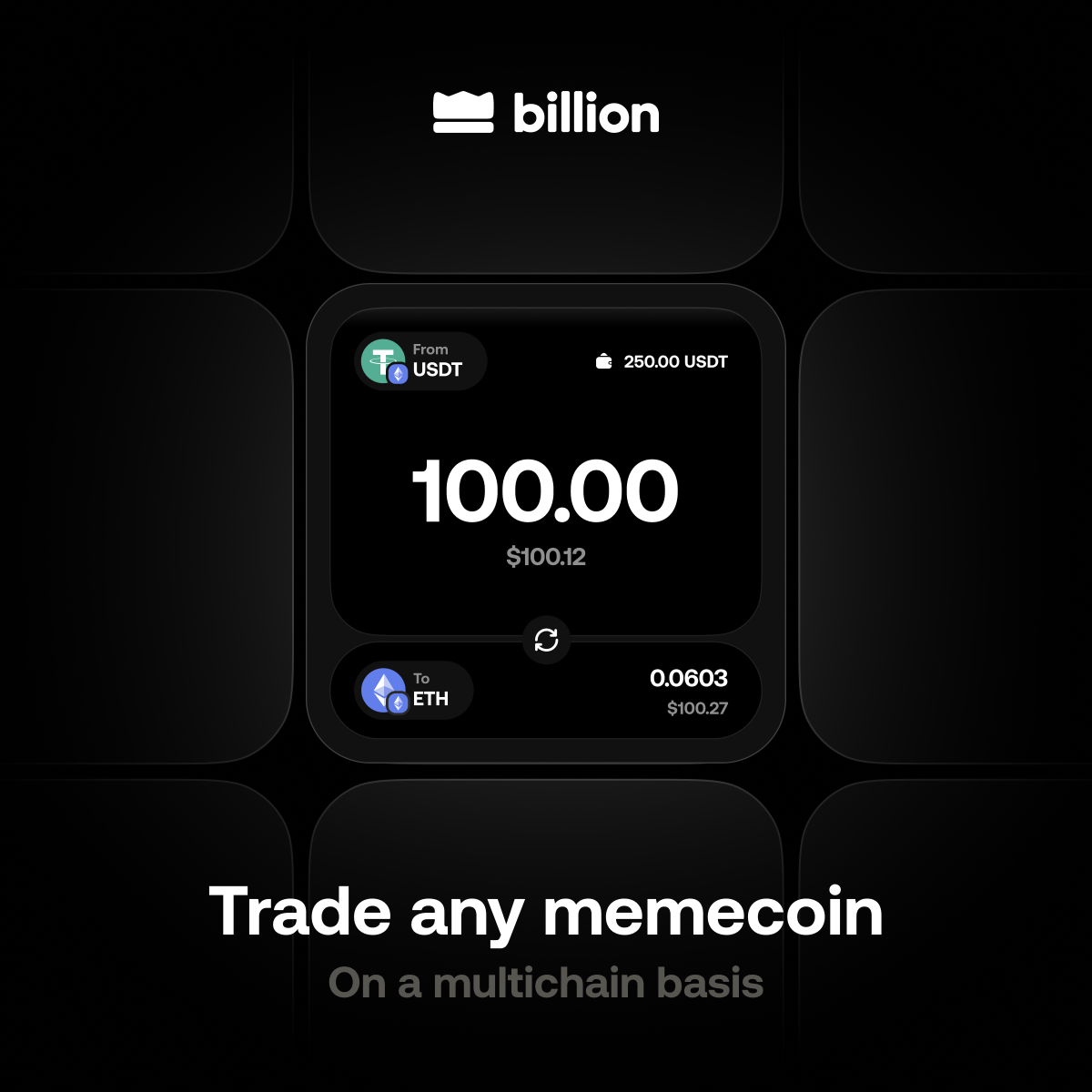
With Billion App, you can trade any meme coin across multiple chains while keeping full self-custody.
What do you think will be the biggest trading narratives surrounding the game?
Can you tell how secure your account is today?
Every account in the new Billion will get a Security level, whether it is self-custody or custody.
Several layers of protection will stand behind it, each one familiar from the apps you already use.
On what factors will modern neobanks compete?
1) How AI will be used in the product
Most modern banks and neobanks block AI agent access to accounts by default, citing the higher operational risks of agents working on behalf of clients.
However, this does not solve the problem and only creates a crutch in the form of restrictions.
Modern financial products need to keep pace with the times, using AI agents to improve and simplify the user experience of their clients with their own money.
The key is not to ban by default but to create conditions where agents cannot harm the client and can be brought under full control:
> Every connected agent is visible in one place
> Permissions are set per agent
> Full activity history and a switch-off in seconds
2) The customer base, behavioral data and legal
With AI, product development is now many times faster and cheaper, yet many products keep building their uniqueness around the technical side.
Financial services, and neobanks in particular, are a different story.
The value of such products lies not just in features and UI/UX, but also in the customer base, the accumulated behavioral history and the legalization of the product.
These are built and formalized over years, and no one can assemble them with AI in a few days.
3) Solving the fragmentation of stablecoin infrastructure
Stablecoins are fragmented across different layers, such as:
Spending | Lending | B2B payments | Cross-border transfers | Agentic commerce
The number of these layers keeps growing, and to access each of them a user has to use different platforms and balances.
The key is to hide all these layers in the infrastructure under the hood of a single app or service, so the user does not have to think about it and interacts only with the familiar UI/UX.
The open question remains:
“Who will be able to deliver all of this in one financial app?”