No internet? No problem.
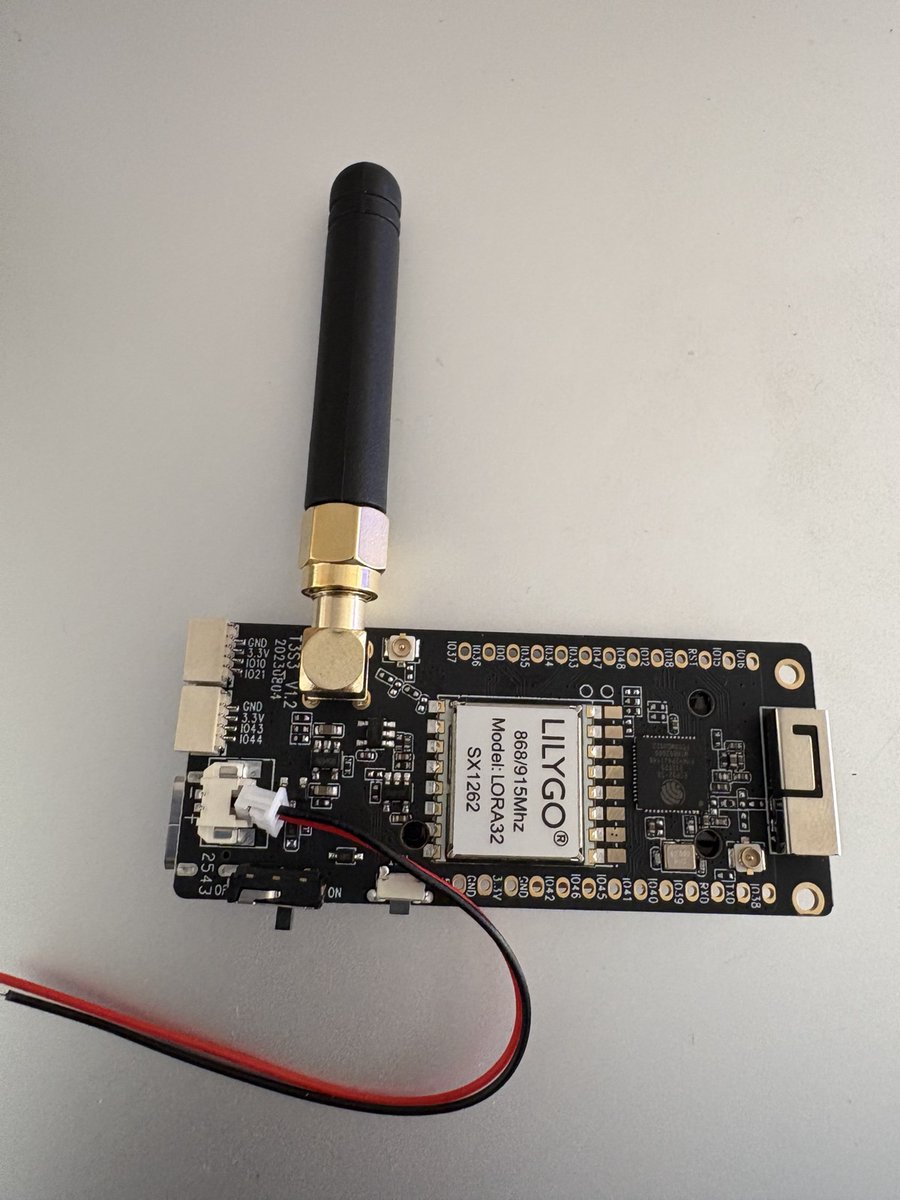
Bala just dropped the ultimate cypherpunk demo at the BOSS Summit: From Off-Grid to On-Chain
He literally broadcasted a live Bitcoin transaction using Mesh Radio.
No ISPs, no Wi-Fi, no cellular data.
Just pure radio waves bypassing the traditional internet layer to hit the mempool.
When we say we are building unconfiscatable money for uncertain times, this is exactly what we mean. Mind blown.
Here is the repo used to connect meshtastic to bitcoin core:https://t.co/HVKkj4dQcM
Built a full data pipeline to analyze Nairobi's property market.
It scrapes listings, normalizes prices, extracts bedrooms, and visualizes affordability. Clean, and ready for your own analysis. Full project: https://t.co/RkrbOCYSLp
#dataengineering#data@HarunMbaabu
Researchers have found two new vulnerabilities in React Server Components while attempting to exploit the patches last week.
These are new issues, separate from the critical CVE last week. The patch for React2Shell remains effective for the Remote Code Execution exploit.
The first debate about arbitrary data in the blockchain happened in December 2010 and Satoshi was involved
On 8th December 2010, Satoshi released Bitcoin version 0.3.18, which included a standardness check, to only include known transaction types
🧵
Kaleidoscopic Kenyan Khrysanthemums. One of the most varied flowers in colour and shape. Kenya is Africa's top exporter of chrysanthemums (Japan where they originate is world's #1) but South Africa may grow more, not for export so much as for home gardens, parks and bouquets.
Crypto folks (hopefully) already know that Lazarus is one of the most prevalent threat actors targeting this industry.
They rekt more people, companies, protocols than anyone else.
But it's good to know exactly how they get in. Bc another smart contract audit won't save you.
Hey devs, if you’re building on blockchain, you need to check out @KRNL_xyz Seriously, it’s a game changer.
You know the struggle:
- 😩 Coding every feature from the ground up.
- ⏰ Burning weeks on stuff others have already built a million times.
- 😵💫 Wrestling with cross-chain compatibility.
KRNL Labs is like a breath of fresh air. They’ve got these things called “kernels” pre-built code modules you can just plug into your project. Boom, problems solved.
When tech makes life easier for builders, people jump on board. And when that happens well, you know where this is headed. This is the future!.
KRNL Konnect: Africa X Space
Join us this Wednesday for a X Space with some of Africa's leading ecosystem voices on the innovations shaping compliance and infra in the African digital economy.
⏰ Aug 27th - 2pm UTC / 5pm EAT
📍https://t.co/KFXXIYZVin
New Google Play Store policy forces AML/KYC on non-custodial wallets in the US, effectively bans non-custodial wallet developers from Play Store in EU
Full Story👇
https://t.co/xhPoyPT1Gt
Top BTC Block Validators Get Sued - Over the pas several hours there are a number of articles being circulated about the patent violation lawsuit against Marathon Digital and Core Scientific - two corporate Bitcoin network validation pools (colloquially referred to as miners). These two pooled BTC block validators are #1 and #2, respectively, based on hashrate.
What is missing is a historical and technical perspective that is important. The patent lawsuit by Malikie Innovations, a firm that acquired tens of thousands of patents from BlackBerry in 2023, is claiming that it owns Elliptic Curve Cryptography (ECC) employed by the Bitcoin L1 mainnet.
The ECC protocol was introduced in 1985 when Neal Koblitz and Victor Miller independently proposed using elliptic curves as the basis for a cryptographic system. Koblitz and Miller suggested using the mathematics of elliptic curves to create a new cryptosystem based on the Diffie-Hellman key exchange protocol. And ECC provides an alternative method for public-key cryptography, offering strong security with relatively smaller key sizes compared to algorithms like RSA.
This patent suit may be confusing for some because, while validators are part of the L1 mainnet architecture, they don't directly use ECC to validate blocks. However, it is necessary to manage internal transactions and communicate securely with other validators.
ECC is primarily used by the Bitcoin L1 mainnet architecture for asymmetric key generation, and those keys are used to cryptographically secure transactions between users with the assistance of the digital signature algorithm (DSA) component. Which leads to some confusion around the basis of the patent violation.
I have been contacted by several contacts within government and the private sector about the link between Malikie Innovations and the Bitcoin payment network block validation pools. The connection is a specific ECC algorithm (secp256k1) developed from the broader ECC protocol introduced in 1985 (i.e., a protocol is a set of rules, while an algorithm is a deployed version of code).
Certicom (now part of Blackberry) held patents on ECC-based key exchange validation and digital signatures. Founded in 1985, the same year Elliptic Curve Cryptography (ECC) was invented, Certicom was acquired by BlackBerry in 2009. In 2023, Malikie acquired a suite of 32,000 ‘non-core’ patents from BlackBerry in a deal supposedly worth up to $900 million.
Certicom did not patent the specific secp256k1 curve itself, but the trove of patents relates to a fundamental component of secp256k1 ECC used by the Bitcoin payment network, specifically patents on techniques like the Gallant-Lambert-Vanstone (GLV) optimization used in secp256k1.
The GLV method is an optimization technique used to speed up scalar multiplication on secp256k1 ECC as a fundamental operation used extensively by the Bitcoin payment network for signing transactions and other cryptographic operations.
While Malikie considers block validators to be the best target with deep pockets and the role they play in the Bitcoin's payment network architecture as easily identifiable and easy to draft a lawsuit around. Another route would be to challenge the assumption that the Bitcoin network is decentralized - an argument I make in my new book "The Digital Asset Technology Guidebook" currently in presale. Although it would not be an IP suit, this was the thrust of the much-publicized Tulip Trading case, which alleged that Bitcoin’s centralized development and extensively controlled by the validators and developers through the foundation mean that its developers owe users legal duties to act in their best interests.
Dr David Utzke, PhD, MSc, MBA, CFE, CFI, CDFE
CEO/CTO MyKey Technologies
A taste of businesses/institutions onboarded to @River today to buy Bitcoin:
- Menswear
- Sports training
- Construction
- Tile installation
- E-commerce
- Church
- Investment firm