DPT, SCS, CSCS Sports Physical Therapist at Connecticut Children’s Medical Center, Hospital for Special Surgery Sports Residency 2018-2019, UConn alumn
@DrJesseMorse@BrianSuttererMD Timelines in the table were merely guidelines rather than expected recovery timeframes. Rehab is criteria based but governed by timeframes of healing. Initiation of a sports specific activities are realistic at 4-6 mos but dependent on strength, tendon healing and other factors
@DrJesseMorse@BrianSuttererMD Just to be clear we were not advocating for accelerated RTS in the high level athlete but rather early safe loading and progressive rehab while attempting to restore properties of the tendon as well as physical capacities.
@rehablabpodcast@DrJesseMorse Even with advancements in surgery and rehab mean time to return to sport still approaches 1 year post-op or greater. RTP metrics very challenging to meet and once met still have to accumulate a ton of playing volume and work up to speed of play. NBA is a different beast.
@LenMacPT Have always gone 12 in for DL and 8 in for SL but have played around with other heights base on RSI and plyometric ability but not formally for testing. Also been liking the DL and SL versions of the hop test (10 hop)
@LenMacPT Sounds like he’s doing great and you have time on your side. 6 week on field ramp up from non-contact to full team play and integration into college S&C program. Makes for a nice handoff and college medical staff can manage loading and early season transition.
New episode discussing our recent publication in IJSPT regarding Rehabilitation and Return to Sport after Achilles Tendon Repair.
Check out part 1 now!!!
@LenMacPT With that being said I do think it helps facilitate strength gains and improve load tolerance. Love it for OKC exercise progression to load PF joint and graft site with lower loads early and nice deload strategy in later stages. Just needs to be part of the bigger picture
@LenMacPT Like it but don’t need it with ACLR. When we lost access in NY can’t say our outcomes changed but would be interesting to look at that data. More impactful when weightbearing/loading is impacted by post op restrictions i.e. cartilage restoration, osteotomies, Achilles repairs etc
@MuyVienDPT Agreed, feel similar about using the ForceFrame for abd/add. Rarely find significant asymmetries unless one side is symptomatic. Very different than testing hip abd with HHD and comparing to contralateral side.
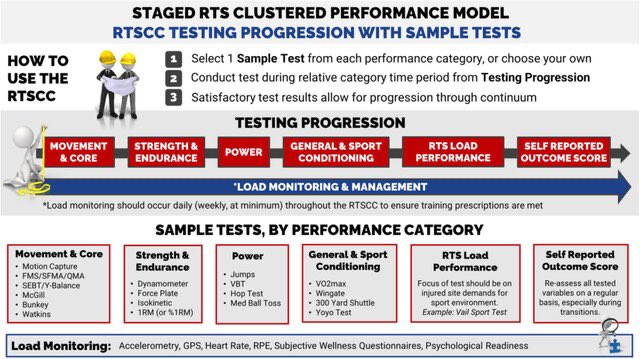
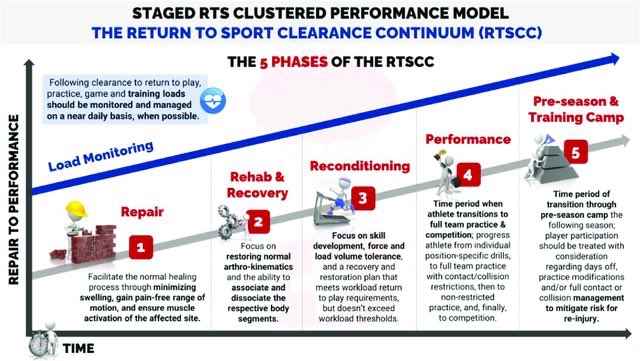
The Return-to-Sport Clearance Continuum Is a Novel Approach Toward Return to Sport and Performance for the Professional Athlete
Free full-text: https://t.co/jW1B0ZCrYL
Results of our recent @ctchildrens trial on Blood Flow Restriction training after adolescent ACLR @OJSM_SportsMed
👤12wk BFR protocol
💪 20%-23% greater isometric and isokinetic knee extension strength compared to control group
⬆️ Greater Pedi-IKDC scores at 12wks and RTS
@MuyVienDPT@snaggs100@enda_king@LenMacPT We have done this as well. How about PCL recon? Any concern with testing at 12 weeks? If not any concern of OKC hami stress?
@doclsmack@erikMeira@kcrehabguy@LauraOpstedal Curious what others are doing re any alterations to strength testing protocols for rehab other than ACLR? i.e isolated PCL recon, root repair etc?
Do you alter initial testing timeframe, angle (if isometric) or speeds of testing?