@matter_birgit
Ludwig Richter in Dresden (2027)
Die Vorstellung eines glücklichen Lebens in einfachen Verhältnissen begleitet die Menschheit seit jeher – nicht zuletzt als Gegenbild zu gesellschaftlichen Krisen und Konflikten. Ludwig Richters Leben und Werk fällt in eine Zeit
superdadaistisch - metadadaistisch - megadadaistisch
neodadaistisch - postdadaistisch - dadadaistisch
-ismus somit Superdadaismus lehnte die Bewegung ab, die Bewegung lehnt:e alle ismen grundsätzlich ab.
Dadaisten verschweigen nichts, sprechen Probleme an, werden dadurch un b
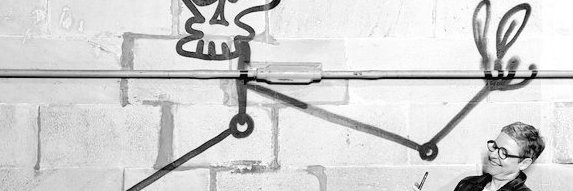
Ihr #Essay "Superdadaistische Kunstausstellung" Wirtschaft mit Armut. Kunst ist Klasse! " im Helmhaus vom 23.01 bis 23.03.2025" ist bei Literaturpodium Berlin im Band Psychologie, Literatur und Evolution erschienen @bimatter
#Atemlosigkeit#Schreiblosigkeit#Inhaltslosigkeit#Formlosigkeit
verloren in den Frequenzen des »Nichts« - NICHT WISSENS - Ursprung - Urgrund - Urfrequenz - Urton -
Urbild -
in der Schweiz habe ich die Erfahrung gemacht,
in Deutschland, Europa habe ich die Erfahrung gemacht
superdadaistisch - metadadaistisch - megadadaistisch
neodadaistisch - postdadaistisch - dadadaistisch
-ismus somit Superdadaismus lehnte die Bewegung ab, die Bewegung lehnt:e alle ismen grundsätzlich ab.
Dadaisten verschweigen nichts, sprechen Probleme an, werden dadurch un b
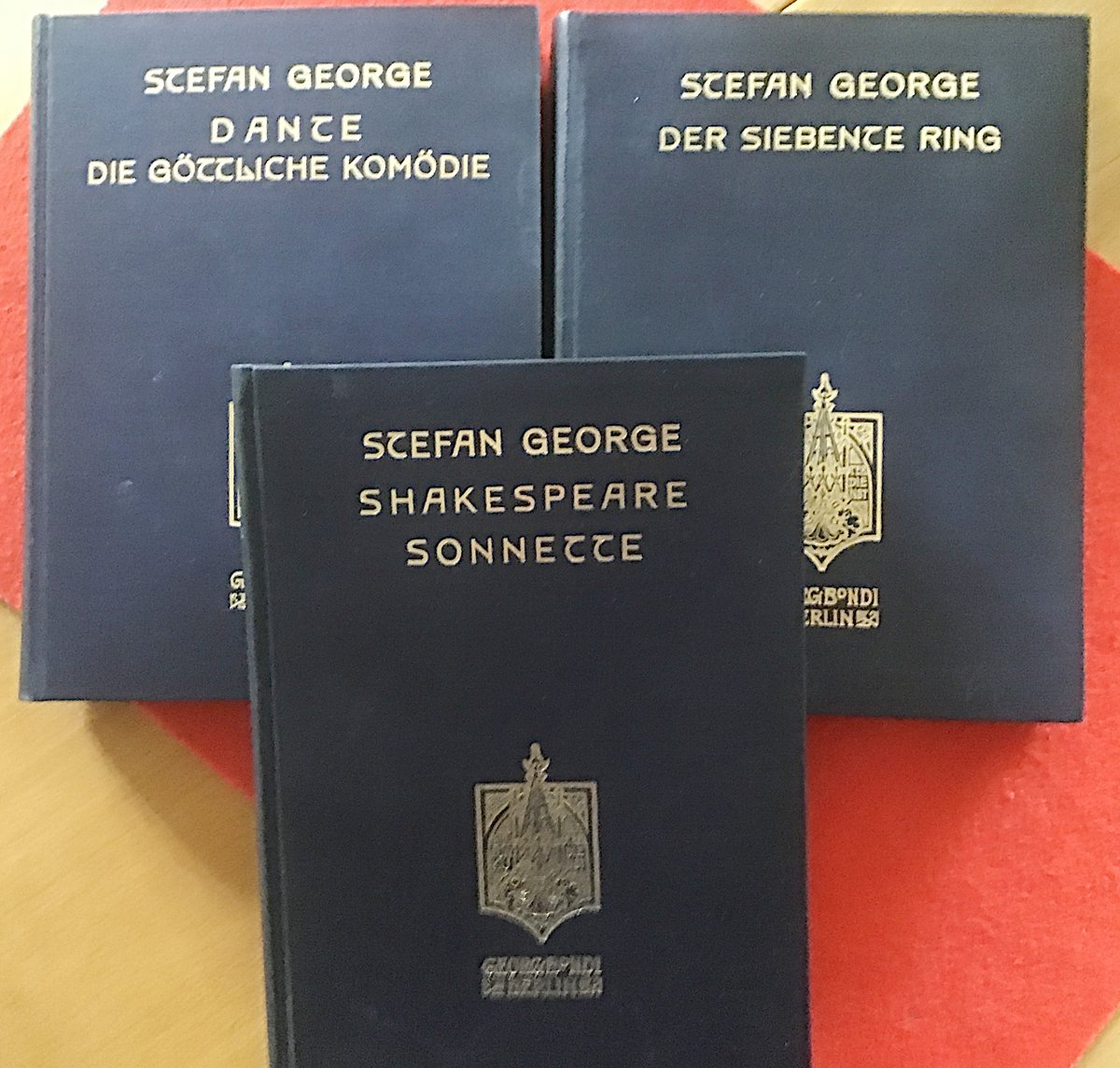
Aus dem Nachlass meines Vaters abzugeben:
20 Bände Literatur zu Stefan George
Hat jemand Interesse? Nur im Ganzen. Kein Versand. Abholung in Frankfurt. VB 50 Euro.
#StefanGeorge#Literatur
Illustration from the Herodias. Author: Stéphane Mallarmé; German translation: Stefan George; Illustration and book design: Melchior Lechter, Berlin, 1905. Collection: Württembergische Landesbibliothek, Stuttgart.
This page is a hand-crafted illustration from the German translation of Hérodiade, a work that French Symbolist poet Stéphane Mallarmé spent over 30 years on, and which remained unfinished even after his death. The story behind the artwork is extraordinary: printed by the Berlin publisher Blätter für die Kunst, only seven copies of the book were ever produced worldwide. What's more, each one was printed on imperial Japanese paper and personally hand-painted and decorated by Melchior Lechter.
The number seven is a deliberate symbol, since Lechter incorporated it throughout the design. In the illustration, seven intertwined serpent heads rise up, with an eight-pointed golden star shining around each one.
Author Stéphane Mallarmé worked on the Herodias text for over thirty years, but he never managed to finish the story. On his deathbed in 1898, he hastily wrote a note to his wife and daughter, asking them to burn all his unpublished drafts. His family refused his final wish and decided against throwing the documents into the fire. Thanks to their decision, the text was saved from destruction and, years later, translated into German by writer Stefan George.
Even though the work seems to focus on the biblical Herodias and her daughter Salome, Mallarmé tore these figures from history and gave them an entirely different meaning. In the poem, there's no severed head of John the Baptist; no dance; no bloody feast.
Here, the figure is a princess who refuses to be touched, shuns human warmth, looks at no one but her mirror, and worships her own virginal beauty. One of the poem's most striking sequences says:Actually, at the book's core, Mallarmé deliberately merged Herodias and her mother. That means this figure is both Salome (the young virgin) and Herodias (the cold, manipulative mother).The cold distance and aloofness typical of the mother fused with the daughter's virginity. Ultimately, the character Mallarmé created represents three things at once: virginity (purity), narcissism (worshipping one's own beauty), and solitude (being closed off to others).
"I love the horror of my virginity, and I want to live in the terror my hair awakens in me; at evening, withdrawing to my bed, like an untouched serpent, to feel upon my useless flesh the cold gleam of your pale light - you who are fading, you who burn with purity, white night composed of ice fragments and cruel snow!"
Herodias isn't a person; she's an abstraction. She's the symbol of untouchable beauty, and of art and poetry isolating themselves from the world. John the Baptist's gaze is the only external element trying to penetrate her virginity, and according to Mallarmé, Herodias wants him dead because of this transgression.
So, what does the seven- headed serpent symbolize here?
The seven-headed serpent/dragon is one of the oldest known symbols of invincible power in history. In Sumerian texts and Ugaritic mythology, this creature represents an eternal and indestructible force that no hero can easily defeat - a beast where cutting off one head just causes another to emerge. In other words, the seven heads are saying: this entity isn't just one thing; you can't suppress it, and you can't destroy it.
In Christian tradition, the seven-headed dragon in the Book of Revelation was identified with Satan. But the word "evil" shouldn't be interpreted too narrowly here. This dragon points to a power beyond human control that defies the cosmic and sacred order. In short, it's dangerous, but at the same time, fascinating.
This is exactly what Lechter did - he took these layers and applied them to the character of Herodias. Because that's precisely what Herodias is in the poem: a cold, virginal beauty, frozen in her own world, whom no one can touch. Even when John the Baptist tries to approach her, this *untouchability* results in death. Herodias doesn't attack like a dragon, but just like that seven-headed serpent, she's an untouchable entity that rejects anyone who draws near.
Stefan George ist, was moderne deutsche lyrik betrifft, ein maß. Alle kenner wissen das, aber es wird in den schulen nicht transportiert. Man muß wirklich nichts an ideologie unterschreiben, um das zu erkennen. Ich hatte glück, daß ich ihn in der oberstufe entdeckte. Heimlich. AL
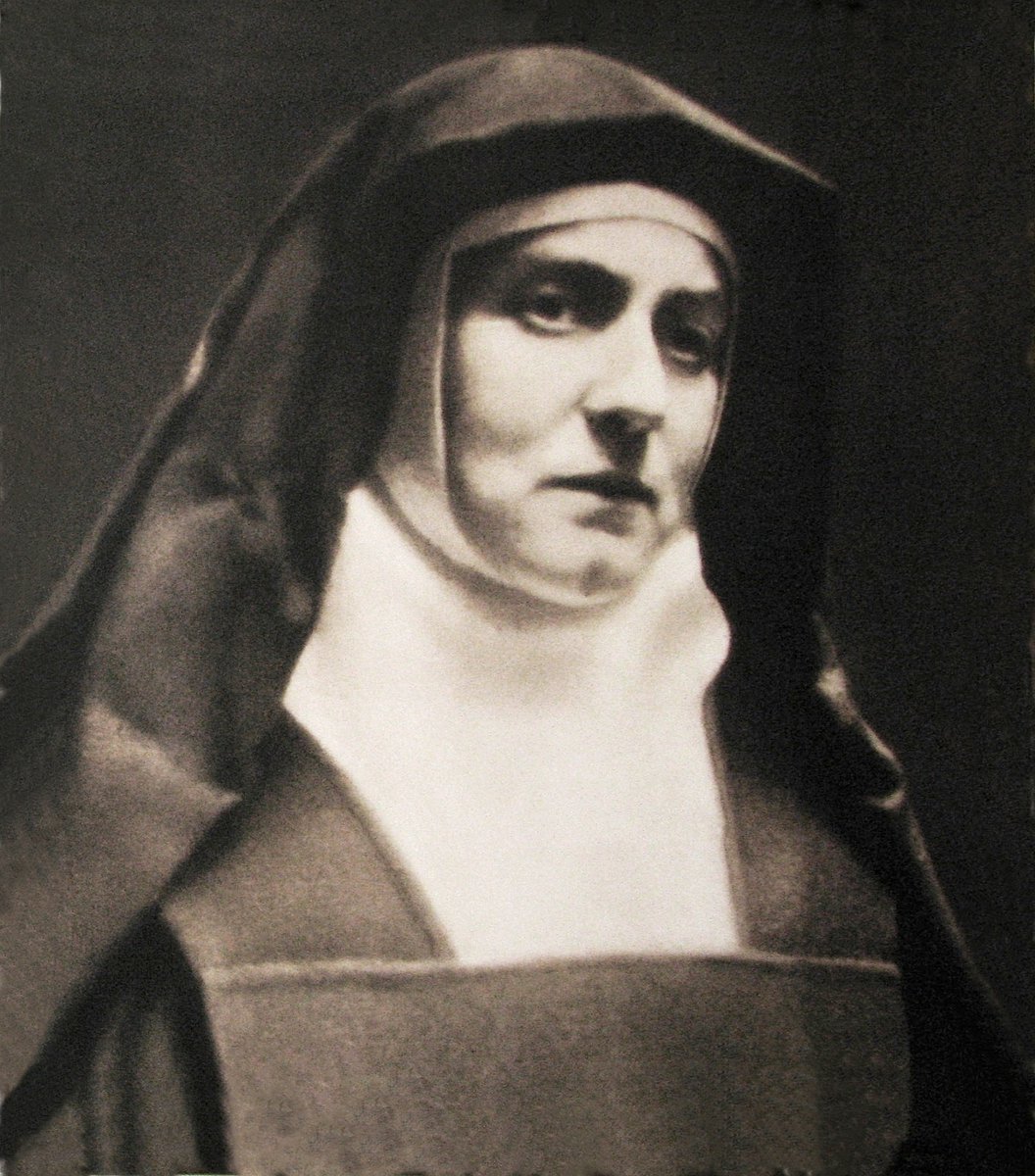
Edith Stein, Philosophin & zukünftige Karmelitin, wurde 1891 in Breslau, dem heutigen Wrocław in Polen, in eine deutsch-jüdische Familie geboren, #OTD.
Sie konvertierte zum Katholizismus & nahm den Ordensnamen Teresa Benedicta vom Kreuz an.
1942 wurde sie von den Deutschen Mac
Edith Stein, later named Teresa Benedicta, was born on this date October 12 in 1891. Photo in the public domain. #OTD
Born to an Orthodox Jewish family in Breslau (now Wrocław, Poland), Stein became an atheist, studied phenomenology under Edmund Husserl, earned a philosophy doctorate, and converted to Catholicism in 1922 after reading St. Teresa of Ávila.
She entered the Carmelite order as Teresa Benedicta of the Cross in 1933, was arrested by the Nazis for her Jewish ancestry, and was killed in the Auschwitz gas chamber in 1942. She was canonized a saint and martyr by the Catholic Church in 1998.
#OnThisDay 14 October 1768 Augustus Henry FitzRoy, 3rd Duke of Grafton, a member of the Whigs, took office as Prime Minister of Great Britain, succeeding William Pitt the Elder, 1st Earl of Chatham, a fellow Whig. #OTD#history#gb#greatbritain#ukpol#ukpolitics#politics