🚨 FREE GIVEAWAY ALERT! 🚨
Want to leverage AI for smarter trading? 📈
I'm giving away my Step-by-Step AI Chart Analysis Guide!
To enter:
1️⃣ Follow @binarypro
2️⃣ RT this post
3️⃣ Tag 3 trading buddies
Guide is Send Per DM in less than 24 hours! 🎁
#TradingAI#FinTech#Trading #CryptoTrading
#BTC
What are we really looking for at this stage for Bitcoin?
Weakening higher timeframe supports
Rallies have been getting progressively weaker from the ~$60,000 region (lower green)
The mid-2024 rally saw price go up +113% from here
But the February 2026 move generated only +38%
This current bounce is +4% thus far but it's very likely that the rebound from here will be even weaker
And this is how the ~$60,000 area will be completely lost as support over time
$BTC #Crypto #Bitcoin
What is the difference among Hedging, Trading, and Investing: Explained with Stocks, Futures, and Options
Hedging
Hedging is a strategy to reduce risk by taking an opposite position in a related asset. Think of it as financial insurance! For instance, if you own stocks in a company but fear a market downturn, you might buy a put option (the right to sell at a set price) on the same stock. This way, if the stock price falls, your losses are offset by gains from the option.
Trading
Trading is all about short-term buying and selling to profit from market fluctuations. Unlike hedging, it seeks gains rather than risk reduction. For example, a trader might use options to speculate on a stock's price increase, buying call options (the right to buy at a set price) if they expect a rise. Futures contracts are also popular for traders aiming to profit from price movements in commodities like gold or indices like the S&P 500.
Investing
Investing focuses on long-term growth and wealth building. This involves buying assets like stocks and holding them for years, betting on the company’s sustained success. For example, you might invest in Tesla stocks, believing its innovations will drive future profits. Options can also be used to generate income, like selling covered calls on stocks you own.
🔑 Key Differences:
Hedging: Protects against losses (e.g., buying a put option on your stocks).
Trading: Profits from short-term market moves (e.g., day trading futures or options).
Investing: Builds wealth over time (e.g., buying stocks for long-term growth).
Follow for more insights on trading, hedging, and investing!
https://t.co/L2gVoCO51X
#hedging #trading #investing #options #stocks #crypto #assets #binarytrading
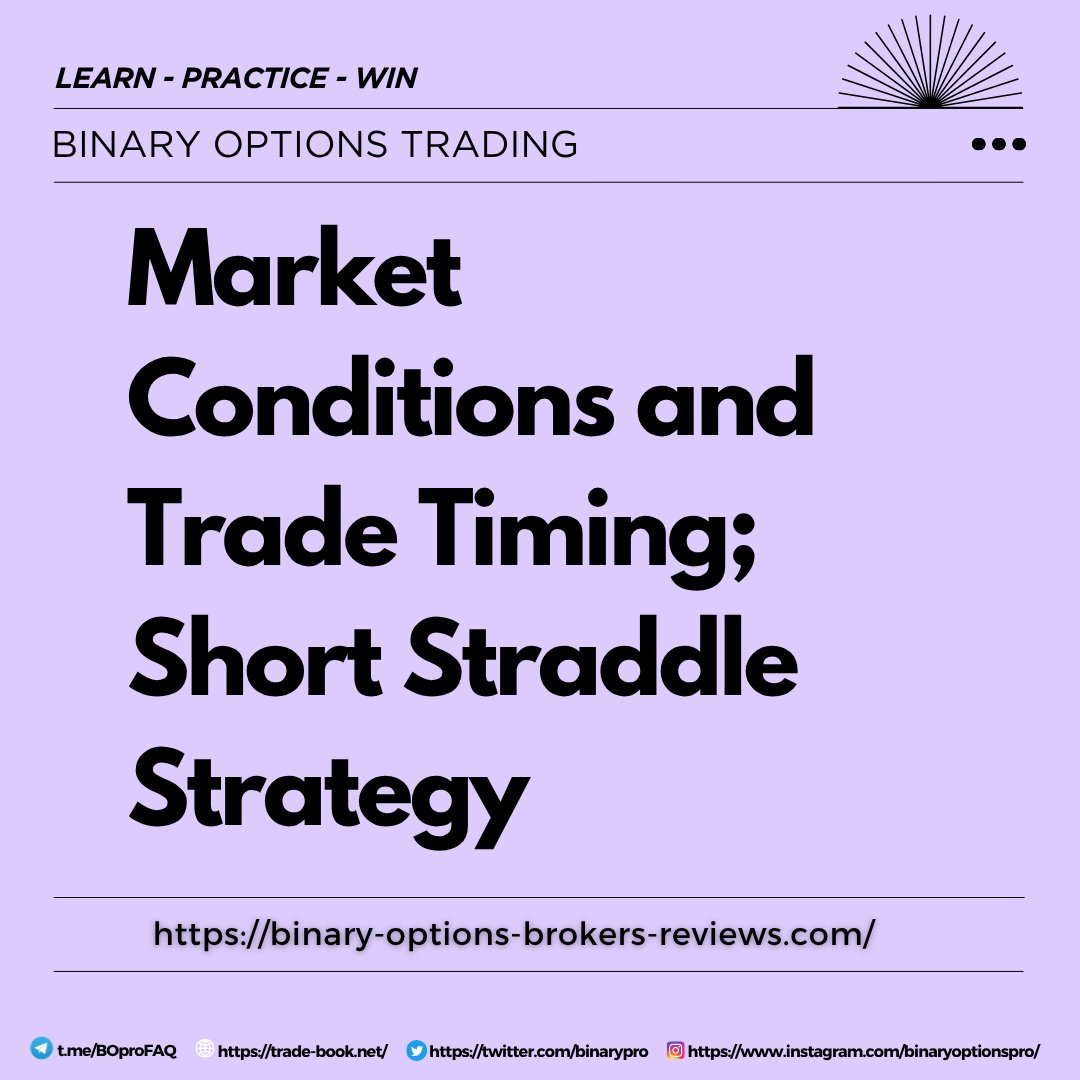
Market conditions and timing are critical factors when using the short straddle strategy because its performance depends heavily on stability and predictable price movement. This strategy is designed to benefit when the underlying asset remains within a narrow range and does not experience sudden volatility spikes.
The most favorable market condition for a short straddle is low volatility with a sideways trend. In such environments, option premiums gradually decline due to time decay, allowing the seller to potentially profit. However, even in calm markets, unexpected news events or economic data releases can quickly change price behavior and increase risk.
Trade timing also plays an important role in strategy effectiveness. Many traders prefer entering positions during periods when implied volatility is relatively high, as this allows them to collect higher premiums. As time progresses and expiration approaches, theta decay accelerates, which can further support the position if price remains stable.
Avoiding major events such as earnings announcements, policy decisions, or high-impact economic reports is often considered essential when deploying short straddles. These events can trigger sharp movements that may lead to significant losses, even if the position was initially well-structured.
Successful execution depends on combining favorable market conditions with disciplined timing. Without these factors aligned, the strategy can quickly shift from income-generating to high-risk exposure.
#ShortStraddle #OptionsTrading #MarketConditions #TradingEducation #RiskManagement
Theta decay plays a central role in the short straddle strategy because it represents the gradual loss of option value as time passes. In a short straddle, a trader sells both a call and a put, and profits when the total premium of these options decreases over time.
As expiration approaches, theta decay accelerates, especially in the final weeks. This works in favor of the seller because both options lose value each day, assuming the underlying price stays within a stable range. The ideal scenario for a short straddle is low volatility combined with steady time decay.
However, theta decay does not eliminate risk. If the underlying asset moves sharply in either direction, the loss from price movement can outweigh the benefit of time decay. This is why managing volatility exposure is just as important as understanding theta itself.
Traders often monitor theta alongside implied volatility to evaluate whether the premium received justifies the risk taken. When used carefully, theta decay can become a consistent source of edge in range-bound markets.
#ThetaDecay #OptionsTrading #TradingEducation #StockMarket #OptionsStrategy
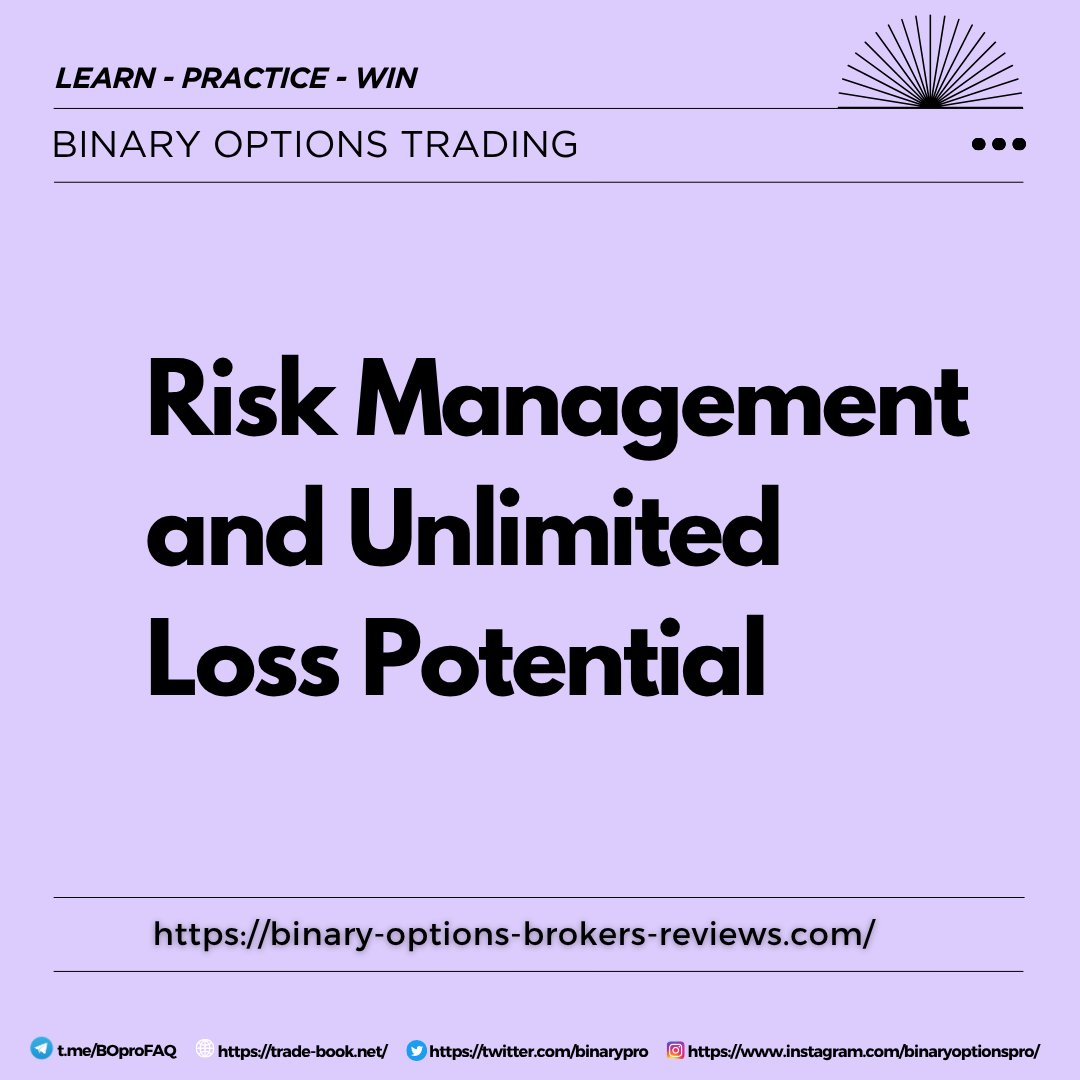
Risk management is one of the most critical aspects of trading because it determines long-term survival in the market. Even a strong strategy can fail if risk is not properly controlled, making protection of capital the first priority for every trader.
In certain trading strategies, especially in options like short calls or short straddles, there is a concept of unlimited loss potential. This means that if the market moves sharply against the position, losses can increase significantly without a fixed upper limit. Understanding this risk is essential before entering such trades.
Effective risk management involves defining position size, setting stop-loss levels where applicable, and ensuring that no single trade can damage the overall portfolio. Traders who ignore these principles often face large drawdowns even if they have a good win rate.
By respecting risk first and profit second, traders can stay consistent in volatile markets and avoid emotional decision-making during unexpected market movements.
Advanced risk and money management: https://t.co/IsGp5L08Dg
#RiskManagement #TradingEducation #OptionsTrading #StockMarket #TradingMindset
Implied volatility is a key concept in options trading that reflects the market’s expectation of how much an asset’s price may move in the future. It does not indicate direction but rather the expected level of uncertainty or movement in the market.
When implied volatility increases, option premiums tend to rise because traders expect larger price swings. When it decreases, option prices generally become cheaper due to lower expected movement. This makes volatility a major factor in determining option pricing and strategy selection.
Traders often use implied volatility to evaluate whether options are overpriced or underpriced and to decide which strategies fit current market conditions. High volatility environments may support premium-selling strategies, while low volatility conditions may favor premium buying approaches.
By combining implied volatility analysis with broader market research, traders can improve timing, manage risk more effectively, and make more informed trading decisions.
Volatility Index in Trading Strategy: https://t.co/gVpq7OUMcc
#ImpliedVolatility #OptionsTrading #TradingEducation #StockMarket #TradingStrategies
A short straddle is an options trading strategy where a trader sells both a call option and a put option with the same strike price and expiration date. The goal is to profit when the underlying asset remains relatively stable and experiences minimal price movement before expiration.
This strategy benefits from time decay and decreasing volatility, making it attractive in range-bound markets. However, significant price swings in either direction can lead to substantial losses, so risk management is essential before implementing a short straddle.
Before using this strategy, traders should understand market conditions, volatility levels, and potential risks. Successful options trading requires careful planning, disciplined execution, and a solid understanding of how options behave under different market scenarios.
#ShortStraddle #OptionsTrading #TradingStrategy #StockMarket #OptionsStrategy
When analyzing price action, the strength filter in candlestick patterns helps traders gauge market sentiment by evaluating the “rejection” levels seen in candle wicks. By understanding strong rejection, good rejection, and weak rejection, traders can make informed decisions about entering or exiting trades. Here’s what each type means:
Strong Rejection
A strong rejection occurs when a candlestick shows a long wick but a small body, with the closing price near the opposite side of the wick. This signals that buyers (or sellers) pushed the price forcefully away from a level, but it was pulled back. A strong rejection at a key level like support or resistance suggests a potential reversal and is a high-probability signal, especially in major trends.
Good Rejection
Good rejection shows a clear effort by the market to push past a price level but doesn’t fully reflect the strength seen in a strong rejection. It has a moderately long wick with a more significant body relative to the wick size, indicating some balance between buyers and sellers. Good rejections are ideal for spotting a possible trend continuation or pullback but may need confirmation from other technical indicators.
Weak Rejection
In weak rejection, the candlestick has a shorter wick and a larger body, indicating minimal pushback from the market. This shows that buyers and sellers are not fully rejecting the level, and there may be insufficient momentum for a reversal. Weak rejections are often less reliable and may not provide a strong trading signal on their own, especially when appearing in low-volume conditions.
💡 Using the Strength Filter
Incorporate the strength filter into your trading to distinguish between true reversals and market noise. Keep an eye on key price levels, volume, and other technical indicators to confirm these signals. Learning to spot rejection types can sharpen your entries and exits and improve your overall strategy.
➡️ Want more insights on candlestick patterns? Follow us at https://t.co/37vUquNoRN
#ForexTrading #CandlestickPatterns #PriceAction #TradingTips #Rejection