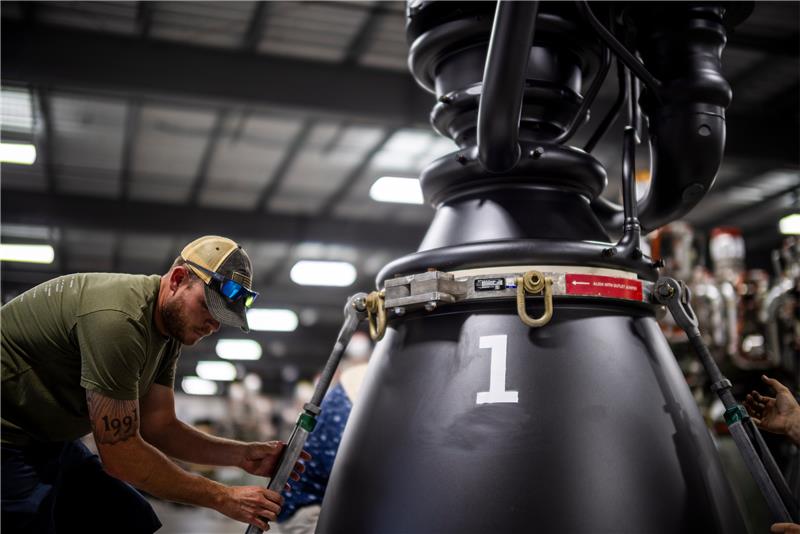
A retired NASA engineer who had worked on the Space Shuttle program for 25 years was hired by SpaceX at age 62. He described the first week as the most disorienting experience of his professional life.
At NASA, a design change required 3 meetings, 2 committees, a review board, and 6 to 18 months of documentation. At SpaceX, his new supervisor said "if it works, build it. If it doesn't, change it by Friday."
He sat at his desk after the first day and called his wife. He told her he felt like a man who had been swimming with ankle weights for 25 years and someone just cut them off. He could move. He could decide. He could build something in the morning and test it in the afternoon. The constraint that he had accepted as the nature of aerospace engineering turned out to be the nature of bureaucracy.
Within 6 months he had contributed to more design iterations than he had completed in his last 5 years at NASA. Not because he was working harder. Because the time between having an idea and testing the idea collapsed from months to hours. The same brain. The same knowledge. A different operating system.
He described a specific moment where he proposed a modification to a Raptor engine component. At NASA, the proposal would have entered a queue. At SpaceX, the modification was machined by the end of the day and tested by the following morning. He watched his idea become a physical object in 18 hours. At NASA, 18 hours would not have been enough to schedule the first meeting to discuss whether to schedule a meeting.
He told an interviewer: "I didn't get smarter when I went to SpaceX. I got faster. The intelligence was always there. The system was in the way."
The difference between SpaceX and NASA is not talent. NASA has extraordinary talent. The difference is the time between a thought and a test. SpaceX compresses it. NASA elongates it. The same engineer produces 10x more at SpaceX than at NASA because the bottleneck was never the engineer. It was the meetings about the meetings about the work.
Apple is leading the local AI revolution, and seriously undercutting NVIDIA along the way.
Mac Studio M5 Ultra
- 36-core CPU / 80-core GPU / 1TB SSD
- 256GB unified memory
- 1.2 TB/s memory bandwidth
- $10,799 — complete computer
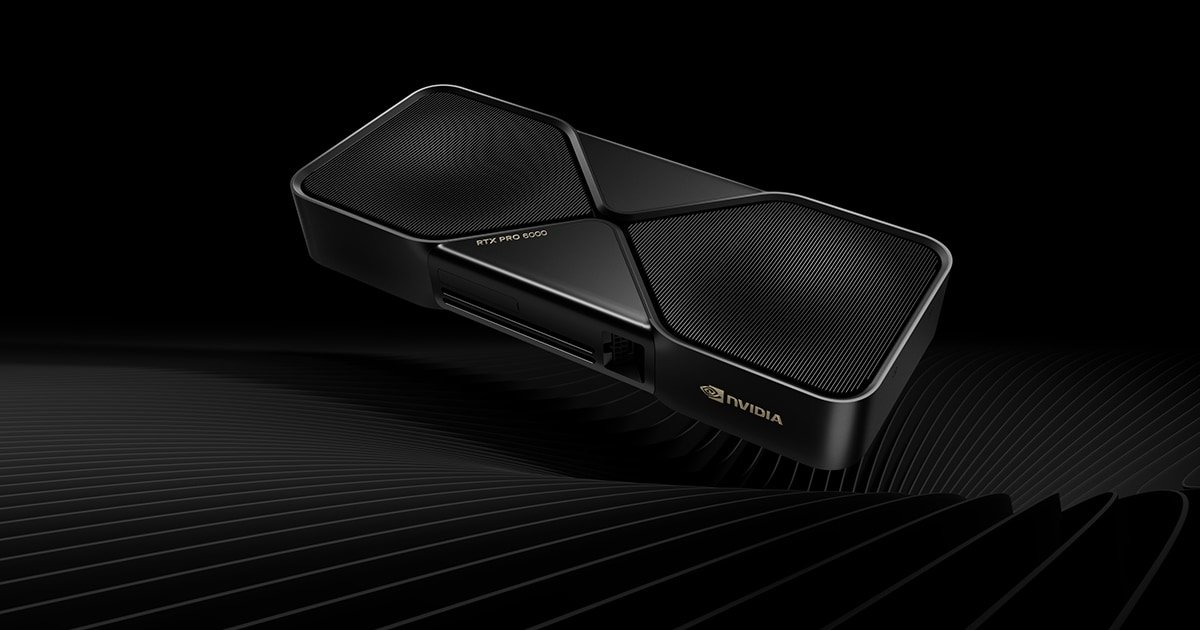
RTX PRO 6000 Blackwell
- 96GB GDDR7
- 1.792 TB/s memory bandwidth
- $16,000 — GPU only
2.7x the memory for $5,200 less. And the $16k doesn't include a CPU, motherboard, RAM, storage, case, or a PSU big enough to feed 600W.
Nothing else on the market puts 256GB at 1.2 TB/s in front of a single user at that price.
The people getting great UI results with AI aren’t using a secret model or a magic prompt. They know what a great interface looks like, and they know how to steer AI towards it.
Work that used to take a week takes a day, and the quality bar doesn’t drop, it goes up, because you spend your time on the things that matter.
At the end of the day, people that use AI best are the ones that were excellent before LLMs as well. The ones that got the fundamentals right, went that extra mile, and cared about the thing they were working on.
Agentic AI adoption is on fire at @Uber, and it's changing the way we build, not just in engineering, but across the entire company.
Today, 99% of our engineers use AI tools. More than 70% of pull requests are attributed to local or cloud agents. And our engineers have built 2,500+ agent skills across the software development lifecycle.
Those numbers are exciting, but they led us to a much bigger question:
How do we bring agentic AI beyond engineering?
Finance. Legal. Operations. Marketing. Customer Support. HR. Procurement.
These functions run on complex workflows that are often manual, highly nuanced, and spread across dozens of systems. You can't automate them effectively by looking at process diagrams or documentation. You have to understand how the work actually gets done.
So we created something called Agentic Pods.
The idea is simple.
We handpicked ~30 of our most AI-proficient engineers (people with deep knowledge of Uber's systems) and paired each of them with a domain expert from a business function.
Then we gave every pod just two weeks.
• Days 1 – 2: Shadow the expert. Observe every step. Document workflows. Ask questions. Build intuition.
• Day 3: Prioritize opportunities based on scale, repetition, business impact, and data availability.
• Days 4 – 5: Build a working agent alongside the person doing the job.
• Days 6 – 9: Validate with several others performing the same work. Does it generalize? Does it actually make their job better?
• Day 10: Ship.
In just the past two months, we've run 16 Agentic Pods across 16 different business functions.
• Capital allocation across 150 cities: 15 hours → 30 minutes.
• Financial pacing reports: 2 days → 10 minutes.
• Marketing web quality assurance: 2 weeks → 50 minutes.
• Support workflow creation: 9,000 manual workflows → self-service automation.
The productivity gains are impressive, but what surprised us most wasn't the speed.
• It was how quickly engineers embedded in unfamiliar domains uncovered opportunities that had been hiding in plain sight.
• The biggest wins rarely come from automating one task. They come from rethinking an entire workflow. Once you redesign the workflow around AI, you often eliminate handoffs, remove unnecessary approvals, replace legacy tooling, reduce vendor spend, and dramatically accelerate decision-making.
• The workflow becomes the unit of automation - not the individual task.
• The most impactful agent skills cut across teams, orgs, functions, tools, and systems.
The biggest lesson? The best AI opportunities are rarely visible from the outside.
You discover them by sitting next to the people doing the work, understanding every friction point, and building with them, not for them.
We're now forming a dedicated team to scale this further and go deeper. They'll deeply understand the work, redesign it from the ground up, and use AI to fundamentally change how the business operates.
It's exciting times!
NEW: Google is now paying Elon $920M a month for compute.
SpaceX and xAI merged in February. The combined entity has 110,000 Nvidia GPUs that Google needed badly enough to sign a $30 billion deal through 2029.
Last month, Anthropic did the same. $1.25 billion a month to SpaceX for compute.
That puts SpaceX at over $2 billion a month from just two companies, roughly $26 billion a year.
Now watch what happened to Nvidia.
In 2022, Nvidia's annual revenue was $27B. By 2025, data center revenue alone hit $115B, in roughly two years, because the world needed GPU compute faster than anyone could build new infrastructure.
SpaceX is in that exact position now. AI labs can't build clusters fast enough, and SpaceX already has them. Google and Anthropic are paying the premium because they have no better option.
These two deals are just the opening. Every AI lab and enterprise running inference at scale will hit the same compute wall. More deals are coming in the next 12 months.
SpaceX is already at $26B a year in contracted compute revenue. Nvidia's inflection took two years. The next one is already here.
My dear front-end developers (and anyone who’s interested in the future of interfaces):
I have crawled through depths of hell to bring you, for the foreseeable years, one of the more important foundational pieces of UI engineering (if not in implementation then certainly at least in concept):
Fast, accurate and comprehensive userland text measurement algorithm in pure TypeScript, usable for laying out entire web pages without CSS, bypassing DOM measurements and reflow
WebMCP is available for early preview → https://t.co/bZMcANfg37
WebMCP aims to provide a standard way for exposing structured tools, ensuring AI agents can perform actions on your side with increased speed, reliability, and precision.
I'm Boris and I created Claude Code. Lots of people have asked how I use Claude Code, so I wanted to show off my setup a bit.
My setup might be surprisingly vanilla! Claude Code works great out of the box, so I personally don't customize it much. There is no one correct way to use Claude Code: we intentionally build it in a way that you can use it, customize it, and hack it however you like. Each person on the Claude Code team uses it very differently.
So, here goes.
Today, SpaceX shared a new picture (on left) of its next-generation Raptor 3 rocket engine, the most advanced rocket engine ever made.
• Almost 2x the thrust of Raptor 1
• Costs 4x less
• Much lighter. Will save 2,425 lbs of weight per engine, or 94,575 lbs (42.9 metric tons) per launch
• No heat shield
• Optimized for manufacturability
It will first fly aboard Starship Version 3, with the first launch currently targeted for Q1 2026.
(New photo on left from SpaceX's new quarterly impact report)
Elon Musk: “Anyone who wants to make more than they take has my respect”
Elon is asked for his advice for entrepreneurs, to which he responds:
“I’m a big fan of anyone who wants to build. Anyone who wants to make more than they take has my respect. That’s the main thing you should aim for: to make more than you take and be a net contributor to society.”
He compares it to the pursuit of happiness:
“If you want to create something valuable financially, you don’t pursue that. It’s best to pursue providing useful products and services. If you do that, money will come as a natural consequence of that rather than pursuing money directly. You can’t pursue happiness directly. You pursue things that lead to happiness — fulfilling work, study, friends, loved ones.”
Elon continues:
“It sounds very obvious, but generally if somebody is trying to make a company work, they should expect to grind super hard and accept that there’s a meaningful chance of failure. Then just focus on having the output be worth more than the input. Are you a value creator? That’s what really matters: making more than you take.”
Video source: @nikhilkamathcio (2025)