Despite mounting global evidence, which is just commonsensical, we are ruining our city by proposing more elevated roads, flyovers, Tunnel, roads, and more such car incentivising infrastructure.
The only objective of spending every public rupee on infrastructure in our cities should be to reduce private vehicles, increase public transport adoption and consequently increase the overall quality of life in our cities.
@krishnabgowda@DKShivakumar
Beyond Politics.
'As long as examinations reward memory, schools will teach memory not learning.'
10 reforms jotted are of utmost importance which shall be considered beyong politics.
Amidst Sonams deteriorating health, I mustered up courage to write this Op-ed for #thehindu as I want the whole nation, @dpradhanbjp, and @narendramodi to wake up to the crying need of a renewal and renaissance in #IndianEducationSystem. With thanks to the team at the Hindu!!
https://t.co/PV1skIBSxG
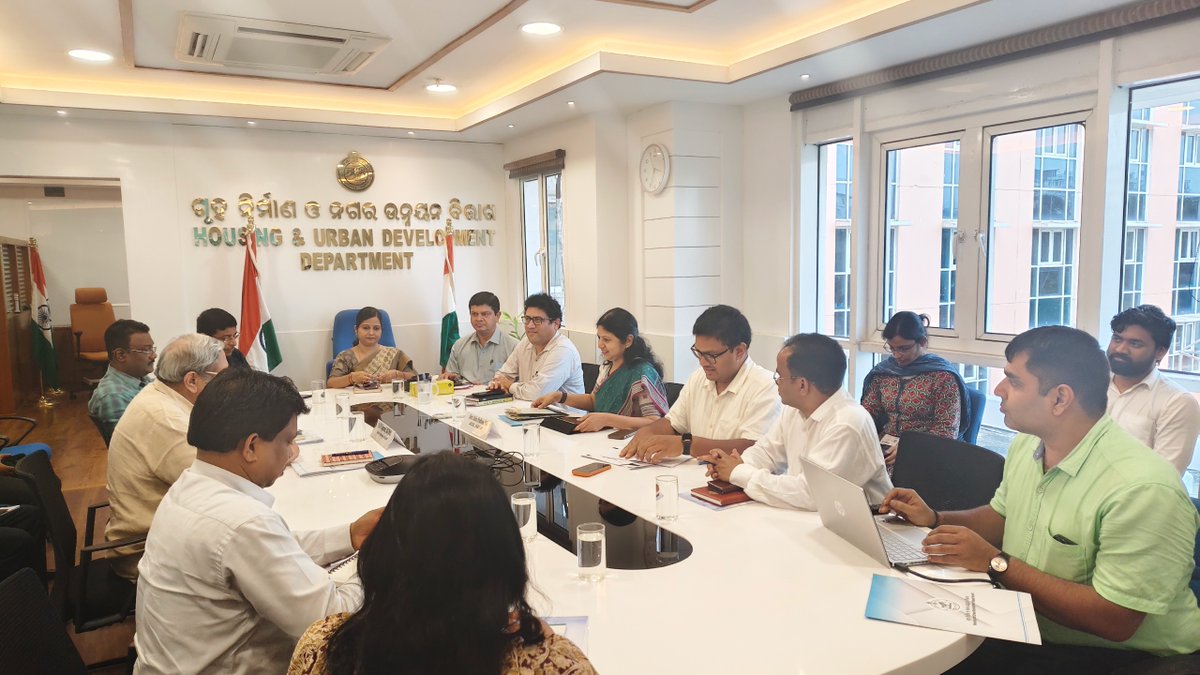
Inter-departmental coordination meeting on Ease of Doing Business (EoDB) and the Business Reforms Action Plan (BRAP) held today under the chairmanship of the Additional Chief Secretary, with participation from IGR Odisha, the Directorate of Municipal Administration, and IPICOL.
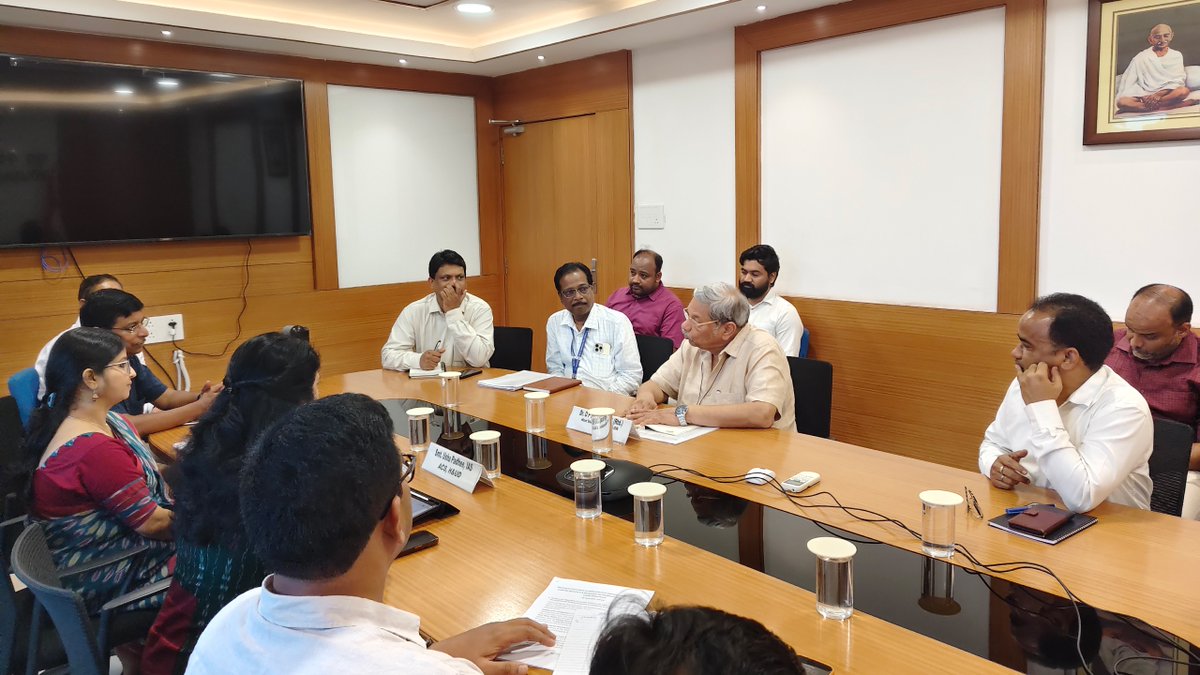
An insightful interaction with Shri O. P. Agarwal, Hon’ble Member, Committee on Administrative and Governance Reforms, along with ACS Smt. @ushapadhee1996 and senior officers, on strengthening Odisha’s urban transformation through integrated regional governance and planning.
#ConnectedCities
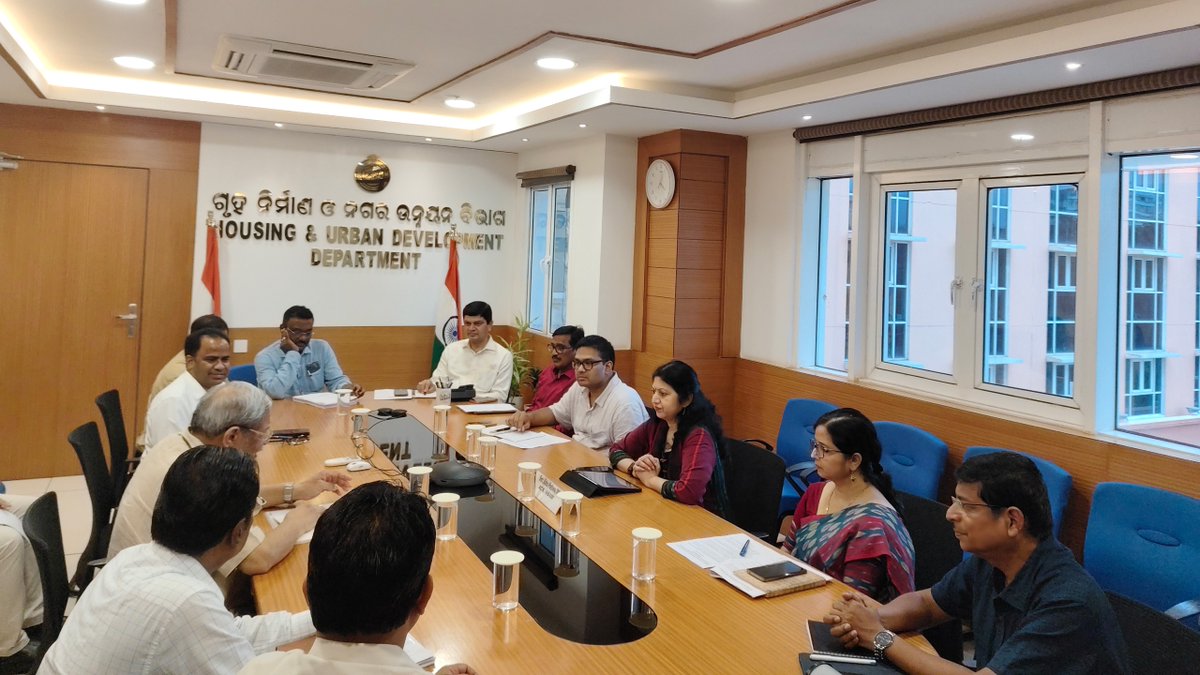
A consultation on the draft Odisha Transit-Oriented Development Policy was held under the chairpersonship of ACS Smt. @ushapadhee1996 to strengthen integrated urban planning and sustainable mobility across the State.
The Copenhagen kids traffic park is one of the loveliest things I have ever seen.
It’s where kids learn to cycle with mini-street furniture - mini bike lanes, signalised junctions, roundabouts, crossings, mini bus stops everything.
Fiscal Health of States of India
Now you know the 'turtle' in the race.
The so called 'poorest state' of India is leading the role - ODISHA 🔥
Link to the NITI Aayog Report : https://t.co/v6fPrvg3VY
#odisha
A forward-looking engagement with Shri O. P. Agarwal, Hon’ble Member, Committee on Administrative and Governance Reforms, explored integrated planning—from legacy frameworks to future-ready visions.
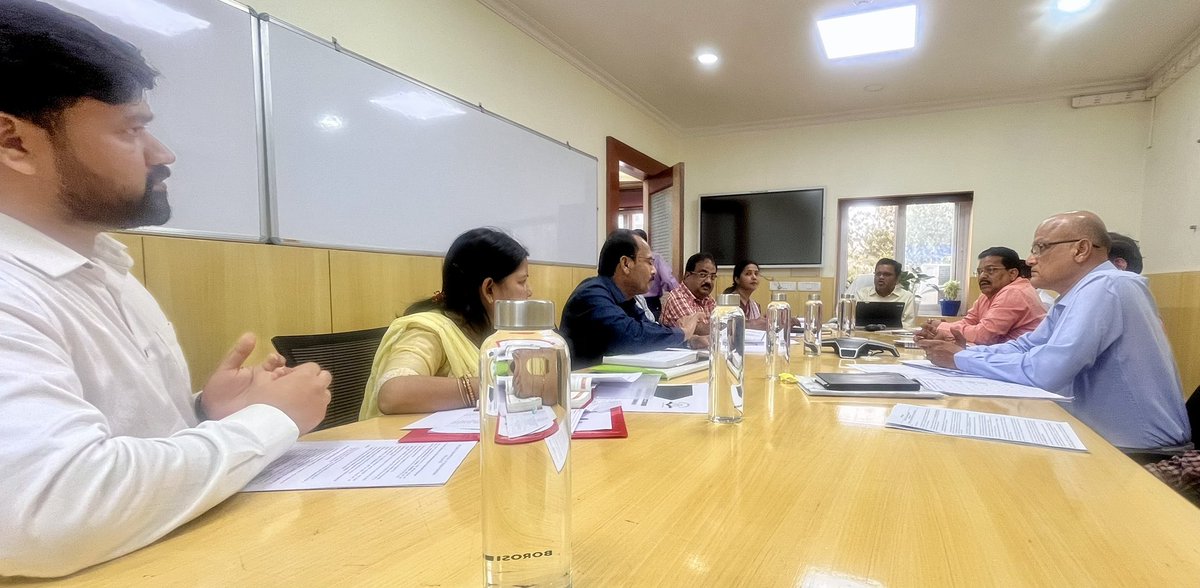
Dr. N. Thirumala Naik, Commissioner-cum-Secretary, chaired a review meeting with Directors and senior officers of the Department to assess the infrastructural status of Academic Buildings and Hostels under Odisha Adarsha Vidyalaya Sangathan (OAVS) and Buildings of DIETs under TE&SCERT.
Chief Engineers of Works Department and Rural Development Department, and officers from Housing & Urban Development Department also participated in the meeting. The Commissioner-cum-Secretary emphasized the importance of timely completion of all ongoing infrastructure works to strengthen educational facilities across the state.
Redesigning city streets to support human behavior isn't rocket science. But it does take a willingness to challenge the status quo assumptions about public space.
📹 Transport Infrastructure Ireland
Did you know Seoul buried a vibrant stream under a massive elevated highway in the 1960s to symbolize "progress"?
In 2003, they tore it down, restoring Cheonggyecheon, now a lush 6km urban park drawing 12 million visitors yearly.
India 🇮🇳 gets just ~1 crore foreign tourists a year.
That’s less than Bangkok (3.2 Crore) alone gets.
And this, in a country with:
🕌 40 UNESCO sites
🏔️ The Himalayas
🌴 Goa, Kerala and Andaman beaches
🍛 The best food on Earth
🧘♂️ Yoga, Ayurveda, Rich Culture, so many Festivals
We have everything, except tourists.
Now imagine if India touched 10 crore+ foreign visitors every year
Here’s what happens 👇
💰 Billions in forex inflow
🏨 Lakhs of new jobs in hotels, taxis, crafts, food
🏡 More income in small towns & villages
🚆 Better infrastructure across tourist circuits
🌍 And a stronger global image for India
Tourism is soft power + real economy combined.
So what’s stopping us?
❌ Dirty public spaces
❌ Aggressive touting & scams
❌ Patchy infrastructure
❌ Poor marketing abroad
❌ Complicated visitor experience
We don’t need to reinvent the Taj Mahal.
We just need to make India cleaner, simpler, and kinder to our guests.
Solutions are simple:
✅ Keep top 50 tourist zones spotless.
✅ Train taxi drivers, guides & shopkeepers.
✅ Make e-visa truly seamless.
✅ Launch an “India Smiles Back” global campaign.
✅ Turn hospitality into national pride again.
If we fix these, India won’t just have 10 crore foreign visitors,
We’ll have 100 crore stories told around the world. 🌏✨
Because the world already loves India.
We just need to make visiting it a joy, not a challenge. 💛
Thank you so much for taking the lead and raising the right issue in the highest forum of the country. It's very crucial that we should have a Urban and Regional Planning cadre at the central level to bring a reform in the urban planning capacity through a dedicated expertise.
Over the last several days, I have been consistently attempting to raise, both during Zero Hour and under Rule 377, the critical issue of the need to establish a dedicated Urban Transport Management Cadre in our cities - to scientifically plan and implement urban mobility and traffic management strategies.
India is urbanising at an unprecedented pace, and this trend will only accelerate in the coming decades. Our cities are already buckling under the weight of unplanned congestion, gridlock, and rising vehicular pressure. Four Indian cities now rank among the top ten globally for the worst traffic conditions. Yet, urban transport planning in India remains ad hoc, unscientific, and fragmented.
Most Indian municipal bodies lack trained, dedicated professionals for urban mobility. Traffic planning is often left to local municipal officials, traffic police, or local politicians - none of whom have the domain expertise required for long-term, integrated, and technology-driven transport solutions. In contrast, most developed countries have institutionalised urban transport management systems with professional planners, engineers, and data specialists who design and implement traffic flow systems, public mobility infrastructure, and urban transport architecture.
If we are to ensure that our cities remain livable, efficient, and globally competitive, India must urgently institutionalise a professional and technically qualified Urban Mobility Cadre, one that operates across city governments and municipal corporations with autonomy, capacity, and accountability.
Since I could not raise this matter in the House due to continued disruptions by the Opposition, I have today formally submitted this issue to the Secretariat for the parliamentary record.
When Parliament is not allowed to function, it is ultimately the citizen who pays the price - their voice is silenced on matters of urgent and long-term national importance.
Chaotic road are the result of technical failure and we need more technical experts cadre than managerial experts cadre.
Why do Indian cities need a dedicated urban transport cadre? https://t.co/x74J7JP4WO
Not all accidents are faults of driver. Infact the reason for most of the accidents in India are bad road engineering and design. We must a road design regulations for every city.
Countries in Europe don't sell tickets to see their old monuments. They sell the experience. It's the whole urban fabric that we should focus to elevate our tourism and generate money out of it.
We need to understand tourism in its true sense. Unfortunately we think tourism is monumental and not whole experience. The ugly architecture and soulless buildings in our historical neighborhoods standing in alienation is not meaningful. Rightly said.
https://t.co/SSEchzMmIa
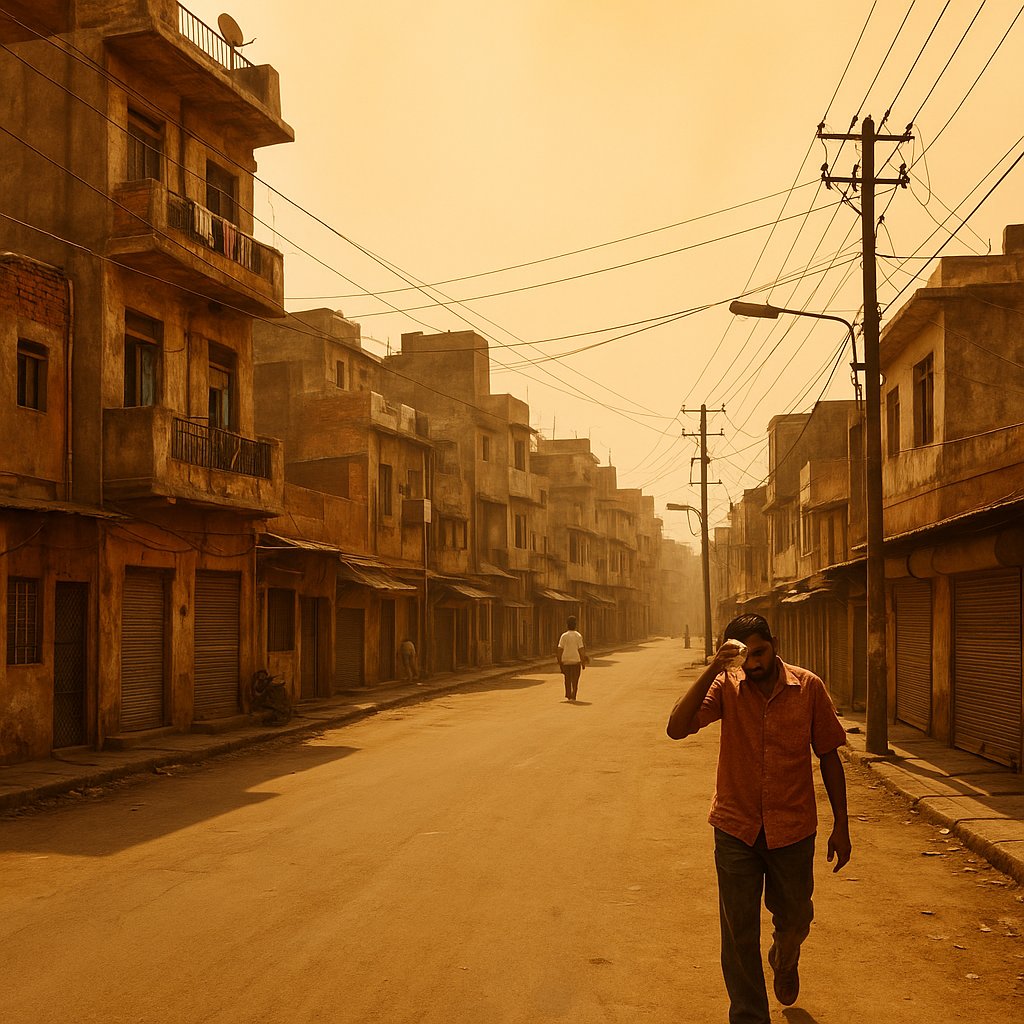
🧵Why Indian cities are Concrete Furnaces - and how better Aesthetics can save lives.
People go abroad citing 'quality of life' but resist focus on improving India's Aesthetics.
Cities are +6°C hotter due to poor Aesthetics.
Extra heat is from our own construction choices.
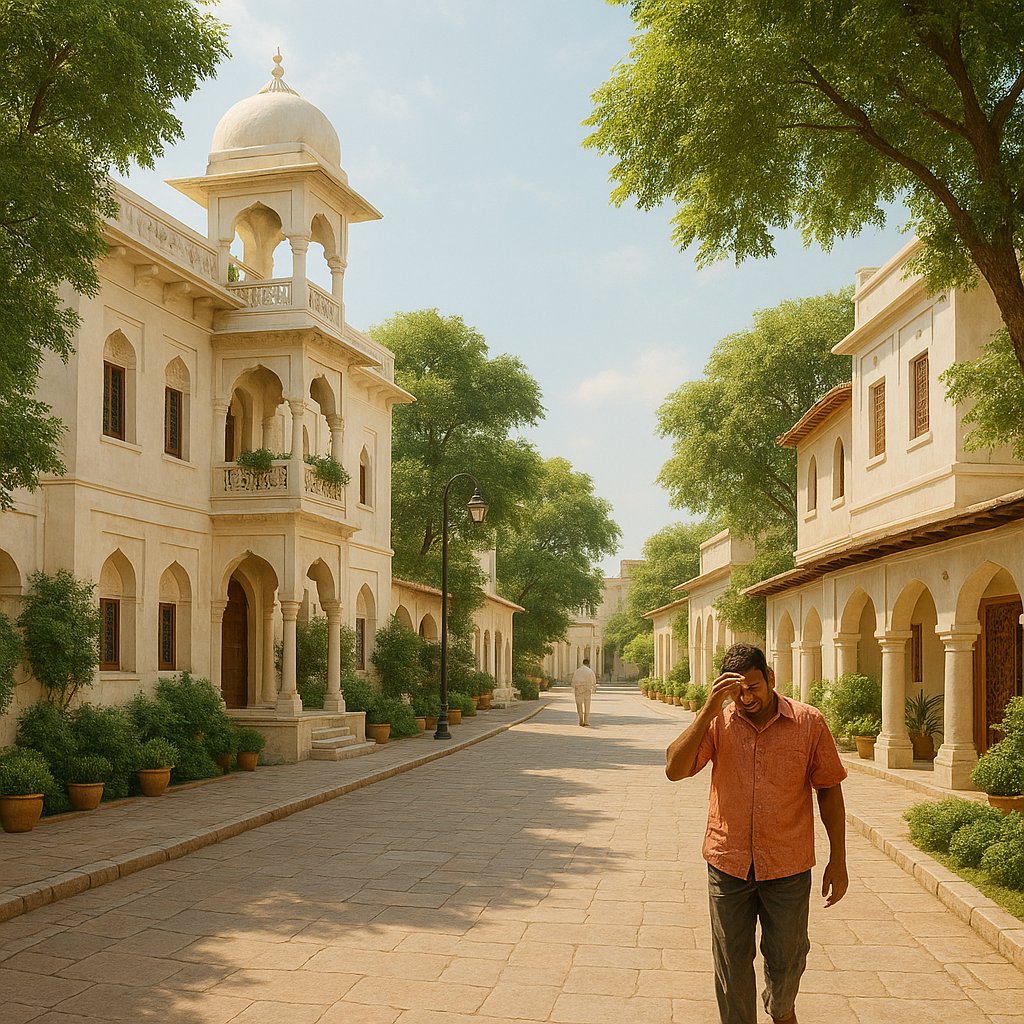
Odisha - Bhubaneswar ranks third in years of saving needed to buy a house. In state where average household income is not very impressive, we should be worried about the long term societal consequences of high housing price.
Even for the richest 5% of the population, it takes many decades of savings to buy a house.
For example, in Chennai, Rs.10.2 lakhs of household income would put you in top 5%. Even for them, it needs 37 years of savings.
Housing, especially in urban areas are becoming unaffordable for masses.