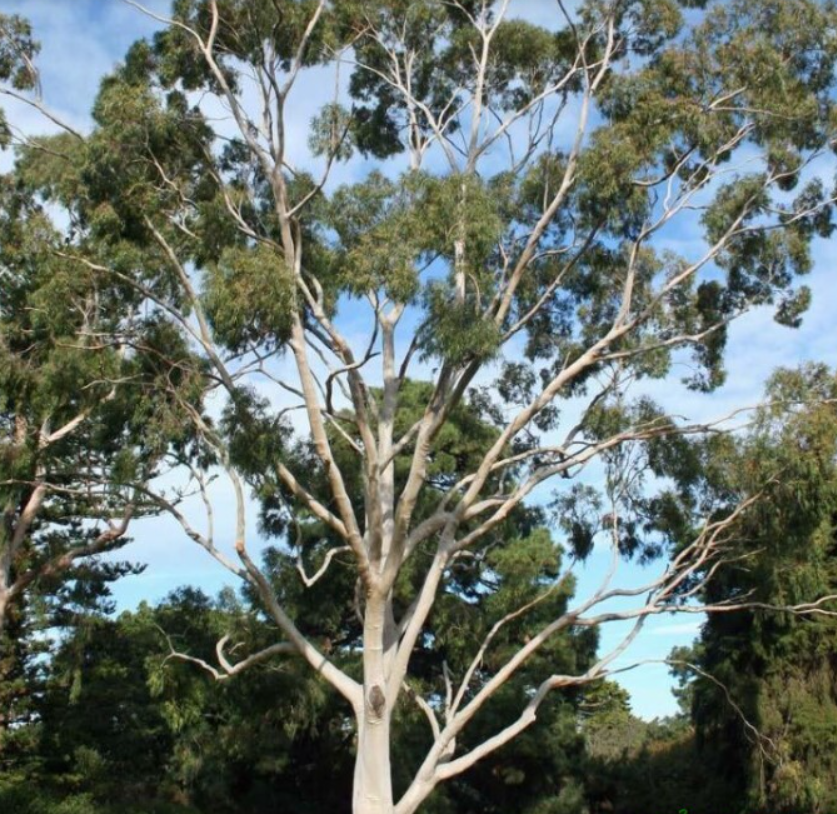
Eucalyptus tree
Eucalyptus is a tree of the diamond peach family. A woody plant that contains a lot of essential oils and has a clustered floral texture of 4-5 single flowers. The leaves are green and grow alternately. The diamond digger family is usually widely distributed throughout the tropics.
Eucalyptus trees are mostly found by scientists in Australia, which is believed to be the first appearance of this species. Over the years of learning helps grow and get an economically valuable plant to a number of places.
Ebony🌳🌳🌳
Ebony is a type of black wood scientifically named Diospyros, it is harvested from trees of the Thi family, in Vietnam, this wood is often obtained from ebony trees, so it is called ebony.
Especially, ebony is now used to make high-value furniture and handicrafts not only in the Vietnamese market but also in many countries around the world that prefer products made from this rare wood model.
The characteristics of Ebony wood are characteristic black color, even, beautiful grain, the wood is very strong, heavy and quite dense, so when harvested, it cannot float along the river or stream like some common forest wood because it can be submerged in water.
The average density of ebony is calculated to be 955kg / 1m3, the compression force required to make a hole 1cm deep and 1cm in diameter on wood requires a compression force of about 1.3 tons.
Ebony trees are 10-20m high, sometimes up to 42-45cm in diameter, the bark is also black, longitudinally cracked.
Dalbergia nigra🌲🌲🌲
Scientifically known as Cupressus funebris, Ngoc Am Wood Tree belongs to the cypress family (Cupressaceae) and the pine order (Pinales). This evergreen tree typically thrives in tropical forests, reaching an average height of 20 to 25 meters and an average diameter of 2 meters.
Ngoc Am Wood Tree features a dense foliage with small, drooping branches. The leaves are approximately 1 to 2 centimeters long, ending in a sharp point. In China, Hoang Dan Liu (Ngoc Am Wood Tree) is commonly found in forests in regions such as Trung Khanh, Hubei, or Gansu. In Vietnam, it is prevalent in tropical forests with limestone mountains, particularly in the provinces of Lang Son and Ha Giang, at elevations ranging from 400 to 1500 meters above sea level. Apart from being cultivated for timber, this tree is also utilized for landscaping purposes, providing shade in various temples and shrines.
ROSEWOOD, also known as padauk, belongs to the Leguminosae family and is scientifically named Pterocarpus macrocarpus.🌳🌳🌳
Color: True to its name, rosewood has a natural red hue resembling the wings of a parrot. After the crafting process, it may deepen in red color. Over time and with regular water polishing, the wood can become even in color, and the red hue will become more prominent, along with the clear beauty of the wood grain.
Wood Characteristics: Rosewood possesses a robust structure, with dense, heavy, hard, and smooth wood fibers. When subjected to careful crafting processes, red rosewood becomes durable and immune to termite infestations.
Aroma: Red rosewood carries a gentle and distinctive fragrance, contributing to a delightful olfactory experience when utilized.
🌳Lignum Vitae🌳
Lignum Vitae is widely considered the heaviest and hardest wood in the world. Its exceptional durability in submerged or ground-contact applications is noteworthy. Lignum Vitae has been utilized for propeller shaft bearings on ships, and its natural oil provides self-lubricating properties, endowing the wood with excellent resistance to abrasion.
The wood's color ranges from olive brown to dark green-brown, nearly black, and sometimes with reddish hues. The color tends to darken with age, especially when exposed to light. The hue of Lignum Vitae is rich and beautiful.
The wood grain interlocks tightly, creating a high level of hardness. It has a dense and robust structure. The wood can be polished to a very fine sheen due to its high natural oil content.
Unfortunately, Lignum Vitae has been exploited to the brink of extinction and is currently a species at risk of disappearing. Verawood, a wood species with similar properties and working characteristics, is often used as a substitute and is sometimes referred to as Argentine Lignum Vitae. However, even this species (Bulnesia sarmientoi) has been listed in Appendix III of CITES, although it is not as restricted as Appendix II where Lignum Vitae is found.
Although Verawood belongs to a different genus than Lignum Vitae (Bulnesia and Guaiacum, respectively), both genera are biologically classified within the same family: Zygophyllaceae. Both types of wood are extremely hard, heavy, rich in oils, and feature distinctive olive-brown grain patterns.
The Elegance of Cámbia Wood (Chlorocardium rodiei)
Enter the enchanting realm of Cámbia Wood, scientifically known as Chlorocardium rodiei, and often referred to as Timbó Wood. This unique and prized timber hails from the lush forests of South America, showcasing exceptional qualities that make it a sought-after material in the world of woodworking.
Timbó Wood is renowned for its distinctive characteristics, including a rich, reddish-brown hue and a pronounced grain pattern that adds a touch of elegance to crafted items. Its durability and resistance to decay make it a preferred choice for high-quality furniture, flooring, and specialty items.
Cámbia Wood has also earned recognition for its environmental benefits, as the Timbó tree is known for thriving in sustainable agroforestry systems, contributing to the conservation of biodiversity in its native habitats.
As we appreciate the beauty and sustainability of Timbó Wood, let's celebrate the harmonious blend of craftsmanship and nature that this unique timber brings to the world.
The Beauty of Rosewood
🌳Embark on a journey through the enchanting world of Rosewood, a genus encompassing various species known for their richly colored and aesthetically captivating wood. Rosewood, belonging to the Dalbergia genus, is celebrated for its exquisite hues and diverse applications in woodworking and craftsmanship.
🌳The wood from different species of Rosewood boasts a stunning array of colors, ranging from deep reds and purples to browns and blacks. This natural diversity has made Rosewood a preferred choice for creating high-quality furniture, musical instruments, and intricate carvings.
🌳Apart from its visual appeal, Rosewood is admired for its dense and durable characteristics, contributing to the longevity and quality of crafted items. However, the popularity of Rosewood has raised concerns about sustainable harvesting, emphasizing the need for responsible practices to preserve these magnificent trees and their vibrant wood for future generations.