Every Nigerian needs to pay very close attention to this official press release by the Finance Minister of Nigeria, Taiwo Oyedele. This serves as the direct response by the Federal Government to the International Monetary Fund 2026 Article IV Concluding Statement on Nigeria.
The recent IMF statement on Nigeria is overflowing with glowing praises for the Tinubu Administration and their supposedly brilliant economic policies.
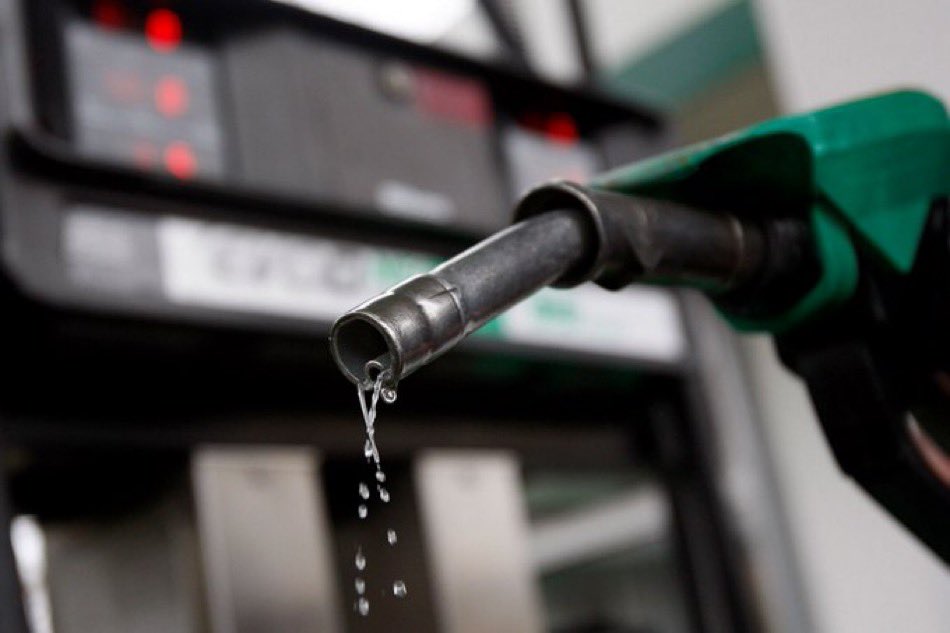
The IMF is loudly cheering for the reunification of the foreign exchange market because the gap between the official and black market exchange rates has remained below 5%, which is absolutely fantastic for foreign investors since they love predictability, guaranteed margins, and zero currency friction. They also excitedly applaud the fact that Nigeria's foreign reserves have built back up, supposedly providing a comfortable cushion against global economic shocks. Finally, the IMF highly commended the Tinubu government's decisions to eliminate deficit monetization (which stopped the CBN from printing money to fund government projects) and to permanently remove petrol subsidies.
Now, the Tinubu Administration, speaking through the office of the Finance Minister, is proudly parading this IMF report like a shiny gold medal. They are framing this praise as an "independent validation" that their brutally painful economic policies over the past few years are finally yielding positive macroeconomic results. The glaring problem here is that this is not something Nigeria as a sovereign country should be celebrating, and this is entirely because of who the IMF actually works for and who dictates their underlying policies. The G7 nations and Western superpowers entirely control the IMF board, and the institution itself exists strictly to protect the financial interests of international creditor nations, massive global investment banks, ruthless hedge funds, and wealthy foreign bondholders. The primary job of the IMF is merely to ensure that the global financial system remains perfectly stable and that struggling developing nations never default on their massive, crippling debts to foreign creditors. Therefore, the IMF works exclusively for the lenders (the global financial-industrial complex), absolutely not for the bleeding borrowers like Nigeria, Ghana, Kenya, or any other struggling African nation.
To see how bad this is, just observe this currency unification being praised by the IMF as a massive win for the Tinubu Administration. They are celebrating simply because the exchange rate is now mathematically stable and investors are finally happy. This is spectacularly good for foreign speculators, but it is deeply catastrophic for us because the currency stabilized at a spectacularly weaker level of N1,400 per dollar, compared to N770 in the black market and N450 in the official rate before this administration took over.
So yes, the currency is technically unified, but at a permanently crippled level. Since Nigeria is a heavily import-dependent economy, this unified weakness has made the cost of food, life-saving medicines, basic hospital bills, school fees, transportation, building materials, imported spare parts, and daily survival astronomical, thereby permanently destroying the purchasing power of everyday Nigerians.
Furthermore, the IMF congratulating the Tinubu Administration on increasing the country's foreign reserves might sound like brilliant news, until you suddenly realize that it is this exact, deliberate policy that violently crippled our local industries. Most of the money that makes up these bloated new foreign reserves was forcefully squeezed out of the removal of petrol subsidies, a move that has deeply suffocated our local businesses, artisans, manufacturers, and logistics companies who rely entirely on petrol generators to survive. But this is not even the full tragic story. Even the bloody change they violently squeezed out of the dying Nigerian middle class was not enough to impress these foreign investors. To aggressively entice them, the Tinubu Administration spiked the base interest rate from 18% up to a staggering 27%. This was no mistake. In the US, for example, when you lend money to the government by buying Treasury Bills, federal bonds, municipal securities, or index funds, the interest you expect to make per year is at most 5%. But the Nigerian government is desperately signaling to these foreign speculators and international bondholders to come drop their dollars in Nigeria, effectively guaranteeing them a massive 27% interest by the end of the year. This might look like a huge economic win as foreign capital flows into the country, but this hot money never ends up in the pockets of ordinary Nigerians. It is never used to build schools, pay hospital bills, subsidize agriculture, fix dead refineries, or reduce house rents. The money just sits idly in the central bank to impress the IMF and World Bank creditors, proving to them that Nigeria is highly liquid and perfectly safe to lend to.
The absolute worst part of this trap is that it is not just the CBN increasing the base interest rates. The commercial banks are naturally forced to aggressively increase their lending rates even higher. Today, some predatory commercial banks are charging desperate businesses as much as 35% to 40% interest on loans. This financial terrorism has forced countless local businesses to drastically cut down production, lay off massive numbers of staff, and permanently close their branches in remote areas across Nigeria, forcing them to operate strictly within the suffocating limits of their own personal, depleted capital. It is practically mathematically impossible to borrow from a Nigerian bank, scale up production, create actual wealth, and employ the millions of struggling graduates in our society when you first have to pay 40% to the bank. Add that to the reunified currency making imports insanely expensive, meaning businesses still have to pay extra for imported raw materials, clear goods at exorbitant customs duties, pay multiple state taxes, and buy the hyper-expensive fuel that spiked in price due to the celebrated subsidy removal.
It is very possible to analyze this insulting press release further, but there is absolutely no need to waste the time. Clearly, this administration should not be celebrating warm handshakes, pat-on-the-back press releases, and polite diplomatic smiles from foreign creditors and international bondholders. They should be focusing entirely on the bleeding Nigerians who are brutally forced to carry the crushing, suffocating burden of these massive economic miscalculations just to please a comfortable, wealthy board of directors at the World Bank and the IMF.
@officialABAT Abeg, I don read from start to finish... Let someone help me with these questions?
1. How much are these low cost housing?
2. In Lagos, the only location is Ibeju Lekki? Everyone willing to get a house must go Ibeju way?
3. What's the process to apply for these houses?
I have noted with grave concern the escalating wave of insecurity that has engulfed our beloved nation. Once again, Nigeria is bleeding profusely. From Zamfara, Borno, Sokoto, Katsina, and Kwara to Oyo and several other parts of the country, our citizens can no longer sleep with both eyes closed.
Banditry, kidnapping for ransom, terrorism, communal clashes, and armed robbery have tragically become daily occurrences. What is most alarming is the audacity of these criminals, who now brazenly hold live sessions on social media to taunt the authorities and terrorise the public.
This is totally unacceptable and not befitting of a sovereign nation like ours.
As someone who has served this country at various levels, including as Governor of Kano State and Minister of Defence, where we confronted and significantly reduced security challenges through decisive leadership and community engagement, I remain convinced that insecurity is not insurmountable. What we lack today is not resources, but the requisite political will and sincerity to confront this menace head-on.
The current approach has clearly failed. Despite massive budgetary allocations to the security sector, the situation continues to deteriorate rapidly. Innocent lives are being lost daily, families are displaced in their thousands, and our economy is suffocating under the heavy weight of fear and instability.
We cannot continue on this dangerous path. Nigeria’s security architecture requires an urgent and comprehensive overhaul.
Additionally, to safeguard our socioeconomic wellbeing, the government must prioritise the provision of quality education, modern infrastructure, accessible healthcare, reliable electricity supply, and essential agricultural inputs. This approach will strengthen local food production and reduce over-reliance on imports for food security.
We must immediately prioritise the welfare and motivation of our gallant security personnel, strengthen intelligence gathering, enhance community policing, and, most crucially, tackle the root causes of this crisis; poverty, mass unemployment, and poor governance through massive investment in quality education, skills acquisition, and job creation for our teeming youth. - RMK
May Almighty Allah never make me believe I’m a Yoruba before being a Muslim. Islam first, Islam always, Islam everyday. If that makes me less Yoruba, AlhamduliLah…. May Allah preserve me upon Khayr.
Why do we not say "Muslim first"?
Because a Muslim can be truthful or deceitful.
A Muslim can be honest or dishonest.
A Muslim can be just or unjust.
A Muslim can be merciful or cruel.
A Muslim can be trustworthy or treacherous.
A Muslim can be humble or arrogant.
A Muslim can be righteous or sinful.
A Muslim can be peaceful or violent.
A Muslim can be law-abiding or criminal.
A Muslim can be a protector of life or a destroyer of life.
A Muslim can defend the innocent or oppress the innocent.
A Muslim can uphold justice or undermine justice.
A Muslim can unite people or divide people.
A Muslim can be guided or misguided.
A Muslim can be sincere or hypocritical.
A Muslim can be a source of benefit or a source of harm.
A Muslim can follow the teachings of Islam or violate the teachings of Islam.
A Muslim can be a victim of terrorism or a perpetrator of terrorism.
A Muslim can be a defender of society or an enemy of society.
That is why Islam does not teach us to support a person merely because he is Muslim.
Rather, Islam teaches us to support truth against falsehood.
Justice against injustice.
Honesty against dishonesty.
Mercy against cruelty.
Peace against violence.
Security against terror.
Integrity against corruption.
Goodness against evil.
Righteousness against sin.
The oppressed against the oppressor.
The innocent against the criminal.
The victim against the aggressor.
Therefore, Islam first does not mean Muslim first.
It means truth first, not falsehood.
Justice first, not injustice.
Honesty first, not deceit.
Peace first, not violence.
Security first, not terror.
Human dignity first, not oppression.
The guidance of Allah first, not the desires of men.
The measure in Islam is not the label a person carries.
The measure is whether he stands with what is right or what is wrong.
That is why we say:
Islam first IS NOT necessarily Muslim first.
Teachers in northeastern Nigeria march in Maiduguri demanding the release of 42 abducted schoolchildren in Borno State and stronger school protection.
Al Jazeera’s Felix Nyawara reports.
LAGOS NIGERIA!
I’m announcing my first ever headline shows here, and we have made sure this homecoming will be special. Sign up for early access here! https://t.co/6RTJy6ubeT
PHOTO NEWS: Today, the Yoruba community in Kano, Nigeria, West Africa, holds the Ojude Oba festival in the city of Kano, celebrating culture and embracing the beauty of Yoruba traditions at the Kano Pillars Stadium.
30th-May-2026
Shots on #FujiFilmX100F