Birds of Brazil aims to share the beauty of brazilian birds with people across the world. Our tweets are written in english, but are Translate-friendly!
Nossa intenção é compartilhar a beleza das aves brasileiras com o mundo. Tweets em inglês, mas funcionam com o Tradutor!
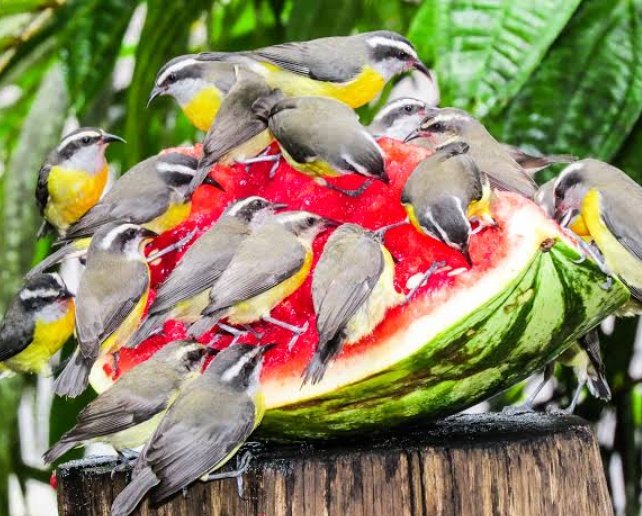
Bananaquit | Cambacica
( Coereba flaveola)
The color of a Great Kiskadee, the size of a Sparrow and the feeding habits of a Hummingbird; this is the Bananaquit. Tiny and noisy, this bird is very common throughout the Americas, and feeds on Nectar, fruits and small arthropods.
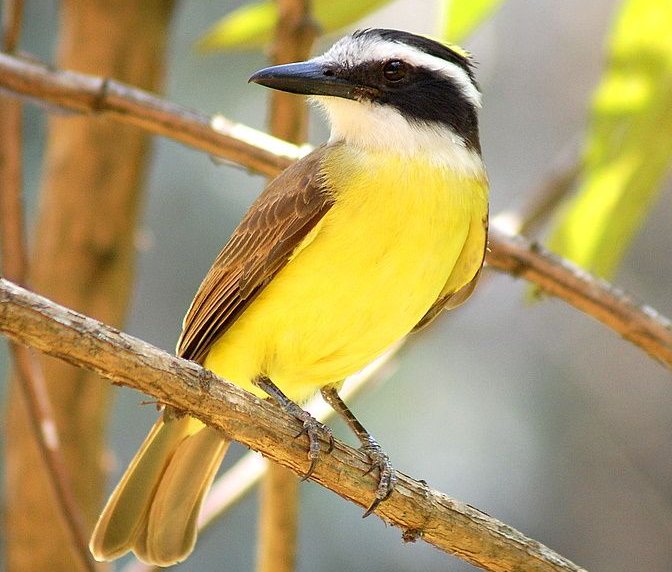
Great Kiskadee | Bem-te-vi (Pitangus sulphuratus)
The Great Kiskadee receives its name from its three-syllabic call, that in portuguese sounds like ''bem-te-vi'' (''see-you-well''). Notable for its vibrant yellow belly, it is one of Brazil's most famous birds (and my favourite!)
They are found most commonly in the Pantanal (Brazil's Wetlands) and southern regions of South America. Albeit considered agricultural pests, their population has grown thanks to artificial Eucalyptus forests. In Rio de Janeiro, there's a self-sufficient community of these birds.
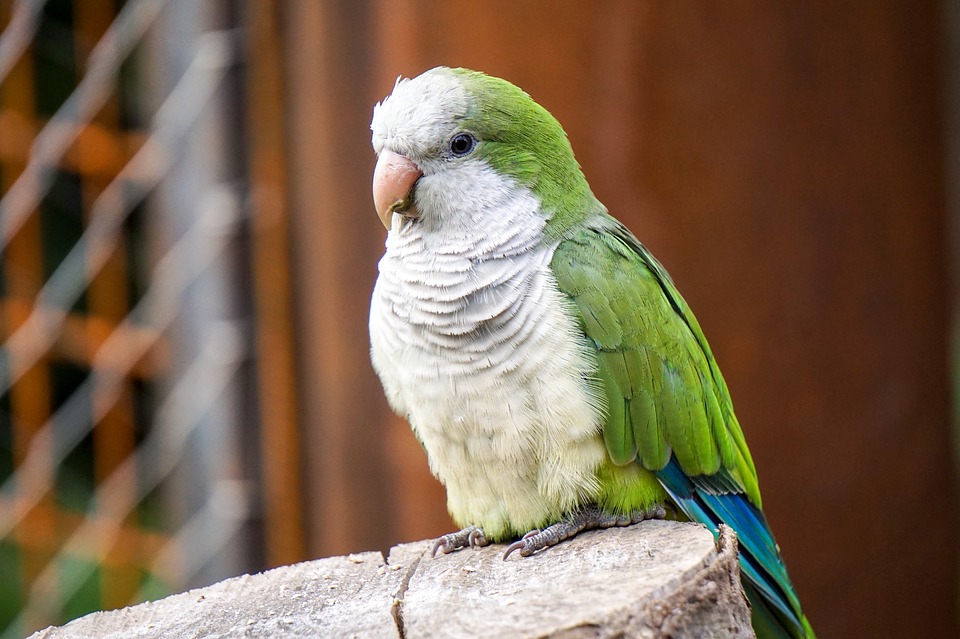
Monk Parakeet | Caturrita (Myiopsitta monachus)
The Monk Parakeet is the only parrot that builds its own nest with sticks; their nests can grow so big that they house several couples, sometimes as big as a car. Their offspring help feed their younger siblings even as adults.
Ringed Kingfisher | Martim-pescador-grande (Megaceryle torquata)
As the name indicates, this bird feeds primarily off of fish, and so are commonly seen next to rivers and lakes. They are relatively big birds, and are not adapted to terrestrial movements, seen mostly flying.
Great Kiskadee | Bem-te-vi (Pitangus sulphuratus)
The Great Kiskadee receives its name from its three-syllabic call, that in portuguese sounds like ''bem-te-vi'' (''see-you-well''). Notable for its vibrant yellow belly, it is one of Brazil's most famous birds (and my favourite!)
They can be found in the entirety of Latin America, and even some southern parts of Texas. The Kiskadee mostly feeds off of fruits and insects, seen flying in elaborate movements to catch flying bugs. They also often fight off Toucans that invade theirs or other birds' nests.
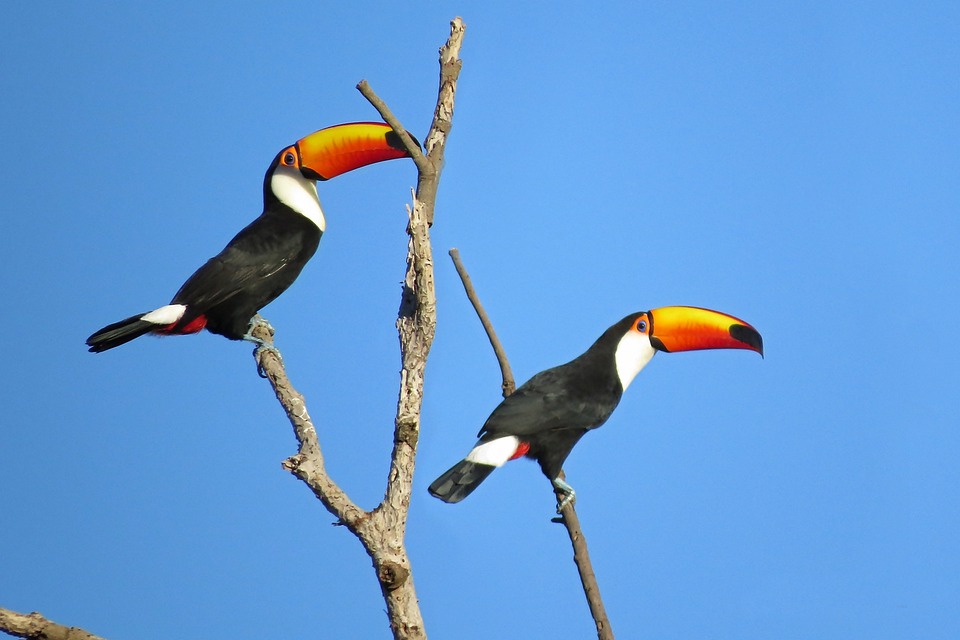
Toco Toucan | Tucanuçu (Ramphastos toco)
Also known as the Common Toucan, known for its large bill and lively colors, this bird is native to South America. It has the highest beak to body ratio of any bird; despite being so huge, the beak is actually incredibly lightweight.
The beak is actually used for regulating the birds' temperature thanks to its size. It has a long, thin tongue the same size.
Toucans are frowned upon for eating eggs and baby birds, attacking other birds' nests.
(Pictured left is a baby Toucan, which is undeniably adorable.)
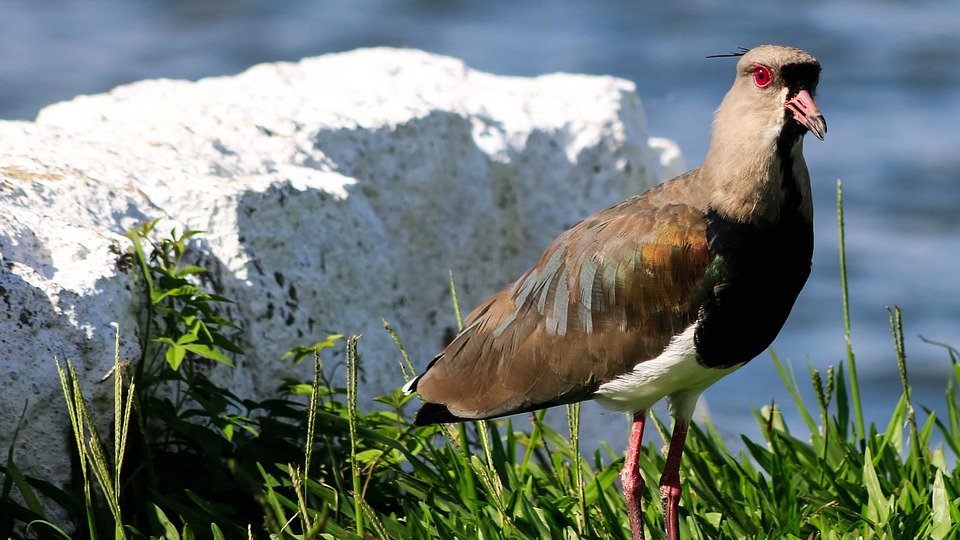
Southern Lapwing | Quero-quero (Southern lapwing)
It is a long-legged bird native to the South and Central Americas, except for the Amazon and the Andes. Although they are shorebirds, they are commonly seen in open grasslands, pastures and, fittingly, football/soccer fields.
If this bird looks scary to you, you are right. They are highly territorial, attacking any animals that come near - including humans. Sensible locals keep their distance from couples. They sound an 'alarm' when danger is near, and capybaras and farmers take advantage of that.