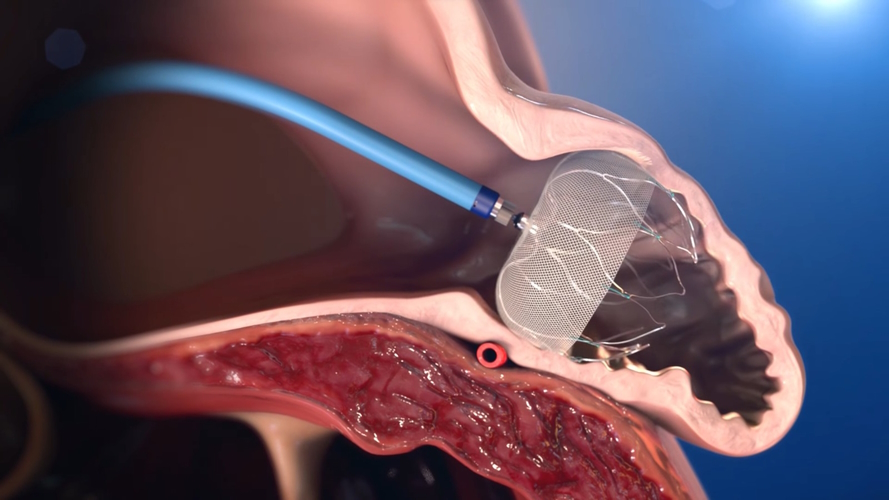
Perceval Plus LANCELOT is the ideal docking station for valve-in-valve as it delivers:
✔ Clear visualization for precise positioning
✔ Optimized hemodynamics thanks to uniform expansion
✔ Preserved coronary access for patient safety
👉https://t.co/noNwFAb9JV
#Corcym
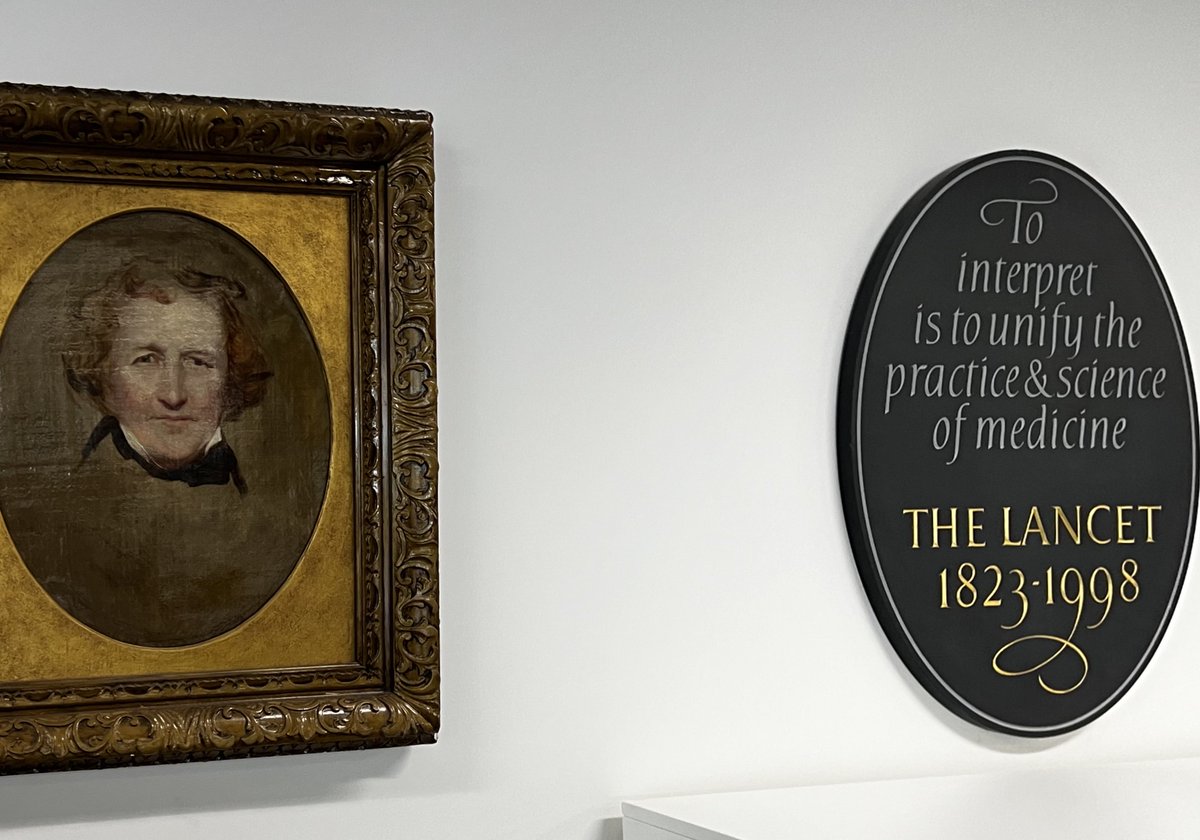
It was a real honour to be invited to visit the modern head office of the Lancet in London. Surprised to find out that it was founded over 200 years ago by Thomas Wakeley, a surgeon!
We are proud to announce that TriMemo™ has received FDA clearance. This new product is a commitment to the patients and surgeons who have been waiting for a dedicated tricuspid solution.
Read the full announcement and discover TriMemo: https://t.co/PUVaw0JjU8
#Corcym#TriMemo
No money for vital staff or infrastructureaccording to our politicians, but plenty of money to help private health care companies exploit the NHS
ttps://www.theguardian.com/society/2026/apr/13/private-companies-nhs-services-profit-chpi-research
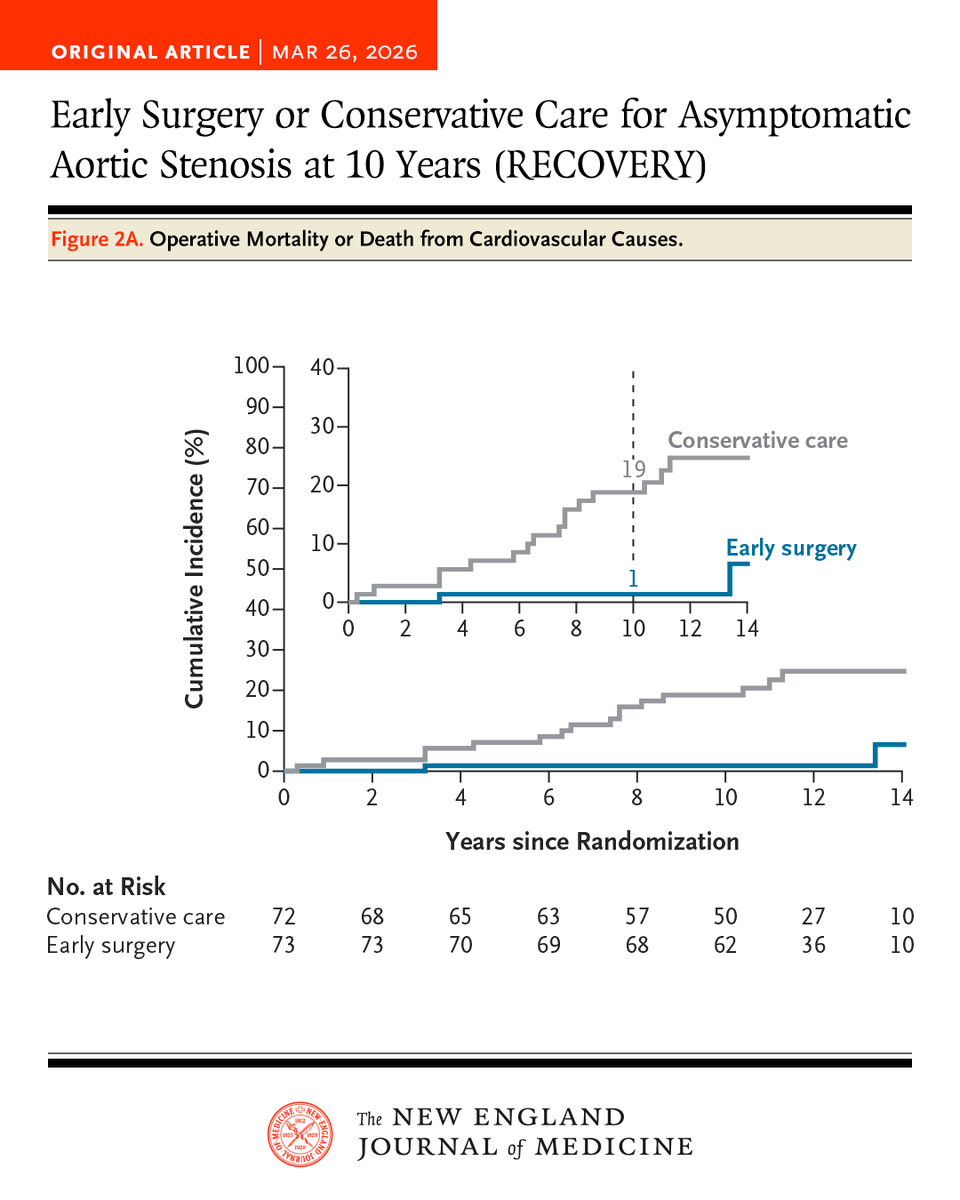
Early surgery in asymptomatic patients with very severe aortic stenosis led to a lower risk of a composite of operative mortality or death from cardiovascular causes at 10 years than conservative care. Full RECOVERY trial results and Research Summary: https://t.co/tLqC25ccCJ
Is CT mandatory in MIS cardiac surgery? We think so: Computed Tomography in Preoperative Planning of Minimally Invasive Valvular Heart Surgery: A Systematic Review of Mixed Evidence and Clinical Application | European Journal of Cardio-Thoracic Surgery https://t.co/ZRjAIqDk0D
The takeaway:
Sometimes the best intervention... is 𝗻𝗼 𝗶𝗻𝘁𝗲𝗿𝘃𝗲𝗻𝘁𝗶𝗼𝗻.
Sometimes "protecting" the heart with technology causes more harm than letting skilled operators do PCI with standard care.
Medicine is humbling.
Science is beautiful.
Patients deserve better.
Early surgery in asymptomatic patients with very severe aortic stenosis led to a lower risk of a composite of operative mortality or death from cardiovascular causes at 10 years than conservative care. Full RECOVERY trial results: https://t.co/tLqC25ccCJ
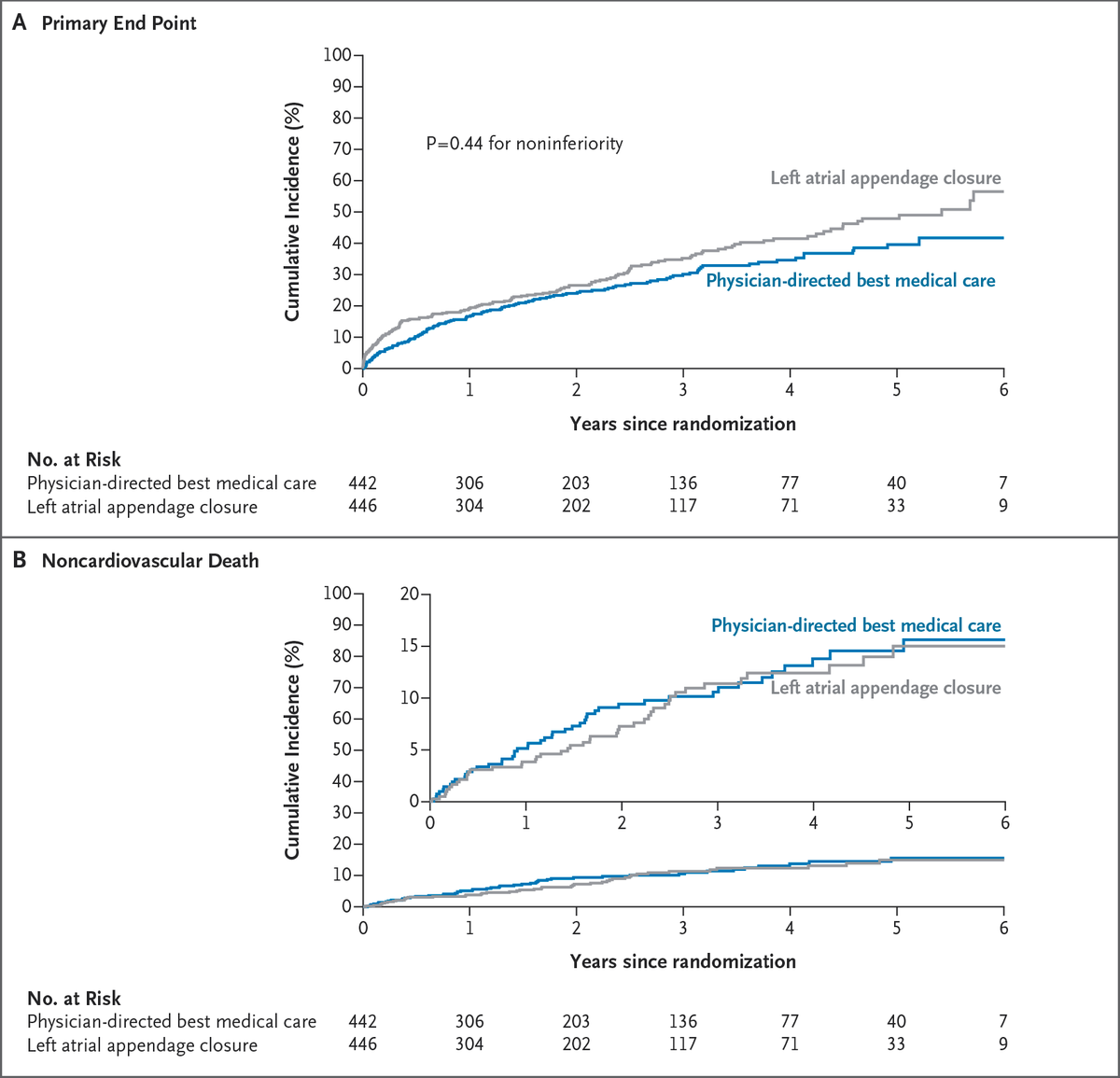
Original Article: Left Atrial Appendage Closure or Medical Therapy in Atrial Fibrillation (CLOSURE-AF trial) https://t.co/ZI5Ml29Dyq
Editorial: Left Atrial Appendage Closure — Another Overused Method in Cardiology? https://t.co/1Mnfv20Z39
#Cardiology
All the explanations I’ve heard today for the negative CLOSURE-AF result—some so strained they’re almost impressive.
1) The devices were “outdated” and therefore responsible for excess complications (the usual argument that things only go wrong elsewhere).
2) DAPT was used after LAAO, which is now said to be obsolete because of bleeding concerns compared with DOAC-based strategies (a claim that is often repeated, less often demonstrated).
3) Stroke rates were similar, so the signal is attributed mainly to bleeding and procedural issues—as if that were a minor point.
4) The composite endpoint is criticized for mixing different mechanisms, although if anything it should have favored non-inferiority.
5) The early phase of enrollment is invoked to argue that complications are not representative of current practice (again, complications seem to belong to others).
6) And then there are the usual remarks about loss to follow-up, crossovers, and lack of blinding.
What seems to be missed in this accumulation of arguments is straightforward: the burden of proof lies with LAAO, not with the control arm. The issue is the strength of the evidence supporting LAAO, not medical therapy, which remains the reference standard.