110 Humanoid Traffic Police Robots Now On Duty
AiMOGA Robotics (under Chery) has delivered 110 intelligent traffic robots to Wuhu Traffic Bureau in Anhui Province.
They are not replacing human officers ,they assist in directing traffic and performing duties during peak hours.
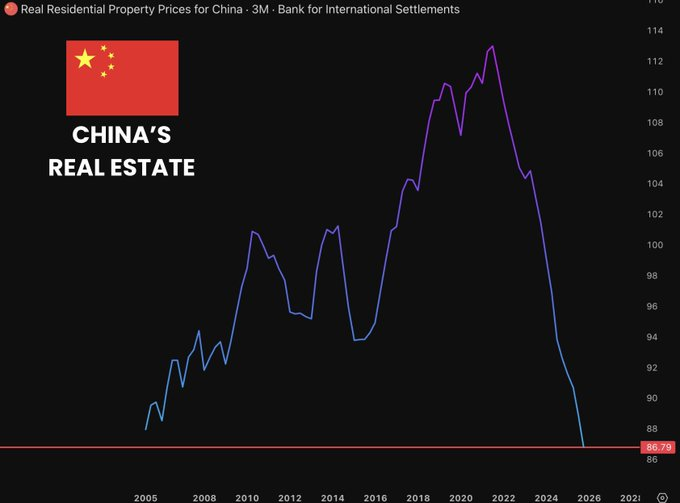
China’s real estate market just fell to its lowest level since 2005.
That matters because property once made up ~25% of China’s GDP with around 70% of household wealth tied to real estate.
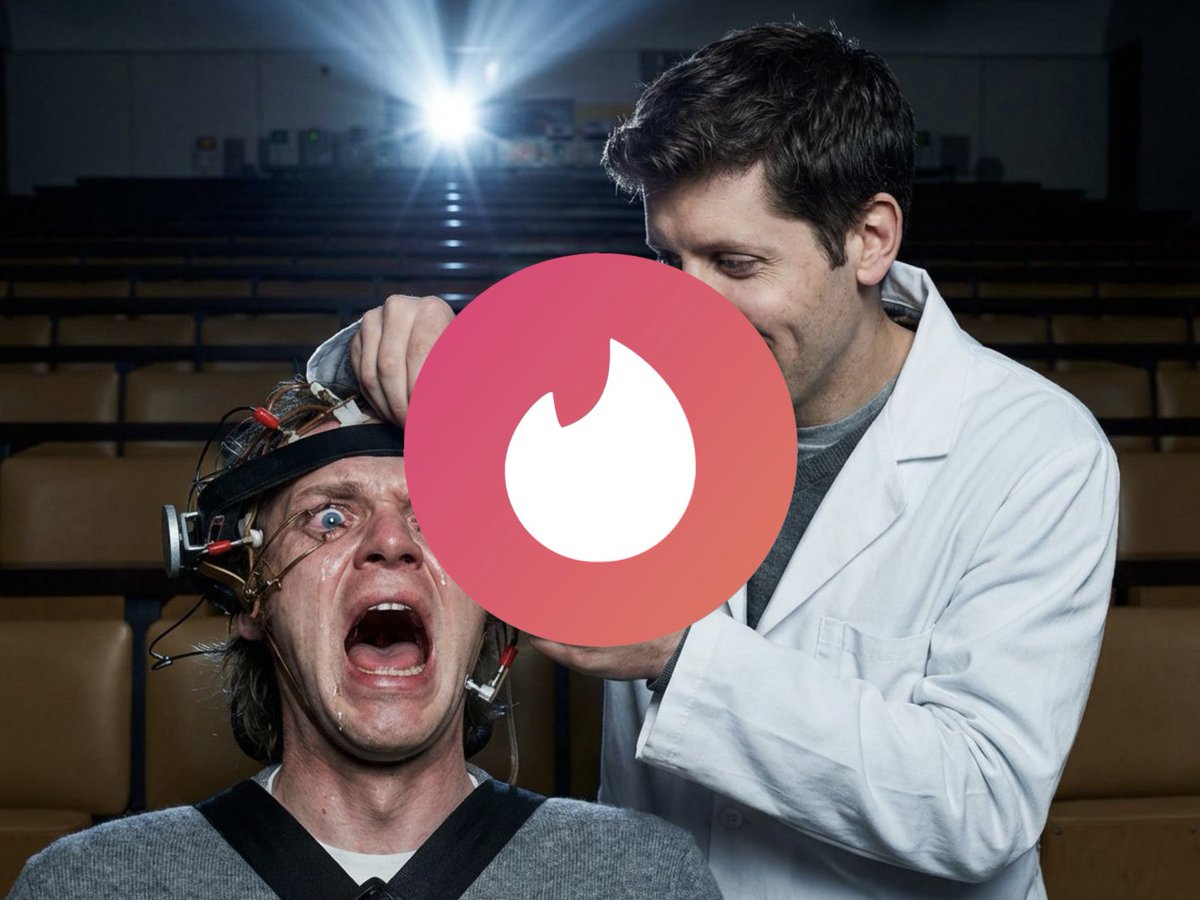
Tinder wants to scan your EYEBALLS to prove you’re not a creep
The dating app is partnering with Sam Altman’s World ID for iris-based verification
Tinder is fighting bots, fake profiles and AI-powered romance scammers draining users for money and data
Trump JOKES that his MARRIAGE WON'T LAST as long a his parents' did
'They were married for 63 years. That’s a record we won’t be able to match, darling'
Starting September 2026, a silent update pushed by Google, will block every Android app whose developer hasn't registered with Google, signed their contract, paid up, and handed over government ID.
Google calls the new rule Android Developer Verification.
This starts with Brazil, Indonesia, Singapore, and Thailand expanding worldwide in 2027 every app on certified Android phones must come from a developer who has registered their real identity with Google.
This covers apps from the Play Store, third-party stores, and sideloaded APKs.
Here’s what developers have to do: They sign up in Google’s new verification system, share their legal name, address, phone number, and ID, and pay a one-time $25 fee.
Apps from unverified developers will be blocked or come with big warnings and extra steps.
Google doing this to fight malware, the company says sideloaded apps are about 50 times more likely to contain bad software than Play Store apps.
Android is becoming a little more controlled with all of this changes
Where does thinking really take place?
Barbara Tversky proposes that thought isn't confined to language but can emerge directly from the body.
Tversky is Emerita Professor of Psychology at Stanford and Columbia Teachers College.
Tap here for her full interview. https://t.co/fLlWCNUIur
BREAKING: Figure is doubling humanoid robot shipments EVERY SINGLE MONTH.
@adcock_brett shared the data himself. The company shipped around 150 units in all of 2025.
Based on that baseline, the last few months likely look something like this:
→ Feb 2026: ~60 units
→ Mar 2026: ~120 units
→ Apr 2026: ~240 units
And their BotQ facility is rated for up to 12,000 units per year.
The hardware is serious too. Figure 03 has cameras in each hand, fingertip tactile sensors detecting forces as light as 3 grams, and achieved a 90% component cost reduction vs Figure 02.
That last number is the one that matters. That's the cost curve that makes consumer-scale deployment possible.
For context, the ENTIRE global humanoid robot market shipped under 14,000 units in 2025. It's forecast to hit 2.6 million annual units by 2035.
Exponential curves are strange things. If Figure keeps doubling for even two or three more months, the gap between it and the leading Chinese competitors starts to look a lot less permanent.
THE RACE IS HEATING UP.
The Forbes article with the numbers: https://t.co/5M3TiTtmgQ
We are obsessed with the "CEO" model of consciousness. We assume a central brain must issue every command, or the system fails.
The octopus proves this is a biological prejudice.
Imagine 500 million neurons. Now, take two-thirds of them and move them into your limbs.
The octopus's central brain is a mere 50 million neurons. The real processing power—350 million neurons—lives in the arms.
Each arm has its own topographic map and its own neurochemical logic. The connection to the head is a tiny wire of only 30,000 fibers.
That is not enough bandwidth for a central dictator. It is a conversation between peers.
We ask: "Where is the octopus thinking?" We should ask: "Why do we assume intelligence needs a single home?"
If an arm can taste and decide without the head's permission, the "unified self" is a lie.
What if you are just a collection of processes that haven't realized they’re independent yet?
A fully automated economy with a human-run government is a logical contradiction. The bottleneck just moves. If production is frictionless but distribution is bureaucratic, you've automated abundance and manually rationed it. That's not a solution.
And even if robot taxes work — that revenue lands with governments. We've seen how well they "redistribute" wealth. The power to fix inequality becomes another political football. Concentration shifts from corpo hands to bureaucratic ones. Meet the new boss, same as the old boss.
The "tax capital income" still needs humans to collect, allocate, and distribute. That's exactly where it rots. You can't fix an automated inequality problem with a manual solution. The governor must be as automated as the governed economy.