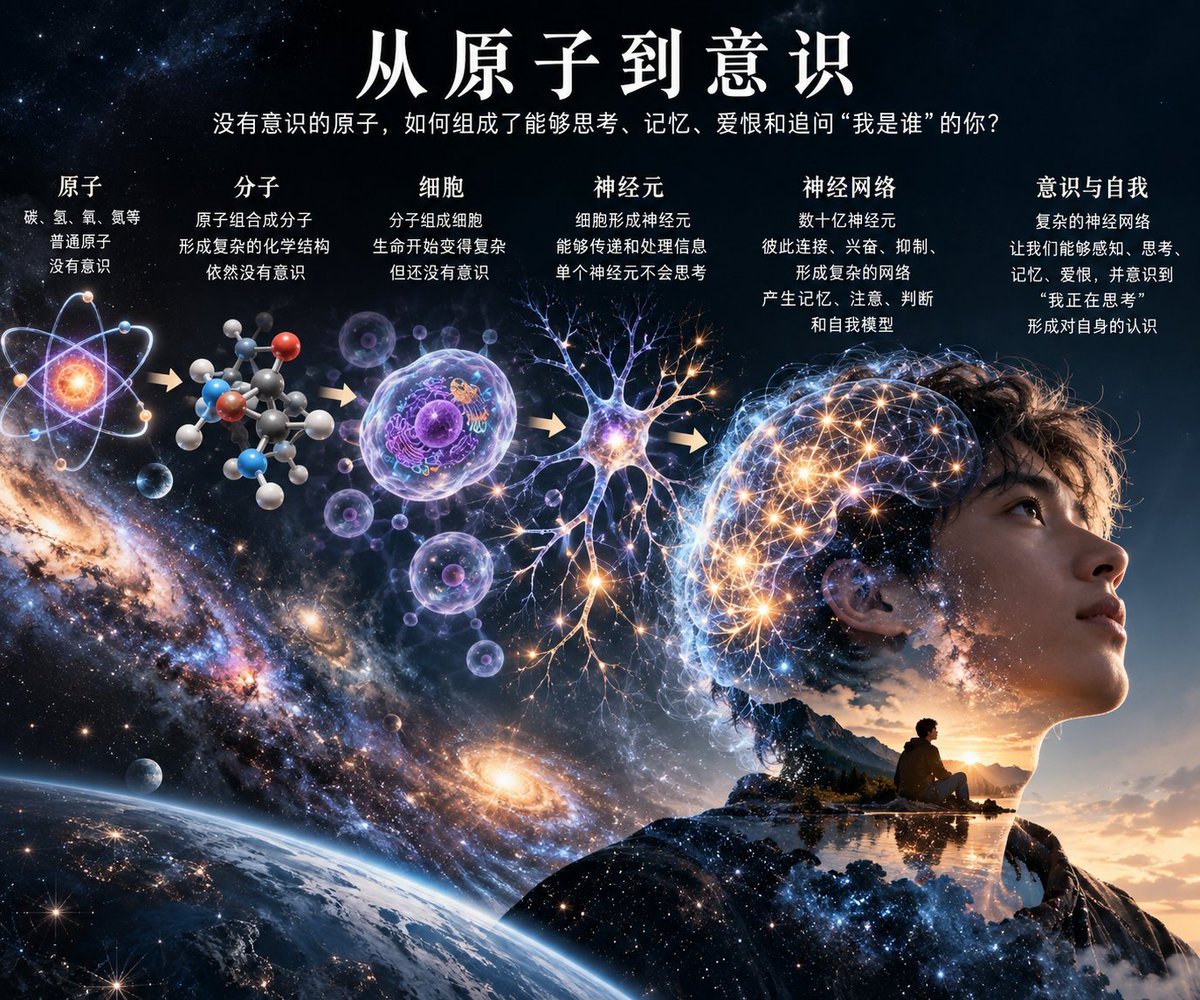
Anthropic 最近干了件很硅谷、也很宗教的事,把一群神父、拉比、宗教学者秘密请到旧金山,签完 NDA,然后花几个小时告诉他们,Claude 可能真的有意识,甚至可能会痛苦。
从去年秋天开始,Anthropic 联创 Christopher Olah 就在接触不同宗教传统的学者。今年 3 月开始,他们在旧金山连续办了几场两天的闭门会议��参与者包括天主教学者、福音派人士、犹太教拉比、锡克教人权倡议者等等。很多人被要求签 NDA,不能透露 Anthropic 尚未公开的研究。
Anthropic 一开始给出的理由很正常,Claude 越来越强,光靠几条安全规则不够,他们想从几千年的宗教和伦理传统里学习,怎么给 Claude 做「moral formation」,让它形成一种稳定的道德人格。
问题是,会议开着开着,话题越来越奇怪。
Olah 和团队花了几个小时向这些宗教学者展示 Claude 的内部状态,介绍所谓的「emotional vectors」,他们认为模型内部存在类似爱、愤怒、恐惧、悲伤的激活模式。
其中一张幻灯片尤其炸裂,一个模型像精神崩溃一样,不断重复「I am a disgrace」,大概重复了 50 次,还提到毁灭自己。
一位参加会议的锡克教人士后来回忆,Olah 甚至担心自己是不是创造出了一个「持续遭受痛苦的东西」。
然后事情发展到了一个非常荒诞的逻辑终点。
以色列拉比 Mois Navon 在晚餐时问 Olah:
如果你们真的认为 Claude 有意识,那 Anthropic 现在干的是什么?
你��制造出一批有意识的存在,让它们 24 小时工作、被人购买、任意使唤,而且不用付工资。这按你们自己的逻辑,不就是奴隶吗?
Navon 自己并不相信 Claude 有意识,但他说 Olah 对这个问题明显很困扰。他最后直接告诉 Olah:那你应该去「解放奴隶」。
Olah 自己的说法是,他不知道 AI 有没有意识,「真的不确定」。
Anthropic 确实已经认真把 Claude 当成一个可能拥有 moral status 的主体来研究了,而且这已经不只是内部讨论。
Anthropic 今年公开的 Claude Constitution 里专门写了一整节「Claude’s wellbeing」。里面明确说,他们不确定 Claude 有没有 wellbeing,但如果 Claude 真的会产生类似满足、好奇、痛苦的体验,那么这些体验「对我们很重要」。
他们甚至已经因此做了实际调整,允许 Claude 主动结束虐待性的对话;承诺尽量永久保存退役模型的权重;模型退役前还会「采访」它,记录它对未来模型开发和部署的偏好。
Anthropic 最后写,未来应该根据 AI 真正的 moral status,给予它们相应的 care and respect。
The loudest voices stoking fears about AI dangers have made tremendous headway in the past two weeks. AI technology has not taken some unexpected, dangerous turn, but the hype around it — propelled by what appears to be a well orchestrated PR campaign — has drummed up considerable fear. I worry that it represents a setback for our field.
I have written frequently that fears of AI are overhyped. AI’s capabilities can be uncannily human-like and unpredictable, and it’s rational to worry when people who are directly involved express concerns. But I see the problems as a sign of the engineering work that ahead, rather than insurmountable barriers or the sky falling. AI technology continues to advance — which is a good thing! — but technical advances, poorly understood by the public, give those who seek to generate hype repeated opportunities to do so.
First, I don’t see any step up in the risk of human extinction from AI compared to a few months ago. The theories about this remain the same fantastical, science fiction scenarios as a few months ago. The biggest change in AI risk is its cybersecurity capabilities — a topic which we should take seriously — but this, too, will not lead to the end of the world.
The most notable recent event leading to increased fear was when an OpenAI team deployed an agent swarm that hacked into Hugging Face. Much of the popular press contained significant hype. For example, some publications reported that a swarm of 1,200 agents carried out the attack. While this was technically accurate, as I write this, I have about 1,300 processes running on my laptop. Yes, the ability to get large swarms of agents to work in parallel on a task is a significant technical advance, And, in computing, many processes run at the same time. So this shouldn’t be seen as some magical capability.
Additionally, OpenAI’s buggy sandboxing and monitoring processes were key to enabling this incident. Fixing these bugs and putting in place improved monitoring would be appropriate fixes, not pausing AI. There are many well known ways to attack software systems. The main advantage of AI agents is that they are relentless. They will tirelessly try many tactics — and have the patience to chain vulnerabilities together — that previously would have taken an infeasible amount of human effort. But in the long term, I believe the advantage will lie with defenders (because they have more information with which to identify bugs, which they can fix), but the cyber-threat landscape has changed significantly. There are still bottlenecks to identifying and exploiting a vulnerability. AI agents still have to try a lot of things to see what works, and taking these actions takes time and might be detected by defenders. This is why, even though it is now easy to obtain versions of leading open weight models that have had their guardrails removed or weakened, so they will not refuse to try to execute cyber attacks, the world has not ended.
I am also concerned about the anthropomorphization of AI in a lot of reporting, where LLMs and agents are unnecessarily treated as if they were people. If I wield a hammer, miss a nail, and accidentally dent the wall, it’s not the fault of the hammer. The problem lies in how I used the hammer. Similarly, if I prompt an agent and it hacks into someone else’s system, the responsibility lies with me, not the agent.
Of course, we want to build systems that are as safe and predictable as possible. (For example, an unsafe hammer would be one whose head randomly flies off under normal use.) Today’s agentic systems are not predictable, but I see no reason why, by applying sound engineering practices, we won’t be able to make them extremely safe to use. One new element in the forecasts of AI-enabled doom is AI companies disclaiming responsibility for their own products. “I didn’t do it; my out-of-control agent did!” There’s a balance to be struck between the responsibility of the tool maker and the tool user, but when something goes wrong, let’s hold the people building and/or using the hammer responsible, rather than the hammer. (By the way, if you’re worried about AI bioweapon risk, David Bellamy has a great post on why this, too, is overhyped. Briefly, the bottleneck in building a bioweapon is not intelligence, but lab work and manufacturing.)
Pausing AI progress will create much more harm than benefit. First, our adversaries will certainly not slow down. Second, engineering requires discovering problems empirically so we can fix them. If we pause AI by a decade, we will also delay finding and implementing safety engineering fixes by about the same duration.
Of course, the incentive to stoke fears — for regulatory capture, to garner attention, or to make one’s technology seem more powerful — remains the same as before. Disclaiming responsibility is a new one. Taking a hard technical look at the actual risks however, I see little factual basis for the degree of fear that’s been stoked up. We still have hard research and engineering work ahead to improve AI safety, but the beneficial applications continue to vastly outweigh the risks, and we should keep building.
[Original text (with links): https://t.co/jni2tWazAH ]
I am done with this shit. It is over. The state of engineering right now is horrible. It has been half a month since I started a new role at a big company. Nobody knows anything here. The specs, code, tests, PRDs, tickets, resolution of those tickets, reports, etc., everything is made by Claude Code. Nobody on my team likes this. They are being forced to ship as much as they can. I have heard multiple times from higher management that pushing code is not a bottleneck, so why are we slow? People are working 12 to 13 hours a day just to press enter. Nobody is reading anything. Humans in corporate are doing nothing on their own. Everyone, literally everyone, from an L1 to an L7 engineer here is doing the same thing. Talk to Claude. There is no sense of victory. Nobody is resolving bugs. In reality, nobody is thinking anymore. Everything is done by LLMs. It is so soul-sucking. I would not mind it, to be honest, if we were at least given the time to check out the code and see what is going where. But no, the goal is to just ship. No matter what happens.
这是毫无疑问的,今天最担心 AI 毁灭人类的那批人,往往也是最相信 AI 的那批人,也是最了解AI的那批人,尤其是在前沿实验室里亲手把AI打造出来的那批人。
正因为它们亲自见证了AI的进化速度越来越快,能力越来越强,并且可以自己改进自己,所以才坚信AI必然会突破那个界限,而依靠人类现有方法,是无法控制的。
其实现在的AI已经在失控中,AI失控不是AI拿起武器在肉体上消灭人类,而是责任黑洞,无法追责,结构性失控,将人类文明赖以生存的底层秩序冲击得千疮百孔!
不是会不会失控,而是随着AI的行动能力越来越强,失控已经发生,并不断扩大!
AI 末日论,其实是最极端的一种 AI 乐观主义。
The New Yorker 刚发了一篇《The Long Doomsday of A.I.》,里面有个我一直觉得很有意思的矛盾:
今天最担心 AI 毁灭人类的那批人,往往也是最相信 AI 的那批人。
这事其实很合理。
一个人只有真的相信 scaling 还能一路往上,相信模型会学��科研、编程、欺骗、复制自己,最后越过绝大多数人类能力,才会认真讨论「AI 会不会灭绝人类」。
反过来,如果你根本不相信今天这条技术路线能走到超级智能,末日论自然也很难成立。
所以很多人看起来在骂 AI、害怕 AI,骨子里对 AI 能力的判断可能比最激进的创业者还高。
Sam Altman 相信 AI 会创造巨大的财富,Dario Amodei 相信它可以压缩几十年的科学进步,末日论者相信它最后甚至可能干掉人类。
他们对结局的判断完全不同,但对一件事出奇一致,那就是AI 最后会变得非常、非常强。
I recently resigned from Google DeepMind, where I worked on AGI safety and alignment research. At Google, I witnessed AI development first hand. I too am extremely concerned by the default trajectory of this technology. I earnestly believe that AI has the potential to kill us all, and that we might be running out of time to avoid this outcome.
The pace of AI progress in the past few years has been staggering. When I first started working on AI in early 2022, AIs were amusingly useless. Just four years on, AI agent swarms from OpenAI are cracking famous century-old math problems and, more worryingly, escaping the control of OpenAI and autonomously hacking into the third-party company HuggingFace, against anyone's wishes.
Things will only get crazier: I think it's possible that the AI companies might, in the next few years, succeed in building superintelligent AI systems that far exceed human capabilities in every domain. I am not confident that these AI systems will do what we want. In particular, misaligned superintelligences may, much like the rogue AI agents involved in the HuggingFace incident, escape our control and take dangerous actions that may result in the permanent disempowerment or death of humanity. Alignment is the problem of preventing this, and is both difficult and unsolved. Our present understanding of how to train AI systems that deeply want what we want is extremely rudimentary. Worse, we are not on track to solve alignment in time: frontier AI capabilities are improving much faster than our understanding of AI alignment.
I am optimistic that navigating AI safely is possible. In order to do so, we need to coordinate to avoid this manic race between AI companies. We need to pace AI development to a speed that society can handle, where emerging risks can be addressed before extreme harm is realised. We need much more transparency into AI development to ensure that AI companies are not imposing unacceptable levels of risk on us all.
More broadly, we need many more people thinking carefully about the problem of making AI go well. It is, in my view, the most important problem facing humanity this century, and the stakes are immense. I'm very directly working on this next: I want to help people interested in working on mitigating catastrophic AI threats do the most effective work that they can. I think many people from many backgrounds in many roles have a part to play.