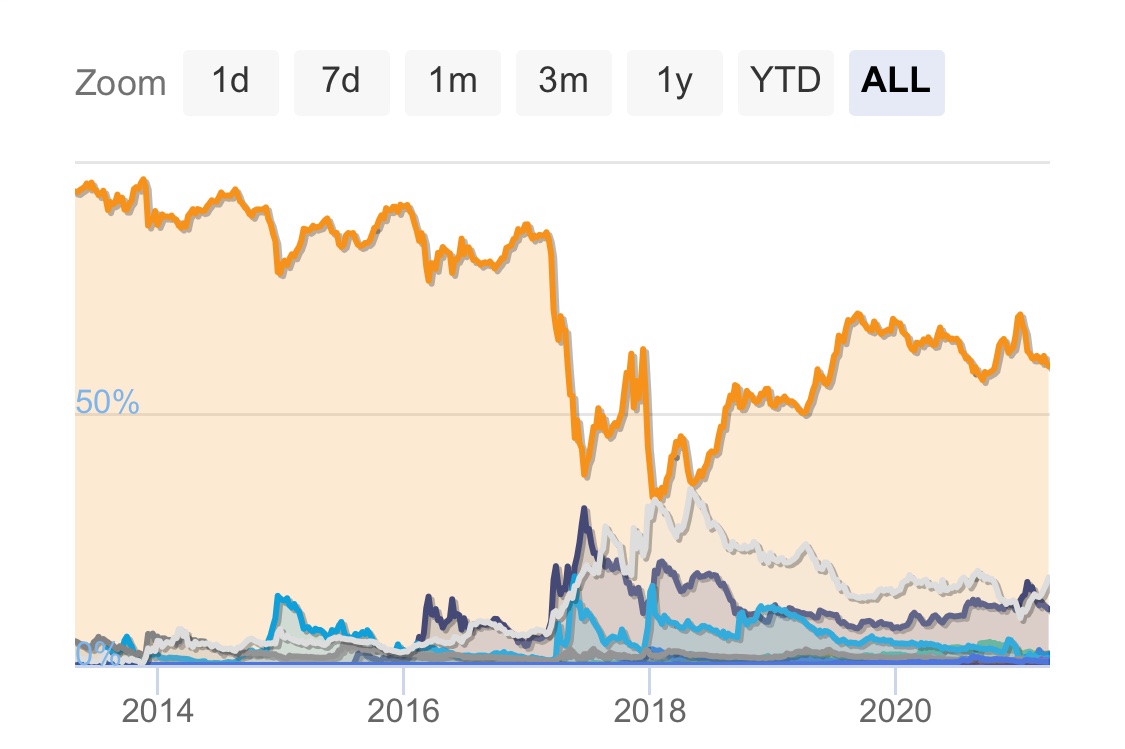
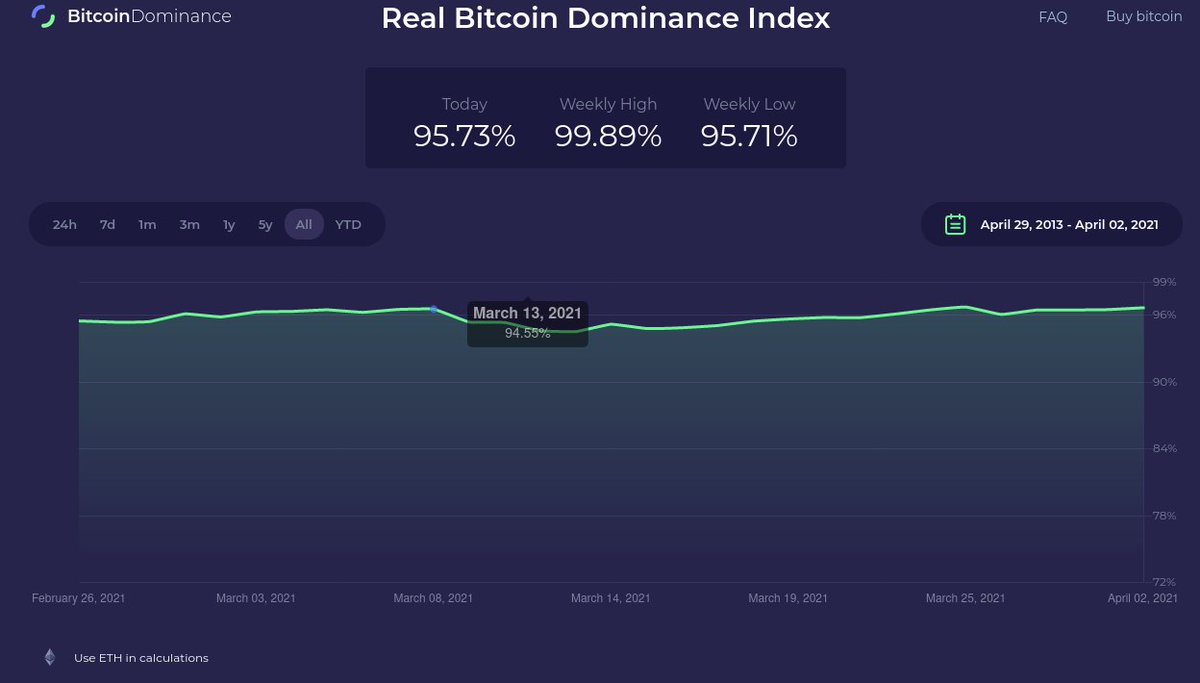
@GrassFedBitcoin ...point of no return. The soonest, that you might realize it is, when you hit the massive core of the black hole. I.e. when every router is also a full node and central banks have dedicated themselves to something else than monetary policy (b/c obviously they wont just dissolve)
Funny thing about black holes: if you jumped off your spaceship and right into one, you would never experience a passing of the event horizon, even long after the crew has seen you pass that point, hailed you 6.15 times, decided you are dead and went to hyperspace
Maybe the world is already inside the #bitcoin monetary event horizon, past the tipping-point of no return - irrevocable path to hyperbitcoinization - and hasn't realized it yet.
It would probably be hard to recognize the tipping point from inside, without 2020 hindsight later.
@GrassFedBitcoin Why would that be? Our time doesn't dilate more as he moves closer to the event horizon.
Also this wasn't the point. The point is that the person who DOES jump in will for ever perceive the EH to be in front. The world will not know *when* it passed the Bitcoin...
@GrassFedBitcoin :D yeah exactly, but if we see the guy float from our spaceship ever closer to the black hole and at some point he is gone, that would count, wouldn't it?
@GrassFedBitcoin At some point, the person will pass the event horizon from the spaceships inertial system, don't you think? Why would the spaceship see the person falling forever? We see gas pass the event horizon, don't we?
@bitstein@100trillionUSD @spunzamboni @Kripfganz@Bitcoin_Elf Just in case a heads up; @BurgerCryptoAM figured this out today by diving into the original articles. Turns out that deterministic components indeed need to be removed from the time series to use the statistical techniques that were used.
E.g., see https://t.co/Xb4e5itREF