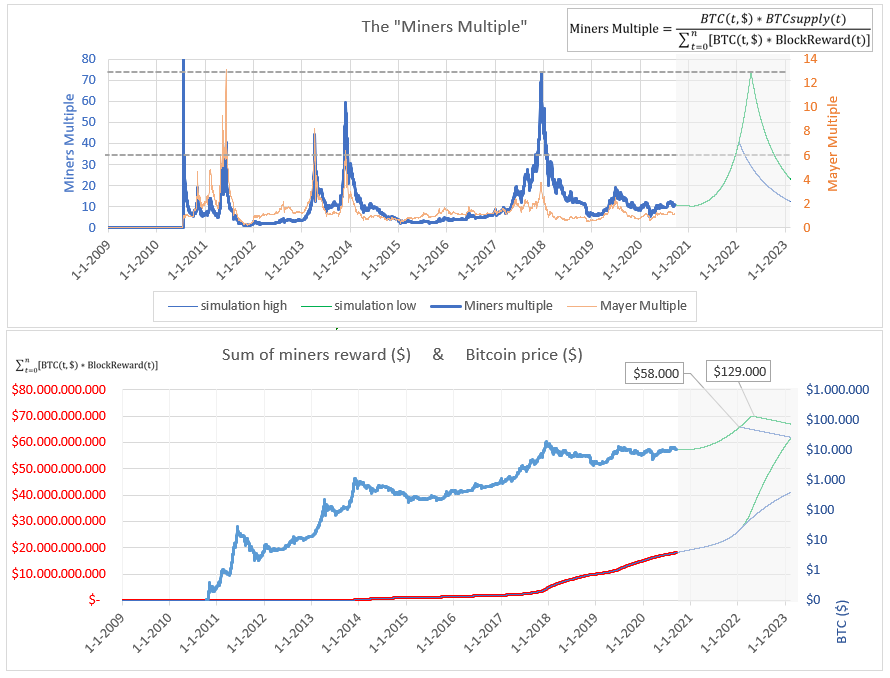
The “Miners Multiple”: #Bitcoin Market Cap vs. the Sum of all Mining Rewards ($). Identifies bubbles & dips with high signal to noise ratio. Current value: 11. Was never below 1. More signal than the Mayer Multiple @TIPMayerMultple@PrestonPysh@TraceMayer (1/3)
When I gave this speech in October 2022, Bitcoin traded near $20,000, Strategy held 130,000 BTC worth about $2.6 billion, and $MSTR was ~$24 split-adjusted. Weeks later, after Bitcoin fell below $16,000, our debt exceeded the combined value of our BTC and cash reserves by ~$300 million, and $MSTR fell into the $13 range by year-end.
We stayed focused, strengthened the company, and executed our strategy. Since then, Strategy has raised over $60 billion of additional capital and invested it in Bitcoin, adding more than 716,000 BTC. Today, our BTC and USD reserves exceed debt by ~$48 billion. Thank you to everyone who believed, endured, and took the long view.
@zerohedge True.
That is why Bitcoin is based on energy: you can issue fake fiat currency, and every government in history has done so, but it is impossible to fake energy.
SpaceX is solving the biggest bottleneck in spaceflight
The COST
For decades, the average launch cost to low Earth orbit was around $18,500 per kg
Falcon 9 cut that to about $2,700 per kg - roughly an 85% reduction
Falcon Heavy pushed it closer to $1,400 per kg - roughly a 92% reduction
Now Starship is targeting a 99%+ cost reduction through full and rapid reusability
That is the real breakthrough
Every booster landing, every reflown rocket, every faster turnaround is directly attacking the economics of space
Lower cost per kg means more satellites, bigger payloads, orbital manufacturing, Moon missions, Mars missions, space stations, and eventually space-based industry
SpaceX is not just building rockets
It is making space usable at scale
> you’ll never start a rocket company
> you’ll never build your own engines
> you’ll never be able to use off-the-shelf parts
> you’ll never survive three launch failures
> you’ll never reach orbit
> you’ll never win NASA’s trust
> you’ll never launch cargo to the ISS
> you’ll never compete with Boeing
> you’ll never compete with Lockheed
> you’ll never make rockets reusable
> you’ll never land a rocket vertically
> you’ll never land one on a drone ship
> you’ll never reuse a booster
> you’ll never fly the same booster 10 times
> you’ll never fly the same booster 20 times
> you’ll never fly the same booster 30 times
> you’ll never recover and reuse the fairing
> you’ll never lower launch costs
> you’ll never launch every month
> you’ll never launch every week
> you’ll never launch multiple times a week
> you’ll never carry astronauts
> you’ll never replace Roscosmos
> you’ll never fly civilians to orbit
> you’ll never manufacture satellites at scale
> you’ll never build the biggest constellation ever
> you’ll never make satellite internet work
> you’ll never make satellite internet fast
> you’ll never make satellite internet affordable
> you’ll never serve rural customers
> you’ll never serve aircraft and ships
> you’ll never build a methane rocket engine
> you’ll never make full-flow staged combustion work
> you’ll never build the most powerful rocket ever
> you’ll never build a rocket bigger than Saturn V
> you’ll never build it out of stainless steel
> you’ll never launch Starship
> you’ll never separate Super Heavy and Starship
> you’ll never relight Raptor in space
> you’ll never bring Super Heavy back
> you’ll never catch a booster with Mechazilla tower arms
> you’ll never launch 85% of mass to orbit worldwide
> you’ll never change the economics of space
> you’ll never force the entire industry to copy you
> you’ll never win
> you’ll never IPO
Congratulations to @elonmusk and the SpaceX team. You did what countless people said was impossible, and you did it time and time again.
Today is your day. You deserve this. May it be a glorious one.
My best one single piece of advice for any young engineer, or aspiring one is this.
Engineering, can be, a very process driven, very analytical, and methodical in industry.
But following this type of thinking, will only get you half way to being a really effective engineer.
The danger of totally process driven thinking, is that it becomes compartmentalised, this can lead to a lack of focus on the primary core issue, causality.
If you were a doctor, the patient arrives with a rash on the skin, the skin is damaged, so the treatment is perhaps a moisturising anti-septic cream, or maybe some anti-inflammatories.
But, it could well be that the patient is actually allergic to something, and actually the body needs to stop ingesting the allergen.
It takes a LOT more knowledge and effort to go from applying a salve to a visible problem, to understanding the system holistically as a whole, and treating the root cause.
The secret is holistic thinking, which means you need to understand how everyting influences other components in the system and try to solve the root cause.
Its very easy to become hyper-focused on detail in engineering, and sometimes this is necessary when detailing the correct solution, but very rarely is a problem solved by initial deep focus. You need to take ten steps BACK, and take in the whole situation.
Also, never assume ANYTHING, I cant count how many times early in my career I was too shy and lacking in confidence to ask blunt questions. Only much later to find out that the people with item XYZ which kept breaking, actually in fact were NOT following the processes in the manual for how to operate it because some lacking aspect of their organization caused an artificial constraint, which they regarded as "probably ok", and so never told anyone about.
It really is the equivalent of the IT joke "is it plugged in ?".
Start with THE most basic questions, and work up.
1) What oil are you using ?
- Oh we didnt have any of oil X so we just used oil Y because it was in stores.
(Oh dear oil X happens to contain more gums than oil Y, and this is why your piston top rings keep jamming and destroying the cylinders)
2) Did you take an oil sample from the bottom of the tank?
-Oh it was really fiddly so we just take it from the top, does that matter ?🤦♂️
(water is denser than most oils, so sits at the bottom, so if you take the samples from the top it wont show water in the system)
3) Did your machinists wear gloves when handling the parts ?
-They said they never usually do, and its really annoying so they didnt bother.
(many alloys can be etched by the acids in the skin, even some ultra expensive titanium alloys must NEVER by touched without gloves.)
Start with the most basic appreciation you can of the system, and if you are confused by any discussion, its likely nobody else knows what the hell is going on either. Dont be afraid to hold up your hand, and literally say:
"Sorry but I really dont understand what we are trying to discuss here, and why any of this has happened."
Start solving problems by retreating to THE most basic position possible at which everyone can agree what the starting point was. Otherwise you end up in an alice in wonderland rabbithole of nonsense, with people pretending to know what is happening.
If it sounds really obstuse and like waffle and nonsense, very often, it IS. STOP and insist everyone clarifies what the hell is going on before you waste any more time.
The key phrase to have in your head at the start of ANY technical discussion is. "What the HELL is going on, and WHY ?"
If nobody can tell you in ten seconds WHAT is going on, and WHY, they DONT KNOW EITHER.
At that point, retreat, and keep reatreating until everyone gets a basic enough overview to all agree they understand that part, then, and ONLY then start delving deeper.
Otherwise you`ll be in a meeting discussing what colour to paint the steering wheel, whilst the car flies off a cliff.
You can only develop this type of thought process by REFUSING to engage in technical activities you do not understand, and asking questions until you DO understand.
Keep asking questions, and you will soon find out who is real, and who isnt. Half the time, you will get no more than two questions in before you get either:
1) Because we always do
2) Because <nonsensical thing XYZ>
Your goal, is to understand any problem such that someone can carry on asking you why until everyone gets to such a basic overview level that a child will understand quite satisfactorally what you are trying to do.
If you cant do that, you dont understand it yet, and thats ok, but understand that IS. And rectify it, go home, read papers, read books, ask experts "stupid questions" until you DO understand.
If you can broadly understand all this, you will be very sucessful in your work.
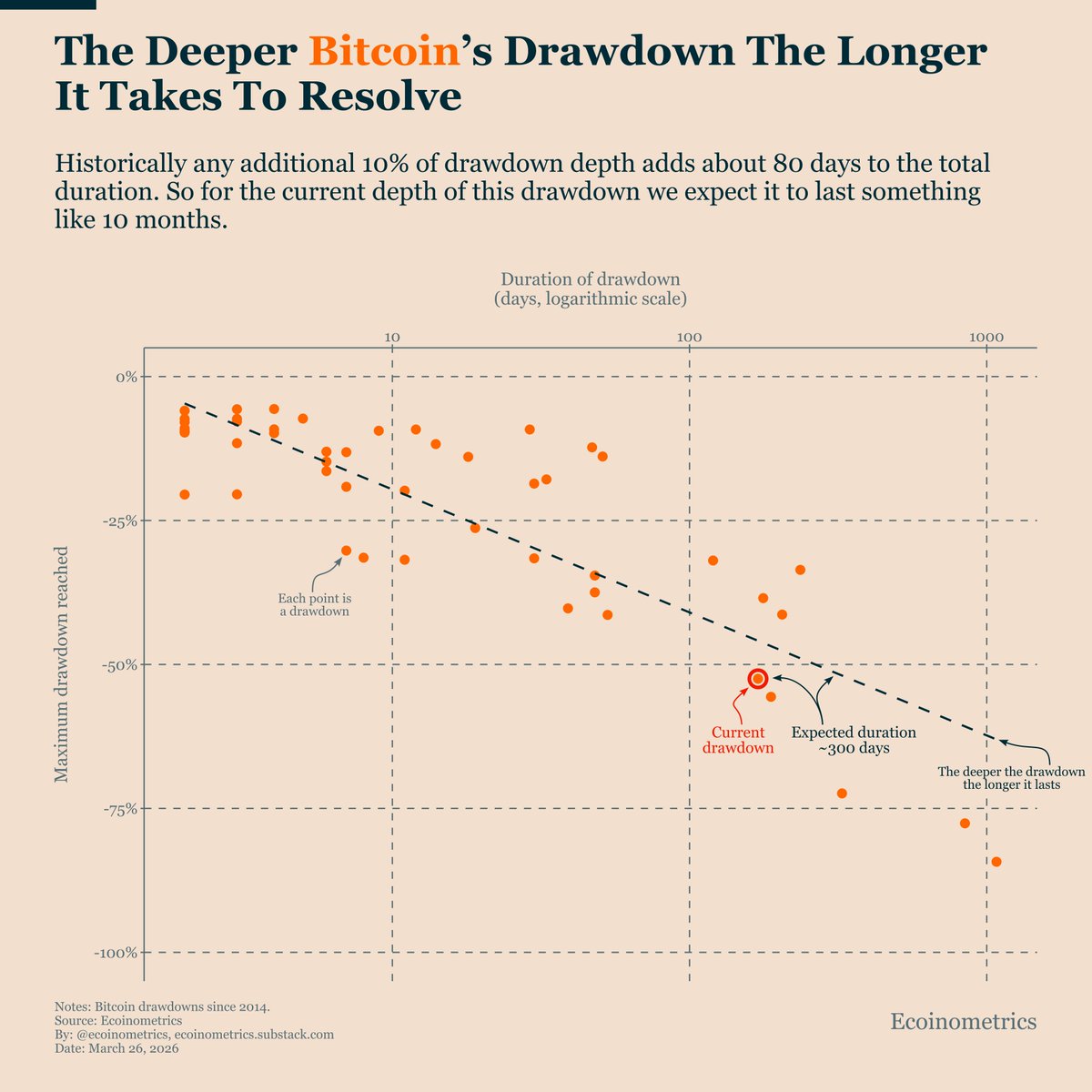
The deeper Bitcoin’s drawdowns, the longer they last.
There is a clear relationship between how far Bitcoin falls and how long it takes to recover.
Historically, every additional 10% of drawdown adds roughly 80 days to the duration.
At the current dept, that points to something on the order of 300 days.
This doesn’t say where price goes next. But it does tell you what kind of time horizon you are dealing with in this regime.
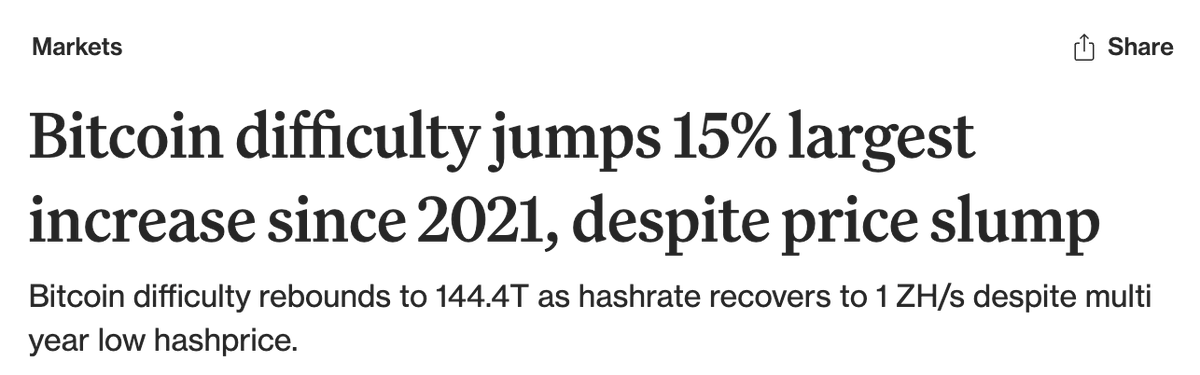
Bitcoin's mining difficulty just had its largest upward adjustment since May 2021, up 14.7% in a single move
And this is happening while miners are selling everything they produce and Bitdeer is literally liquidating their entire treasury to pivot to AI
So the network is getting harder to mine at the exact moment it's getting less profitable to mine and the companies that mine it are questioning whether they even want to be in the mining business anymore
And yet the hashrate keeps climbing
The difficulty keeps adjusting upward
The economics are brutal right now and the network just keeps going because the protocol doesn't care about quarterly earnings or analyst expectations or what the Fear and Greed Index says
Fifteen years of continuous operation through every crisis imaginable and it just keeps processing blocks
I think people forget how remarkable that actually is because they're so focused on the number going down
Europe’s ten largest tech companies include four (‼️) from the 🇳🇱 Netherlands, even though the country represents just 4% of Europe’s total population 🤯
📷 Source: Multiples
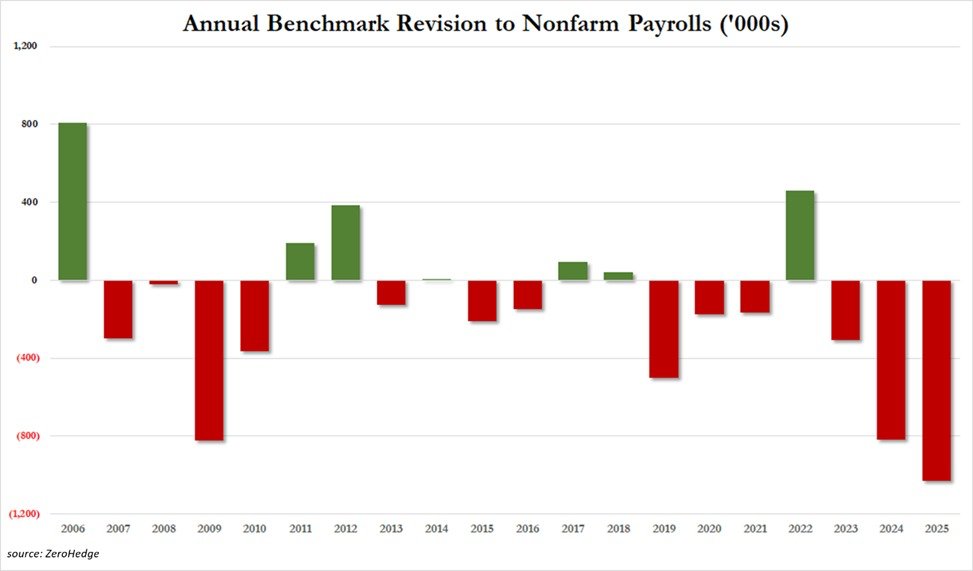
BREAKING: US job numbers were revised down by -1,029,000 jobs in 2025, the largest annual revision in at least 20 years.
This follows downward revisions of -818,000 in 2024 and -306,000 in 2023.
In total, -2,153,000 jobs have been revised out of initially reported data over the last 3 years.
Since 2019, -2,500,000 jobs have been erased from official data, with negative revisions occurring in 6 of the last 7 years.
By comparison, 2009-2010 combined downward revisions were roughly -1,200,000.
What is happening with US labor market data?
Bitcoin Bottom Signal Series.
A thread of on-chain signals which suggest the Bitcoin bottom is in, or very close. In my opinion, these are the most important on-chain metrics today. Based on Bitcoin's 13 year history, they are telling me this is an extraordinary opportunity.
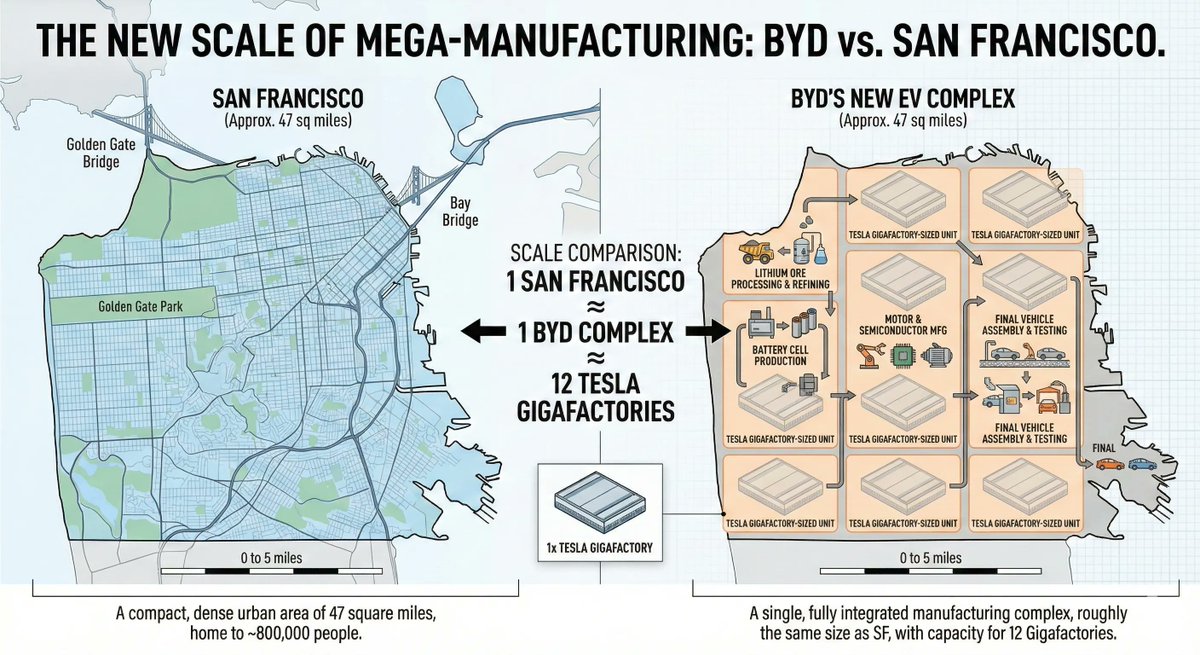
The scale here is actually hilarious when you think about it
SF covers *forty-seven* square miles
That's space for roughly 12 Tesla Gigafactories, or *every* major auto plant in Michigan combined
BYD's new complex will be so vertically integrated that lithium ore walks in one door and finished EVs drive out the other
They're building the battery cells, the motors, the semiconductors, and assembling the cars all under one roof
Tesla's original Gigafactory seemed absurd when Musk announced it
BYD just casually announced one that's 12 times bigger lol
Scale is relative, and China is redefining what large-scale manufacturing looks like
If your team relies on you for every decision, this is why. ⬇️
Every time you step in, it feels helpful.
But the signal you send is: wait, don’t decide.
Over time:
Confidence drops
Initiative fades
Ownership disappears
Not because people are incapable,
but because decisions were taken away from them.
Control works short term.
It damages teams long term.
Decision-making is a skill.
If you always decide, your team never learns.
Every decision you take away
is a lesson they don’t get.
What’s your take?
♻️ Repost to help others in your network.
➕ Follow me for more content like this.
Reflections on this bill from a Dutch citizen who has closely followed this process for years.
First: the old system. It was pretty simple: the government assumed that you make ~5% return on your assets per year. That return is then taxed (~35%). Assets include savings, stocks, crypto, etc. There is an exemption of ~€55.000 per person. Assets are measured on the 1st of January every year.
Imagine you hold one bitcoin worth €75,000. Subtracting the exemption leaves €20,000 taxable. The government presumes a €1,000 return (5%), resulting in €360 tax (35%).
In summary, this system is:
- Very simple to understand
- Low administrative burden
- Advantageous to investors where ROI >5%
- Disadvantageous to investors where ROI <5%
Savers fall into that latter group. Years of sub-5% interest rates led the government to overestimate savers' returns.
In 2021, the Supreme Court ruled that this was unlawful and that this needed to change. The government should calculate taxes based on the actual return on investment instead of the assumed return.
At this point, I want to make a few things clear:
- I don't mind paying taxes
- I think the Supreme Court's decision was correct
What I do mind is:
- Tax on paper gains
- Added administrative complexity for tax filings
- The Government is not listening to the advice of the Netherlands’ highest advisory body on legislation
- That the Tax Authority is pressuring the legislative process to make a quick decision
- Making obviously bad legislative decisions
And these are exactly the things that are happening.
For some reason, the Government decided against a capital gains-like system and chose an unrealized capital gains system.
This means that you pay tax on the paper profit you made during the year.
Let's say you have one Bitcoin on January 1st, valued at €70.000. On December 31st, Bitcoin is at €115.000. A return of €45.000. Taxes to pay: €15.750 (35%). No exemption in the new bill.
The problem: all your money is in Bitcoin.
But that is not a problem! That is what I want! That is why I stacked every single Satoshi I could since 2016. The same goes for stocks, gold, silver, or real estate: the goal is to have as little fiat as possible!
But in the short term, I have to pay €15.750 in taxes. In this example, it means I have to sell some of my Bitcoin (0.137 BTC, to be precise). After the tax, I'm left with 0.863 BTC (€99.245).
So on paper I'm doing fine (from €70.000 to €99.245 in a year). But my underlying assets are diminishing (1BTC to 0.863 BTC). The amount of Bitcoin, stocks, and gold in my portfolio is decreasing each year.
This creates a dilemma: I don’t want to sell. I expect bitcoin, stocks, and gold to rise over time. But I have to, because the Government demands it.
The obvious better choice was to tax when people decide to take a profit. I don't really have a problem with paying taxes on my realized profit. When I decide to sell, instead of being forced to sell when I don't want to.
I'm not the only one who thinks there are better options. The Council of State (the Netherlands’ highest advisory body on legislation):
"Don't do it. It's too complex (for both the tax authority and the citizens). Look for alternatives."
And still, the government marches on. And the House of Representatives 'reluctantly agrees'. What the fuck does that even mean?
"Yeah, we also don't like this bill, but we still are going to sign it into law."
It's batshit crazy. But it's where we are. That's what the quoted tweet is about.
Not all is lost, though:
- House of Representatives (2e kamer) still has to approve this bill (quote tweet is wrong here).
- Senate (1e kamer) still has to approve.
- The Tax Authority is unable to comply with this bill (too complex)
- Complexity makes this bill filled with loopholes
So, to sum it up: hopefully, Parliament comes to their senses and stops this monstrosity of a bill, and chooses one of the better options instead.
BREAKING: The US Dollar now represents ~40% of global currency reserves, the lowest in at least 20 years.
This percentage has declined -18 percentage points over the last 10 years.
Over the same period, gold’s percentage has increased +12 points, to 28%, the highest since the early 1990s.
Gold now accounts for more global FX reserves than Euro, Yen and Pound combined.
This comes as central banks continue diversifying away from the US Dollar while rapidly stockpiling gold in their vaults.
As a result, gold prices rallied +65% in 2025, the largest annual gain since 1979, while the US Dollar Index declined -9.4%, its worst annual performance in 8 years.
Gold is changing the world.
The math on this image is insane.
New Horizons transmitted at 2,000 bits per second from 3 billion miles away. Slower than a 1990s dial-up modem. It took 16 months to download all the flyby data.
The spacecraft had to hit a target box 100km wide, arriving within 150 seconds of schedule, after 9 years of flight. Miss it and the preloaded observation commands point at empty space.
Ten days before arrival, the spacecraft crashed and went into safe mode. Engineers had 72 hours to restore everything.
The probe is now 5 billion miles out, still whispering data back to Earth. We got 50 gigabits of Pluto photos using technology slower than your phone’s bluetooth.
🚨🇺🇸NICK SHIRLEY'S FRAUD VIDEO HITS 75 MILLION VIEWS - FOX NEWS AIRS HIS FOOTAGE- THE INSTITUTIONAL MEDIA GATEKEEPERS JUST LOST
75 million views. Still climbing by the hour. 400,000 likes. 150,000 reposts. Fox News running his footage on national television.
Nick Shirley just proved the entire thesis: One guy with a camera documenting fraud beats every newsroom in America combined.
Here's what just changed permanently:
Traditional media ignored the Minnesota story for years. MSNBC, CNN, local stations- they all knew about welfare fraud allegations. Nobody investigated. Too politically sensitive. Too much work. Not worth the risk.
Then Nick Shirley walks to addresses, knocks on doors, films empty buildings billing millions, and gets 75 million people watching in days.
Fox News didn't break the story. They're airing footage from a YouTuber because he did the journalism they didn't.
That's the power shift documented in real-time.
Institutional media had monopoly on investigation and distribution. You needed newsroom resources, editorial approval, broadcast access. Now you need an iPhone and the ability to read public records.
Nick found $110 million in fraud on day one. Put it on YouTube. The algorithm did the rest.
The incentive structure just got established:
75 million views = significant ad revenue. More importantly = proof that fraud investigation content scales. Every creator just saw the formula work at massive scale.
Next week: hundreds of imitators descend on every major city looking for their viral fraud expose. Because Nick just showed them the map and the treasure's real.
That's the beginning of institutional media becoming aggregators of citizen journalism rather than primary sources.
The barrier to entry just collapsed:
You don't need:
- Journalism degree
- Newsroom budget
- Editorial approval
- Broadcast license
- Corporate backing
You need:
- Public records access (free)
- Camera phone ($1000)
- Ability to walk to addresses
- Willingness to knock on doors
Nick proved the economics work. Now watch what happens when a generation realizes fraud investigation pays better than content creation and requires less creativity.
This is the DOGE army that can't be stopped:
Centralized reform efforts get bogged down in bureaucracy. But 1,000 Nick Shirleys documenting fraud simultaneously? No institution's built to counter that.
Every empty building exposed forces response. Every viral video creates political pressure. Every imitator makes the fraud harder to hide.
The decentralized investigative swarm just proved it works at scale. 75 million views is the proof.
Welcome to the new media. Too big to ignore. Too distributed to stop. Too economically viable to quit.
Source: YouTube analytics, Fox News
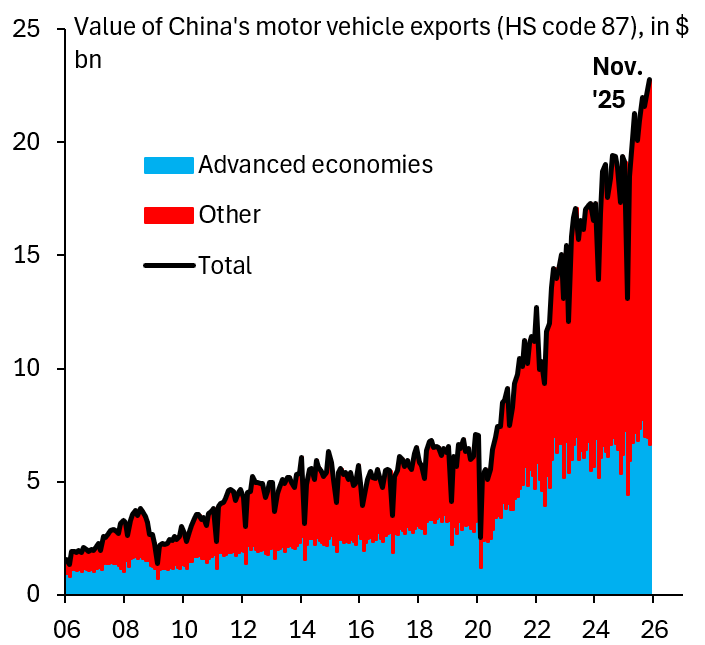
The threat to German auto producers isn't from Chinese cars flooding Germany. It's from Chinese cars flooding to emerging markets (red), where they're killing the market for German cars. That's not something EU tariffs on China are going to be able to fix.
https://t.co/5Tefp3pu7B