This is 100% completely unsustainable as a society.
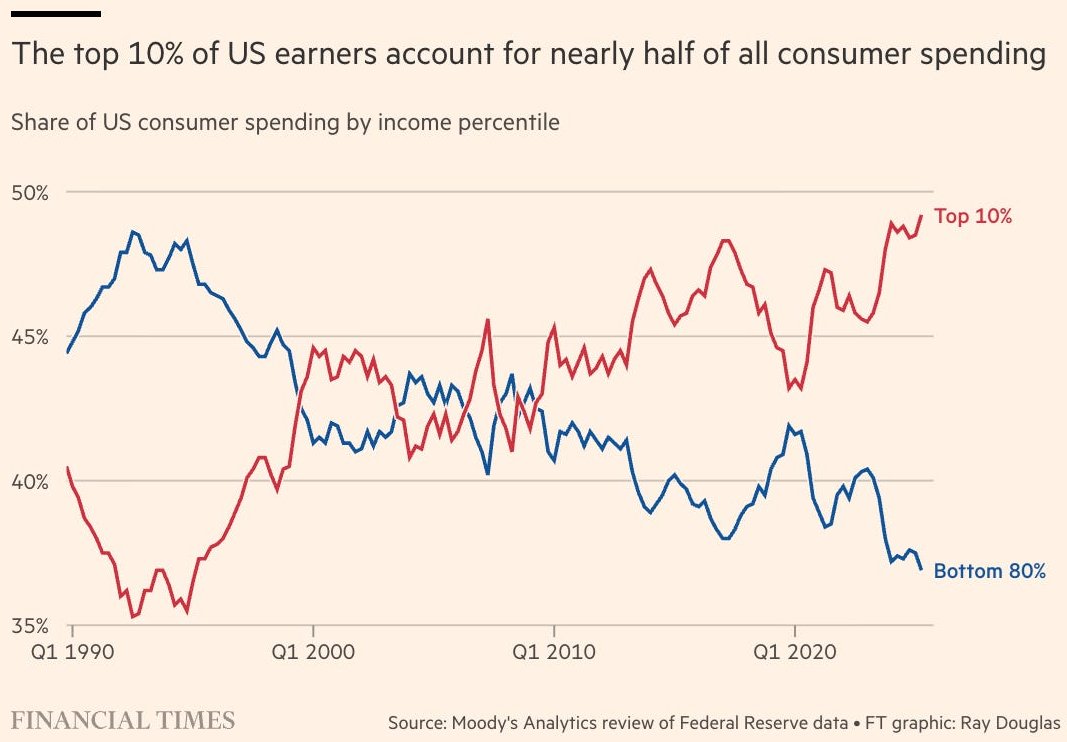
Nearly 50% of all consumer spending now comes from the top 10% of earners.
The bottom 80%?
Their share keeps falling.
This is why the economy can look strong in the data while millions of people feel like they're falling behind.
Over the last 30 years, the purchasing power of the US Consumer Dollar has been cut in half due to inflation.
At the same time, the S&P 500 has gained 874% (8% per year) after adjusting for inflation.
Why you need to invest, in one chart...
https://t.co/O8m7hWvabB
What Trump has (not) accomplished so far:
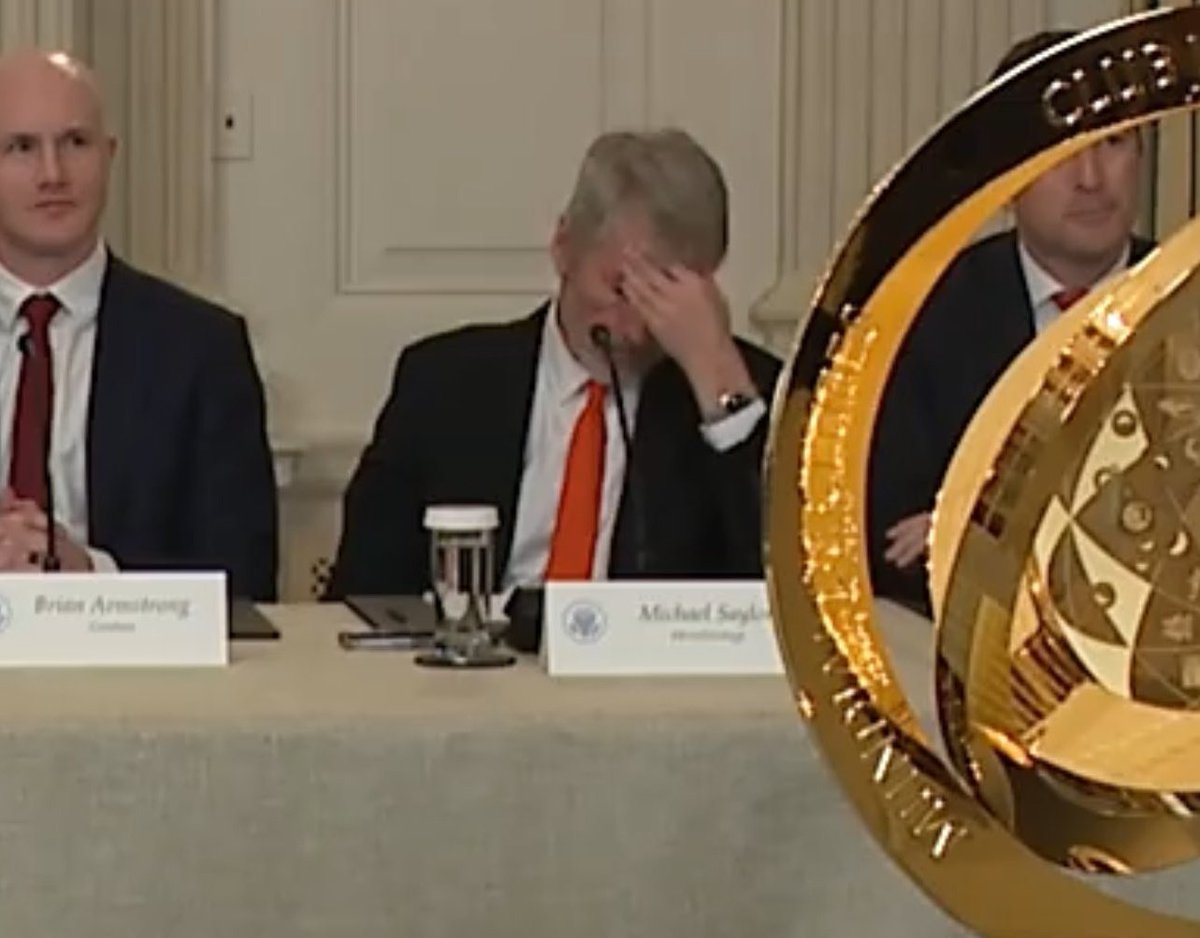
- no proof of bitcoin holdings
- no SBR (see first bullet point)
- no de minimis tax exemption
- Stablecoins are now de facto CBDCs
- trump launched a shitcoin
- paper Bitcoin on Wall Street
Promises made, nothing accomplished!
Congrats to everyone involved, great work! @CynthiaMLummis@DavidSacks@DavidFBailey@BoHines
Friendly reminder that we no longer have a fractional reserve banking system.
As of now, banks in the United States do not have reserve requirements.
In March 2020, the Federal Reserve reduced reserve requirements to 0% for all depository institutions.
Not reinstated since.
President Dwight Eisenhower, February 17, 1953:
"But I believe, and I think this can be demonstrated as fact by economists, both on the basis of history and on their theoretical and abstract reasoning, that until the deficit is eliminated from our budget, there is no hope of keeping our money stable. It is bound to continue to be cheapened, and if it is cheapened, then the necessary expenses of government each year cost more because the money is worth less. Therefore, there is no end to the inflation; there is finally no end to taxation; and the eventual result would, of course, be catastrophe."
We’re giving away our new STACK SATS hat to one lucky Bitcoiner! 🟠
Just RT this post and follow us to enter. That's it. ✅
Winner announced Friday 5/9 at 4PM CT.
Grab yours here: https://t.co/m79JkE7YNb
The US Federal Government spent $307 billion more than it took in during the month of February, bringing the budget deficit over the last 12 months up to -$2.15 trillion. That's the highest in 19 months.
https://t.co/rQuXrxVpWs
We're partnering with @fold_app to giveaway $250 in #bitcoin! 🟠
Just RT this tweet to enter. That's it ✅
Winner announced Tuesday 3/11 at 4PM EST.
We're doing this to celebrate the first-ever bitcoin rewards credit card. Join the waitlist now!
https://t.co/vWu3X6A3Yq
What is Triffin's Dilemma?
In 1959, a Belgian economist named Robert Triffin testified to Congress about the dangers of the USD becoming the global reserve currency, after he observed what was called the "dollar glut".
Under Bretton Woods, the dollar was to be redeemable into gold, but the 'dollar glut' noted that there was an overabundance of dollars outside the US, without the corresponding amount of gold. This ultimately led to a collapse of the gold standard in 1971.
Because of being the reserve currency and the demand for dollars, the US was forced to run deficits on its current account. This means that the US was importing more than it was exporting, then financing the difference by borrowing or creating more dollars.
However, this current account deficit led to an accumulation of vastly more dollars overseas, than there was gold (which allegedly backed those dollars' value).
Balance of payments ('BOP'- the difference between money flowing into a country, vs out of the country):
The BOP has two main components:
-Current Account
-Capital Account and Financial Account
The Current Account, as previously mentioned, is primarily comprised of the Trade Balance ('BOT'), or the value of imports vs exports.
The Capital Account represents capital transfers and the transfer of non-financial assets and the Financial Account shows investment flows which include foreign direct investment ('FDI'), portfolio investment, and other capital investments into and out of the country.
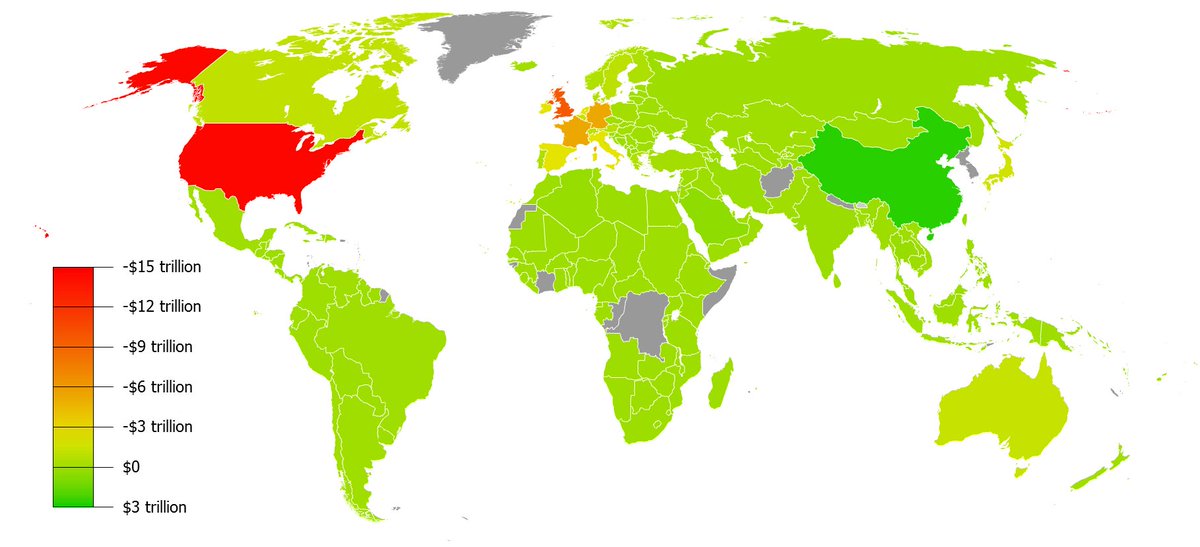
As you can see, any deficit in the current account (mainly, the trade deficit), must be balanced by an equal amount of capital inflows. This is what has led to the hyper-financialization of our economy.
Post Bretton Woods, the agreement was essentially this:
"We love the power that comes with being able to wield King Dollar as a weapon so much, that we will hollow out our industrial base and ship our jobs overseas.
You will make everything we need, and we will run ever-increasing twin deficits to get you dollars for our stuff. We'll oversee the best capital markets in the world, so you can recycle those dollars back into our assets."
This is what has led to historic wealth inequality, *worse even than The Gilded Age*
This has also created, arguably, the biggest national security threat of our time, illustrated beautifully by COVID (reliance on China for PPE, medication, etc.) and the stunning lack of a functional defense industrial base (eg losing a proxy war to a country with 1/10th the GDP)
As the dollar continues to strengthen, our exports become less and less competitive, but the 'carry' for the rest of the world (especially given how strongly performing US assets are), continues to increase.
This only ends, when the dollar's reserve currency status ends.
Quantum Computing & Bitcoin🤔
-Why the Microsoft Majorana 1 announcement is interesting
-Bitcoin's potential quantum path forward w/ @cryptoquick BIP360 proposal
-My attempt at making quantum understandable
Let me know what you guys think in the comments.