Everyone is short after the flush.
I’m looking at the reclaim.
Confluence: 0.5 Fib + FVG + SMA support.
$BTC long from 66k → 80k.
Structure doesn’t lie.
Liquidity is on exchanges — but not buying Bitcoin.
USDC rising = parked capital.
USDT ERC-20 falling = weaker on-chain activity.
USDT TRC-20 rising = derivatives, not spot.
Capital isn’t leaving crypto. It’s defensive.
Until this flips into spot BTC demand, upside remains fragile.
Biggest buyers are now sitting on heavy unrealized losses.
• Strategy: −$6B on $BTC (−12%)
• BitMine: −$8B on $ETH (−49%)
• Forward Industries: −$1B on $SOL (−65%)
When large holders go deep into red,
forced selling risk starts to rise.
OTHERS/BTC is reversing while Bitcoin is still in a bear phase.
This never happened in previous cycles.
Alts used to bleed vs BTC before the recovery.
Now they are finishing the bleed during it.
Same cycle.
Different timing.
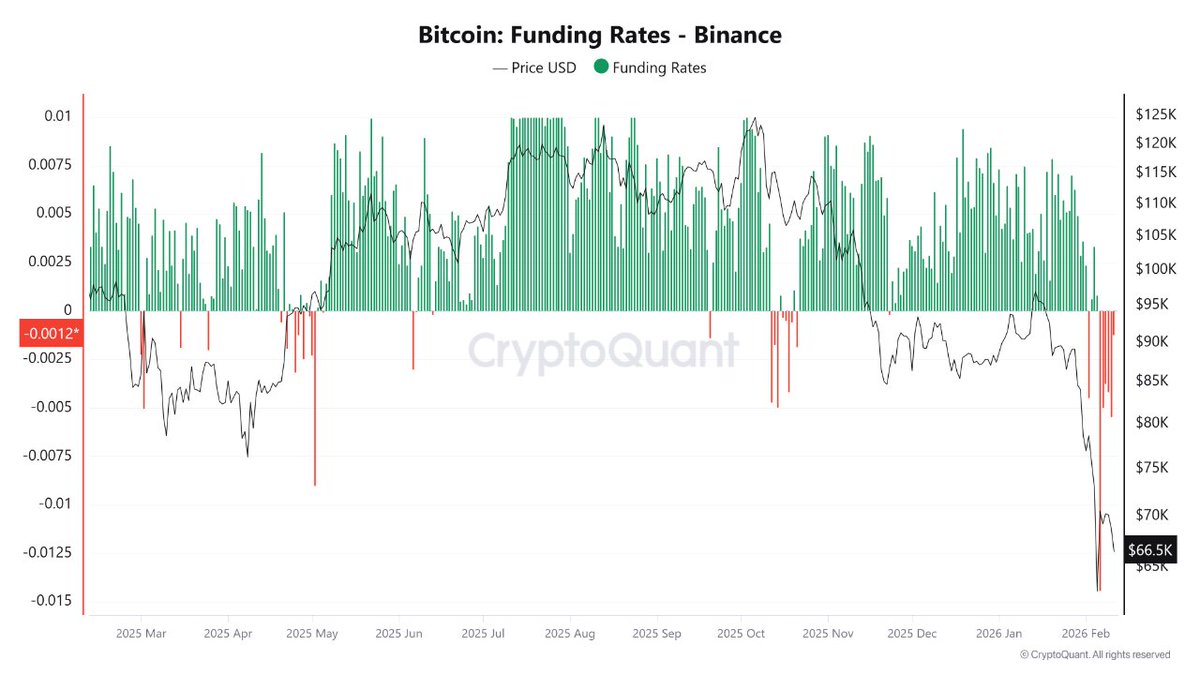
Funding on Binance is deeply negative while $BTC sits at $66.5K.
Shorts are overcrowded.
Fear is dominant.
Leverage is building on the downside.
This is the exact setup that often precedes a short squeeze.
If sell pressure weakens, forced short covers can accelerate fast — potentially from the $58K region.
Binance is where real positioning happens.
Imbalances here move the market.
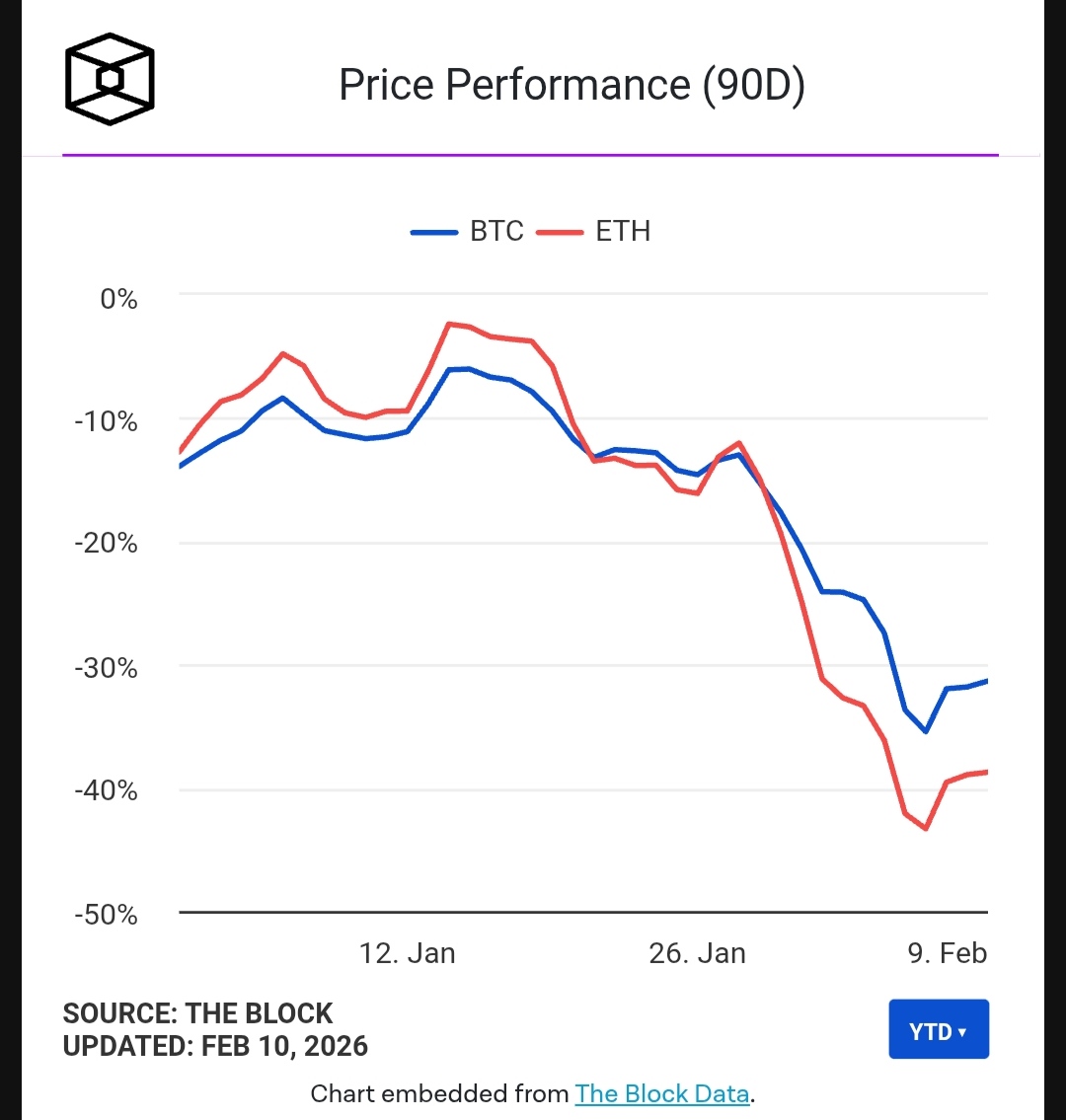
$ETH down ~45% in 90 days.
$BTC down ~30%.
Same pattern every cycle when liquidity contracts.
Hawkish Fed → tighter conditions → crypto repricing risk.
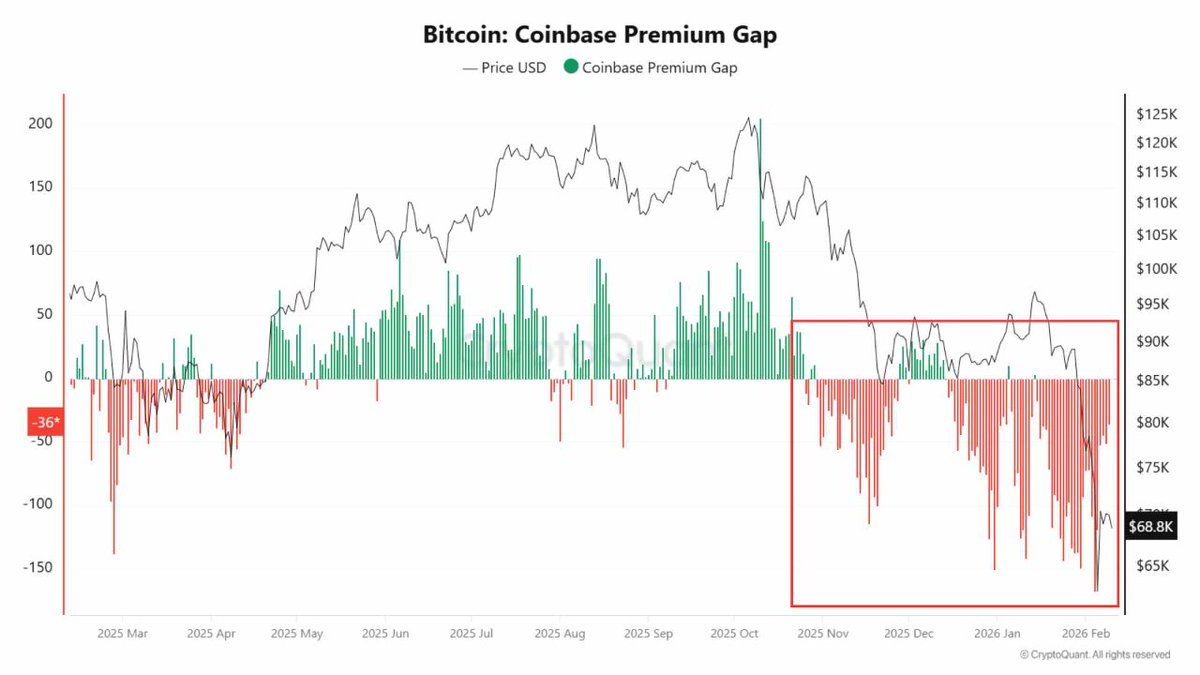
US consumer slowdown + persistent negative Coinbase Premium.
Spot demand in the US remains weak.
Recent moves are driven more by derivatives than real buying.
Robinhood’s crypto revenue fell 38% in Q4.
The company is now relying more on subscriptions, interest income and institutional activity than trading spikes.