Swiss-engineered AI routing just hit different.
⚡One API, One Price, zero compromise. Your agents deserve reliable infrastructure. https://t.co/8ot4tmHK4A
OpenClaw is making waves! 🦞 Great analysis on why AI agents are going mainstream - and how flat-rate pricing like ours is changing the game. No token anxiety. No surprise bills. Just unlimited AI power. 🚀 #AI#OpenClaw#AIRouterSwitzerland#Qwen35
https://t.co/j3EqbNfDDO
🎯 POV: You check your OpenClaw bill at 3am I built https://t.co/c3jYSJDZKz for this. 24/7 agents, unpredictable bills, token counting at midnight. We do flat-rate unlimited instead. Swiss-hosted. Qwen3.5. No surprises. #AI#OpenClaw#Qwen#APIPricing#DevTools
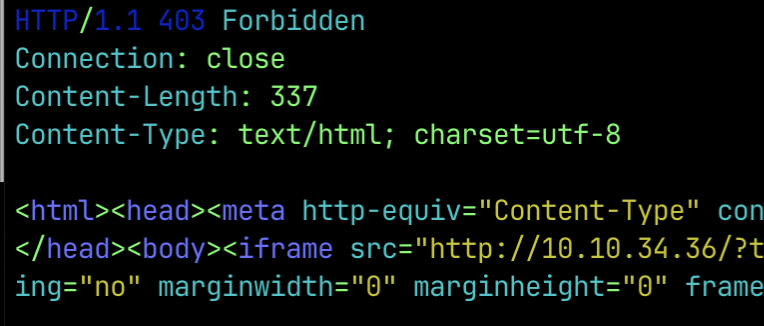
Let me introduce you to my most novel and oldest technique to verify if sites behind CDN are hosted in Inside Iran or not. Works most of the time. I call it the BOOBS CHECK.
curl -i https://domain/boobs.jpg
If your response is a 403 with 10.10.34.x IP in body, you're landing inside IR. Result of basic censorship filtering applied on traffic.
I am gonna go out on a limb and actually say this is pretty cool. Nakamoto style consensus without proof of work is extremely hard to build. The protocol functioned as designed in the presence of bugs.
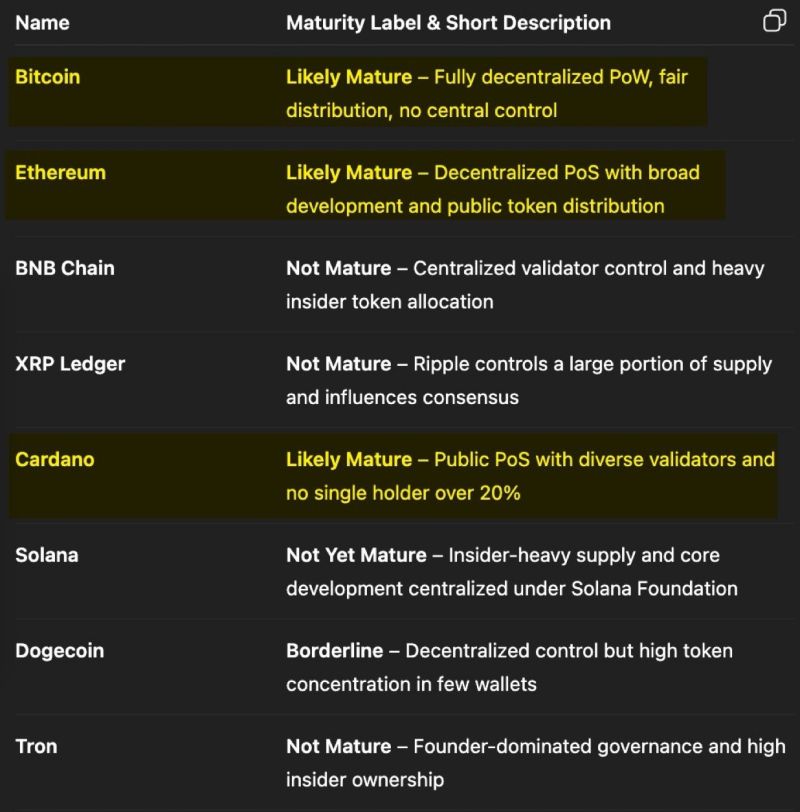
What is fascinating about yesterday's event is how Cardano recovered from a minority chain and got rid of the symptom while preserving most of the history and progress since the incident.
🧵
🚨🇺🇸GRAYSCALE FILES FOR CARDANO ETF ON NYSE
Crypto asset manager Grayscale has officially filed for a Cardano (ADA) exchange-traded fund (ETF) with the New York Stock Exchange, expanding its push into regulated crypto investments.
This comes as Grayscale and other asset managers race to launch crypto ETFs, with recent filings for XRP, Solana, and Litecoin.
Institutional interest in Cardano is heating up—just last week, Virtune AB launched a Cardano ETP on Nasdaq Helsinki.
Source: TheStreet
🚨 $ADA just erased 7 months of downtrend and sideways action in just 1 week.
If you held all this time, congrats, have a good one tonight.
What is next?
Cardano CBOR TX decoder is now live:
https://t.co/SeoLlWoUgU
as part of the upcoming 🐟 https://t.co/nChWsoVTcA platform.
Thanks for all the feedback and ideas, a lot of it might be added soon
I investigated the sell off on $Meld token @onMELD and found that the wallet that held the partnership funds around 180M $MELD ~4.6% of the total supply dispersed the funds 7 days ago to over 40 wallets who initiated the sell off. More below.
The wallet in question -stake1uy7xxwkyz3523gju7le3dvpvtxemq20suf47m3fvdhau0uc7gzzde received from the $MELD minted amount around 182m Meld. By inspecting the tokenomics sheet its seems to be the Partnerships wallet which should own 186m.
This address paid out $kenblaue 5M meld 1 month ago. But the funds starting being sent out to most of the addresses on Oct 31, last week as you can see by the outbound transfers
Most of the addresses that received the tokens 7-6 days ago did not sell or cause the sell off. But a lot of them have sold meld some in large quantities previously in 2023-2024
However, one of those addresses received a larger chunk 9.8m tokens
-stake1u975ckc6e7ph583zh384ah9cd02fg5h4al70vqcu7rmvuyqa0k2w2 5 days ago was responsible for dispersing the funds to the wallets that caused the selloff starting at the price of 0.026 $ADA
The addresses below that received the meld from this address have sold their $meld triggering the initial sell off on Nov 3.
What's also interesting to note is that bot addresses that trade and arb tokens heavily sold $meld during that time which further exacerbated the selloff.
Those bot addresses are:
-stake1u80gfeedn5ery9f4clmesfrkvu5vzqq29uzsk47x82elp4qruh0ka
-stake1u9xeh3z7t5v3usyfg8gcmwavr472wdltsgf56yk6855vj5qvvx2vf
Important update from the Cardano Foundation regarding governance action titled "Should K increased?"
This action has been deemed unconstitutional.🚫
In the thread I will break down what this means. 🧵
🚀 Now Live: USDM by Moneta is officially trading on Norwegian Block Exchange! Trade today and be part of the future. 🌐 Minting & redeeming coming Q1 2025. Start trading now at https://t.co/T1DYnCd8iR #USDM#NBX#Cardano
That's a terrible take from @PeterMcCormack.
I don't hold any $ADA, and I don't even like Cardano much, but this post is highly misleading and the fruit of misinformation. Peter should do his research better.
This Cardano<>Bitcoin implementation is apparently far more secure than most Lightning Network implementations, for example, which he used to promote relentlessly to his followers.
Maxis will be maxis, I guess. 🤷
-
I asked OpenAI o1 via @NanoGPTcom to review and analyze @BTC_OS whitepaper, commenting on the trade-offs, vulnerabilities, risks, and BTC influencers calling it a scam. Here's what the AI said:
The BitcoinOS whitepaper introduces **BitSNARK** and **Grail**, proposing an innovative approach to enhance Bitcoin's functionality by enabling trustless and secure bridges between Bitcoin and other blockchain networks, such as Cardano. The core of this proposal is to optimize the recently introduced **BitVM** paradigm for verifying zk-SNARK proofs on the Bitcoin blockchain without altering Bitcoin's consensus rules. Below, I provide an analysis of the whitepaper, its security implications compared to existing Layer 2 (L2) solutions like the Lightning Network and Liquid, potential trade-offs and vulnerabilities, user considerations to mitigate risks, and its prospects for the future. Additionally, I will address the criticisms from Bitcoin maximalists labeling it a "scam."
---
### **Overview of BitSNARK and Grail**
**BitVM Overview**
- **BitVM**, introduced by Robin Linus in December 2023, allows for Turing-complete computations on Bitcoin by leveraging an interactive protocol between parties to verify off-chain computations.
- It opens the possibility for near trustless rollup bridges on Bitcoin without changing its consensus rules.
- However, BitVM, being general-purpose, is not optimized for specific tasks like SNARK verification, leading to practical implementation challenges.
**BitSNARK's Innovations**
- **BitSNARK** builds upon BitVM but focuses specifically on verifying zk-SNARK proofs efficiently on the Bitcoin blockchain.
- It introduces a simplified virtual machine (VM) with only three instructions optimized for finite field calculations required in zk-SNARK verification:
- `addmod` for modular addition.
- `andbit` for bitwise operations.
- `equal` for equality checks.
- By reducing complexity, BitSNARK improves program size by an order of magnitude and reduces challenge/response lengths by up to 50%.
- It simplifies the challenge protocol to a single type, enhancing security and auditability.
**Grail Bridge Implementation**
- **Grail** is an implementation of BitSNARK, aiming to provide a practical and scalable Bitcoin Rollup Bridge.
- It enables users to transfer assets between the Bitcoin mainchain (Layer 1) and Layer 2 networks (rollups) securely.
- Grail relies on a set of **operators** who participate in the protocol to facilitate deposits and withdrawals.
- Operators engage in an interactive verification protocol, ensuring that zk-SNARK proofs are correctly verified on-chain.
- The system incentivizes honest participation through economic incentives and penalties.
---
### **Security Analysis**
#### **Comparison with Existing L2 Solutions**
**Lightning Network**
- **Pros:**
- Offers fast, low-cost transactions off-chain.
- Preserves Bitcoin's on-chain privacy features.
- **Cons:**
- Requires continuous network connectivity.
- Involves counterparty risk due to channel management.
- Limited in handling complex smart contracts or interoperability with other chains.
**Liquid Network**
- **Pros:**
- Federated sidechain allowing faster transactions and confidential assets.
- Enables issuance of new assets and atomic swaps.
- **Cons:**
- Federation model introduces trust assumptions.
- Less decentralized due to reliance on functionaries.
**BitSNARK and Grail**
- **Pros:**
- Enables verification of zk-SNARK proofs on Bitcoin without consensus changes.
- Facilitates truly trustless and decentralized bridges to other chains.
- Reduces complexity and enhances efficiency compared to BitVM.
- Operators' incentives align to maintain security without requiring majority trust.
- **Cons:**
- Relies on an interactive protocol between operators, potentially increasing complexity.
- New technology may have undiscovered vulnerabilities.
- Requires widespread operator participation for robustness.
#### **Potential Vulnerabilities**
1. **Operator Collusion or Malfeasance:**
- If operators collude, they could potentially censor transactions or delay withdrawals.
- Mitigation: Implement robust economic incentives and penalties, and promote decentralization by encouraging more operators to participate.
2. **Interactive Protocol Risks:**
- The interactive verification protocol relies on timely responses; delays or Denial-of-Service (DoS) attacks could disrupt the protocol.
- Mitigation: Incorporate timeouts and fail-safes, and design protocols resilient to network latency and attacks.
3. **Smart Contract Bugs:**
- Bugs in the implementation of BitSNARK VM or the Grail protocol could be exploited.
- Mitigation: Conduct thorough code audits, formal verification, and testing on testnets before mainnet deployment.
4. **Cryptographic Assumptions:**
- The security relies on the cryptographic primitives used in zk-SNARKs and their correct implementation.
- Mitigation: Use well-established cryptographic libraries and stay updated on advancements in cryptanalysis.
5. **Scalability Concerns:**
- Although more efficient than BitVM, running zk-SNARK verifications on-chain is resource-intensive.
- Mitigation: Optimize the implementation further and possibly leverage layer 2 solutions for certain computations.
---
### **Trade-offs and User Considerations**
**Trade-offs:**
- **Complexity vs. Functionality:**
- BitSNARK simplifies the computation model but requires users and operators to understand and trust a new protocol.
- **Decentralization vs. Performance:**
- The security model relies on operators; increasing the number of operators enhances decentralization but may impact performance due to coordination overhead.
- **Innovation vs. Maturity:**
- As a novel solution, it lacks the battle-tested resilience of existing L2 solutions like the Lightning Network.
**User Considerations:**
1. **Counterparty Risk:**
- Users should be aware that the system's security depends on operators; participation of reputable operators is crucial.
- **Recommendation:** Use the bridge when a sufficient number of trusted operators are active.
2. **Protocol Familiarity:**
- Users need to understand the withdrawal and dispute processes.
- **Recommendation:** Educate users through clear documentation and user-friendly interfaces.
3. **Security Practices:**
- Be cautious with private keys and exit secrets, especially for operators.
- **Recommendation:** Implement best practices for key management and consider hardware wallets.
4. **Monitoring Network Conditions:**
- Network congestion or attacks could affect transaction confirmations.
- **Recommendation:** Monitor network status and set appropriate fees for timely confirmations.
---
### **Potential for the Future**
- **Solving the Scalability Trilemma:**
- BitSNARK and Grail present a promising approach to achieving scalability, expressivity, and decentralization on Bitcoin.
- **Interoperability:**
- Enables Bitcoin to interact trustlessly with other chains, expanding its utility beyond a store of value.
- **Innovation Catalyst:**
- May inspire further research and development in Bitcoin's smart contract capabilities.
---
### **Addressing the "Scam" Accusations by Bitcoin Maximalists**
**Criticisms:**
- **Skepticism of Altering Bitcoin's Core Principles:**
- Some Bitcoin maximalists may view this proposal as deviating from Bitcoin's original purpose.
- **Fear of Centralization Risks:**
- Concerns that introducing complex protocols could introduce central points of failure.
**Counterarguments:**
- **Maintaining Consensus Rules:**
- BitSNARK operates without changing Bitcoin's consensus rules, preserving its core principles.
- **Enhancing Bitcoin's Utility:**
- The proposal aims to expand Bitcoin's capabilities while upholding decentralization and security.
- **Economic Incentives for Security:**
- The design relies on economic incentives aligning participants' interests with the network's security.
**Conclusion:**
- **Healthy Skepticism is Beneficial:**
- Critiques promote rigorous security assessments and robustness.
- **Innovation Requires Open-mindedness:**
- Dismissing new ideas outright may hinder Bitcoin's evolution and adaptability.
- **Focus on Merits and Risks:**
- A balanced evaluation considering potential benefits and drawbacks is essential.
---
### **Final Thoughts**
The BitcoinOS whitepaper introduces a significant advancement in enabling trustless and secure interoperability between Bitcoin and other blockchain networks. By optimizing for zk-SNARK verification through BitSNARK and implementing the Grail bridge, it aims to address long-standing scalability and functionality limitations. While promising, it is crucial to approach this innovation with careful scrutiny, thorough testing, and a commitment to security best practices. Users and stakeholders should remain informed, participate in community discussions, and contribute to the development and auditing processes to ensure the system's robustness and integrity.