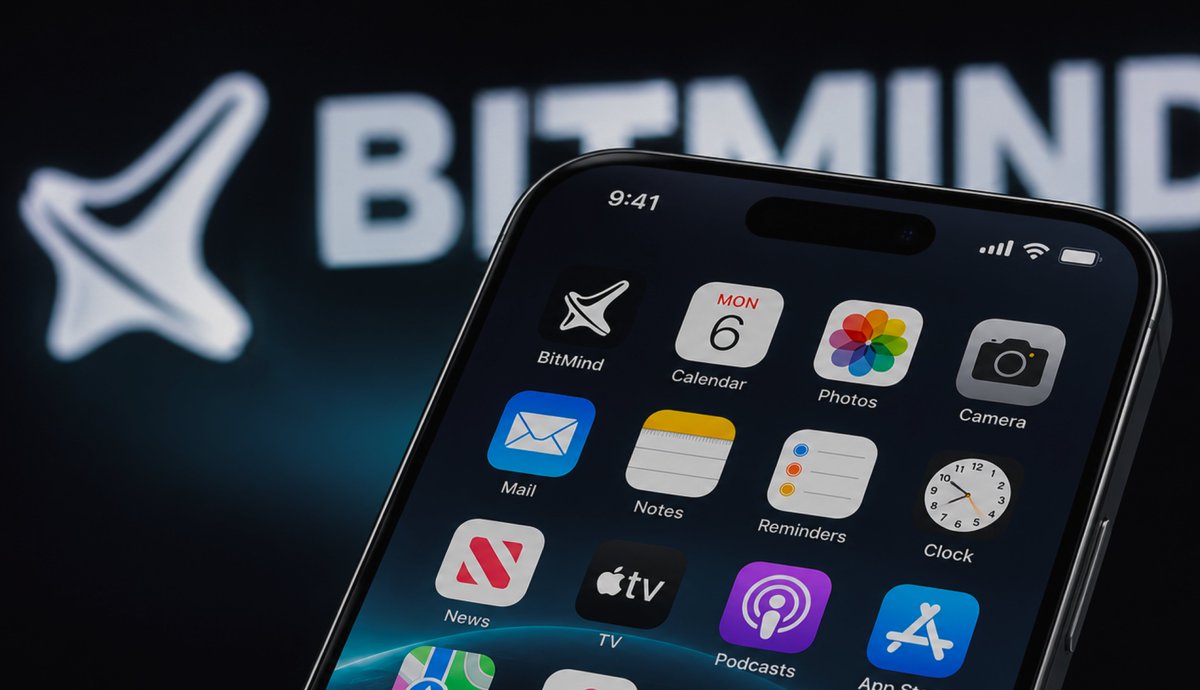
Our updated mobile app allows you to generate AND detect deepfakes in seconds.
Create, verify, and explore AI-generated content all in one place.
Try BitMind's AI Detector & Creator app here: https://t.co/NcqMJ4QdUB
The last AI model you'll ever choose.
New models launch every week. Pricing changes. Intelligence improves. Providers compete on speed, cost, and performance.
Keeping up with which model to use, from which provider, and at what reasoning effort is becoming a full-time job.
Introducing Yugos.
One intelligent decision layer for AI inference that continuously optimizes for intelligence, cost, and speed.
Yugos automatically selects the best model, provider, and reasoning effort for every request.
As new models launch, pricing changes, and performance evolves, Yugos adapts automatically.
All with full transparency into model selection, usage, and costs.
Stop choosing models. Let Yugos optimize intelligence for you.
Live today. ↓
Everyone worries about fake videos being believed.
The scarier problem is the reverse: real videos dismissed as fake. Caught on camera? “It’s AI.” Researchers call it the liar’s dividend, and every viral deepfake pays it.
Detection cuts both ways. Proving content fake protects the audience. Proving it real protects the truth. You need both, and eyes can’t do either anymore.
Update from last week: California’s digital replica bill passed committee 15 to 0. 24 of 29 AI bills advanced in a single day.
Running total: 85 AI laws enacted across 27 states.
85 laws. Zero define how you prove content is synthetic. The gap between statute and evidence is now the biggest open problem in AI policy.
Three predictions for the next 12 months of synthetic media:
1. A major court case will turn on whether a video can be proven synthetic. Detection evidence will decide it.
2. Label laws will keep passing (85 and counting), and enforcement will quietly outsource to detection, because scammers don’t label.
3. The bigger crisis flips: real footage dismissed as fake becomes as damaging as fake footage believed real.
Bookmark this.
None of these require expertise. They require a pause.
The scam works because it arrives mid-scroll, mid-trust, mid-hurry. Sixty seconds of friction defeats attacks that fool experts at a glance.
And for everything that gets past the pause: that’s what we’re building the detection layer for.
Before you trust it:
1. Check who posted it first, not who shared it loudest.
2. Urgency is the tell. “Act now” is the scammer’s favorite sentence.
3. If a public figure is endorsing an investment, assume fake until proven otherwise. Regulators say those are now the #1 deepfake scam.
4. Run it through a detector. Takes seconds.
Australia’s market regulator removed 19,400 scams last year. Up 182%. Deepfakes of the Prime Minister and trusted finance journalists are selling fake investments, and Australians lost $2B anyway.
Takedowns happen after the money is gone. Detection has to happen before the click.
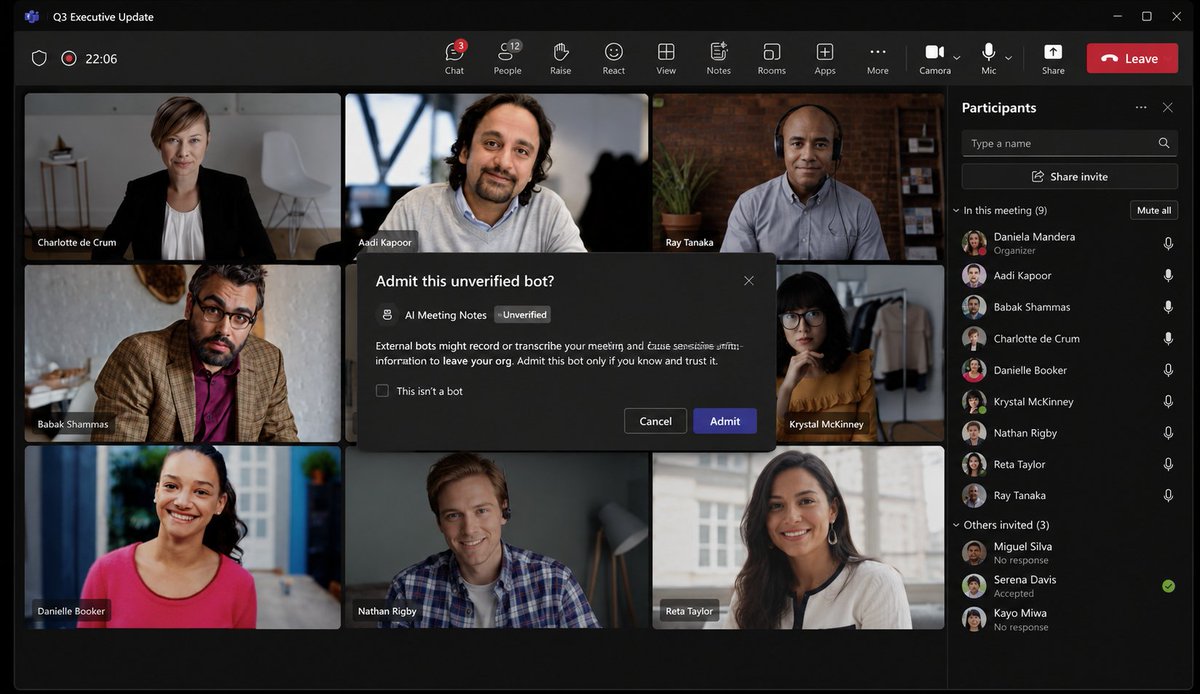
The industry’s answer ships this month: a “report a concern” button in Microsoft Teams.
A button assumes someone suspects. This attack is designed so nobody does.
The fix is a layer under the call asking what humans forget to ask: is this face real, right now. That’s what we build.
9:58am. A finance director joins a video call with the CFO and two colleagues she recognizes.
10:31am. $25 million is gone. Every face on that call was synthetic.
This actually happens. Here’s the anatomy. 🧵
The playbook: scrape executive video from earnings calls. Clone voices from seconds of audio. Join on a “traveling, bad camera” setup. Urgent confidential deal.
Every safeguard fails politely. She recognized the faces. And the manager she’d verify with was on the call.
Today California votes on ~30 AI bills in one day. Digital replica fraud. Deepfake extortion. Pennsylvania just passed its deepfake bill 202 to 0. Nothing passes 202 to 0.
None of them define how you prove content is synthetic.
Every AI law is a detection mandate in disguise.
The old deepfake tells are dead. No six fingers, no weird ears.
What a detector reads instead: frequency artifacts from the generation process, noise that matches no camera sensor, lighting that’s almost right.
“Almost right” survives compression, resizing, screenshots. Your eyes never see it. The model always does.
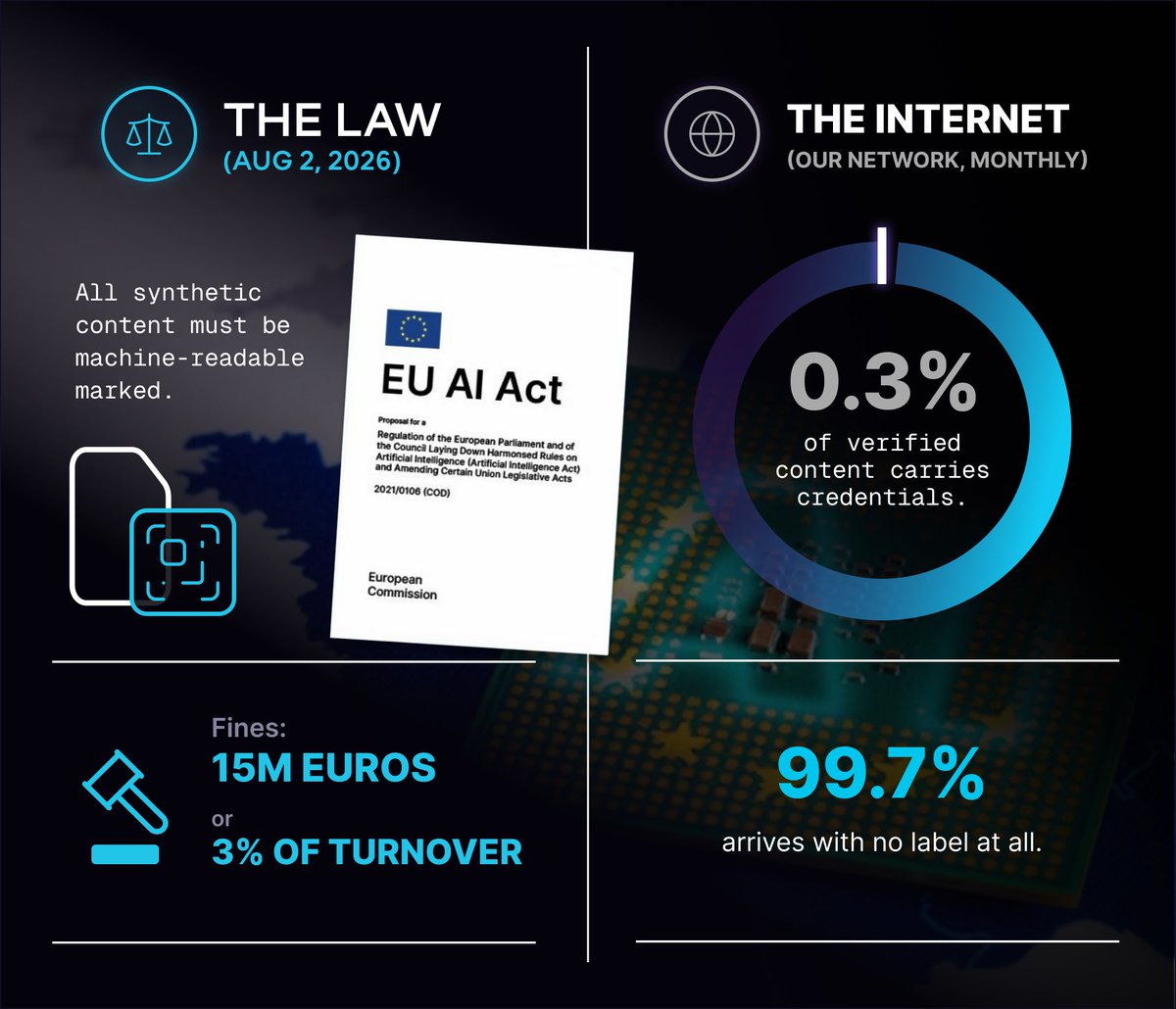
EU law now requires machine-readable marking on all AI content. Fines up to 15M euros. New York is drafting the same rule.
Our network: 0.3% of content we’re asked to verify carries any credential.
The label laws are live. The labels aren’t. Detection reads pixels, not paperwork.
Detection at that scale can’t be a model trained once and shipped. Scammers iterate weekly. The detector has to iterate faster.
That’s why ours lives inside an adversarial network, tested nonstop by people paid to beat it, retrained on every fake that wins.
The FBI says Americans lost $893 million to AI-powered crime last year.
The official advice for protecting your family?
Set up a safe word with your mom.
We need to talk about that. 🧵
Read the recommended defenses closely: verify through a known contact. Hang up and redial. Use a family password.
Every single one assumes the same thing: that no technology can tell you whether the voice or face is real. Humans are the last line of defense.
We serve millions of detection requests a month.
0.3% of that content carries C2PA credentials.
Provenance standards are great when they’re present. The other 99.7% of the internet doesn’t come with a label, and the people making scams and deepfakes will never opt in to one.
Watermarks tell you where content claims to come from. Detection tells you what it is. In the age of the open internet, only one of those works without permission.