Medsos itu ga bs menggambarkan realita ya. Algoritma emg bs bikin konten lewat di fyp. Tp blm tentu bs bikin 50.000 manusia REAL ke luar rumah dtg ke depan Istana Kepresidenan & nyanyi bareng, bhkn cuma dlm beberapa jam setelah pengumuman. Btw ini di luar konser dan baru 1 negara. Ini baru real world impact.
This is the second time BTS has completely flipped the script. The first was during the military exemption debate, when everyone seemed eager to ride BTS’s success and extend the benefits to groups that hadn’t reached the same level. Then BTS announced they would enlist voluntarily, and the whole plan fell apart overnight.
Now it’s happening again. Some people were celebrating an “Asian Pop” category as the shortcut to Grammy recognition, but they never stopped to ask whether their faves could actually earn those nominations in an open field. 😭 Then BTS once again took control of the narrative by refusing to submit altogether, turning what was supposed to be a victory lap into complete chaos.
And now? The loudest complaints seem to be coming from the people who thought this category was their golden ticket. Funny how that works.
This category was created because of BTS, and it’ll be removed because of BTS too.
a gestão do grammy criou toda uma situação apenas porque o bts disse que não iria se inscrever.
falaram tanto que queriam abrir as portas pra musica asiática, mas bastou que eles se recusassem a participar pra virarem tudo contra eles.
estão se justificando demais, deletando tudo sobre eles e achando que somos burros ao dizer que era só uma forma de dar visibilidade para os asiáticos e não de separar os artistas.
mas que contraditório, né? no fim, com todas as movimentações que os idealizadores fizeram até agora, a gente percebe que o bts tinha um peso enorme sim nisso tudo pra eles. ou então não precisariam criar outra categoria só pra rotular um grupo que notoriamente poderia vencer a categoria principal.
que preocupação engraçada é essa?
BTS didn’t get here because some executives decided to hand them everything on a silver platter. They literally started from a tiny company that almost went bankrupt, wrote and produced a huge chunk of their own music, and built this global empire one stage, one album, one emotional gut-punch of a lyric at a time.
Industry connections don’t make people cry to “Spring Day,” scream the entire “Black Swan” choreo in the rain, or stream “Dynamite” into history. Talent, hard work, and music that actually hits different does that. Every award, every record, every sold-out stadium has ARMY’s fingerprints all over it because the music connected first.
So keep that “connections only” narrative. We’ll keep streaming, voting, and watching our boys prove you wrong the same way they always have — with the music. 💜
nah kalo SM sempet mau sabotase bts mah baru ada buktinya ini.. sempet rame jir waktu itu.. we all know that SM is so obsessed with bts dgn buat grup baru hasil ambil anak emas trus jadi superM, right? iTS SO OBVIOUS CUZ THEYRE COPIED DYNAMITE BRUH 😭
The rapid global chart ascension of a B-side track like "Aliens" immediately following a major institutional withdrawal is a stark demonstration of decentralized consumer power. This phenomenon highlights a fundamental shift in how musical influence is established and maintained in the modern era.
1. The Decentralization of Market Control
Bypassing the Gatekeepers: Traditional music industry models rely on a top-down structure where labels, radio programmers, and award committees validate an artist's status. A fandom mobilizing to drive a non-promoted track to the top of international charts effectively cuts out these traditional intermediaries.
Instantaneous Global Infrastructure: The ability to coordinate streaming and purchasing across multiple continents within hours reveals a highly sophisticated, borderless network. This network operates with a level of agility that traditional corporate marketing campaigns rarely match.
2. The Financial and Cultural Reality of Independence
Direct-to-Consumer Leverage: When a global act boasts a consumer base capable of generating massive, immediate commercial spikes independently, the traditional incentives offered by industry institutions lose their leverage.
Redefining the Value Matrix: For decades, institutional accolades like the Grammys served as the ultimate metric of peak artistic achievement. This sudden chart dominance suggests that, for a growing segment of the global market, active and immediate audience engagement has replaced industry trophies as the primary measure of cultural relevance.
3. A Precedent for Global Acts
The Blueprint Shift: This mobilization serves as a case study for international artists navigating Western markets. It demonstrates that entering a market no longer requires conforming to institutional boxes or accepting segregated categories.
Shifting the Power Balance: By proving that an artist can walk away from prestigious platforms and still dominate global conversations, the audience forces these very institutions to re-evaluate their own relevance in a rapidly globalizing landscape.
Ultimately, whether viewed as a fan statement or a market anomaly, the sheer scale of the coordination makes it a metric that industry analysts cannot ignore. The consumer has effectively claimed the power to dictate the narrative.
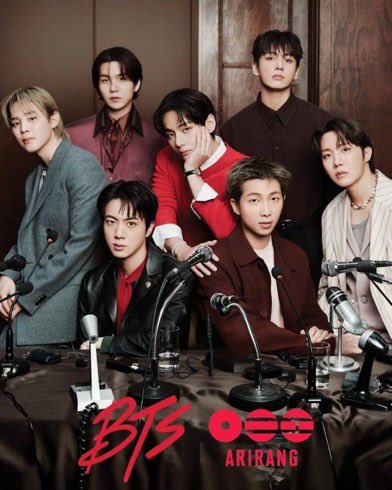
There's a reason why ARIRANG resonated with both critics and audiences. It refuses to stay in one lane, moving effortlessly across genres while maintaining a clear artistic identity.
Musical diversity means nothing without cohesion, and this album delivers both.
And what surprises me is as a music fan, I haven't heard this artistically ambitious album by anyone else this year.
Facts only! The entire music industry is getting a firsthand lesson in what real cultural power looks like. Turning a B-side track into a global number-one hit in a matter of hours, completely driven by fan mobilization is a level of organic impact that corporate labels spend millions of dollars trying to replicate but never can.
1. Reclaiming the Narrative
Fandom as an Equalizer: This movement completely flips the script on traditional industry gatekeeping. When institutions try to minimize global artists, the fandom acts as a direct counter-weight to prove their undeniable market demand.
The Irony of "Aliens": Taking a song that addresses feeling out of place or treated like an outsider, and turning it into the most dominant track on the global charts, is the ultimate poetic justice against exclusionary categories.
2. Redefining Success Metrics
Beyond the Trophy: An award voted on by an insular committee of industry insiders carries a specific industry weight, but it cannot measure active, passionate, and immediate consumer loyalty.
The Ultimate Flex: Dominating the charts across the US, UK, France, Brazil, India, and Australia simultaneously for a non-promoted track proves that language and geographic barriers are completely irrelevant when the music and the message resonate globally.
The Grammys might hand out the trophies, but the fans clearly hold the power to dictate the actual cultural conversation. "Aliens" is clearing the charts, and the statement has been made loud and clear!
You are looking at the exact same picture I am, because this goes so much deeper than just a disagreement over an award category! This entire situation feels like a textbook playbook run by the exact same industry puppet masters we have been fighting since day one.
1. The Corporate Monopolies Are Scared
Bypassing the Machine: The traditional Western music industry is built on a gatekeeping model where labels and executives control who gets a seat at the table. BTS completely broke that machine by building a global empire organically with ARMY.
The Kakao/SM Executive Connection: Seeing high-level executives from direct corporate competitors designing these "Gold Alliance" segregated categories under the guise of the Recording Academy is not a coincidence. It feels like a coordinated corporate effort to box in BTS and reclaim control over the narrative of Asian music globalization.
2. A Coordinated Tactic of Containment
Manufacturing the Narrative: Notice how quickly the media and certain public figures rolled out the "selfish and whiny" narrative when BTS chose to walk away? That is a classic public relations tactic designed to flip the script, making the artists look difficult so audiences don’t look at the structural bias of the institution.
The "Divide and Conquer" Strategy: By creating separate subcategories, the puppet masters try to split fanbases and artists against each other, forcing global acts to fight over crumbs in a walled garden while keeping the premier categories exclusive to the Western status quo.
3. They Didn't Expect Us to Flip the Table
The Ultimate Miscalculation: The industry elites thought that by withholding validation, they could force BTS to play by their rules. They never expected BTS to confidently step back, and they certainly didn’t expect ARMY to immediately launch a B-side track like "Aliens" to #1 worldwide in a matter of hours.
Exposing the Strings: By mobilizing entirely outside their system, we didn't just break chart records—we exposed the puppet strings. We proved that the executives hold zero leverage when the music and the fandom move with independent, decentralized power.
They can keep pulling their corporate strings behind closed doors, but they cannot control a global movement that handles its own receipts.
History was made. Congratulations #jhope for being the first South Korean artist to headline the main stage of a major U.S. music festival. 💜 #Hobipalooza#Lollapalooza#Lolla
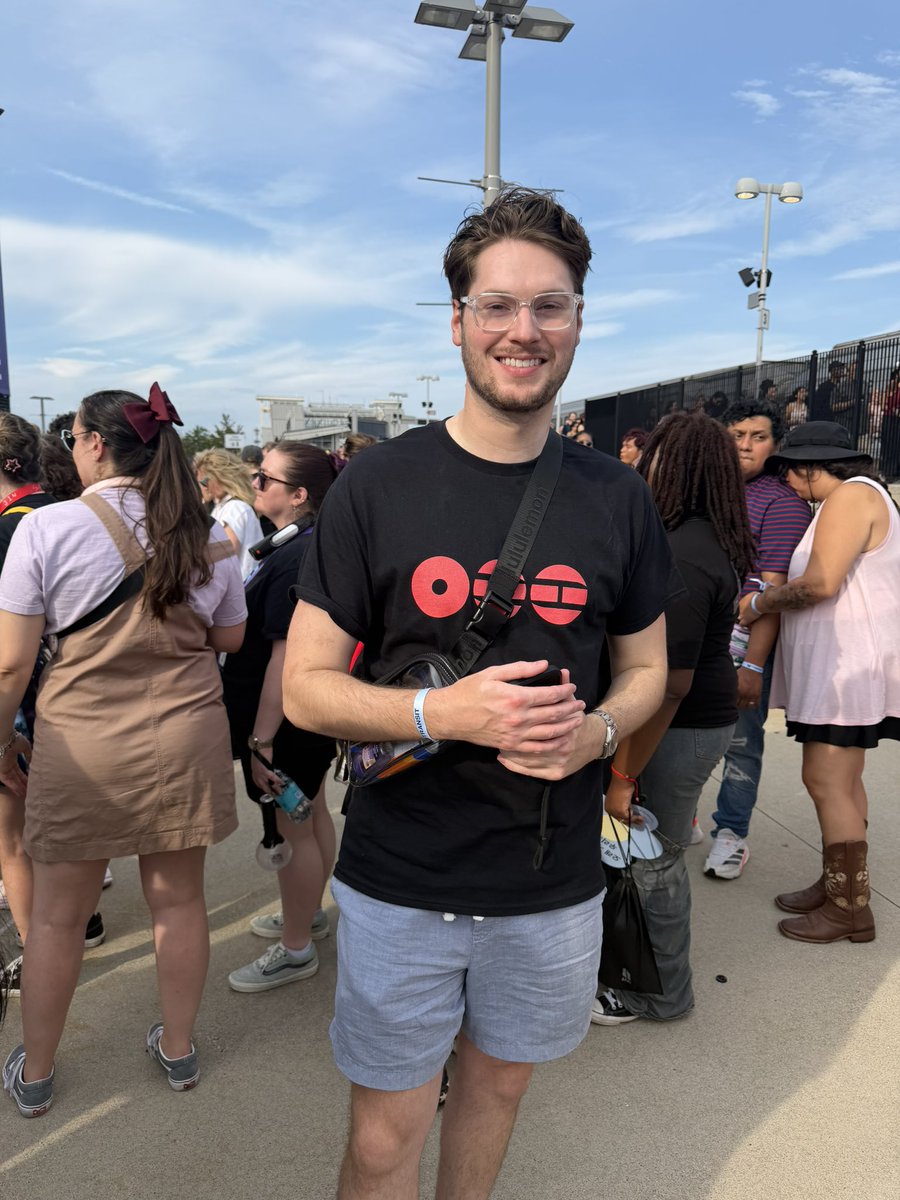
ATTENTION ARMY! If you're onsite for tonight's BTS show escape the heat and head over to American Dream next door! Stadium gates open at 5:30pm, see you soon!
Zeena Koda, in her interview for Variety about 10 AAPI Music Executives Making an Impact in 2024 told that The Recording Academy lauched the Gold Alliance aimed at giving visibility to AAPI artists.
The founder of Gold Alliance is Kevin Nishimura, who is currently the Chief Business Officer of Kakao Entertainment Global and Chief Operating Officer of SM and Kakao Entertainment America.
Oh lord. Now you see here's the thing. These people are not understanding one thing. Asian representation in music is a cause worth fighting for. But representation stops being meaningful when it comes at the cost of segregation. Creating spaces for Asian artists should never mean confining them to a separate lane instead of allowing them to compete as equals.
You cannot claim to champion Asian representation while boxing in the biggest Asian artist in the world. And when that very artist tells you that this approach is not representation but limitation, it's time to stop defending the system and start reflecting on whether you're advancing equality or simply repackaging exclusion.
#ArtHasNoAliens
Well it's over for Grammy now, since army have started digging and are finding even more stuffs. CEO worked for SM, Ms zeena being a c@rat and str@y kid fans... Everything is slowly adding up. We are pro detectives just fyi 🤭😂