Little rant...
I’ve seen this script so many times before, and I’m here to tell you how it is, respectfully, but without a filter. I couldn’t care less what other people think.
There’s always an excuse not to buy. Always.
What, do you think that in a bull market they’re going to hand you a 50–150% move with bullish news, and everyone’s just going to win? Are you having a laugh?
Peak uncertainty is exactly why $BTC was created. Yet you have supposed OGs using uncertain conditions as an excuse to stay out of the market. Incredible, if you ask me.
Bitcoin is at $80,000 a coin. It’s going to $126,000. There’s absolutely no reason to take profits before that region is reached.
The issue is people are investing and using leverage with money they can’t afford to lose... which leads to amateur mistakes, closing winning positions too early, flipping too soon, then finding excuses to justify the flip. All because they are emotionally attached to their $.
Do less. Not more.
The problem with mfs is they load up X and see these fake lavish lifestyles that 1% live. Maybe 5% of these people are making it. The other 95% are making money by extracting it from their followers.
Then you start comparing yourself to them, thinking, "I need to make XYZ returns because this guy did."
They’re fucking larps, posting demo screenshots made to look real. Exchanges are literally paying KOLs to market for them, making these guys look like legit traders moving millions. They’re not.
That’s exactly why I see zero reason to post anything PnL related.
What’s the point in a space where everyone’s a fucking fraud? I’d rather post my ideas and genuine thoughts, which I believe are worth more than 99% of the shit you see on here.
I’m genuinely disappointed in what this space has become. Years ago, I used to sit on the sidelines and watch people who actually provided value. Now it’s nothing but wannabe max extractors, fake lifestyle flexers and lifestyle traders with 18 and 19yo fanboys acting like they’re the greatest traders alive.
They’re not. They offer fuck all, and anyone with real market experience can see their opinions are irrelevant.
It’s a shame this place has become such a shithole that people can’t tell who’s real and who’s fake. It’s actually depressing. And maybe that’s part of why sentiment feels so fucking dead, like nobody’s even here anymore. Back to the Stone Age.
I spend 14–16 hours a day in one of my rooms, religiously watching charts, with 7-figure exposure in the market. I’m not out partying. I’m not at events. I’m not doing podcasts or interviews. I’m locked the fuck in.
Fuck these wannabe lifestyle traders. They don’t exist.
What does exist are traders who are so fucking obsessed they barely leave their rooms. It is what it is. I just needed to rant, because crypto has never felt this depressing to be part of.
Take it from me, compare yourself to absolutely fucking nobody.
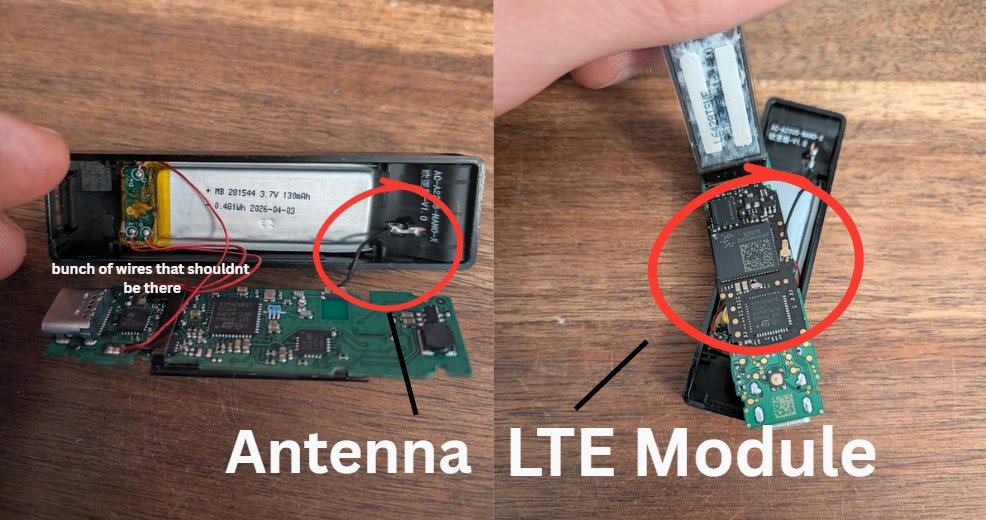
UPDATE: I can confirm that the Ledger supply chain is compromised in Europe as well. @Ledger should initiate an immediate product recall to protect users.
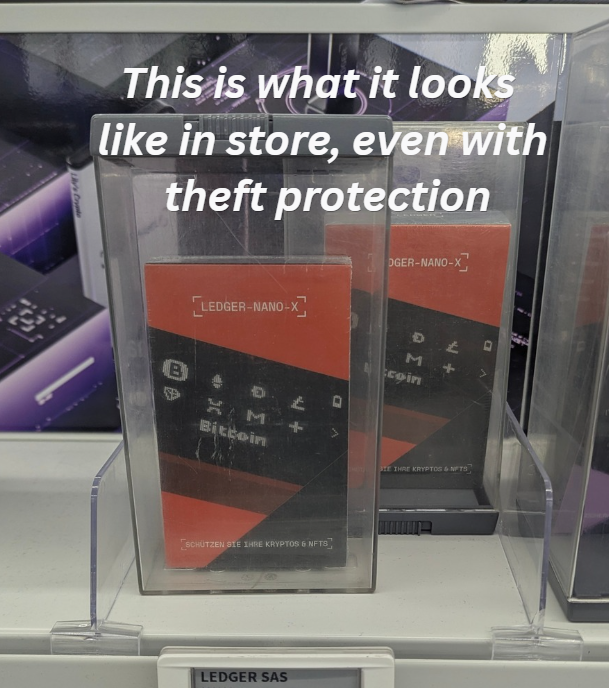
I just purchased a second device from a different Mediamarkt location today, recorded the unboxing process, and discovered spyware once again (video linked in the second tweet).
The device was compromised in the exact same manner, featuring identical modifications (such as additional cables and an LTE module). This indicates its a widespread issue rather than an isolated incident, potentially affecting Ledger inventory across MediaMarkt and Saturn stores throughout Europe (comprising over 1,000 stores across 11 countries).
My initial hypothesis was that these devices were returns that looked unopened to the employees and were just sold again as new however, a MediaMarkt employee confirmed that the device I purchased was not a return, and that returned Ledgers are sent directly back to the manufacturer rather than resold.
Store records show the inventory originated from Aqipa GmbH. While Ledger's CTO was unsure if Aqipa serves as the direct distributor between Ledger and MediaMarkt, it appears to be the case. Given that Aqipa distributes across Europe, any physical retail store receiving stock through them may be at risk.
I sent the first ledger to mark and the second one is going to ledger now, so that they can analyse it.
If you purchased a ledger from anyone other than the official ledger store, make sure to check your device!!
I don't recommend anyone scramble to move their funds to new wallets today. But we should take the risks to cryptography from AI-accelerated math seriously, and minimize our exposure to not just quantum-vulnerable cryptography, but also potentially AI-vulnerable cryptography.
The core new area of risk from this viewpoint is, unfortunately, ML-DSA / FHE / lattices.
(and it's also another reason, along with quantum, why ECDSA might fall even faster than expected, hence the "fresh address" recommendation)
So far most people have been in the mode of thinking "elliptic curves broken, hashes safe, lattices safe". But there is a good chance that the concrete security of lattices will take serious hits from the next two years of AI math.
The basic threat model is: factoring is something that naively takes 2^(n/2) time, but over decades smart people have found and optimized number field sieves, and degraded that to 2^O(n^(1/3)), which is why RSA keys and signatures need to be ~400 bytes (and not 64 bytes). What if there are skeletons in the closet like that, both for elliptic curves and lattices, that we are simply not smart enough to discover - but bots soon will be?
This is a major part of the reason why for the past year ethereum's lean roadmap has been going in the "hash-only" direction: no lattices, no ML-DSA, no Falcon, no lattice-based commitments inside ZK proofs, etc. Signatures in lean ethereum are all hash-based, either WOTS or SPHINCS-.
For signatures and proofs, we already know how to go hash-only. The bigger challenge is for *public-key encryption* - and this goes far beyond blockchains. Secure communication, anonymizing protocols, lots of things need public-key encryption.
And unfortunately there are long-standing mathematical theorems showing why public-key encryption cannot be done with hashes alone. You have to have some kind of trapdoor object that has at least one form of usable "structure" - either group theory (incl. isogenies) or lattices or code-based or potentially in the future even more newfangled and spooky things (local mixing?). But for anything that has structure, you should assume that AI will make at least some progress in breaking that structure. Here, one reasonable inference is that if you want to make something plausibly long-term secure, multiply the key sizes by 10.
To me that's a very plausible world and something not at all extreme to predict. If AI will bring us 50 years of math in 2 years, then that 50 years of math may very plausibly include a "naive factoring -> GNFS" level of improvement to our ability to break lattices. In that world, lattices will still exist, but they will have to be significantly bigger to guarantee the same level of safety.
And at those new larger sizes, hash-based constructions will beat lattice-based constructions on concrete efficiency in every use case where hash-based constructions are possible at all.
Theoretically, of course it's possible that hashes are broken too (eg. P = NP would imply that). But I think P = NP is very unlikely. And intuitively, it's much more likely that a mathematical object has exactly no exploitable structure (like hashes are intended to), than that a mathematical object has exactly ~3 forms of exploitable structure (for elliptic curves: associativity, Schoof, pairings) and not some secret fourth form of structure we have not yet discovered that greatly degrades its security (for elliptic curves, ECDLP and pairing security). Similar for LWE, SVP, RLWE and the zoo of lattice problems.
For this reason, we do not yet see any reason to worry and start padding the byte size of hashes (if we start to worry more, we would pad the round count first before doing anything to the byte size).
Concrete TLDR, my own personal views:
* Hash-based > lattice-based, in those situations where hash-based is possible at all
* For anything lattice-based, be much more paranoid on param sizes. Remember that blockchains are only a small portion of the cryptography story; this point goes far beyond blockchains and applies to eg. access to websites, secure messaging, Tor / VPNs ...
* For privacy protocols, strongly favor NOT putting encrypted notes onchain. Instead, send them offchain through some third-party mechanism.
* If it's not difficult for you, keeping your funds in addresses which have not yet been used to make a transaction is a good idea. If it's easy for you, do it. **But be careful about migrations; I personally have lost more money in botched migrations than I have lost in all hacks combined**.
* For multisig wallets, doing confirmations offchain is better than onchain, because this way the signatures of signer wallets do not get exposed to the public, so if ECDSA falls to AI much faster than expected, at least the multisig "gracefully degrades" to a 1-of-1 where the 1 is whoever was gathering the signatures - a much better place to be than "anyone can take the money"
https://t.co/oVjwZog2lL
Se robaron USD 292M de Kelp DAO.
Es el hack más grande de DeFi en lo que va del 2026.
AAVE, Spark, Fluid, Lido y Ethena tuvieron que freezar contratos de emergencia.
Te explico lo que paso 👇
NEW: Major investigation dropping February 26 on one of crypto’s most profitable businesses where multiple employees abused internal data to insider trade over a prolonged period of time.
@AngelicTheGame is scamming the investors. They raised capital from investors in 2024 with a white paper, and yesterday they sent an email to investors saying that they “will not refund the capital and will deliver a memecoin in Solana with no counterpart value.” @EpicGames@Angelicore_GS@erkanbayol_7@bufuak