Who Is Che Guevara? The Communist Hangover That Holds Us Back
Like most university students, I too went through my Che Guevara phase. His posters were everywhere. His quotes felt immortal. One line still stays with me: "We cannot be sure of having something unless we are willing to die for it." At that age, revolution always sounds poetic.
Years later, I stopped reading the revolutionary and started reading the administrator. The irony is fascinating.
The same man whose face today is printed on T-shirts symbolising freedom spent much of his life after the Cuban Revolution helping build a system where dissent had little room to breathe. As the head of Cuba's National Bank and later its Ministry of Industries, Guevara believed ideology could replace economics. Monetary incentives were abolished, industries were centralised, profits became morally suspicious and businesses were expected to function out of revolutionary consciousness rather than self-interest.
The revolution succeeded. The economy did not. Yet the romance survived. Perhaps that is socialism's greatest success, not in creating wealth but in creating stories and appropriating leaders into GODS.
India inherited many things from the twentieth century. One of them was this quiet suspicion of profit through its socialist policies. Whenever someone makes money, our first instinct is not to ask how value was created. It is to ask who got exploited.
This mindset runs particularly deep in regions like ours. Our parents belonged to a generation where everything was achieved through protest because of the historic neglect of our region. Roads came through agitations. Universities came through movements. Political rights came through resistance. Protest became part of our political DNA. This is India pre-1991, before the advent of a market economy.
The problem is that somewhere along the way, we forgot that markets don't negotiate the way governments do.
Take Guwahati.
Thousands of young people from across the Northeast migrate here because this is where private jobs exist, however little. Many of these businesses are owned by entrepreneurs or companies headquartered outside Assam. The local population often participates only through rent, small contracts or employment. Naturally, many feel left behind as someone else appears to be making the larger profit.
Into this resentment walks a familiar character. The self-appointed protector of the locals at times dressed up like Che Guevara. Sometimes an organisation. Sometimes a union. He tells people that the businessman is exploiting them, that being born here automatically entitles them to a share of someone else's profits. If that share doesn't come voluntarily, pressure must be created. A protest here. A bandh there. A phone call. A visit to the office.
It is extortion with ideological packaging. The businessman eventually pays.
But capital has one quality that ideology rarely understands. It leaves. The factory simply shifts to another state. The unemployed youth remain exactly where they were.
This is why I found the Assam Budget conversation so interesting. We all seem to have missed the big story....
A ₹1,164 crore semiconductor ecosystem around the Tata Electronics chip plant with a Japanese partnership. ₹77,353 crore worth of energy investments with the reopening of trade routes with Bhutan and Bangladesh. Since 2015, there has been a 9x increase in capital expenditure from Rs 2,951 cr to Rs 26,531 cr.
As India looks east again and reconnects with Southeast Asia, the Northeast has an opportunity history denied us after colonial borders and wars disrupted our natural trading routes.
The question is whether we wish to participate in this new economy or continue standing outside the factory gate explaining why the businessman owes us something.
There are only two ways to become prosperous.
You either create capital or you attract it. Everything else is just applause for a revolution that ended long ago.
There was a time when Republic Day and Independence Day in Assam did not mean celebration. They meant fear.
Growing up in the 90s and early 2000s, these were not days we went out to wave the tricolour. These were days of Assam Bandh. Days of bomb threats. Days when the safest place was inside our homes. Our only connection to patriotism came through cable television by watching Border, Tango Charlie, and imagining a country we could not fully experience outside our doors.
I still remember when I first moved to Delhi as a student of Delhi University. In Lajpat Nagar, I saw families flying kites on August 15. Children running freely. Parathas being served in open streets. It fascinated me. Because back home, that normalcy did not exist.
Today, it does.
Now, children in Assam look up and see Rafale fighter jets fly across the Brahmaputra. Today, they sat inside Sarusajai Stadium and watch CRPF CoBRA commandos demonstrate counter-insurgency manoeuvres at the 87th CRPF Raising Day in Guwahati. It was lovely to see young boys saluting commandos not out of fear, but out of aspiration.
They were not afraid of the uniform. They wanted to become the uniform.
That is the real victory.
The Northeast’s story is no longer defined by insurgency. It is defined by transition.
Security forces like the CRPF played a decisive role in that transition. Their role is no longer just combat. It is community.
An entire generation grew up in fear.
This generation is growing up with purpose.
That is the difference.
Well said Nibir. An entire generation in Assam missed the experience of celebrating Independence Day and Republic Day. I am so happy to see our future generation wouldn’t have to go through this ordeal .
Rahul Gandhi in Germany : There will be civil war in India
Translated to Geopolitics : If you want civil war in India, I am the guy you need to support
Read that carefully
Guwahati is leading the Northeast
My father once took a train all the way to Kolkata in the 80s…
Just to buy a Wren & Martin Solution Book from College Street.
That was the era when Kolkata was the cultural headquarters of East India.
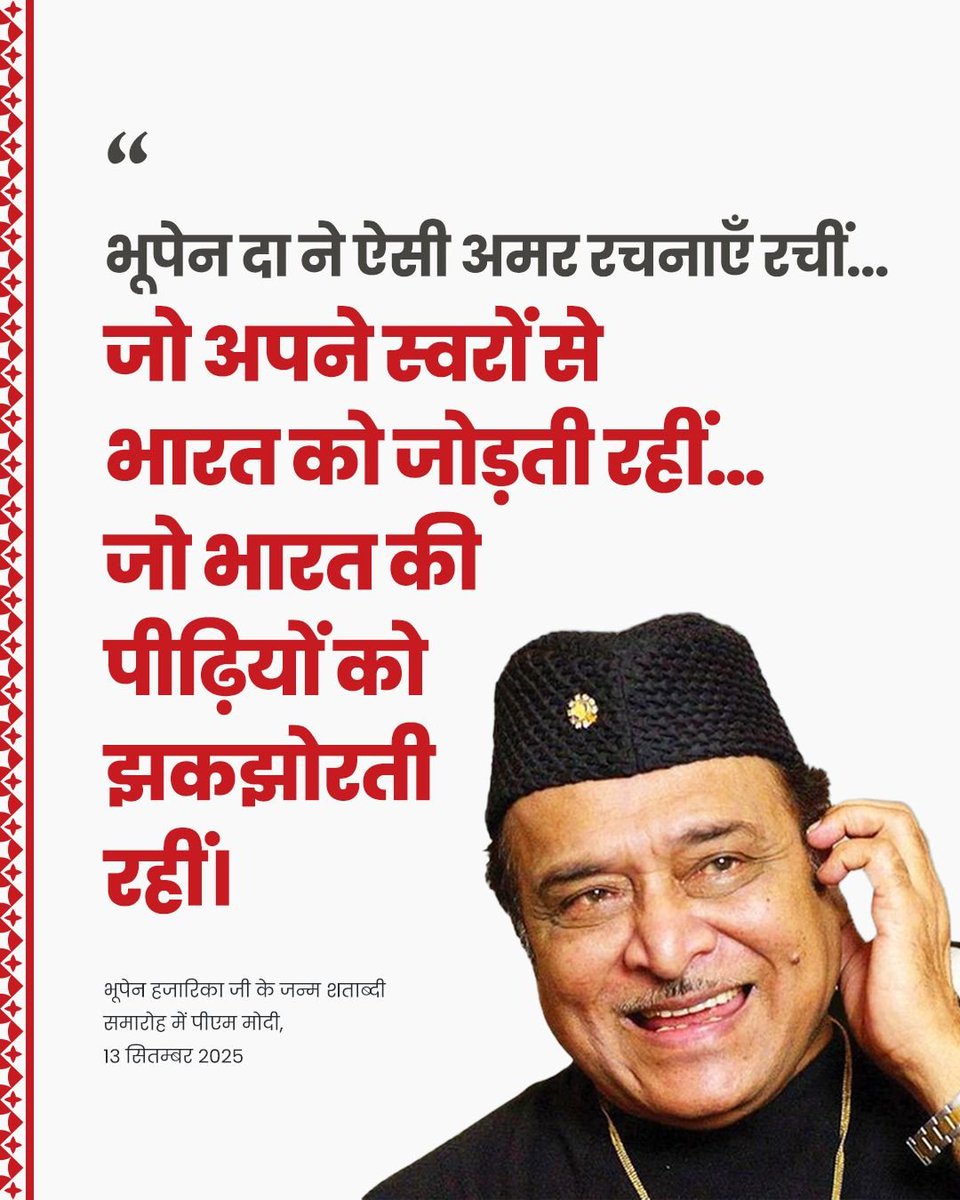
From Bhupen Hazarika to Lakshminath Bezbaruah, all our legends made a Kolkata pit stop.
Cut to 2025:
We only go to Kolkata now for one thing, that is Visa appointments.
(And even that list is shrinking faster than the Howrah Bridge paint job.)
Because today, Guwahati has become the hub of the entire Northeast.
A city that once needed Kolkata for everything
now gets visa approvals for 60+ countries on its own turf.
Kolkata is no longer our gateway to the world,
Guwahati is. (From Northeast)
Northeast India is becoming self-sufficient.
And Guwahati is quietly (and sometimes loudly) leading the charge.
Saurav Kumar Chaliha once had to create a fictional assignment to glorify Guwahati.
We don’t have to do that anymore.
The city speaks for itself.
🚉✨
Shocked by the sudden demise of popular singer Zubeen Garg. He will be remembered for his rich contribution to music. His renditions were very popular among people across all walks of life. Condolences to his family and admirers. Om Shanti.
A Different Independence Day in Northeast India
Growing up in the 90s and early 2000s, Independence Day in the Northeast wasn’t about flags on bikes or kids running around in school playgrounds.
It was about caution — with bandhs declared, bomb blasts announced by various organisations, and an unspoken understanding that August 15 was better spent indoors.
For many of us, our celebration was limited to watching a loop of patriotic Bollywood movies on TV, imagining freedom through the lens of cinema.
Today, things have changed. The streets are alive. Kids are out playing local football tournaments, adults are cruising through bike rallies, and the entire neighbourhood treats August 15 like a proper festival. It’s loud, colourful, and for the first time in decades, free from that old lingering fear.
And yet… somewhere in my head, one worry remains — will Genda Swami’s atom bomb be defused in time by Brigadier Suryadev in Tirangaa? Because some Independence Day traditions, you never outgrow.
"Claims of human sacrifice in Meghalaya"
Another expert who claims to know about Meghalaya that even local historians dont know
Kindly look into the matter
@MeghalayaPolice@SangmaConrad