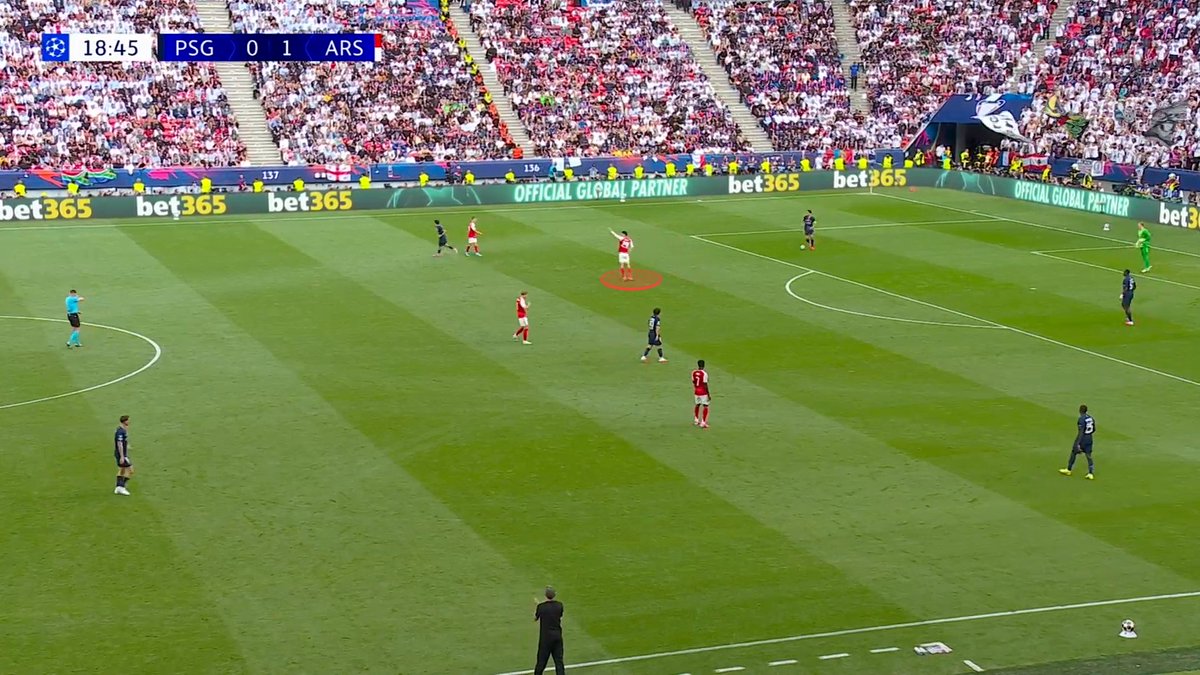
Arteta's tactical intent is to apply as much pressure on the ball as possible at ALL times from a zonal turned man-to-man framework.
Sometimes it works, sometimes that breaks down in the form of a lack of co-ordination from back to front (Gabriel doesn't jump with Havertz expressing frustration at him), and sometimes they are forced to defend low because of the opposition doing good things or the lack of co-ordination on their own part.
But we cannot separate attacking and defending in football.
Arsenal are the best defensive team in the world, but their lack of possession against the likes of City, Liverpool, and PSG this season comes from issues they have WITH the ball.
Ødegaard cannot be a #10 for an elite team. He always plays in front of the block so Arsenal lack bodies high and between the lines. If he is considered anything other than a #8 for Arsenal from this summer window onwards, it would be a catastrophic mistake from Arteta.
Arsenal are also often reliant on their fullbacks travelling from low to high to occupy spaces high. That can work when your fullbacks are Hakimi and Nuno Mendes or Timber and Calafiori because they constantly make forward runs and have quality in the final third, but not with Hincapie AND Mosquera who are centre back profiles (even though you can get away with them at times if they play with a genuine attacking intent and have someone like Eze in the #10 ahead of Ødegaard).
I didn't like Arteta's selection against PSG because Arsenal played with too many players low with Ødegaard, Hincapie, and Mosquera in the same XI.
PSG often only attack with 3 in the top line considering Hakimi and Nuno Mendes start low and their midfield 3 all like to play in front of the opposition's lines, but their front 3 has elite quality in every position. Arsenal only have top-end quality on the right and in the #9, not on the left. This further handicaps their attack and ability to get their foot on the ball.
Against Fulham at home, Arteta showed the blueprint that Arsenal need to build around for next season - the 3-1-6 with 4 low and 6 high. In open play, let Lewis-Skelly and Rice manage the build-up with the centre backs, and let everyone else stay high and attack. Again, this brings me back to the fullbacks and Ødegaard. If they cannot reliably attack or play high, they should not be considered in that position. In that context, Ødegaard should exclusively be considered as competition with Lewis-Skelly in the #8 with Rice and Zubimendi in the #6.
Summer squad-building in direct relation to incomings and outgoings should be considered with this context in mind.
🔴 PSG vs Arsenal — Tactical Preview (PSG Perspective)
PSG enter this tie with a clear competitive truth:
Arsenal are more structured. PSG are more explosive.
So the match plan is not to out-structure Arsenal, but to overload, disorganise, and destabilise their reference points in midfield and fullback zones.
⚙️ 1. PSG Build-Up Strategy: “Invite Pressure, Then Break It”
Arsenal’s press is most dangerous when it is allowed to settle into rhythm. PSG’s solution is to deny rhythm entirely.
Key principles:
-Short build-up phases to bait Arsenal’s mid-block forward
-Immediate vertical release into wide channels once pressure is triggered
-Constant positional swapping between midfield and wide forwards
The goal is not possession dominance, but manipulated access to space behind Arsenal’s first press line.
Vitinha-type profiles become crucial as “escape valves” rather than pure controllers.
🧠 2. Midfield Design: Disrupt Rice, Not Compete with Him
Arsenal’s defensive stability is anchored by Declan Rice. PSG’s tactical priority:
-Pull Rice out of central protection zones
-Force him into lateral decisions rather than vertical interceptions
-Overload his zone with rotating runners, not static midfielders
When Rice is forced to move horizontally instead of shielding centrally:
👉 Arsenal’s back line becomes exposed to direct half-space attacks.
PSG do not want midfield dominance, they want midfield displacement.
⚡ 3. The Main Weapon: Wide Isolation & 1v1 Engineering
This is where PSG believe they can decide the tie. Arsenal’s fullbacks defend best when supported. PSG’s attacking plan is to remove support through spacing manipulation.
Key mechanisms:
-Stretch Arsenal’s back four horizontally
-Create repeated 1v1 scenarios for PSG wingers (Dembélé/Kvaratskhelia profiles)
-Attack immediately after Arsenal lose pressing shape
The PSG mantra here is simple:
“No second defender arrives in time.”
Once isolation is achieved, PSG’s advantage becomes exponential.
🔁 4. Transition Football: The Real Match Script
This is not a possession game for PSG, but a transition contest. PSG’s ideal phases:
-Win ball → immediate vertical pass
-First touch forward, not sideways
-Exploit Arsenal before rest defence is set
Arsenal’s weakness in elite matches is not structure, but it is the moment after structure breaks. PSG will repeatedly target that 3–5 second window.
🎯 5. Arsenal’s Set-Piece Threat vs PSG’s Discipline Test
PSG’s known vulnerability remains:
-Defensive concentration in set-piece phases
-Second-ball tracking in congested box situations
So PSG’s counter-objective:
-Minimise corners conceded
-Avoid unnecessary deep defensive cycles
-Control fouls in wide zones
Because Arsenal do not need many chances to score, they need repeatable entries into set-piece territory.
🧭 6. Game State Logic (PSG Lens)
PSG’s entire tactical identity changes based on the scoreline:
-PSG score first: Arsenal are forced into higher lines → PSG transition game becomes lethal
-0–0 at HT: PSG still comfortable; Arsenal’s patience becomes tested
-Arsenal score first: PSG must increase tempo, game becomes chaotic (ideal PSG environment)
The danger zone for PSG is not Arsenal dominance but Arsenal control without scoring. That is when PSG’s transitions lose frequency.
🔴 Final Tactical Reading (PSG Perspective)
PSG’s path to victory is not subtle:
-They must turn Arsenal’s structured system into a reactive system.
This is achieved through:
-Wide isolation of fullbacks
-Midfield displacement of Rice
-Rapid vertical transitions
-Emotional acceleration of tempo
Arsenal win if the match becomes geometric and predictable.
PSG win if the match becomes fragmented and explosive.
#UCL #ChampionsLeague #PSG #ParisSaintGermain #Arsenal #ARSPSG #UCLFinal #UCLTactics #TacticalAnalysis #FootballTactics #EuropeanFootball #LuisEnrique #MikelArteta #FootballTwitter #SoccerAnalysis #BigMatchAnalysis #UCLNight #TransitionPlay #PositionalPlay #EliteFootball
@premierleague@Arsenal@ChampionsLeague@Ligue1@PSG_English@SkySportsPL@ESPNFC@BBCSport@FOXSports@Marcotti@segunn_@JamesHorncastle@minakimes@Edwyeen@Okkeeeyy@akanbijamesoluz@olaolubanky292@TheBoluSport@dayveedtalks@kanyewest@JamesOlley@MarkOgden_@LaurensJulien@ochocinco@OlisaOsega@SirLeoBDasilva
🧠 Arsenal vs PSG — Tactical Preview (Arsenal Perspective)
Arsenal arrive with the most coherent defensive identity in Europe: a compact 4-3-3/4-4-2 mid-block hybrid that compresses central spaces and forces wide circulation. PSG arrive with the most dangerous rotational attack in the competition, led by asymmetric wide threats and midfield “gravity” that pulls opponents out of shape.
The match will be decided in 3 phases:
⚙️ 1. Arsenal’s Defensive Game Plan: “Protect the Half-Spaces, Not the Flanks”
PSG do not win finals by crossing teams. They win by creating overloads in the half-spaces between fullback and centre-back.
Arsenal’s response:
-Saliba + Gabriel must defend forward, not backwards
-Rice drops into defensive lanes to block central progression into Vitinha
-Fullbacks (likely White/Calafiori profile roles depending on selection) must delay rather than engage
The key instruction:
👉 Do not over-commit to wide pressing traps, because PSG’s wingers (especially Kvaratskhelia/Dembélé profiles) are strongest when isolated 1v1 after a failed press.
Arsenal’s success condition:
Force PSG into sterile wide possession, not central penetration.
🔁 2. Midfield War: Ødegaard vs PSG’s Control Network
This is where the match is actually won or lost. PSG’s midfield triangle typically functions as:
-One controller (Vitinha-type profile)
-One progressive carrier (Neves-type profile)
-One connector (Ruiz-type profile)
Their objective is simple: drag Arsenal’s midfield line apart horizontally.
Arsenal’s counter-structure:
-Ødegaard must press trigger points, not chase possession
-Rice becomes a “defensive pivot screen” in front of the back four
-The second midfielder (Havertz or advanced 8 profile) must block PSG’s build-up access into the right half-space
If Arsenal lose midfield structure:
👉 PSG will isolate fullbacks repeatedly = match breaks open.
If Arsenal control midfield rhythm:
👉 PSG are forced into predictable wing progression.
⚡ 3. Arsenal’s Attack Plan: Transition Economy + Set-Piece Pressure
Arsenal will not out-possess PSG. That is structurally unlikely. Their route to winning is:
“Minimal possession, maximal punishment”
Key attacking mechanisms:
-Saka isolation moments against PSG left-side defensive transitions
-Direct progression into space behind PSG fullbacks
-Early vertical passes into striker channels before PSG settle
But the most decisive Arsenal weapon remains set pieces:
-Corners
-Second-ball chaos
-Near-post routines
PSG, despite their quality, remain vulnerable when:
-defending repeated dead-ball pressure
-reacting to second-phase balls in the box
This is where Arsenal can “manufacture” goals in a game of fine margins.
🧩 4. The Hidden Tactical Decider: Arsenal’s Right Side
This is PSG’s main attacking target zone. PSG will repeatedly try to:
-Isolate Arsenal right-back in 1v1 situations
-Overload that side with winger + overlapping fullback movements
-Force early defensive collapse before Arsenal’s midfield support arrives
Arsenal’s survival depends on:
-Winger tracking discipline
-Right-sided midfield cover from Rice/Ødegaard rotation
-Delayed engagement (not early pressing traps)
If Arsenal’s right side holds:
👉 PSG lose their fastest route to goal.
🧭 5. Game State Logic (Most Important Layer)
This match is less about tactics in isolation and more about scoreline psychology:
-0–0 at HT: Advantage Arsenal (PSG frustration grows, space tightens)
-PSG score first: Arsenal must abandon pure structure → game opens
-Arsenal score first: PSG overcommit → Arsenal’s transition game becomes lethal
Arsenal’s ideal script is:
0–0 → controlled second half → set-piece or transition goal → defensive closure
🔴 Final Perspective (Arsenal Lens)
Arsenal’s advantage is not superiority in talent or possession. It is this:
They are the most structurally stable team PSG will face all season.
But PSG remain:
-More individually explosive
-More tactically fluid in attack
-More capable of breaking structure in 5–10 second bursts
So this becomes the core truth:
👉 Arsenal win if they turn the game into a patterned, low-chaos final
👉 PSG win if they turn it into a fluid, high-chaos transition game
#UCL #ChampionsLeague #PSG #ParisSaintGermain
#Arsenal #ARSPSG #UCLFinal #UCLTactics
#TacticalAnalysis #FootballTactics #EuropeanFootball
#LuisEnrique #MikelArteta #FootballTwitter #SoccerAnalysis #BigMatchAnalysis #UCLNight
#TransitionPlay #PositionalPlay #EliteFootball
@premierleague@Arsenal@ChampionsLeague@Ligue1@PSG_English@SkySportsPL@ESPNFC@BBCSport@FOXSports@Marcotti@segunn_@JamesHorncastle@minakimes@Edwyeen@Okkeeeyy@akanbijamesoluz@olaolubanky292@TheBoluSport@dayveedtalks@kanyewest@JamesOlley@MarkOgden_@LaurensJulien@ochocinco@OlisaOsega@SirLeoBDasilva
SUPER EXCLUSIVE 🚨 Official Andrea Berta’s Statement To The Arsenal Family.
Official Statement from Andrea Berta Technical Director, Arsenal Football Club.
Dear Mikel,
To our players, staff, and every single Arsenal supporter around the world,
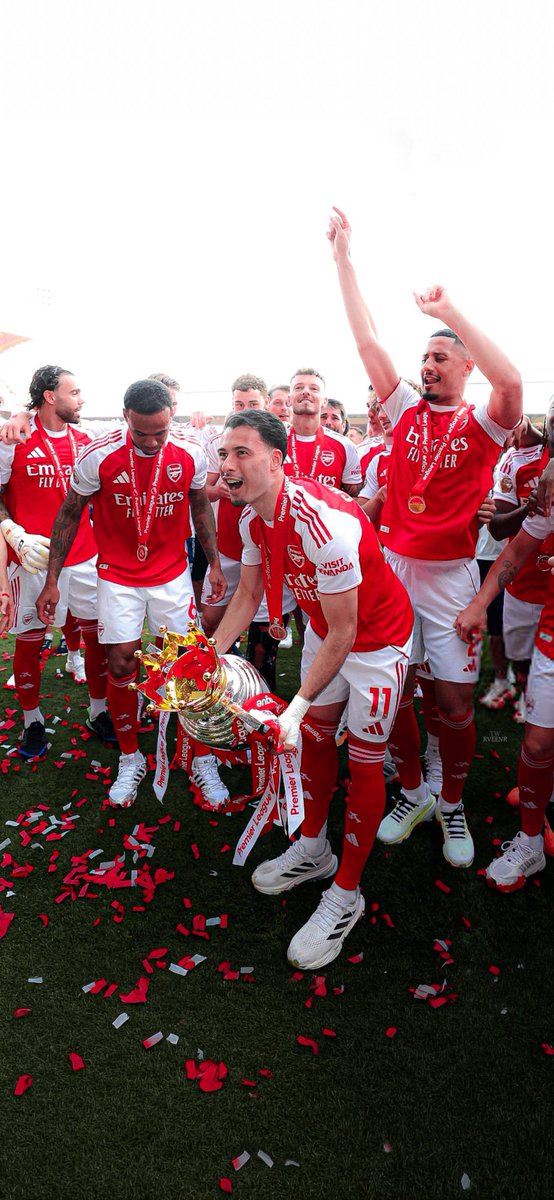
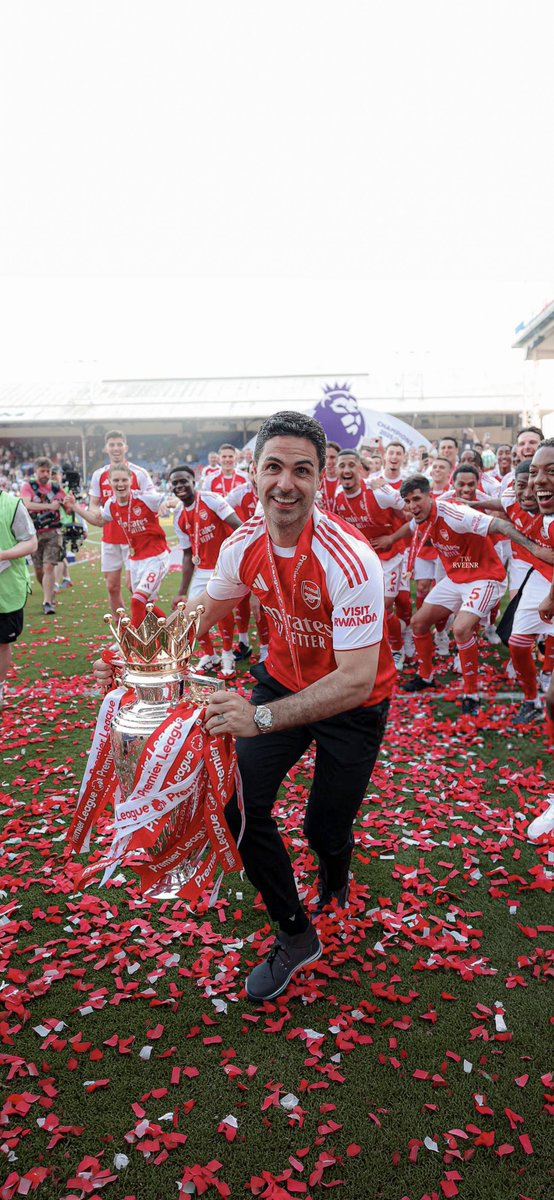
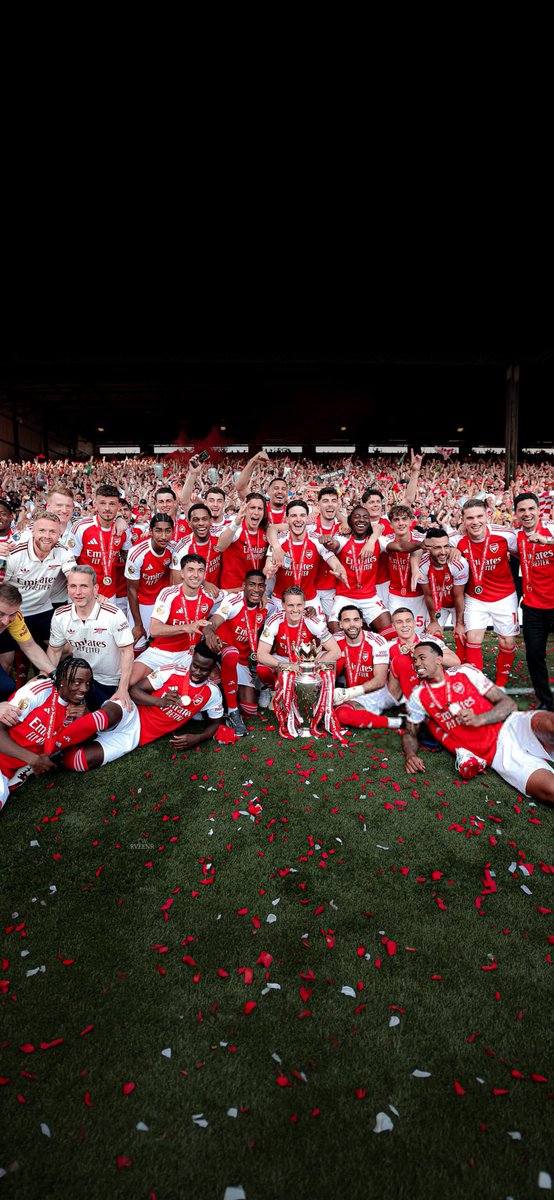
It is with immense pride and emotion that I write to you today following our triumphant victory. This trophy is not just silverware it is the culmination of years of dedication, belief, and relentless hard work from everyone connected to this great club.
Mikel, your vision, leadership, and unwavering commitment have been the driving force behind this success. You have built a team that embodies the Arsenal spirit: technical excellence, tactical intelligence, and an unbreakable fighting mentality. This achievement is a testament to your philosophy and the culture you have instilled throughout the squad. On behalf of the Board and everyone at the club, thank you for your extraordinary contribution.
To our players: you have shown heart, quality, and character throughout this campaign. Every training session, every match, and every moment of sacrifice has been worth it. You have made us all proud to wear the Arsenal badge.
And to our fans the lifeblood of this club: your passion, loyalty, and support have been the extra player on the pitch. From the Emirates to away ends across the country and across the globe, you have never wavered. This trophy belongs to you as much as it does to anyone. You have waited and believed, and now we celebrate together.
This is a landmark moment in our journey, but it is not the end. We remain fully committed to building a sustainable, winning Arsenal that competes at the very highest level for years to come. The standards have been raised, and the hunger remains.
Congratulations once again to everyone involved. Let us enjoy this moment and then let us go and chase the next one.
With gratitude and pride,
Andrea Berta
Technical Director
Arsenal Football Club.