Excited to share my review of @cbseaman & Tran on board game innovation. They challenge the binary btw full-IP and negative space industries: most are hybrids.
But what can this industry tell us about whether an innovation regime strikes the right balance? Thoughts linked below
Check out our latest Iowa Law Review Online piece, "Hybrid Innovation Regimes: The Interplay of IP and Non-IP Protections" by BJ Ard. You can read this Response Piece here: https://t.co/lKBnkxQZh8
oh no @distractify every single sentence in this piece is wrong
why do you want to make trademark lawyers cry
please do research next time?
https://t.co/31W9ISTniy
my annual reminder that trademark law has a doctrine called nominative fair use, which allows speakers to use TMs to reference brands in describing their own goods/services--like "we clean UGG boots" or "charger compatible w/ iPhone 15" or "wings half off on superbowl sunday"
This is a quick thread for people trying to keep up with international platform liability law developments. I used to do that myself, but there is just too much! But here are some things to keep an eye on and people who know more. 1/
Thoughtful thread below on why path breaking academic papers might have a hard time getting accepted in journals. A reason to think through how better to sift through and elevate intriguing preprints, when attention, rather than paper or distribution, is the material constraint.
1/n: There are some academic papers that are so brilliantly and so accessibly written and so universal in scope that they transcend disciplines and stand as timeless testaments to both great thinking and great writing. Here's a short personal selection:
@pranesh If one were genuinely going to treat IP more like property, this wouldn’t mean always ratcheting it up. Instead, policymakers would need to calibrate rights and exceptions to serve the pertinent principles and policies.
@pranesh Thank you for sharing! Property rhetoric often treats ownership as sacrosanct and absolute without acknowledging that property rights. as they actually exist in law, are subject to excuses and justifications (some as a matter of principle, others as a matter of economic policy).
📖📚New book alert!🚨🔔
"Research Handbook on Law & Technology" edited by @oliakanevskaia, Bartosz Brożek, and yours truly has just been published by @ElgarPublishing@Elgar_Law 😍
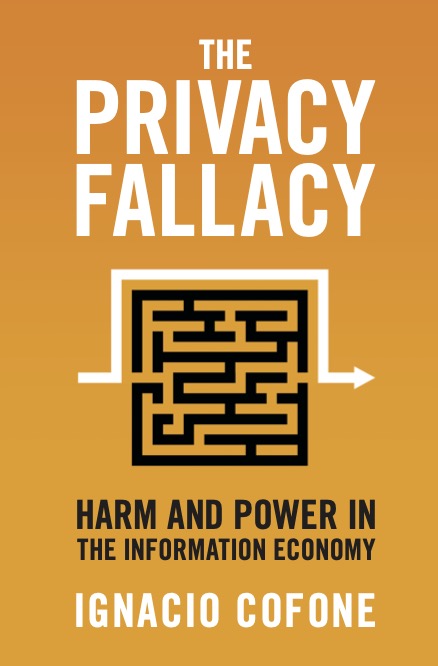
Beyond thrilled to share that my first book, "The Privacy Fallacy: Harm and Power in the Information Economy" is now in production with @CambridgeUP. In a world where data is the lifeblood of the economy, figuring out how to protect people from data harms is paramount 1/
.@bj_ard, @nyutandon and @openlawlib work to develop technologies that secure the “digital legal supply chain” thanks to a $1.2 million @NSF grant. Learn more: https://t.co/RbsIm5UBuU. #Cybersecurity