@BLackgold_5 That's not skill. It's lack of knowledge. If the nose is lowered the plane stops quicker because the spoilers are more exposed to the air. So more drag when nose gear is down. 🙂
@jalle51 The F35 is difficult to detect until it communicates. Then it's easy.
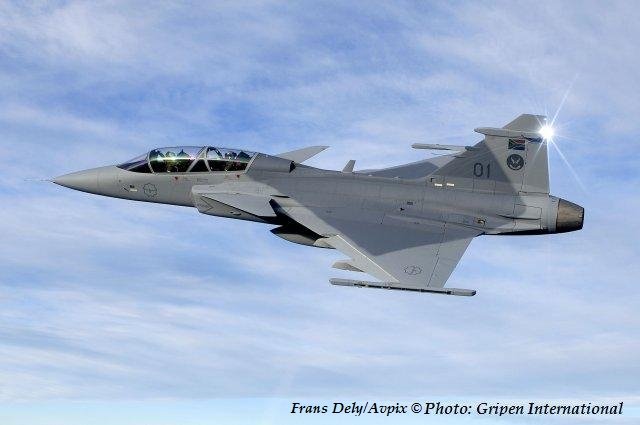
Why spend so much money on it, when you can get more power for 1/6 of the flight hour cost with The Saab Gripen?
"We forced Ukraine to give up nuclear weapons, cruise missiles, and strategic bombers..
We promised to protect Ukraine from Russia.
We made Ukraine vulnerable.
So yes,this is our war."
- Bill Clinton
🫡
Sometimes a procurement decision says more about strategy than about the aircraft.
Washington’s response to reports that Canada may lean toward the Saab Gripen has been unusually public for a routine fighter purchase. Statements from the U.S. Department of Defense suggest the issue is being viewed through a strategic lens, not just a technical one.
This debate is not really about speed, stealth, or unit cost. It’s about long-term airpower integration, defense-industrial dependencies, and how interoperability is defined inside NATO.
If confirmed, Canada’s direction could signal a shift: allied procurement becoming more flexible, less tied to a single supplier ecosystem, and more focused on resilience and autonomy.
In a security environment marked by tighter budgets, higher readiness demands, and supply-chain risk, fighter choices increasingly reflect strategy as much as capability.
This is bigger than one aircraft. It’s about how alliance cooperation adapts in a more complex, multipolar world.
The calm demeanor of Americans as they grow accustomed to extreme levels of police brutality is almost as shocking to European audiences as the violence itself.
A once free people are now compliant, walking right into the slaughterhouse.