Assistant Professor @HU | Researcher in Organic and Materials Chemistry | Fluorescent Materials, COFs & Green Chem #Science#MaterialsChemistry#Innovation
BREAKING NEWS
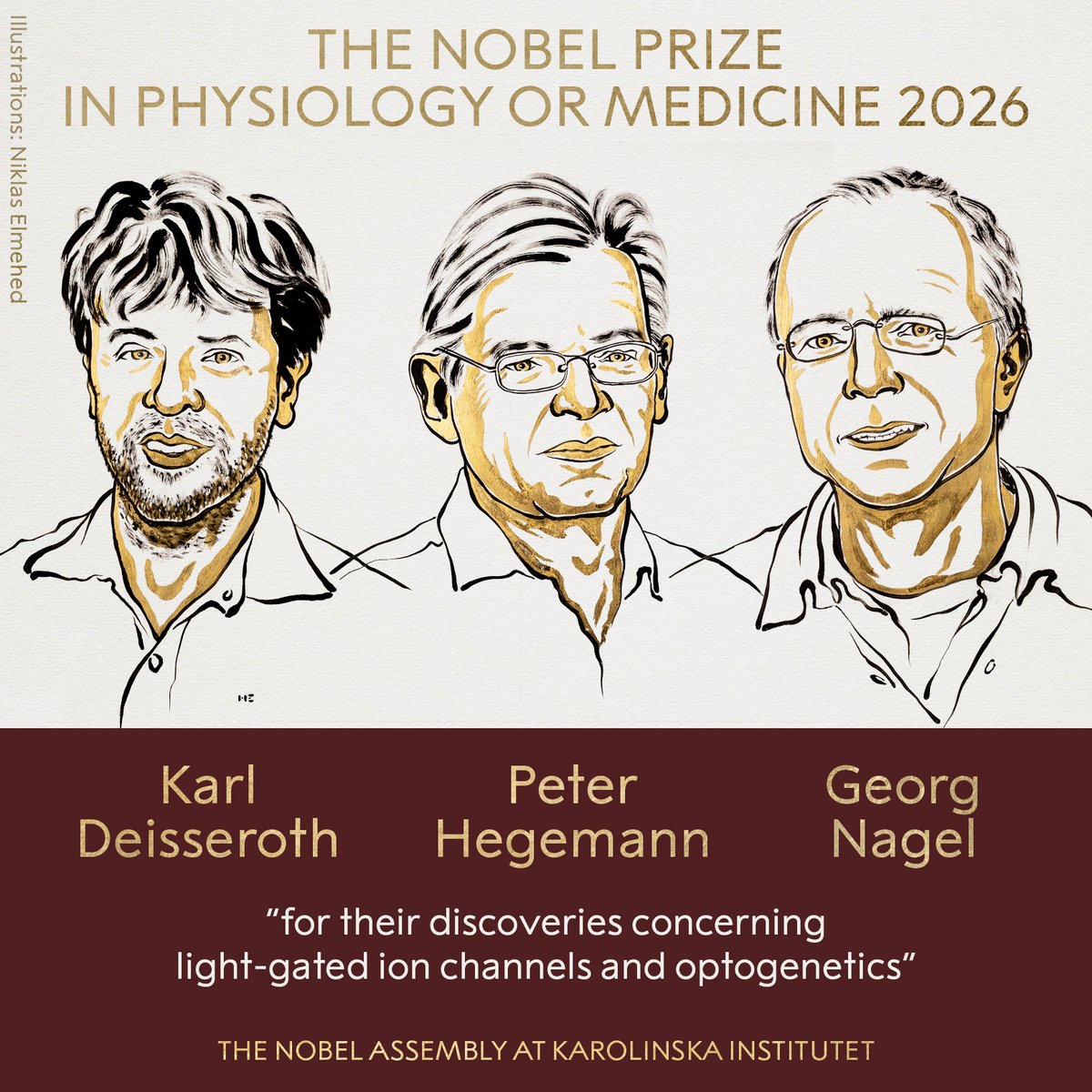
The 2026 #NobelPrize in Physiology or Medicine has been awarded to Karl Deisseroth, Peter Hegemann and Georg Nagel “for their discoveries concerning light-gated ion channels and optogenetics.”
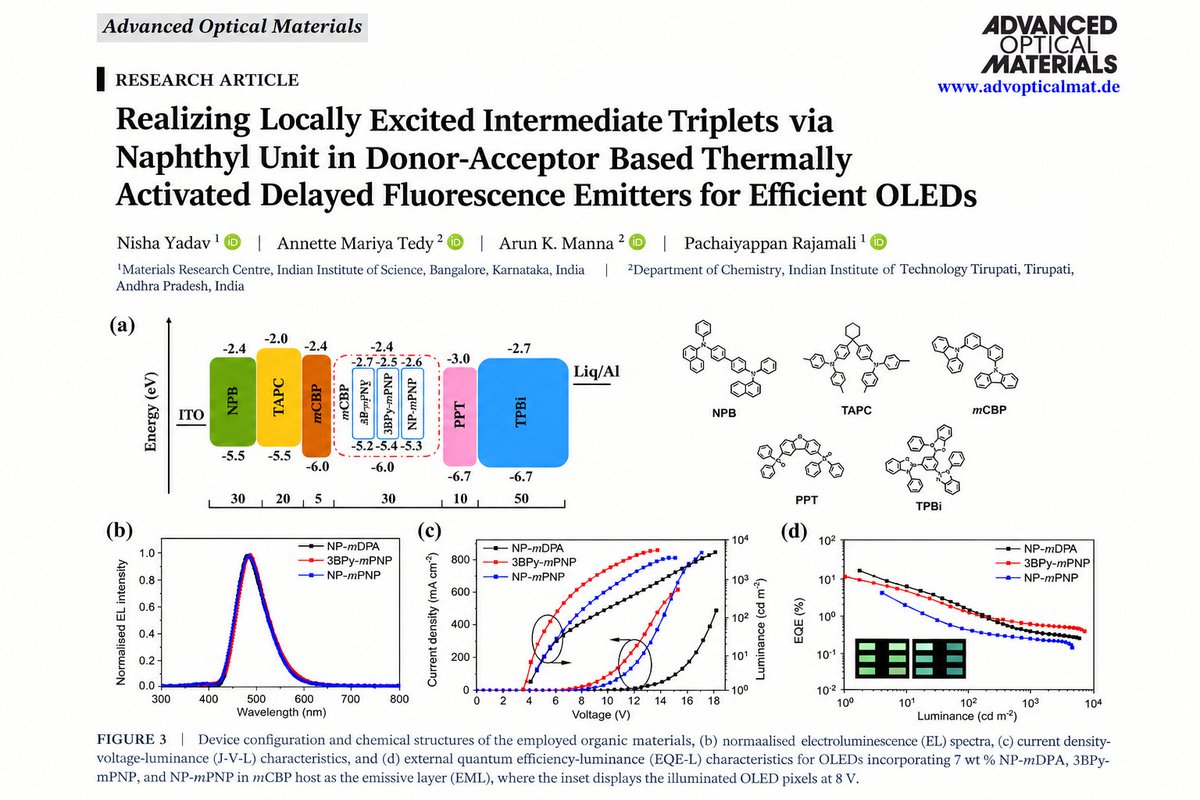
Congratulations to Nisha for the recent paper published in Advanced Optical Materials👏...In collaboration with Prof. Arun K Manna and his student Annette Mariya Tedy....
DOI : https://t.co/ypX9FDEpuO
#COFs By slowing down reaction kinetics in Schiff-base condensation, we isolated single crystals of a key intermediate assembly, shedding light on the COF formation mechanism @J_A_C_S https://t.co/2C9NI0LyTN
We’re excited to share our latest publication in @ChemicalScience on BODIPY post-functionalization, expanding the scope of accessible tailored fluorescent dyes. Kudos to Carla for her first published article ! 😀
https://t.co/jnLqdE9x1p
Excited to share our work @angew_chem, demonstrating a one-step methylation turning a bipyridine COF into a dicationic, electron-deficient framework that enables C–F bond activation under visible light!☀️
A great collaboration with @DA_catalysisLab.
https://t.co/QREX2eprE9
Thrilled to share our recent findings in @J_A_C_S@ACSPublications on engineering of COFs to achieve atto-molar detection of glucose via electrochemical sensing. A wonderful effort by Nada and our collaborators Anna, Sarah, Sushil, and Najat. @KhalifaUni
https://t.co/OCHkAALhVU
BREAKING NEWS
The Royal Swedish Academy of Sciences has decided to award the 2025 #NobelPrize in Chemistry to Susumu Kitagawa, Richard Robson and Omar M. Yaghi “for the development of metal–organic frameworks.”
Our immune system is an evolutionary masterpiece. Every day it protects us from the thousands of different viruses, bacteria and other microbes that attempt to invade our bodies. Without a functioning immune system, we would not survive.
One of the immune system’s marvels is its ability to identify pathogens and differentiate them from the body’s own cells. The microbes that threaten our health do not wear a uniform – they all have different appearances. Many have also developed similarities to human cells, as a form of camouflage. So how does the immune system keep track of what to attack and what to protect? Why doesn’t the immune system attack our bodies more frequently?
Researchers long believed they knew the answer to these questions: that immune cells mature through a process called central immune tolerance (see image). However, our immune system turned out to be more complex than they believed. Mary Brunkow, Fred Ramsdell and Shimon Sakaguchi have been awarded the 2025 Nobel Prize in Physiology or Medicine for their discoveries concerning peripheral immune tolerance.
New Post-Doc Position Available! -- The Smart Materials Lab at the Division of Science, NYU Abu Dhabi, seeks to recruit a highly motivated post-doctoral candidate in the areas of Artificial Intelligence (AI) for materials science:
https://t.co/p3u3jbcTPO
Interesting article, the importance of computational modeling and experimentation.
Congratulations @MJWenzel13
COFs with 2-Fold Functional Pores Produced from a Monofunctional Monomer as Predicted by Computational Methods | ACS Polymers Au https://t.co/ujwLxC2iih
Happy to share our work in @CGD_ACS
Mechanochemistry for the Synthesis of Organic Hole Transport Materials in Perovskite Solar Cells https://t.co/hUkVNnJU04
Huge thanks to all authors and collaborators for their contributions @DrSharmarke@ACSPublications