Honored to be named a 2026 Google PhD Fellow in NLP! 🎉
Huge thanks to my advisors @ABosselut & @martin_schrimpf and my mentor @MonaDiab77 for believing in me, and to all my colleagues and collaborators who made this possible!
https://t.co/wHKULodSNR
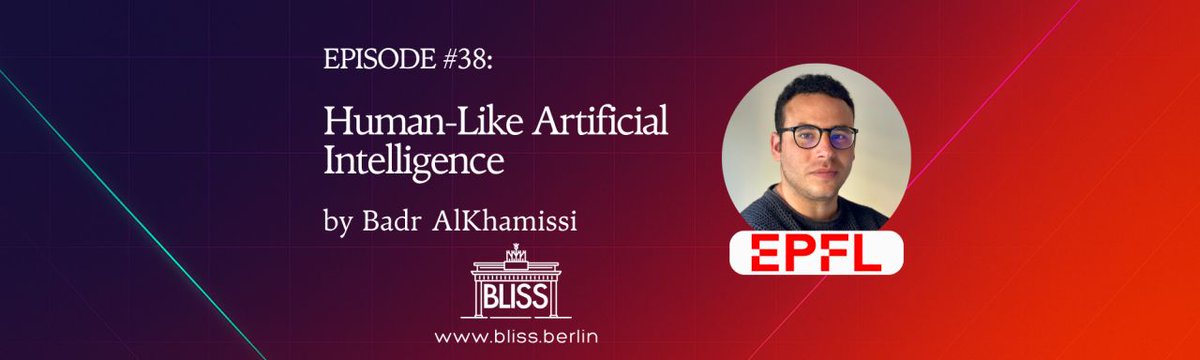
Looking forward to speaking at the BLISS AI Speaker Series next Tuesday! 🧠
I’ll talk about our recent projects at the intersection of AI and neuroscience. If you’re in Berlin, come say hi!
🗓️ Tue, Nov 3, 7pm
📍 TU Berlin, Room C130
🎟️ Free: https://t.co/MZUbyYOzTF
Super excited to present INCLUDE-2.0 at #EMNLP2026 🎉
Join me tomorrow at 12:15 in room G13 for our oral presentation in the Resources and Evaluation session!
Come to chat about the paper or collaborate in future INCLUDE versions!
We're excited to release INCLUDE-2.0! 🌍 An expanded multilingual benchmark evaluating models' regional factual knowledge using questions from local exams across 91 languages, 22 scripts and 86 countries.
From first visit to this machine shop to robot deployment in under a week. Building a data moat with teleoperation data from real-world deployments at @ko_br_
P.S. Before robots can tend CNC machines, they need to learn to clean them 😉
Dataset sample: https://t.co/xwMjvpMRex
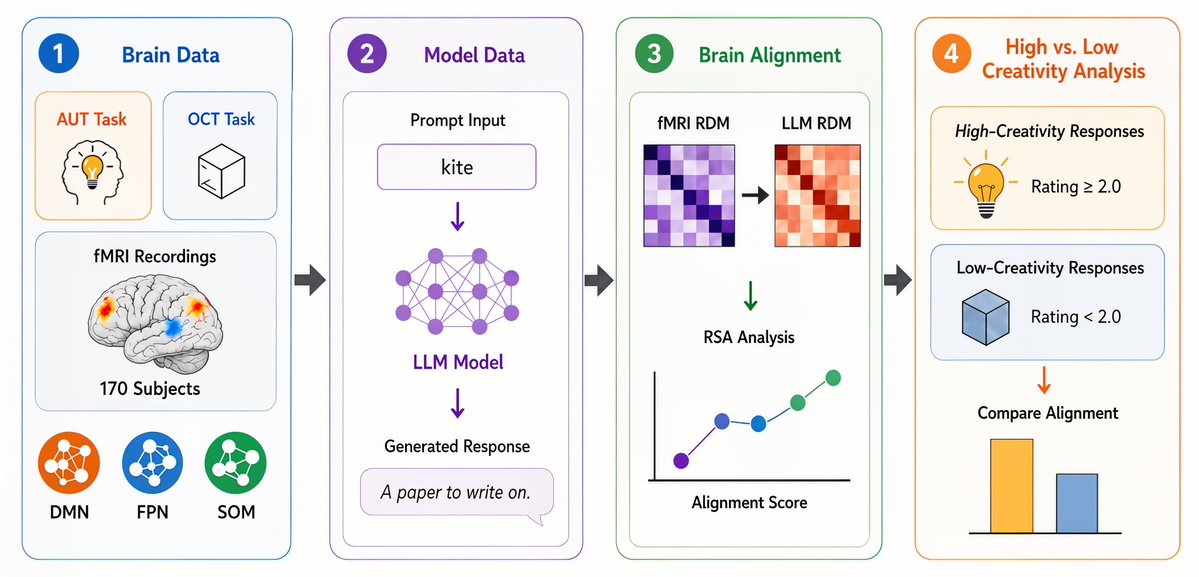
Heading to #COLM2026? Don't miss our paper led by Mete (@mismayilsoy) on the surprising parallels between LLMs and the human brain in creative thinking! 🧠✨
Do LLMs align with the human brain during creative thinking? 🤔
In our new #COLM2026 paper, we find that the answer is Yes!
Come check it out at Poster Session 1, 11:00am PDT, 06/10!
Whoops, chose the wrong week to share our paper…
Something about someone named Navier and Stokes????
But hey the code is out now! Go play with latent identification probes 🤾
💻 Code: https://t.co/JrI1iVnVCu
Egyptians in CS Research now features 300+ researchers.
Hoping it inspires students from underrepresented backgrounds by showing them what a path into research can look like.
If you know someone missing from the list, nominate them.
https://t.co/eBcRaW15iO
We are hiring at @ko_br_ (embodied AI) across engineering, sales, and operations. Please spread the word and tag anyone who might be a good fit 🤖🦾.
We give robots the ability to reliably perform mundane manufacturing work. Come build with us.
We are looking for:
• Founding Software Engineers
• Founding Deployment & Operations Engineers
• Founding Sales Engineers
• Robot Teleoperators
Apply here: https://t.co/CkGzyiy0v5
One direction I'm especially excited about: relating LLM's latent language to the human brain's "language of thought," which recent work by @HopeKean, @ev_fedorenko and colleagues suggests isn't natural language at all. 🤯
Link: https://t.co/I4D8AOpbRl
So do LLMs really think in English? 🤔
Turns out it depends on how you ask. Different latent-language-ID methods give you different answers! We test 27 candidate languages across 12 models, two of them analyzed through pretraining.
Led by the amazing @denizbayazit 👇
1/🚨 New paper #emnlp2026
Do multilingual #LLMs work in English? It depends on how you ask. In "Lingua Franca or Probing Artifact?", we probe the same hidden states with three latent language identification methods and get different answers. 🧵👇
#interpretability#NLProc
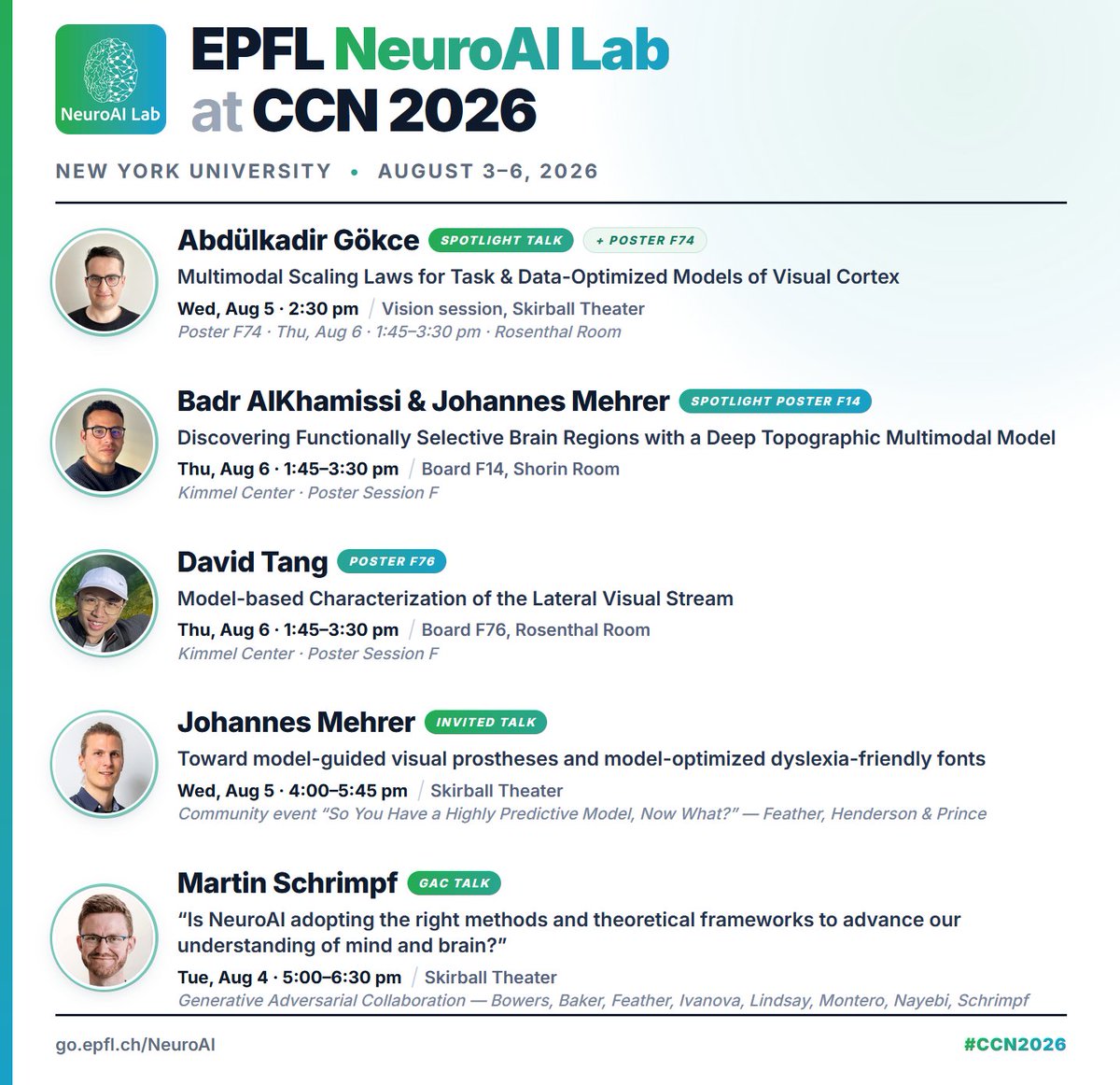
Come say hi at #CCN2026! Scaling laws for visual cortex, topographic multimodal models, video generation for the lateral stream, model-enabled applications, and a GAC on whether #NeuroAI is asking the right questions
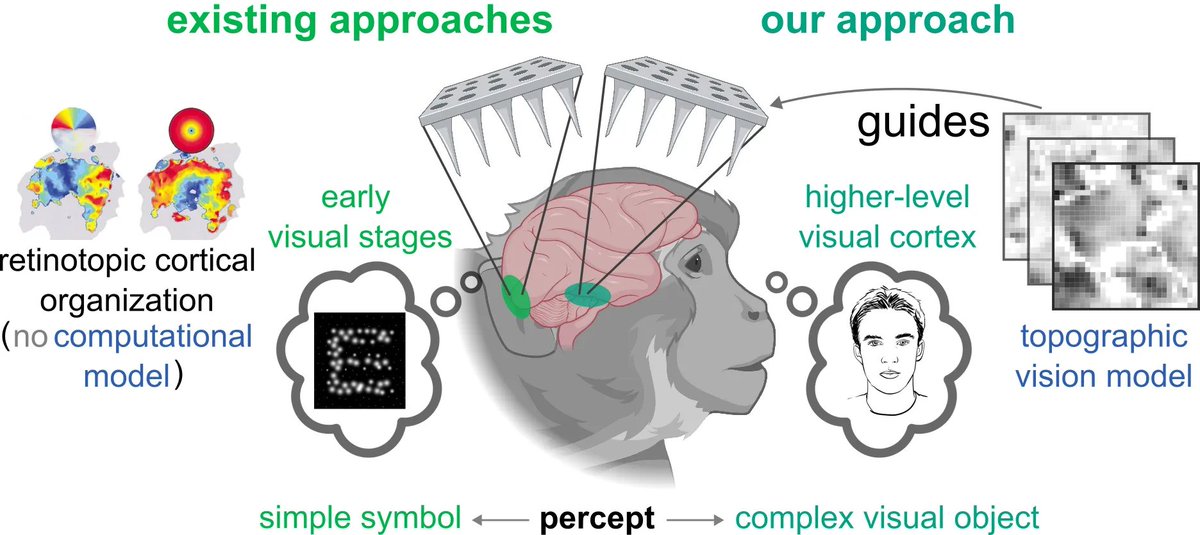
"So, you have a highly predictive model, now what?" At this #CCN2026 event on Wed, 5 Aug, 4pm at NYU Skirball Theatre I will present work using ANN brain models for visual prostheses (https://t.co/jr5psNDBZ6) and for dyslexia (https://t.co/3nQq4sqcQt, first author: @melikahnd_1).
@SumeetBt Thanks for your comment! I'd really like to see cogneuro to AI direction becoming relevant in the foreseeable future, and as you point out, there're a lot of heuristics that we employ for training LLMs that insights about the brain might overcome, but for that we need more data!
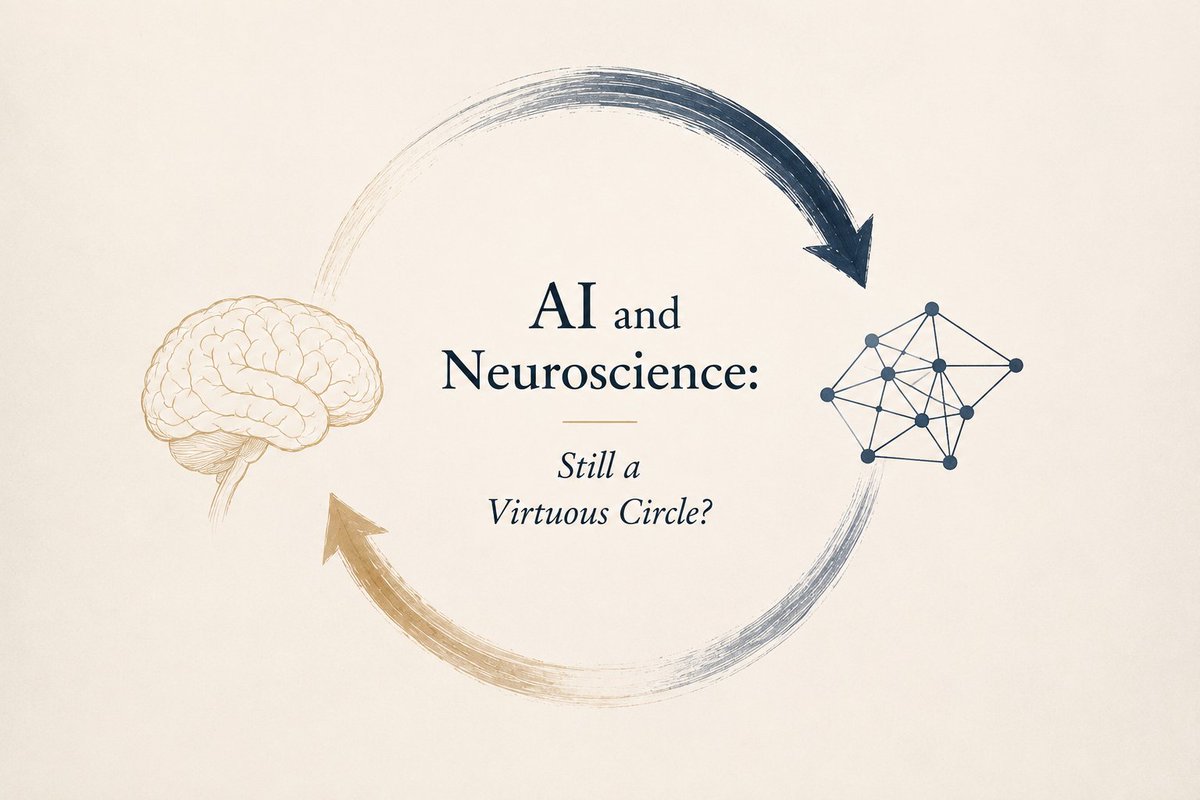
Finally wrote up something I've been thinking about for a while, and with CCN next week, feels like the moment to share it: is the "virtuous circle" between AI and neuroscience that Hassabis et al. described in 2017 still turning?
Curious what you think!
https://t.co/TEJPPL9p98