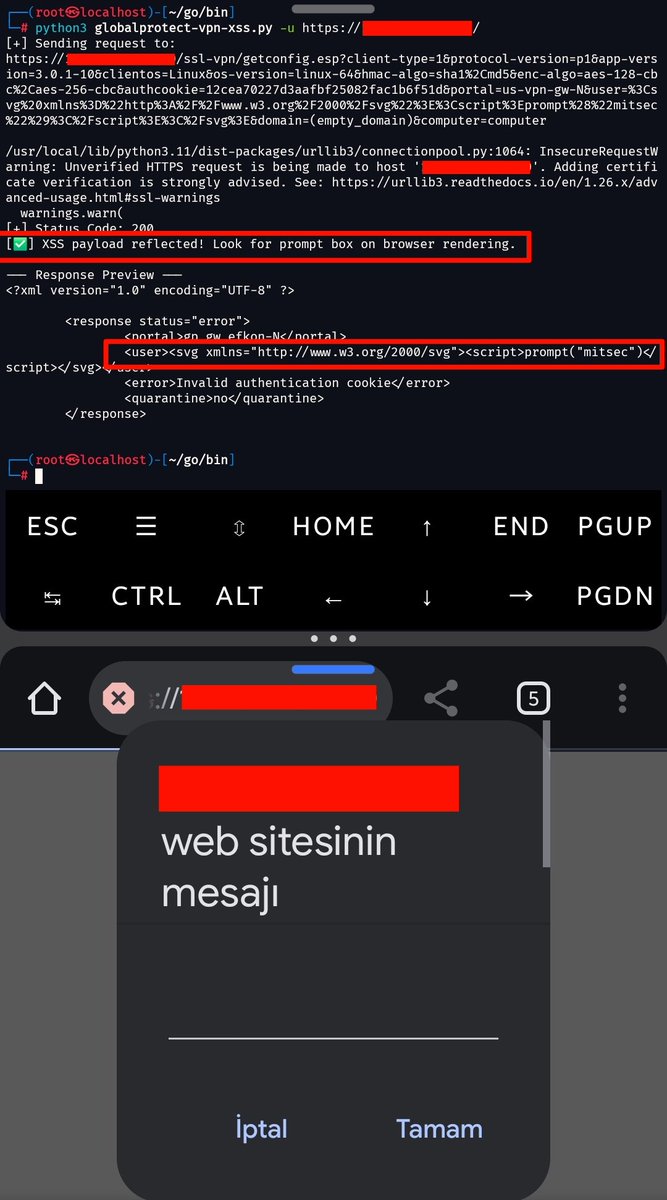
Found an XSS but got blocked by the CSP?
https://t.co/0aA3GyIOVz has a compiled list of ways to bypass the Content-Security Policy. Check out the video below 👇
𝗣𝗮𝗶𝗱 𝗖𝗼𝘂𝗿𝘀𝗲 𝗙𝗥𝗘𝗘 (PART - 1)
1. Artificial Intelligence + Data Analyst
2. Machine Learning + Data Science
3. Cloud Computing + Web Development
4. Ethical Hacking + Hacking
5. Data Analytics + DSA
6. AWS Certified + IBM COURSE
7. Data Science + Deep Learning
8. BIG DATA + SQL COMPLETE COURSE
9. Python + OTHERS
10 MBA + HANDWRITTEN NOTES
(72 Hours only ) Cost About - $500
To get FREE: -
1. Follow (So I can DM you)
2. Like & retweet
3. Reply " Send "
How to add a new header to every request that passes through Burp using Match and Replace 👇
Leaving the "Match" field blank allows you to add a new header to each request.
PRO TIP: Enable "Only apply to in-scope items" in the Match and Replace tab to apply only to items that are in-scope.
WPProbe 0.7.0 is out! 🚀 Added:
• list - preview total CVEs in the Wordfence DB
• search - lookup by CVE ID, plugin name, title, severity & more
👉 https://t.co/73ryUo1lz8
Trying to solve our latest Dojo chall? 👀
Look no further! In Episode 4 of #TalkiePwnii, @pwnwithlove breaks down homograph attacks in phishing, and explores why NodeJS sandboxes using the VM module might not be as secure as they seem 👇
#BugBountyTips
https://t.co/pMTe7fW7s8
100 Web app exploits
#BugBounty#hacking#EthicalHacking
Injection attacks 1.1. SQL Injection 1.2. NoSQL Injection 1.3. Command Injection 1.4. LDAP Injection 1.5. XML Injection 1.6. XPath Injection 1.7. Server-Side Template Injection (SSTI) 1.8. Code Injection 1.9. Log Injection 1.10. CRLF Injection
Cross-Site Scripting (XSS) 2.1. Stored XSS 2.2. Reflected XSS 2.3. DOM-based XSS
Cross-Site Request Forgery (CSRF)
Authentication and Authorization attacks 4.1. Broken Authentication 4.2. Broken Access Control 4.3. Privilege Escalation 4.4. Insecure Direct Object Reference (IDOR) 4.5. Missing Authentication for Critical Function 4.6. Password-related attacks 4.6.1. Brute Force attacks 4.6.2. Credential Stuffing 4.6.3. Password Spraying 4.6.4. Dictionary attacks
Session Management attacks 5.1. Session Fixation 5.2. Session Hijacking 5.3. Session Timeout
Insecure Deserialization
Security Misconfiguration
Sensitive Data Exposure 8.1. Insecure Storage of Sensitive Data 8.2. Information Leakage and Improper Error Handling 8.3. Insecure Data Transfer
Using Components with Known Vulnerabilities
Insufficient Logging and Monitoring
Unvalidated Redirects and Forwards
XML External Entity (XXE) attacks
Clickjacking (UI Redressing)
Server-Side Request Forgery (SSRF)
Insecure File Upload
Path Traversal (Directory Traversal)
Remote Code Execution (RCE)
Remote File Inclusion (RFI)
Local File Inclusion (LFI)
HTTP Request Smuggling
HTTP Response Splitting
Denial of Service (DoS) and Distributed Denial of Service (DDoS) attacks 22.1. Application-Level DoS 22.2. Network-Level DoS
Insecure CORS (Cross-Origin Resource Sharing) Configuration
Insecure WebSocket Implementation
Cache Poisoning
Subdomain Takeover
Race Condition
Insecure APIs
Insecure Cryptographic Practices
Insecure Password Recovery Mechanisms
Insecure Serverless Functions
Insecure Docker Container Configuration
Insecure Kubernetes Configuration
Web Application Firewall (WAF) Bypass
Open Redirects
Man-in-the-Middle (MITM) attacks
Header Injection
Host Header Injection
Reverse Tabnabbing
Parameter Tampering
Timing Attacks
Memory Leaks
Same-Origin Method Execution (SOME)
Insecure Object References
Insecure WebSockets
Cryptojacking
Content Security Policy (CSP) Bypass
MIME Sniffing
Insecure Use of JWT (JSON Web Tokens)
Insecure OAuth2/OpenID Connect Implementation
Improper Certificate Validation (e.g., SSL/TLS certificate pinning)
Insecure Third-Party Library Dependencies
Subresource Integrity (SRI) Bypass
DNS Rebinding
Server Name Indication (SNI) Injection
Insecure use of HTTP Headers
Insecure use of Cookies
Insecure use of HTML5 features (e.g., Web Storage, Web Workers)
Insecure GraphQL Implementation
Insecure use of Content Delivery Networks (CDNs)
Insecure WebAssembly Implementation
Insecure Single Sign-On (SSO) Implementation
Insecure Server-Sent Events (SSE) Implementation
Improper use of HTTP Security Headers
Cache-Control Misconfiguration
Improper Input Validation
Insecure Direct Memory Access (DMA)
Insecure Integration with Third-Party Services
Cross-Origin Opener Policy (COOP) Bypass
Cross-Origin Embedder Policy (COEP) Bypass
Insecure usage of Cloud Storage Services (e.g., AWS S3, Azure Blob Storage)
Insecure Server Configuration (e.g., Default Credentials, Unpatched Systems)
Exposed Administration Interfaces
Insecure use of Serverless Architectures (e.g., AWS Lambda, Azure Functions)
Insecure use of Microservices
Insecure use of Content Management Systems (CMS) and Plugins
Insecure use of gRPC (gRPC Remote Procedure Calls) Implementation
Insecure use of QUIC (Quick UDP Internet Connections) Protocol
Insecure use of HTTP/3 Protocol
Insecure use of Edge Computing Services (e.g., AWS Lambda@Edge, Cloudflare Workers)
Insecure use of Server Push Technology (e.g., HTTP/2 Push)
Insecure use of Progressive Web Apps (PWAs)
Insecure use of WebRTC (Web Real-Time Communication) Implementation
Insecure use of Service Workers
Insecure use of Message Queues (e.g., RabbitMQ, Apache Kafka)
Insecure use of Browser Extensions and Add-ons
Insecure use of Third-Party APIs and SDKs
Insecure use of Machine Learning Models and APIs
Insecure use of AI-based Services
Insecure use of IoT Devices and APIs
Insecure use of Container Orchestration Platforms (e.g., Kubernetes, Docker Swarm)
Insecure use of Server-Side Rendering (SSR) Frameworks (e.g., Next.js, Nuxt.js)
Insecure use of Client-Side Rendering (CSR) Frameworks (e.g., React, Angular, Vue)
Insecure use of WebSockets over TLS (WSS)
Insecure use of HTTP Alternative Services
Insecure use of HTTP Strict Transport Security (HSTS) Preloading
Insecure use of Web Cryptography API
Insecure use of Web Authentication API (WebAuthn)
Insecure use of Custom Protocol Handlers
Insecure use of Web Payment API
🚀 Calling all Ethical Hackers, Bug Bounty Hunters & Cybersecurity Enthusiasts!
I just came across this amazing GitHub repo — Hacking-Tools 🛠️
This mega collection covers everything you need:
🔍 Information Gathering
🔎 Vulnerability Analysis
💥 Exploitation Tools
🌐 Web Hacking
🔐 Password Attacks
📡 Wireless Attacks
🎭 Social Engineering
… and much more!
It even includes Kali Linux classics and tons of other powerful tools. 🐉
If you're into CTFs, Bug Bounties, or just sharpening your hacking skills, this is a must-have resource! ⭐
Check it out & bookmark it now: https://t.co/ceI6xyAJYI