The Porsche Mission S is one of the most beautiful cars unveiled this year. Aggressive aero, a big rear wing, muscular rear arches and that unmistakable Porsche silhouette. It looks like the best of Porsche's design history brought into the present.
@iqbb2008 A car is more than screens and flashy gimmicks. Real automotive excellence is about engineering, character and innovation. BYD keeps copying established marques, perhaps it’s time to develop an identity of their own instead of confusing imitation with innovation.
I reckon Chinese automakers have spent years buying European cars, stripping them down to build cheaper replicas. They can't even disguise the copying.
They can copy Land Rover's design, but not its heritage, character or remarkable ability to tackle almost any terrain.
Another week, another blatant Defender copy launched in China. This time it’s the BAIC Xingtan 5X (mmm, snappy).
This has to be the closest copy yet. Absurd.
@WilJay_1@wayne_m159 Chinese manufacturers may be making waves with cheaper replicas, but matching the engineering, performance, character and luxury of German marques like Mercedes Benz, BMW and Porsche is an entirely different challenge.
It’ll be interesting to see how things unfold.
Mansory took a standard BMW M5, made it uglier and slapped a ridiculous $435k price tag on it. There's nothing particularly special about it, and I doubt these modifications will add any meaningful value to the car in the long run.
@wayne_m159 That's the kind of long term durability Lexus has built its reputation on. 450k+ miles on the original engine and transmission, with just one alternator failure, is seriously impressive.
Candidate A, and it's not particularly close. The 2GR-FSE is a naturally aspirated V6 with a strong reliability record. The N55 is a good engine, but turbocharging adds complexity and more potential failure points. 500k miles without major repairs is almost impossible for either.
Answer this question: which one of these two will likely hit 500k miles with simple oil changes and transmission flushes without a major rebuild: Candidate A. 2015 Lexus GS350 (2GR FSE)
Candidate
B: 2015 F10 BMW 535i (N55)
Bugattis prioritise straight line speed over handling versatility. I wonder what a naturally aspirated V16 without turbos or hybrid assistance would deliver.
For the money these cars command, they should hit ridiculous top speeds and still be able to drift.
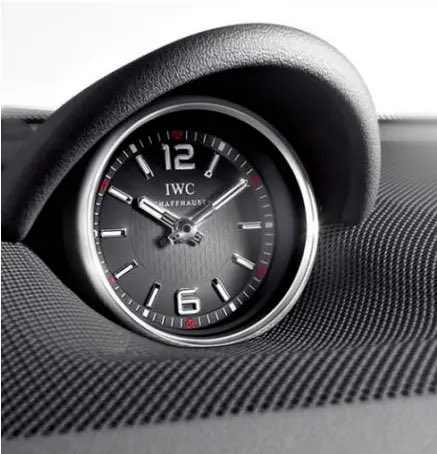
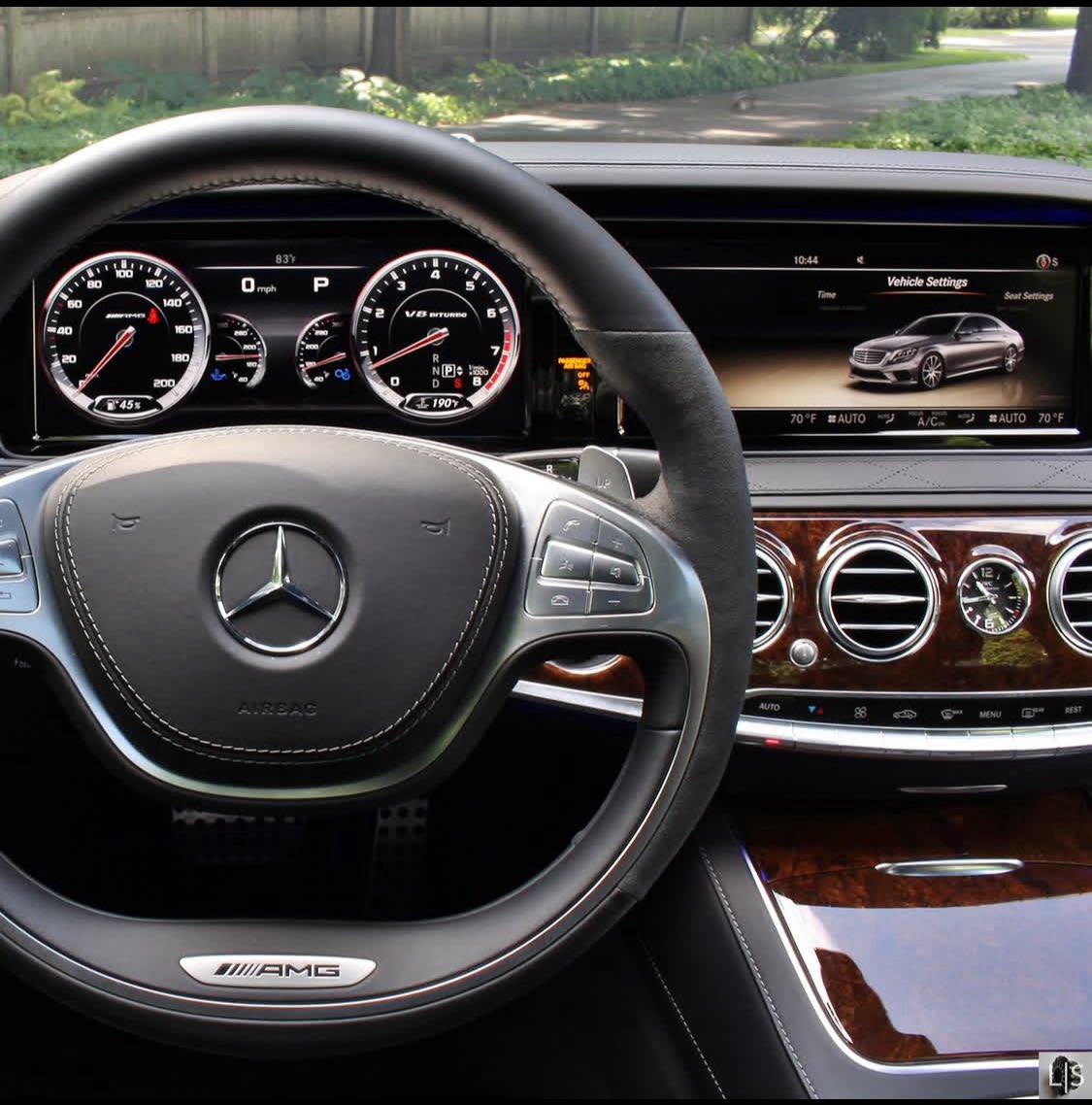
Another casualty of the industry's obsession with screens and cost-cutting. A beautifully crafted analogue IWC clock has far more character than a digital rendering buried in an infotainment interface.
Not everything needs to be digitised.
One of the greatest tragedies in modern Mercedes interior design, thanks to aggressive cost-cutting by the accountants, is the deletion of the classic IWC analog clock. Today,only a digital rendering of the clock in the MBUX interface serves as a relic of its presence (frame 4)
Imagine swapping a Honda K20Z4 from a Civic Type R into this Micra, with a 6 speed manual and custom exhaust.
That Rothmans racing livery combined with a 200hp Honda engine? It'd be like turbocharging a Go-kart. Absolutely bonkers.
@NikitaIlsaFaust Touchscreens are better suited to less frequently accessed functions. I prefer proper physical buttons, switches and knobs for everyday controls, preferably made from quality materials like aluminium. They offer better tactile feedback and age much better.
@NikitaIlsaFaust Exactly. It's also a cost cutting exercise disguised as technological progress. Physical buttons offer tactile feedback and make basic functions easier to operate without taking your eyes off the road.
We've reached a ridiculous point in automotive design where cars have more screens than physical buttons. Why should adjusting the AC or mirrors require a touchscreen? Give me proper buttons, analogue gauges and a screen only where necessary. Not every damn thing needs a display.
The M177 in the G63 is certainly impressive, but fuel quality is a concern, particularly given how sensitive these high performance engines can be.
For someone looking for a daily driver, the G550 is arguably the better option. The G63, however, is a different beast altogether.
If money isn’t an issue, I will take the G63. Both are V8s ; this iteration of the G550 uses the M176 while the G63 uses the high performance version with forged internals known as the M177, both engines feature active cylinder management and can switch off half their cylinders.
The G63 is a better overall package both aesthetically and mechanically.
A fascinating piece of automotive history.
W124 underpinnings, W140 inspired styling and genuine Mercedes Benz engines.
The SsangYong Chairman was an ambitious attempt at creating a Korean luxury flagship. Quite an interesting piece of automotive history.
Korea’s luxury saloon sat on a stretched Mercedes W124, with Mercedes engines under the bonnet.
The story started in 1991, when SsangYong formed an alliance with Mercedes-Benz and Daimler took a five percent stake in the company.
The Chairman arrived in 1997.
It used the platform of the W124 E-Class, stretched to 5.05 metres, and borrowed its look from the W140 S-Class closely enough that Mercedes asked SsangYong to redesign it and keep it out of Western Europe and the US, meaning only a handful ever made it to Western Europe.
Its engines came from Mercedes too: the 2.3-litre M111 four-cylinder and the M104 straight-six in 2.8- and 3.2-litre form, making 197 hp (145 kW) and 220 hp (162 kW).
The 3.2 was the same engine Mercedes used in the E 320.
Renamed the Chairman H in 2008, the W124-based model survived until 2014, while the wider Chairman nameplate lasted until 2017 ending a twenty-year run.
Same IMV architecture, meaning you can literally body swap an older model up to date with OEM parts. Its hard to justify the ridiculous price of the Toyota Hilux.
This is possible because the new Toyota Hilux is also based on the same IMV platform of the previous generation and the body panels & interior were simply refreshed. most powertrains are carried over from the previous generation as well.
What i don’t understand is the increment in pricing, Toyota didn’t really spend much on the revamp, the basic architecture is almost 25yrs😏
The BMW M3 CS is a perfect example. The xDrive version with its 8 speed automatic makes 543 hp, while the new M3 CS Handschalter makes 473 hp, RWD and a 6 speed manual.
Same S58 engine family, but two very different driving experiences.
I've always found it interesting how two cars with the same engine can have completely different personalities.
Transmission, gearing, weight distribution, exhaust tuning and suspension can change the entire experience.
The engine is only one piece of the puzzle.
@WilJay_1 Absolutely true 😄
I remember road trips with my cousins when we'd deliberately avoid stopping unless it was necessary, just to avoid overtaking those ridiculously long trucks again on narrow highways. But that's part of the fun of long journeys. Sometimes it's inevitable.
@1sthand2 Fair point on BMW saving them.
Still, buying a brand isn't the same as cloning an iconic look. True luxury, heritage and prestige takes a real pedigree, not just cheap tech.
Luxury isn’t a horsepower contest.
Rolls-Royce represents over a century of heritage, craftsmanship, bespoke design and refinement.
A 1,000hp EV with extravagant features doesn’t automatically put BYD in the same league. There’s more to luxury than specifications.
BYD y su marca de lujo Yangwang van a competir contra Rolls Royce. Con el Altior, los chinos ponen a un nuevo EV de más de 1,000 CV a luchar contra el auto que, visiblemente “inspiró” sus formas. El RR Phantom tiene un V12 bi-turbo de 563 HP y representa lujo y opulencia desde 1904. Estos chinos existen desde 2022. ¿Prefieres el lujo tradicional británico o su nueva interpretación china?