@Paul_Tenorio Si con esto eres feliz, y duermes mejor, pues enhorabuena. Como dice el refrán, no hay peor ciego que el que no quiere ver, el tiempo te desmentirá
@rgsecundaria La Mar Hurtado ja va quedar retratadíssima en la seva celebrada performance a La Selva (tv3) de l'any passat. Rosa Sensat son uns dels principals culpables del desgavell actual
Ayer 19 de agosto se cumplían 49 años del fallecimiento de uno de los grandes del humor universal: Julius Henry Marx, más conocido como Groucho Marx.
El sobrenombre de Groucho lo tomó de la palabra grouch, que en inglés significa "gruñón".
Mostacho postizo que incluso lo cambió por uno pintado con betún, cejas muy pobladas, un habano y gafas redondas de metal conformaban su peculiar caracterización que conocemos que junto a unos singulares andares gachos, suscitaba irremediablemente a la risa.
Autor de famosas frases como "estos son mis principios; si no le gustan tengo otros", lamentablemente tan de moda hoy en día entre nuestros políticos😠, sin embargo no es cierto que en su tumba esté escrita la frase "Perdone que no me levante" también atribuida a Groucho Marx.
Junto a sus hermanos Harpo y Chico protagonizaron una serie de películas cómicas de gran éxito como:
"Sopa de ganso" (1933), "Una noche en la ópera" (1935), "Un día en las carreras" (1937) o "Los hermanos Marx en el Oeste" (1940)
Aquí os dejo la famosa escena del camarote que pertenece a la película "Una noche en la ópera".
De esta escena parte el dicho "esto parece el camarote de los hermanos Marx" que utilizamos en situaciones reales de mucho lío o embrollo.
¡Qué la disfrutéis!😀
#cine #Groucho
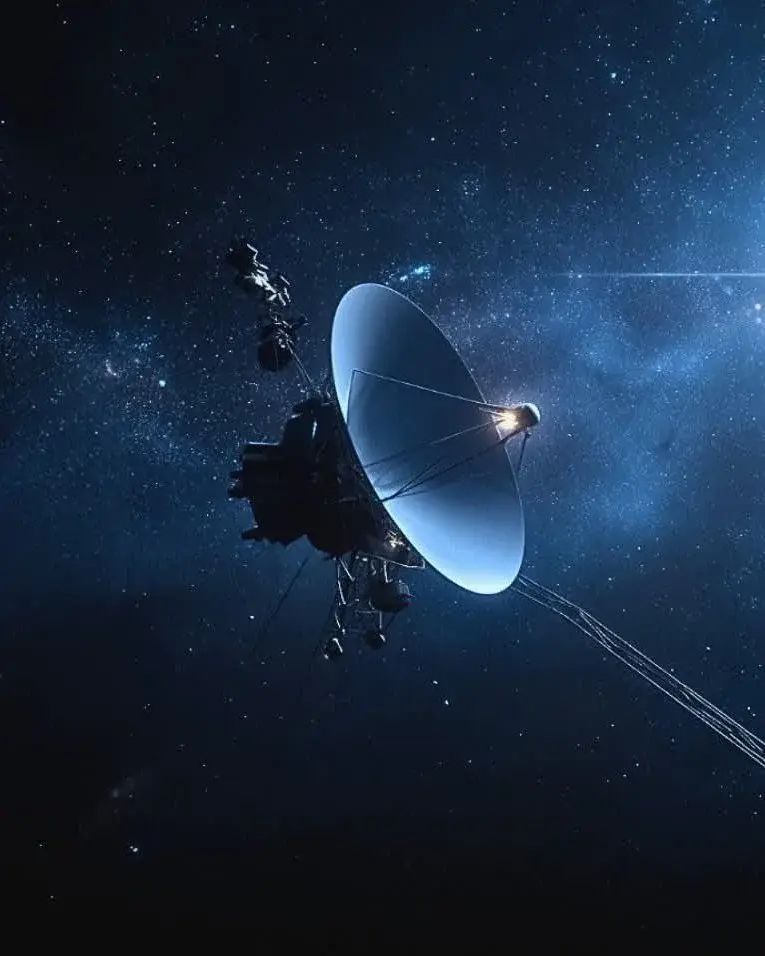
Voyager 1 Is About to Reach One Light-day from Earth
After nearly 50 years in space, NASA’s Voyager 1 is about to hit a historic milestone. By November 15, 2026, it will be 16.1 billion miles (25.9 billion km) away, meaning a radio signal will take a full 24 hours, a full light-day to reach it.
🔴 "Catalunya ha donat 400.000 milions d'euros més dels que ha rebut des del 1982. No existiria cap deute amb el FLA si no tingués aquest dèficit fiscal"
L'anàlisi de Santiago Niño-Becerra (@sninobecerra), catedràtic emèrit d'Economia
#TotEsMou3Cat
▶ https://t.co/QeCDq0vE3b
Each second, 1.5 million tons of solar material, traveling at 100 miles per second, shoot off the sun. Earth's magnetic field deflects most of it, but not all. The solar wind, a stream of charged particles, flows at 447 km/s (1 million mph), and while the magnetic field protects us, some particles still cause auroras and geomagnetic storms.
The Colossus of Rhodes is a wonder of the ancient world that has remained in our imaginations for millennia - should we rebuild it?
A $283m bid to resurrect it was launched in 2015, but sadly it never came to fruition.
But what was it, and why was it built originally?
It was a war memorial completed in 282 BC, commemorating what had been a colossal siege on the city of Rhodes 25 years earlier. Demetrius I of Macedon had waged war on Rhodes for years, even at one point deploying a 100-foot, metal-plated siege tower.
But Rhodes endured. To honor the victory, Rhodians melted down the bronze and iron weaponry of the enemy and used it to erect a giant colossus of the sun god Helios, the patron deity of their city.
What they built was enormous - it was probably designed with the gigantic statue of Zeus at Olympia in mind. Roman philosopher Pliny the Elder, writing 200 years after it was built, said it was 108-110 feet tall. That's about the height of the Statue of Liberty from feet to crown (a statue which it later inspired).
Little more than 50 years after completion, it was toppled by a devastating earthquake. There are varying accounts of what happened next, but mostly agreeing that it lay in ruin for several centuries until the pieces were eventually sold off.
However, it was so impressive in scale that people still came to visit the fragments. Pliny the Elder noted it was of such scale that few could even wrap their arms around its thumbs.
We don't know for sure what it looked like. Many depictions through history show Helios' mighty legs straddling the harbour (as pictured). That was a vision made popular by medieval writers, although unverified by records from antiquity. That was also the proposal of the architects in 2015, who wanted it to straddle the harbour piers and face outwards across the Aegean Sea.
Regardless, the colossus at Rhodes has left an indelible mark on Western art and imaginations ever since, not least inspiring Frédéric-Auguste Bartholdi's colossus at New York Harbor. Like Rhodes, that great statue is a monument to freedom, and borrows visual cues from traditional depictions of Rhodes - like the iconic torch and crown.
This dedication to it has also survived the ages in anthologies of Greek poetry:
“To you, O Sun, the people of Dorian Rhodes set up this bronze statue reaching to Olympus, when they had pacified the waves of war and crowned their city with the spoils taken from the enemy. Not only over the seas but also on land did they kindle the lovely torch of freedom and independence. For to the descendants of Herakles belongs dominion over sea and land.”