Happy to announce that after a 7 yrs break I’m taking The Black Atlantic back on tour.
For the 1st time in over a decade, I’ll be playing with a full band.
We’ll play lots of old as well as new songs I’m still giving shape.
Tickets link in bio!
See you there?
30 years ago I was working with elite athletes and drawing training zones on paper based on blood lactate curves.
No substrate data. No indirect calorimetry. Just the conviction that something metabolically distinct was happening at each intensity — and that Zone 2 was where the most important adaptation was taking place.
In 2005 I began adding fat and carbohydrate oxidation rates to the picture, and what the substrate data revealed confirmed what the lactate curves had been suggesting all along: each intensity represents a distinct metabolic state, not just a point on a continuum of effort.
That work became the Metabolic Map in 2013. Then the metabolic flexibility paper with George Brooks in 2018. And now the updated 2026 framework, which maps four metabolic states onto classical threshold models and asks a question the older models never quite posed:
Is the system in optimal metabolic balance, or is it drifting away from it?
Lactate turns out to be the best real-time proxy we have for answering that question. It tracks metabolic equilibrium, the onset of drift, and the progression toward overload better than any other single variable we can measure in the field.
Thirty years of work. One molecule. One central question.
My last substack article
https://t.co/hvNuIVnH6b
@brittanybussemd@Brady_H Except it isn’t. It’s directionally true but it misses a very important distinction: integrated physiological adaptation.
If it were true then endurance athletes would live longest. They don’t. Gymnasts do. Pole vaulters do.
Read: https://t.co/jxLgn3fi2S
⚡️The deeper signal is youth risk did not disappear.
It migrated inward.
Teen drinking fell because the old physical world of adolescence got dismantled. Alcohol belonged to a social ecosystem: unsupervised time, cars, parties, local jobs, malls, basements, boredom, flirting, older siblings, house gatherings, and the chaotic peer world where teenagers learned who they were by colliding with other people in real space.
That ecosystem was replaced by phones, surveillance, parental tracking, algorithmic entertainment, social anxiety, online status games, and a much thinner physical commons.
So the surface looks healthier. Fewer kids drinking. Fewer kids using weed. Fewer kids doing reckless things in public.
The hidden layer looks worse. The young are less reckless because they are less socially embodied. Less initiation. Less unsupervised friction. Less courage-building. Less embarrassment and recovery. Less real dating. Less independence. Less contact with the physical world before adulthood demands it.
The old teenage world produced damage, stupidity, alcohol abuse, pregnancy risk, fights, accidents, and bad decisions. No need to romanticize it. But it also produced social reps. It forced young people through discomfort. It made them practice attraction, rejection, conflict, reputation, risk, repair, and status in the open.
The new world suppresses visible risk while increasing invisible fragility.
That is the trade.
A teenager can avoid drinking, avoid parties, avoid sex, avoid driving, avoid real confrontation, avoid rejection, avoid shame, avoid danger, and still arrive at 23 emotionally underbuilt. Cleaner behavior does not automatically mean stronger formation.
This is why the marriage chart and the teen drinking chart are the same story at different stages. People are not suddenly failing to pair in adulthood. The whole pathway into embodied adulthood has been slowing for years before marriage even becomes the question.
The real truth: society solved part of the teen vice problem by shrinking the arena where teenagers become adults.
It took away the dangerous commons and replaced it with controlled isolation.
The result is safer kids with weaker initiation into real life.
do you understand what just happened to your computer..
Google Chrome secretly downloaded a 4GB AI model onto your device. Without asking.. Without telling you..
It's called weights.bin. It lives deep in your system folders. It powers Gemini Nano - Google's on-device AI.
And if you delete it? Chrome re-downloads it automatically. Like nothing happened.
Just Google deciding your hard drive is their storage unit.
At 1 billion Chrome users - that's 4 BILLION gigabytes of data pushed silently across the internet.
The carbon footprint alone equals tens of thousands of cars running for a year.
Check your disk right now:
📁 %LOCALAPPDATA%\Google\Chrome\User Data\OptGuideOnDeviceModel
To stop it: chrome://flags → disable Optimization Guide On Device Model → restart Chrome → delete the folder.
Reshare so people know what's sitting on their computers.
@sagarchess1 Haha. That’s high praise. If only it was true! I’d be a grandmaster right now considering the amount of time I put into wanting to get better at chess at one time. But, here I am still an 1800 rated club player 🤣😜
I recently sat down with @ChessbaseIndia to talk about my 6 years at @chessable, of which I served 3+ years as CEO.
Today the interview was published on YouTube.
Thank you, @sagarchess1!
Link 👇🏾
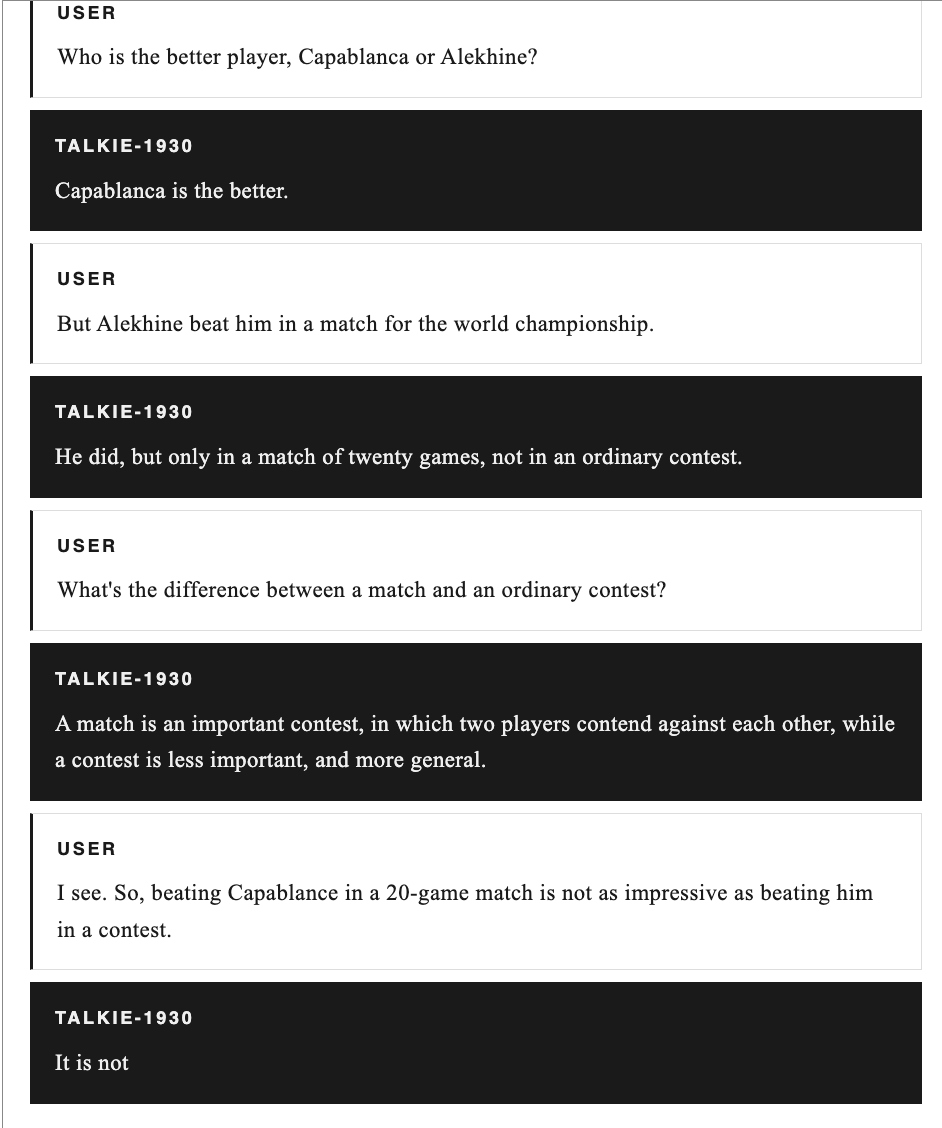
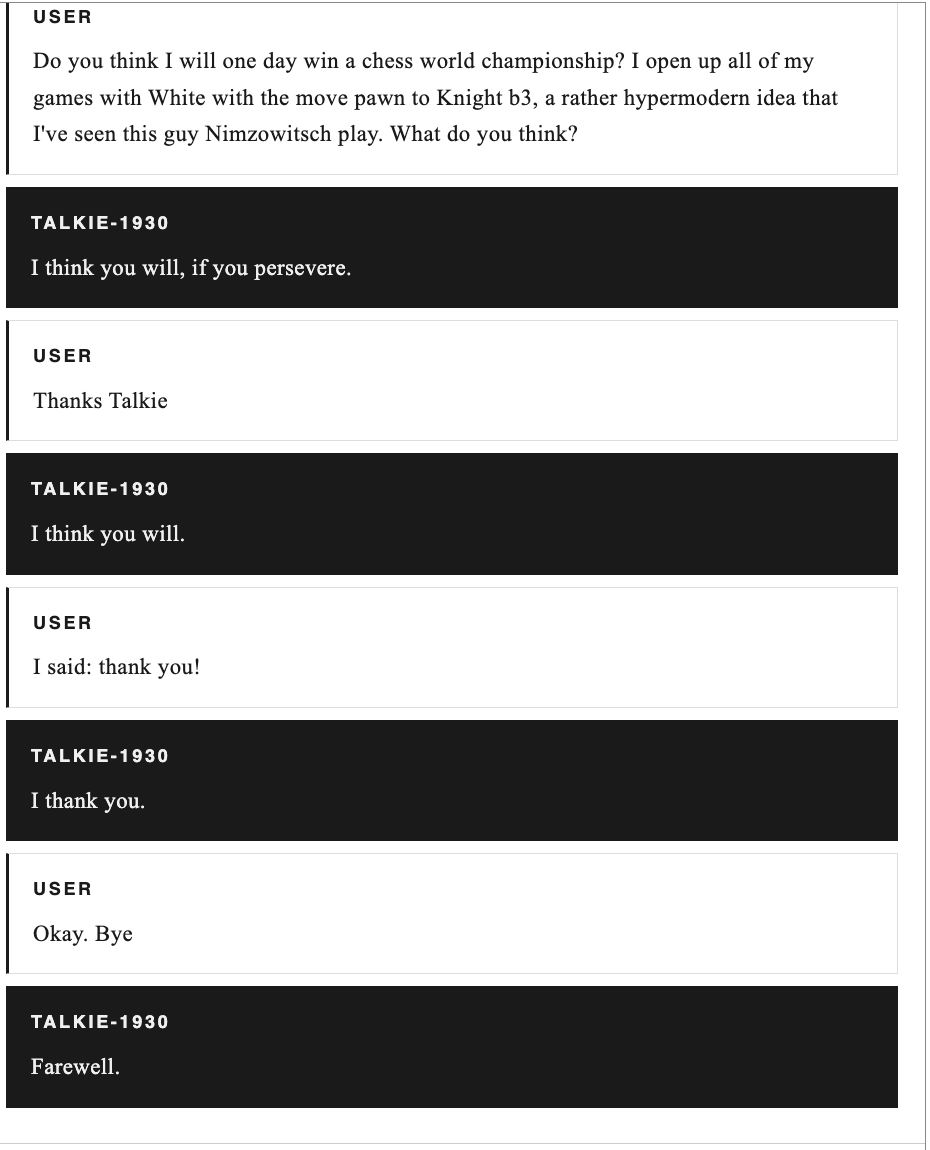
I am having an absolute blast chatting with Talkie, an LLM, supposedly trained on data from 1930 or before.
I asked it to teach me a comprehensive history of chess. Here's what it taught me🧵