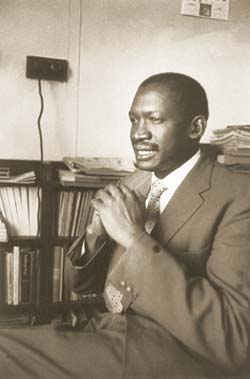
African people can be organised only under the banner of African nationalism in an All-African Organisation where they will by themselves formulate policies and programmes and decide on the methods of struggle without interference from either so-called left-wing or right-wing groups of the minorities who arrogantly appropriate to themselves the right to plan and think for the Africans.
-Robert Sobukwe
"When Black people are talked about, the focus tends to be on Black men; and when women are talked about, the focus tends to be on white women."
— Bell Hooks
The France–Africa Summit taking place in Nairobi must be viewed by Africans with open eyes and historical memory. France is not coming to Africa as a charitable friend. It is coming as a declining imperial power seeking new ground after being politically humiliated and strategically expelled from large parts of the Sahel. Countries like Mali, Burkina Faso, and Niger have rejected French military domination and challenged decades of French political and economic control. France is now looking eastward, trying to reposition itself in Kenya and other African states under the soft language of “partnership,” “investment,” and “renewed cooperation.” https://t.co/DVcbGuf3nz
🇳🇪 BREAKING: Niger bans 9 French media outlets for running smear campaigns against the authorities and the social cohesion in Niger while praising the terrorist groups.
Burkina Faso had already banned most of them if not all in addition to BBC and DW since more than a year ago for the same reasons.
#Niger
#AES
#Sahel
French media confirmed that France and Ukraine are behind the terrorism and instability in Burkina Faso, Mali and Niger. Once again, the ideology of white supremacy is infested in Africa like a parasite. They can't let us Africans be!
Argentina’s relationship with its Afro-descendant population is often described through a story of visibility, disappearance, and gradual re-emergence.
In the early 19th century, especially in cities like Buenos Aires, people of African descent formed a significant part of urban society. Over time, however, their presence became less visible in official narratives and public identity.
A number of historical forces contributed to this change. During the wars of independence, many Afro-Argentine men were conscripted into military service, where casualty rates were extremely high. Later, the 1871 yellow fever outbreak hit densely populated working-class neighborhoods particularly hard, areas where many Afro-Argentines lived.
At the same time, Argentina pursued a state-driven policy of encouraging large-scale European immigration, particularly from Italy and Spain. This reshaped the country’s demographics and was tied to an elite vision of building a more “European” national identity. Over generations, intermarriage and social integration also blurred visible distinctions.
As these processes unfolded, the idea that Afro-Argentines had “disappeared” gradually took hold in education and public discourse, even though people of African descent continued to exist within the population.
In recent years, that narrative has been challenged. Census data, including the 2022 figures, shows hundreds of thousands of people identifying as Afro-descendants, reflecting a broader reclaiming of identity and heritage that had long been under-recognized in official statistics.
The shift is not about a population suddenly returning, but rather about recognition catching up with reality.
Thomas Sankara, a revolutionary African leader, was assassinated by French imperialists. He drove out French imperialism from Burkina Faso and withdrew from IMF and made the country non-reliant on foreign aid. #blackhistory#france
Julius Nyerere, the first President of Tanzania, interviewed in 1976.
Tanzania was colonized by Germany and later by Britain before independence in 1961. During this period, Nyerere emerged as a leading advocate for African decolonization and majority rule in neighbouring countries such as Zimbabwe (then called "Rhodesia").
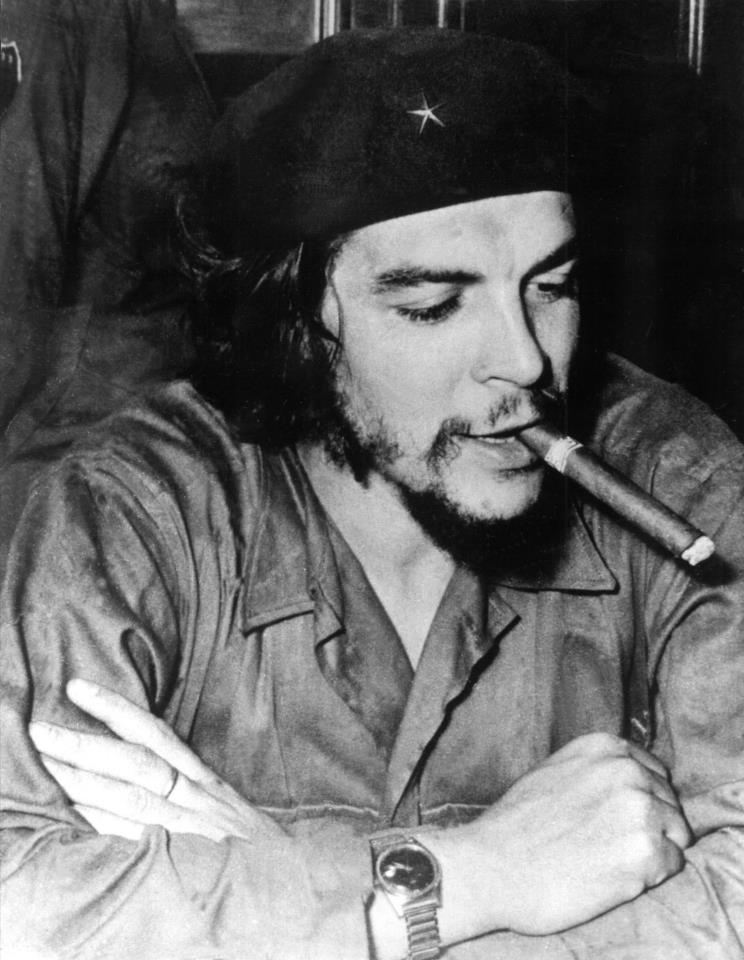
He didn't die in Bolivia. Before his famous last stand, Che Guevara vanished into the Congo🇨🇩 in 1965, slipping into the heart of Africa's post-colonial chaos to ignite a new revolution. This rare photo shows him alongside a Congolese communist guerrilla, during a secret campaign that most people never learn about.
Guevara believed the Congo could become the next major front in a global struggle, but the reality was brutal.
Infighting, poor organization, and unfamiliar terrain turned the mission into a grinding failure, forcing him to withdraw in defeat.
The image captures a pivotal moment when revolutionary myth met the limits of power, and Che's legend took a detour into history's shadows.