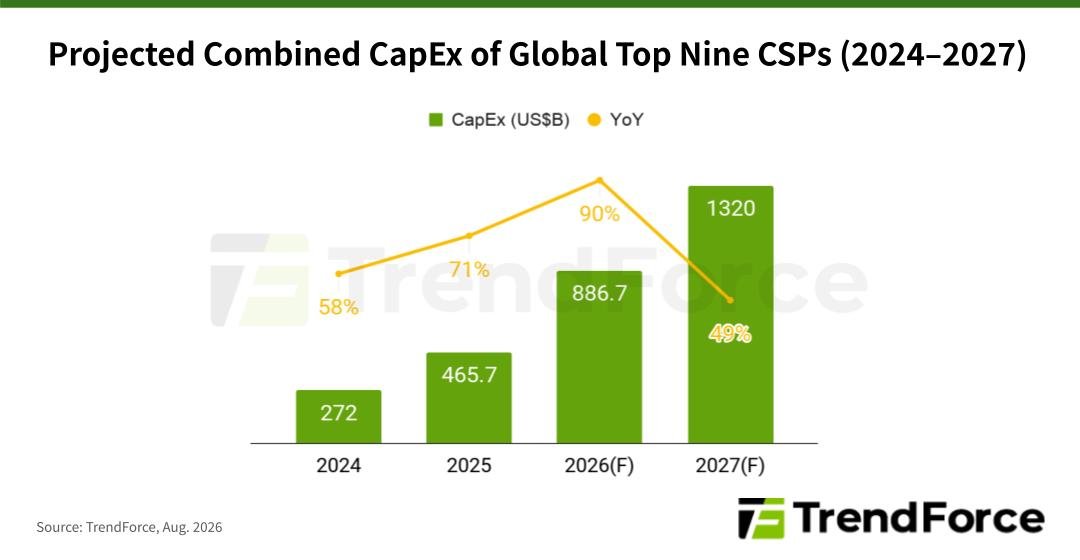
TrendForce estimates that the combined 2026 CapEx of Google, Amazon, Meta, Microsoft, Oracle, ByteDance, Tencent, Alibaba, and Baidu will exceed US$886.7 billion, with the five North American hyperscalers accounting for nearly 90%.
https://t.co/7PYVfCBAR5
Adam Smith’s most famous sentence remains one of the clearest statements in all of social science:
“It is not from the benevolence of the butcher, the brewer, or the baker that we expect our dinner, but from their regard to their own interest.”
The point is simple and profound. We do not rely on the kindness of strangers to put food on the table. We rely on their self-interest. The butcher supplies meat because he profits by doing so. The baker rises early because customers will pay for bread. Their desire to improve their own condition leads them, without any central direction, to serve ours.
This is the central mechanism of a market economy. Self-interest, channelled through voluntary exchange, produces cooperation on a vast scale. No one has to love their customers or share their political views. They only have to respond to incentives. The result is a system that regularly feeds, clothes, and houses millions of people who will never meet.
Many on the left still struggle to accept this. Self-interest is treated as morally suspect - a form of greed that should be restrained or replaced by appeals to solidarity and collective purpose. The preference is for systems that rely on moral exhortation or state direction rather than on the everyday pursuit of personal advantage. Yet the historical record is clear: societies that suppress self-interest in the name of higher motives tend to produce shortages, stagnation, and coercion. Societies that allow people to benefit from serving others tend to produce abundance.
Smith’s insight is not a celebration of selfishness. It is a recognition of reality. People are more reliable when they can improve their own lives by improving the lives of others. That simple alignment of interests remains the most powerful engine of social cooperation ever discovered.
Understanding, accepting, and working with reality is both practical and beautiful. I have become so much of a hyperrealist that I’ve learned to appreciate the beauty of all realities, even harsh ones, and have come to despise impractical idealism.
Don’t get me wrong: I believe in making dreams happen. To me, there’s nothing better in life than doing that. The pursuit of dreams is what gives life its flavor. My point is that people who create great things aren’t idle dreamers: They are totally grounded in reality. Being hyperrealistic will help you choose your dreams wisely and then achieve them.
#principleoftheday
This isn't science fiction anymore. 🧲
The Chinese University of Hong Kong researchers developed a magnetic slime robot that can be remotely controlled to move, squeeze through tight spaces, and even grasp objects.
One potential application? Removing objects accidentally swallowed inside the human body without traditional surgery.
Soft robotics is opening doors that rigid robots simply can't.
Would you trust a robot made of slime inside your body?
🎥 Media: @newscientist , Li Zhang and The Chinese University of Hong Kong
⚠️ This content is shared for informational purposes only. CTO Robotics Media is a media platform and does not own or develop the technology shown. Credit belongs to the original creators.
#Robotics #SoftRobotics #MedicalRobotics #Engineering #Innovation #FutureTech #Science
A friend of mine said that we should welcome illegal immigrants, so long as they don’t live near her. She’s now a former friend. My mom used to say, you cannot argue with stupid or crazy people. Her quote is in my new book. I still try, but without success.
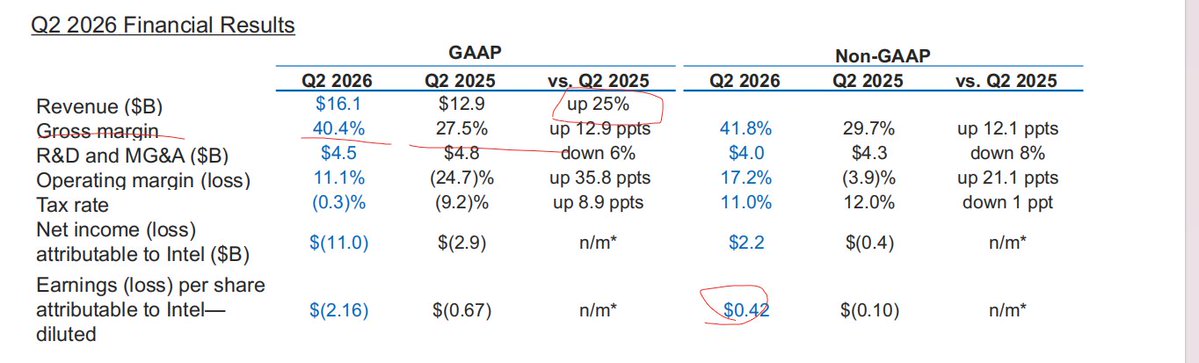
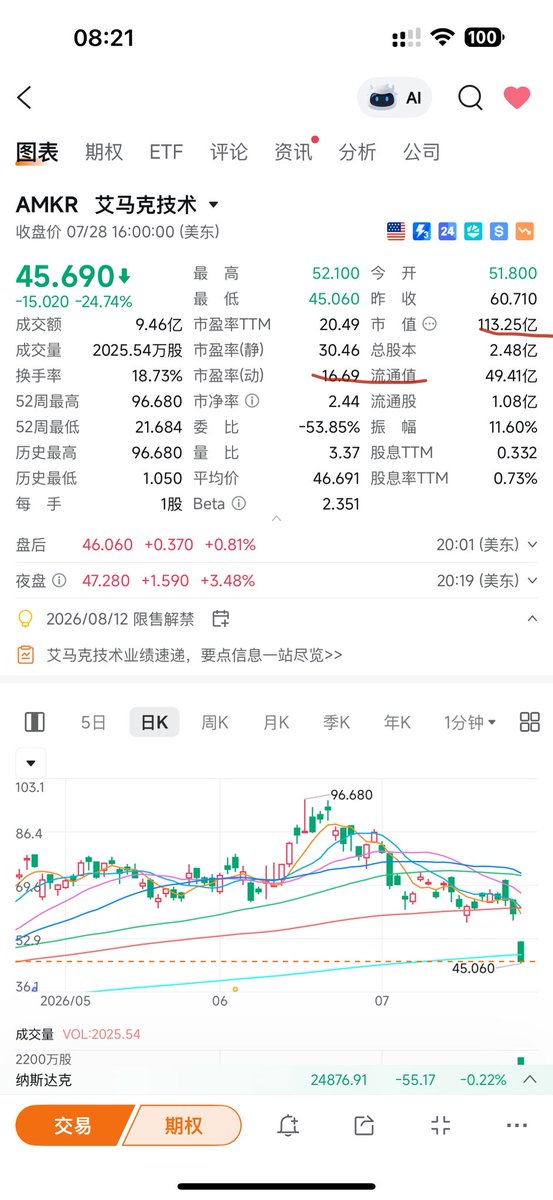
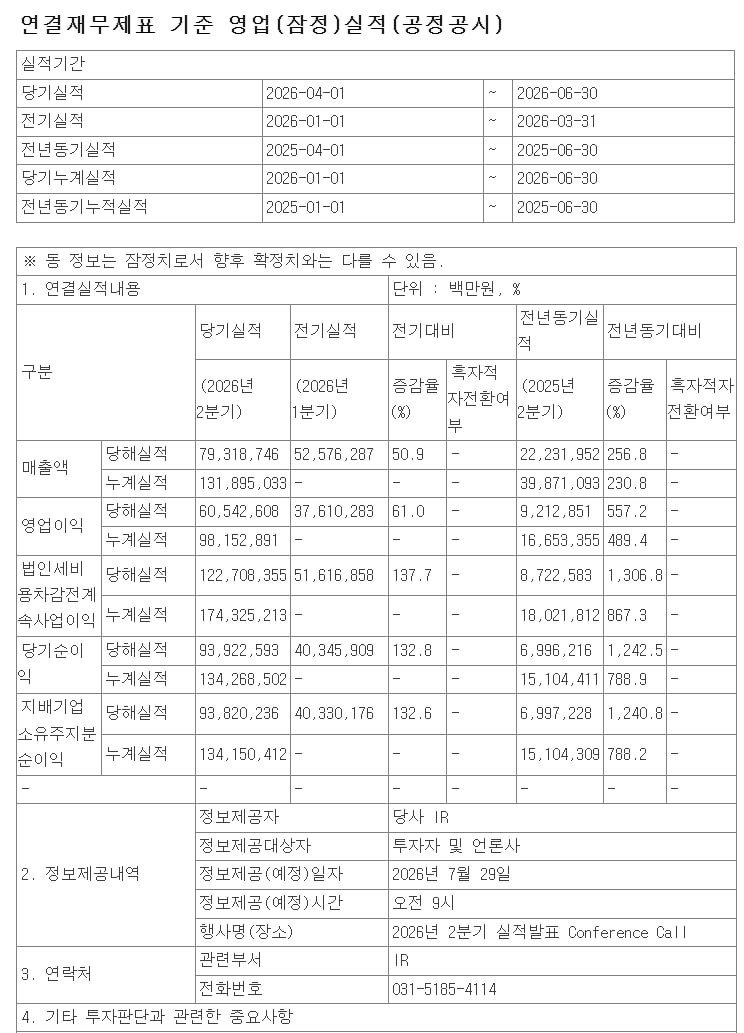
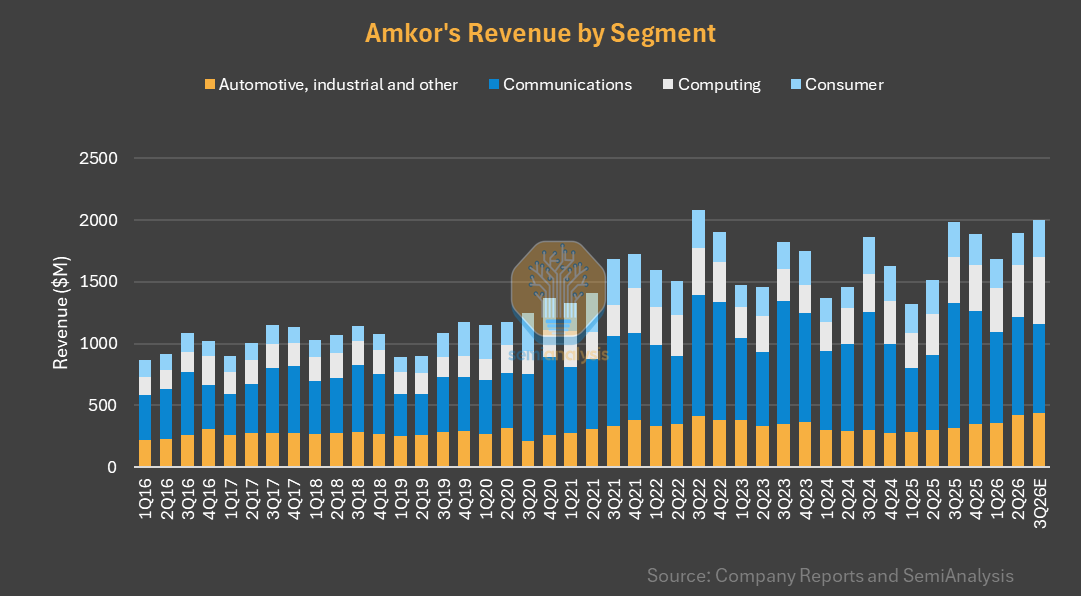
Amkor 2Q26
- Rev up +12.6% q/q and +26% y/y to $1.898B at 16.8% GM, both above the high end of guidance; 3Q26 guided $1.95-2.05B at 18.5-19.5% GM
- FY26 capex unchanged at $2.5-3.0B; FY26 capex split newly disclosed at 65-70% facilities expansion including Arizona phase 1
- the 3Q revenue guide is only +0.7% y/y at midpoint against $1.987B in 3Q25 because comms is guided down HSD q/q instead of the usual iPhone-launch lift, so y/y growth goes from +26% to roughly zero in one quarter even as computing accelerates
- biggest incremental of the call, FY26 will be at 17.5% GM, which is exactly the FY28 IR day target, two years early and on $7.5B of revenue vs the $9.0B in that 2028
- that implies +$1.5B of revenue between 2026 and 2028 delivering zero incremental GM; the company cites the initial US ramp a headwind
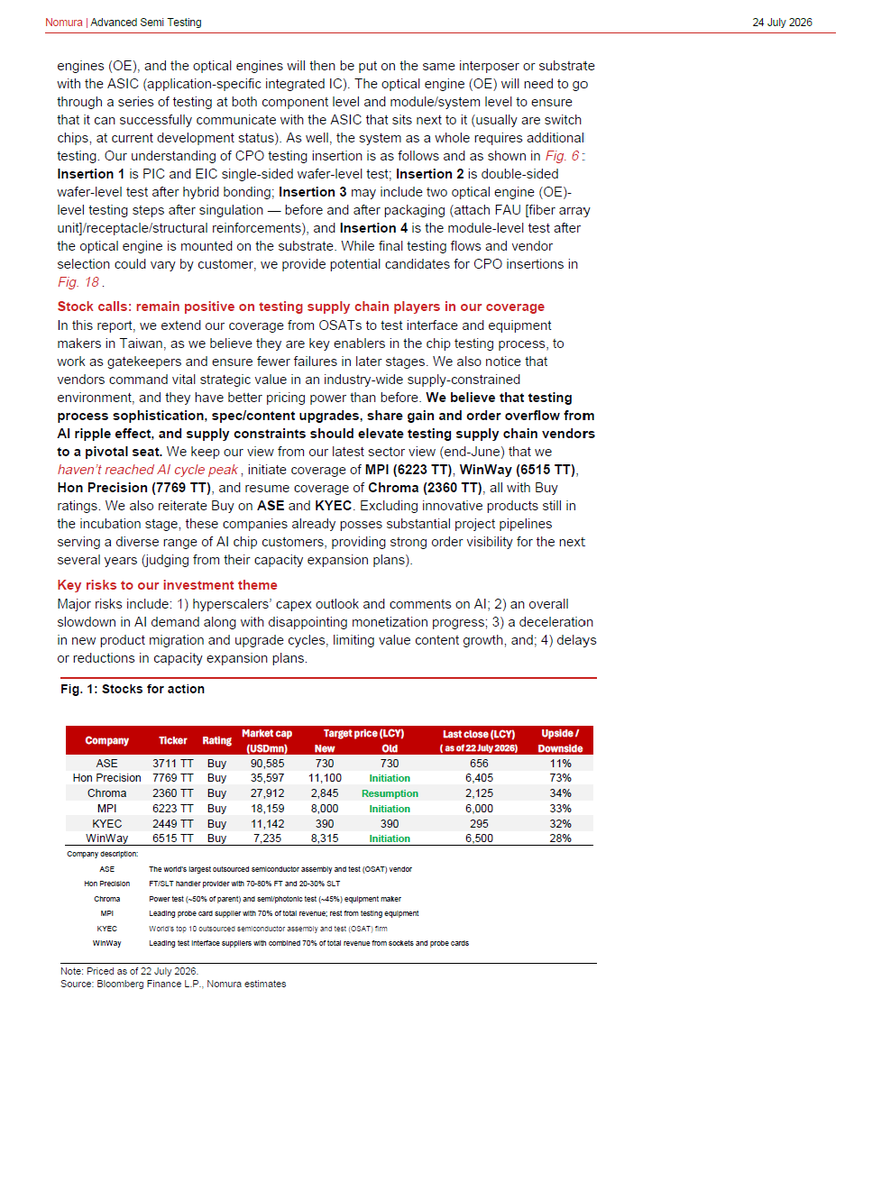
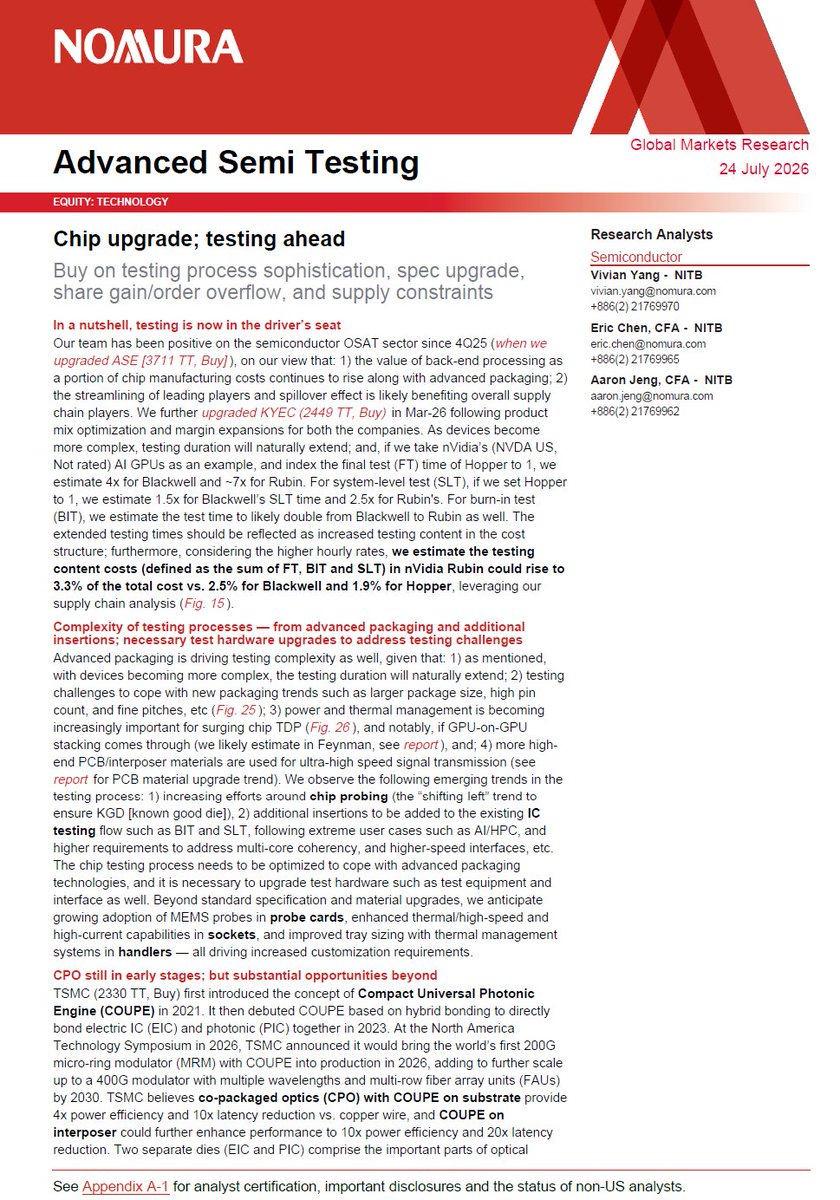
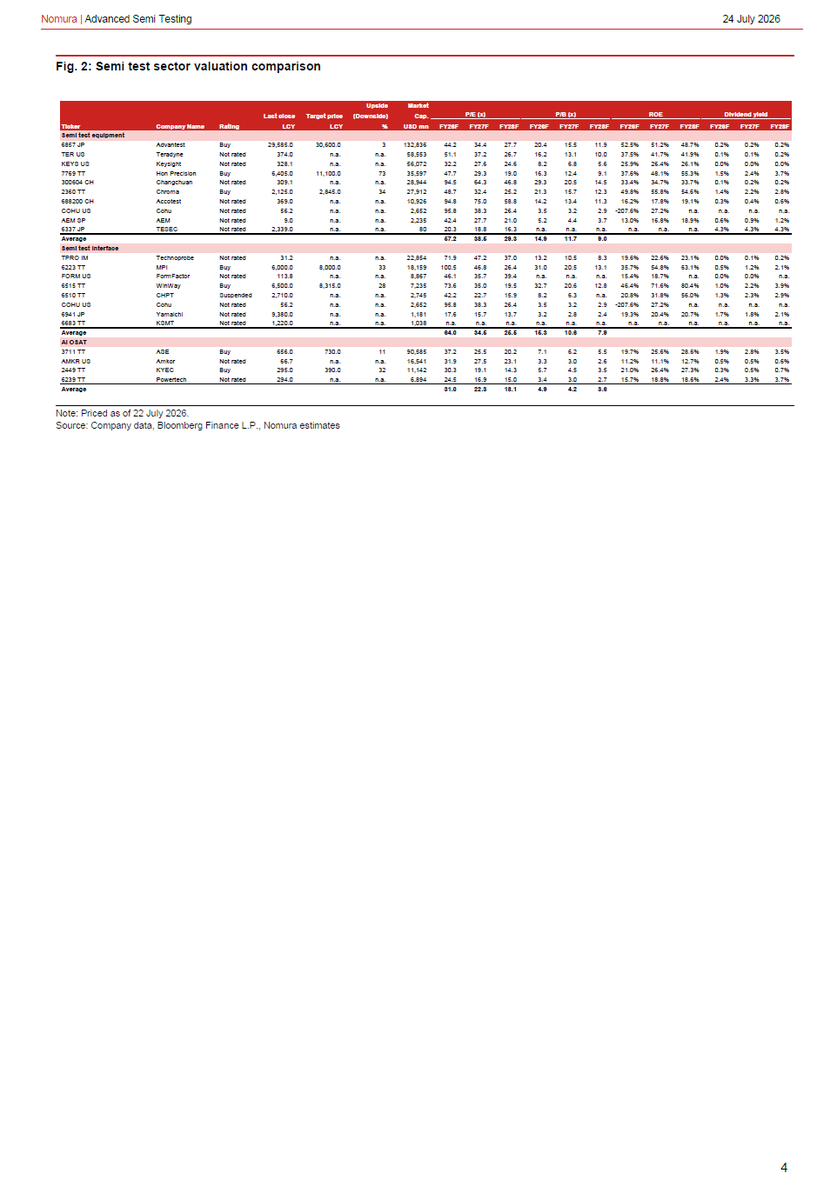
Nomura's report reinforces what we believe is one of the most underappreciated structural shifts taking place across the semiconductor industry today, namely that testing is no longer a low-value manufacturing step performed at the end of production, but is rapidly evolving into one of the most critical value-added processes within the entire AI hardware supply chain, because as chips become exponentially more complex through chiplets, stacked HBM, advanced packaging, silicon photonics and eventually co-packaged optics (CPO), the economic cost of failure rises disproportionately, making every additional dollar spent on testing significantly more valuable than it was during previous semiconductor cycles.
The market has understandably spent the past two years focusing almost exclusively on GPU designers, HBM suppliers and advanced packaging companies, yet what this report demonstrates is that testing is quietly becoming the next bottleneck, because increasingly sophisticated AI accelerators cannot simply be manufactured, they must be validated repeatedly throughout the production process to ensure every component performs flawlessly before being assembled into AI systems that may ultimately be worth several million dollars each, effectively transforming testing from a manufacturing support function into an essential yield protection mechanism.
Historically, testing was largely viewed as a necessary manufacturing expense whose primary objective was to filter out defective chips before shipment, but AI has fundamentally altered that equation because testing today is increasingly about protecting economic value rather than merely measuring quality, and when a single package contains multiple GPU chiplets, twelve stacks of HBM, advanced substrates, hybrid bonding interfaces, silicon photonic engines and increasingly expensive packaging materials, discovering a defect late in the production process can destroy vastly more value than in previous semiconductor generations.
That is precisely why Nomura estimates testing content continues to increase materially with every GPU generation, using Hopper as the baseline, where final testing time increases approximately fourfold for Blackwell and roughly sevenfold for Rubin, while system-level testing rises approximately 1.5 times for Blackwell and 2.5 times for Rubin, with burn-in testing roughly doubling, resulting in testing content increasing from approximately 1.9% of total GPU cost for Hopper to 2.5% for Blackwell and approximately 3.3% for Rubin, a progression that may appear modest when expressed as percentages but becomes extraordinarily meaningful when applied to AI systems whose selling prices continue rising dramatically.
Perhaps the most important observation in the report is not simply that testing content is increasing, but that testing itself is migrating earlier throughout the manufacturing process, effectively shifting from a single inspection performed after fabrication into a continuous validation framework that begins at wafer probing, continues through known-good-die verification, hybrid bonding validation, package testing, burn-in qualification and ultimately system-level testing before deployment inside hyperscale AI clusters, meaning the industry is increasingly adopting multiple quality gates rather than relying on one final inspection at the end of production.
This shift has enormous implications for the supply chain because every additional testing insertion creates incremental demand for specialized equipment, probe cards, sockets, handlers, MEMS probes, thermal management systems and high-speed interfaces, thereby expanding the opportunity set well beyond traditional outsourced semiconductor assembly and test companies, which explains why Nomura has broadened its coverage to include interface suppliers and test hardware manufacturers rather than limiting its investment thesis solely to OSAT providers.
Another theme that deserves significantly more attention is the interaction between advanced packaging and testing, because while investors have understandably focused on CoWoS capacity as one of the industry's largest bottlenecks, packaging capacity alone cannot solve the industry's challenges if testing capacity fails to expand at a similar pace, since every additional layer of complexity introduced through chiplets, hybrid bonding, HBM stacking, heterogeneous integration and silicon photonics simultaneously increases the probability that expensive failures will occur after substantial value has already been added to the product, making testing increasingly indispensable as AI hardware becomes more sophisticated.
The discussion surrounding co-packaged optics is equally compelling because most investors naturally associate CPO with optical component suppliers, whereas Nomura correctly argues that the real opportunity extends much further into the testing ecosystem, given that every optical engine must communicate flawlessly with adjacent ASICs under extremely demanding thermal, electrical and optical conditions while maintaining signal integrity across increasingly complex architectures, thereby introducing entirely new categories of testing that simply did not exist in previous semiconductor generations and creating an additional secular growth driver for testing vendors.
We also agree with Nomura's conclusion that the AI infrastructure cycle remains considerably earlier than many investors assume, because every successive GPU generation is becoming disproportionately more difficult to validate than its predecessor, allowing testing content to grow materially faster than semiconductor unit volumes themselves, which means the industry's next major beneficiaries may not necessarily be the companies designing the chips, but increasingly the companies ensuring those chips actually function reliably inside increasingly expensive AI systems.
Our preferred way to position for this theme is to own the entire testing value chain rather than focusing solely on OSATs, because different parts of the ecosystem benefit from different stages of the testing process. ASE (3711 TT) remains our highest-conviction OSAT exposure given its scale, broad customer base and dominant position across advanced packaging and testing. Hon Precision (7769 TT) stands out as one of the most attractive pure-play beneficiaries of final testing and system-level testing, areas where AI complexity is expanding the fastest. WinWay (6515 TT) offers differentiated exposure through sockets and probe cards, which should experience rising content per AI accelerator as electrical and thermal requirements become increasingly demanding. MPI (6223 TT) is well positioned through wafer probing, benefiting directly from the industry's shift toward earlier testing insertions and known-good-die validation. KYEC (2449 TT) remains an attractive second OSAT exposure with meaningful leverage to AI testing demand, while Chroma (2360 TT) provides exposure to automated testing equipment, allowing investors to participate in the hardware upgrade cycle required to support increasingly sophisticated AI devices.
Ultimately, we believe semiconductor testing has quietly transitioned from a manufacturing support function into one of the industry's most valuable strategic chokepoints, and just as HBM suppliers, advanced packaging companies and foundries have enjoyed structurally stronger pricing power because they occupy indispensable positions within the AI value chain, testing vendors increasingly appear poised to achieve similar economics as AI hardware becomes more heterogeneous, more thermally demanding, more optically integrated and substantially more expensive to manufacture, making testing one of the highest-conviction secular investment opportunities across the broader semiconductor ecosystem.