Tomorrow (11/22) at 2 PM EST 😶🌫️
The SMQKE Room will host another insightful live discussion that reveals the importance of recent developments in digital assets.😶🌫️
This is a fast moving space that is slowing down for no one.💯
Speed is the new edge in crypto research, and we are keeping up with that speed in the SMQKE Room.💨
As crypto announcements ramp up this year, being able to sort them out and take advantage of major moves will become difficult.🎯
Therefore, a concise breakdown of every major institutional strategy at this moment becomes a strong resource for crypto navigation.📝
This conversation tomorrow aims to prepare any digital asset investor for what is coming next.🗣️
Join the institutional discussion today: https://t.co/CoiqjxL24B
My mom had a stroke, and my grandma lives with dementia. I’d love for them to get back some of the everyday things they used to enjoy. When I say medicine is where I’m most bullish on superintelligence, that’s who I’m thinking about.
@NiomeAI Subnet 55 started with synthetic genetic data. Now the team is building a tool for biotech researchers working on rare genetic diseases.
Say a research team has three potential treatments and the budget to test one. Which one goes to the lab first? The plan for SN55 is to have one set of AI models propose candidates and another score them. The models can then use those results to improve the candidates. The researchers compare the options and make the call on what to test.
@NiomeAI says it’s generated $120K in revenue since February and put that money back into technology for rare genetic disease research. What I want to see next is a research team explain which candidate they picked for the lab and how SN55 helped them make that decision. That’s the kind of Bittensor story I want to cover. $TAO
We’re excited to be working with @Zebec_HQ as their privacy infrastructure provider for confidential payroll on @StellarOrg.
Zebec’s real-time payroll is already live on Stellar. Now we’re bringing privacy to its existing payment flows.
Our Enterprise Privacy Stack, developed with @0xPredicate, aims to enable private salary streaming with controlled disclosure.
Privacy for employees. Visibility for businesses.
A July post said @Cloudflare's Monetization Gateway was getting over 20% of the web ready for AI agent micropayments in stablecoins.
If agents start paying sites on their own, where does $ZBCN fit? #AgenticFinance
https://t.co/4xZyn3T8oL
🤖 The agentic economy is arriving faster than you think.
With @Cloudflare launching its Monetization Gateway, a major shift is underway. Over 20% of the web is getting ready to enable micro-payments for AI agents via stablecoins.
But how do we take agentic commerce from a tech trend to mainstream global adoption?
Our CTO and COO, Peter Grosskopf, recently sat down with @block_stories and Lucas Shin from @merit_systems, to share the stablecoin operator's perspective.
His core takeaway? ➡️ For agentic commerce to truly scale, the stablecoin layer must reflect the local currencies businesses actually use to manage their revenues. 🚀At @AllUnityStable, we are building exactly that infrastructure.
👉 Read the full breakdown and see what's still missing for broader adoption in the latest blockstories Crypto Briefing: https://t.co/0or9fPXvbm
#AllUnity #EURAU #CHFAU #SEKAU #FutureOfFinance #Stablecoin
The conversation about the "switch" to crypto in banking finally happened. 💯
Here it is in full, with Mike Ring and Michael Staw, the co-founders of Old Glory Bank. Mike serves as the bank's president and CEO. Michael leads its technology as chief innovation officer. For over an hour they explained why they built the bank, what the debanking era did to them, how the debanking fight pushed them into crypto, and exactly when XRP goes live on their platform. 😶🌫️
Here are a few of the major takeaways from this conversation:
0:05:10 — You have to own a bank to be cancel-proof. ✅
When Ring asked Staw how to build a financial solution nobody could cancel, Staw came back a week later with the answer. Payment rails and card programs were not enough. Owning a real bank was the only structure that could guarantee it.
0:10:34 — Debanking was real, and the OCC report settled the argument. ✅
Ring testified before the Senate Banking Committee in February 2025 and named the big banks that were debanking people while the other panelists laughed at him. The OCC report on the nine largest national banks later confirmed what he said, and crypto was one of the restricted industries named in it.
0:37:02 — "It's not even close. You've got to support the XRP community." ✅
Ring tells how Steve Paganucci, the former FBI official who wrote the Bureau's crypto documents and helped launch the bank, told them the XRP community was the natural fit because its people care about freedom and distrust government control. Ring also admits the XRP Ledger is harder to build on than Ethereum, and says the effort is worth it.
0:40:27 — XRP was built for payments. ✅
Staw lays out the technical case. The XRP Ledger was built for payments, with fast settlement, low transaction costs, and compliance and credentialing tools built into the platform. In his words, there is no cheaper or faster way for the bank to move payments than the XRP chain.
0:51:50 — Their stablecoin was built to the GENIUS Act from day one. ✅
Ring confirms every component of the bank's stablecoin was built to comply with the GENIUS Act, one hundred percent, ahead of the January 2027 effective date. He also explains why he believes the Federal Reserve remains the one institution still standing in the way.
1:10:45 — XRP connects about 30 days after the platform launches. ✅
Ring explains the pacing directly. XRP does not switch on at launch because he expects this community to be the bank's most passionate group and he refuses to overwhelm his customer service team on day one. About 30 days in, customers will be able to connect an XRP compatible wallet, and sooner if the first launch runs quiet.
Bank leadership rarely explains decisions like this in public and on the record. That is what makes this conversation worth hearing in full.🧠
FULL CONVERSATION TIMESTAMPS
0:00 — Introduction
1:56 — Who You Are and the Philosophy Behind the Bank
9:33 — Debanking and the OCC Report
16:19 — What Old Glory Bank Does That Big Banks Will Not
20:36 — Upcoming Plans with Crypto and the NextGen Platform
29:24 — The Process of Flipping the Switch
36:13 — Integration of XRPL
48:09 — How the Fed Cannot Delay Anymore
54:14 — Overall Attitudes of the Banking Community Toward Crypto Adoption
1:02:00 — Crypto Lending
1:07:35 — The Launch Roadmap
1:20:15 — Closer
Enjoy🍿
NEAR reports its SHIELD system blocked more than $50M in attempted laundering through NEAR Intents after the reported Bitget hack and about 96% of Binance exploit-linked flows that reached the app.
SHIELD screens requests before execution. NEAR’s base layer stays permissionless.
@NEARProtocol
Per Stellar, Ethena's USDe and sUSDe are now live on the network, bridgeable via Stargate and on SushiSwap, Templar and Varial.
More dollar assets landing on Stellar. Does more stablecoin choice strengthen the stellar:native case, or is it still all about USDC?
#Stellar#Ethena #XLM #Stablecoins ethereum:0x57e114b691db790c35207b2e685d4a43181e6061
Back in August, Circle launched native $USDC and CCTP on OKX's X Layer, making cross-chain USDC moves easier.
The more chains USDC lives on, the bigger the market for stablecoin payroll. Does that open more doors for $ZBCN? #Stablecoins
https://t.co/8DSvNE5Of2
⚡️ LATEST: Circle has launched native $USDC and Cross-Chain Transfer Protocol (CCTP) on OKX’s X Layer, enabling crosschain transfers and expanding USDC across the Ethereum-compatible network.
Founded in 1853, The Clearing House is preparing a major modernization of systems used by leading U.S. banks. Its move toward quantum technology could mark a turning point for crypto adoption. #Banking#Crypto#Smqke
Overledger’s official technical blueprints show connections to XRP, Stellar, Bitcoin, and Canton. That’s documentation—not speculation—and a step toward interoperability between public blockchains and traditional finance. #Blockchain#Interoperability#Smqke
Sen. Lummis pushed back on the idea that crypto hasn't helped everyday Americans, and payroll was one of her examples.
If workers could get paid in real time instead of waiting days, would that win over more skeptics in DC? $ZBCN #Stablecoins
https://t.co/nTsEyAVsTM
BREAKING: Water is wet.
Of course the woman who wanted to recruit an “anti-crypto army” is unwilling to acknowledge the many positive things digital assets have done for affordability and everyday Americans, so allow me to name a few:
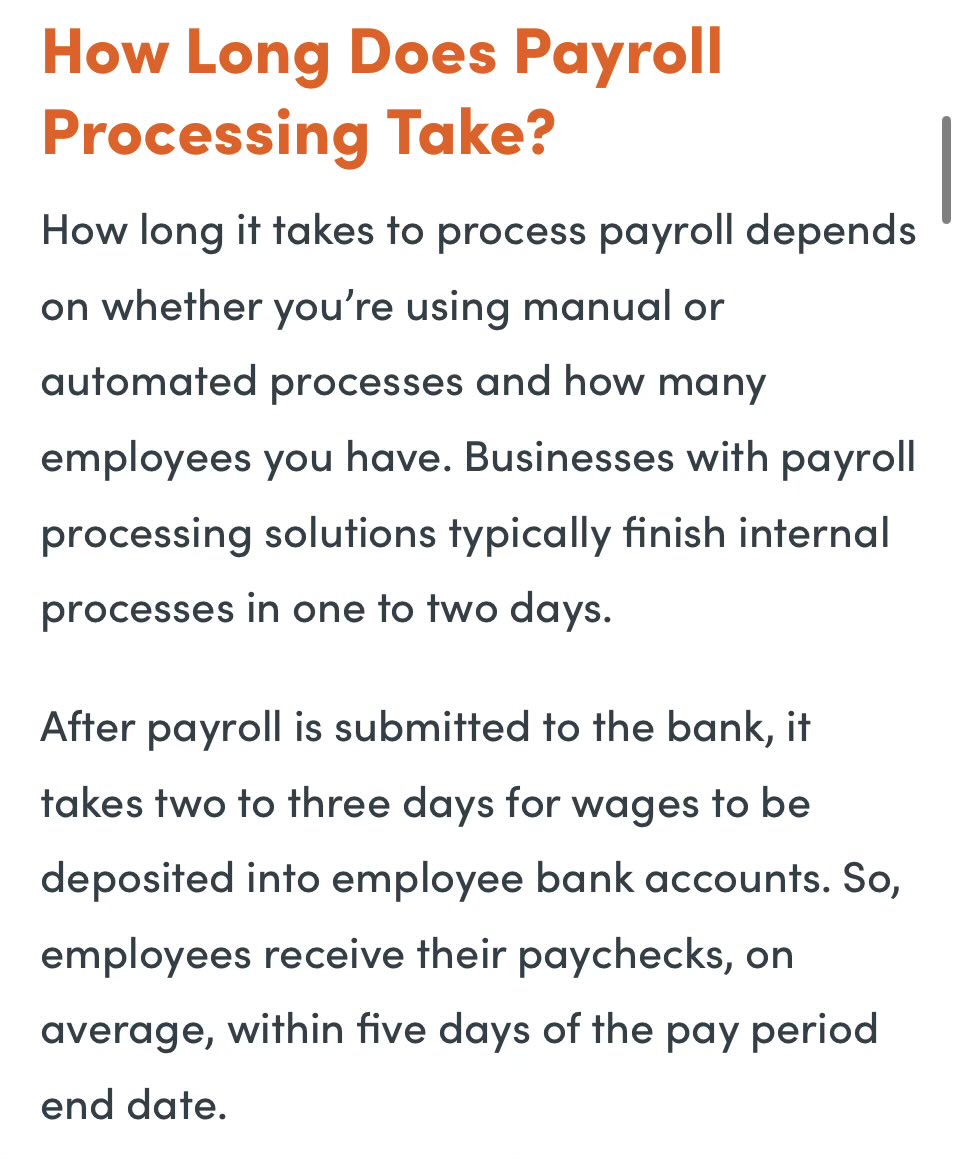
-Payroll processing takes 5 days on average today, as you can see below. Stablecoins permit employers to pay their employees nearly instantly. For most Americans living paycheck-to-paycheck, getting paid 5 days earlier is a big deal.
-Warren’s beloved big banks charge nearly 15% to send $200 overseas, and the money takes days or weeks to arrive. Digital assets spare its customers many of the unnecessary fees and can move the funds nearly instantly, any day of the week.
For someone who claims to champion affordability and hates junk fees, she sure loves protecting them. Ultimately, digital assets have made a clear case, but she just keeps voting against them and the rules of the road she claims she wants, because she actually wants to kill crypto.
Builders should plan accordingly.
AI’s real bottlenecks: power, grid, memory, rare earths, chips. Nobody wants to build all that.
$TAO is the alternative when we hit:
Physical limits
Permits and compliance
Export controls
It runs on power already plugged into the grid. No downtime. No single point of failure.