@satish_faction@travisk@a16z This. Also makes me dream of investing even something.
Travis or anyone capable of making this happen, if you see this please 🙏🏻
We charge $3K to $5K for an audit before building anything.
Sometimes we'll bake it into the project or start just with the audit.
Here's everything we put in the delivery doc:
(Make sure to bookmark this one)
Section 1. Executive summary. One page. Their situation in 3 sentences using their own language. What I'm proposing in 3 sentences. The expected outcome in 3 sentences. Investment range. That's it. If the exec summary is weak, nobody reads the rest.
Section 2. Current state. Visual process maps for every major workflow they run. Each map shows the actual steps, who owns each one, where the handoffs break, where data gets re-entered, where things sit waiting. Most companies have never seen their own operations drawn out. The moment they do, they get it.
Section 3. Cost of inaction. This is the section that sells the build. Dollar amount they're losing per month. Hours per week being burned on manual work. Opportunity cost. Risk they're carrying. All using their numbers from the discovery call, not mine.
Section 4. Proposed solution. Architecture diagram showing what connects to what. Before and after process maps side by side. Specific tools, not vague tech talk. Data flow. Security considerations. The thinking, not just the build.
Section 5. Implementation roadmap. Phases with clear deliverables. Week 1 to week 4. Week 5 to week 8. Week 9 to week 12. Plus the line that closes deals: "you'll see daily demo items in our shared Slack." Most agencies say "we'll deliver in 3 weeks." Showing daily progress is a different sales pitch entirely.
Section 6. Quantified ROI. Hours saved per month. Dollars saved per month. Capacity unlocked. Payback period in months. Under-promise. If you project $20K a month and they see $8K, you lose trust. If you project $8K and they see $12K, they become a case study.
NOTE: Section 7 & 8 below are included IF we start with the audit only.
Section 7. Investment. Total cost. Breakdown by phase. Payment terms. What's included. What's not. Scope boundaries. Retainer pricing if applicable.
Section 8. Next steps. What happens after they sign. Kickoff timeline. Signing link.
The build becomes inevitable once they've read the doc.
Skip this and wonder why you're losing deals to people charging 3x more.
This is Anton Kreil.
A kid from Liverpool, raised by a single mom with no money, who walked into Goldman Sachs at 20 and walked out of Wall Street at 28 with the kind of resume nobody believes is real.
His prop book at Goldman grew from $25M to over $400M in four years.
Lehman headhunted him in 2004.
JP Morgan paid him a fortune to run their global pharma, biotech, and chemicals trading franchises in 2006.
He retired in May 2007, months before the entire system blew up.
The 16 minutes below is the closest thing I've seen to an actual trader explaining how he thinks.
No fluff, no charts, just the framework that made three of the biggest banks on Wall Street fight to hire him.
Atlassian's revenue: $1.79 billion last quarter
Atlassian's move: fire the engineer who built their infrastructure
his move: post a 38-minute breakdown of every system he built, free for anyone to copy
what he revealed:
> Envoy proxy instead of enterprise load balancers
> sidecar architecture for auth, logging, rate limits
> DynamoDB + SQS for async provisioning
> Packer + SaltStack for automated VM deployments at scale
Atlassian charges per employee across 350,000 customers
this guy just handed you the enterprise playbook for free
save this
I'm only going to say this once:
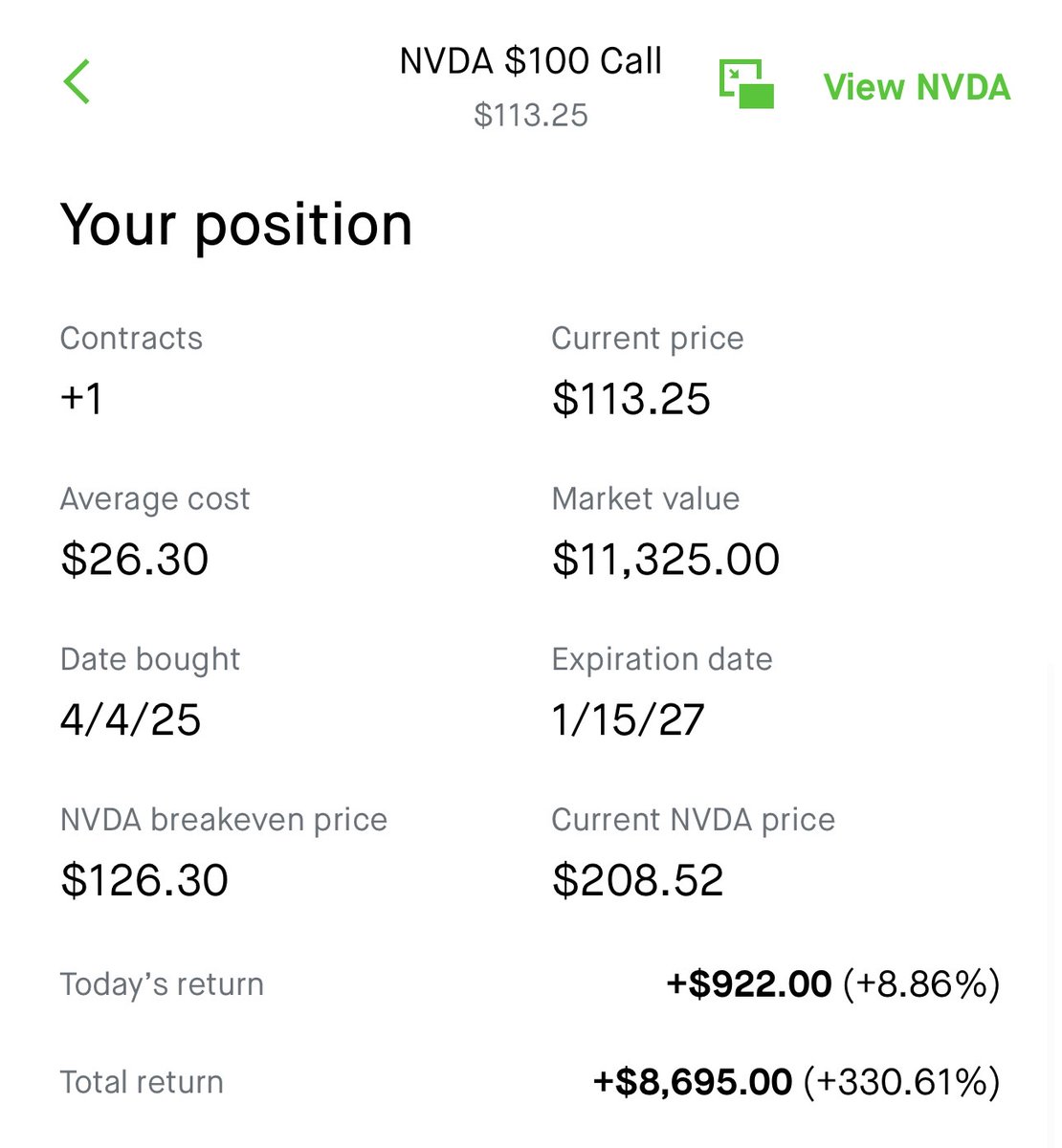
LEAPS are by far the best way to grow a small account when done correctly.
One contract. Exposure to 100 shares. A fraction of the cost. 12+ months of runway. Amplified returns. Defined max loss.
No margin. No weeklies. No staring at charts all day.
My results from LEAPS:
- $IREN: 800% gain
- $HOOD: 700% gain
- $NVDA: 300% gain
But this only works if you're disciplined about entry. Most people buy LEAPs at the wrong time, on the wrong stock, with the wrong strike and expiration. That's how a leveraged position bleeds to zero.
There are specific conditions I look for before I enter, and specific rules around strike selection and expiration that keep the odds in my favor. Get those wrong and LEAPs will hurt you. Get them right and a small account can do things most people don't think are possible.
Comment "LEAPS" and I'll send you my free cheat sheet - everything I use to find, structure, and manage these trades on one page.