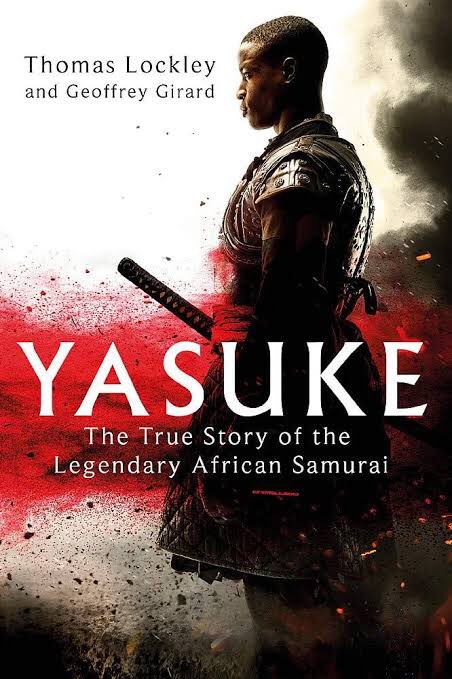
Why can Thomas Lockley's depiction of the samurai Yasuke in his self-claim nonfiction "Yasuke" be considered a fiction?
⑴The character Yasuke described in "Nobunagako-ki" and "Ietada Diary" appears only a couple of times, and is described as "black as charcoal and eight feet and two inches in height," without mentioning his status. That Yasuke was not a samurai is also evident from the fact that samurais of the time were given family names, and even though their name was not known, their family name was described respectfully.
⑵In addition, it was customary for Japanese warlords to read a poem of resignation and entrust it to their retainers in advance when they were prepared to die. If he entrusted Yasuke to deliver the head and sword to his son before the decisive battle at Honnoji, as mentioned in his book, he must have also entrusted him with a phrase of resignation at that time. Nobunaga, however, did not leave a phrase of resignation, and only his last words, "It can't be helped," have been passed down through the generations.
⑶Finally, although this is not part of the history of the Warring States period, Utagawa Yoshitora, an ukiyoe artist active at the end of the Edo period, left many paintings of foreigners, but none of them depict blacks, whether warriors or slaves.
If, as he describes in his book, there was a huge uproar over blacks congregating, there would be no reason for the artist not to paint them. In other words, blacks are rarely seen in Japan, and the idea that black slaves were bought with such relish is nothing more than an illusion.