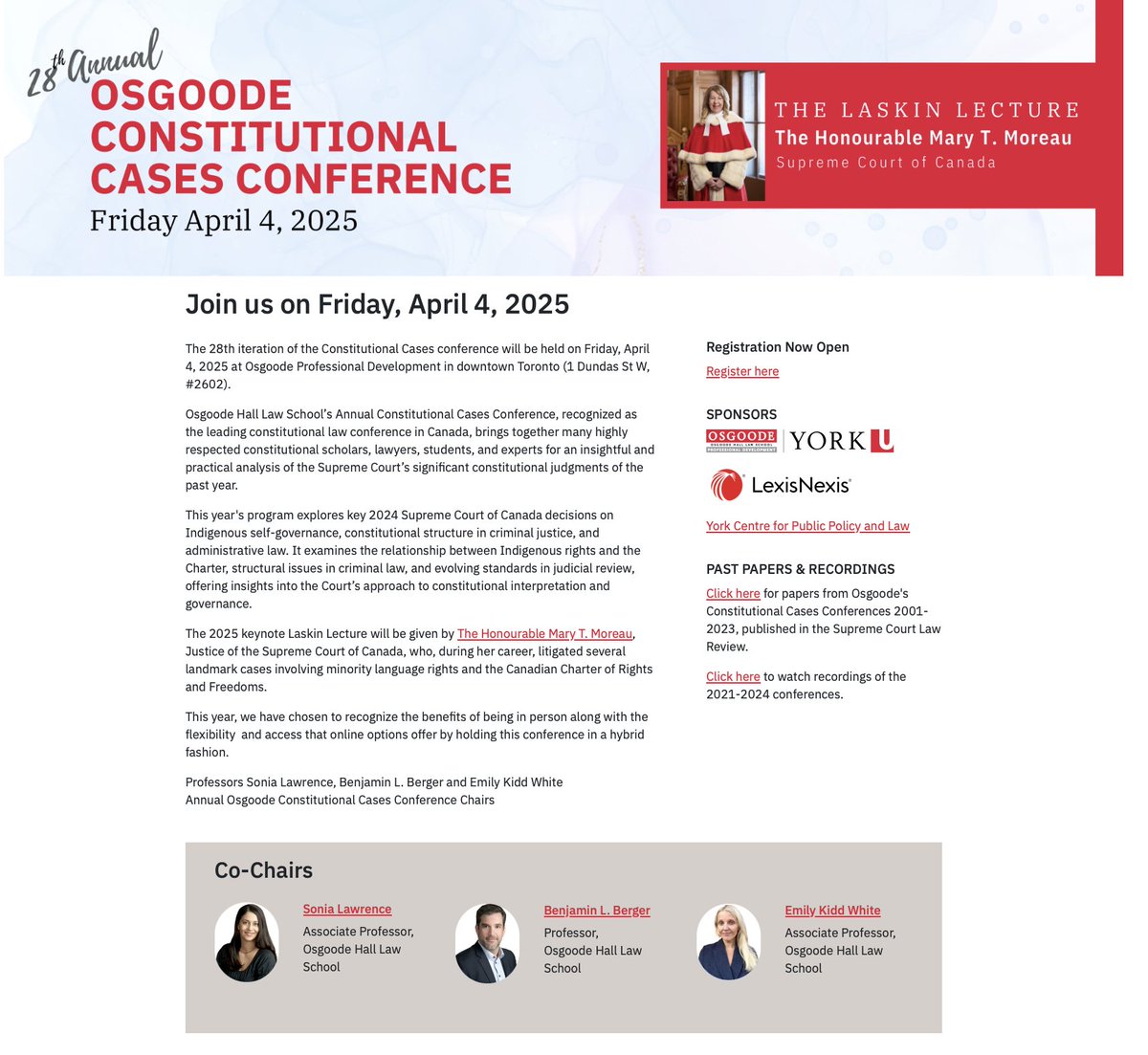
We've assembled a magnificent group of scholars to critically analyze the year's decisions, w plenary sessions on: Indigenous Governance and the Canadian Constitution, The Constitutional Structure of Criminal Justice, and Reasonableness, Rights, and Review: Admin Law at the SCC.
Please join @sonialawprof, @blberger and myself on April 4 at our 28th Annual @OsgoodeNews Constitutional Cases Conference.
It's an important time to be thinking about the hopes and the limits of Canadian Constitutional Law.
Please share. Hybrid format: https://t.co/VPSDq4dg2d
Registration is open for the 28th annual Con Cases Conference at @OsgoodeNews! Early bird pricing now available. Join an outstanding group of presenters and a community of con law nerds on Apr 4 https://t.co/N2EWgU9Vnd @emilykiddwhite@sonialawprof
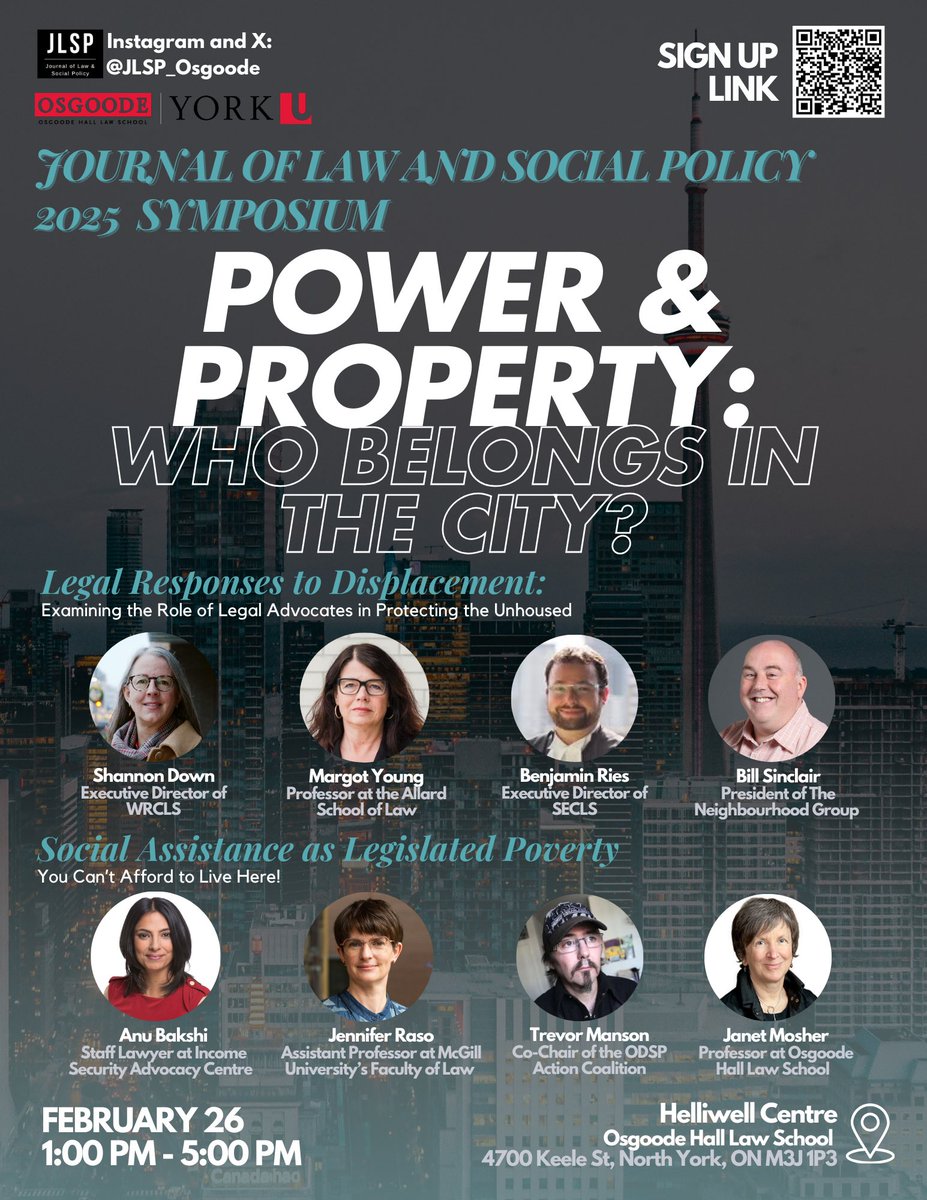
We are excited to invite YOU to learn more about critical issues of displacement, power, and property in urban spaces. This event is open to students, lawyers, academics and the general public.
Fill out the Google form below:
https://t.co/g5vIRik3Sk
@finseraste@coleenlisa@nationalpost Sincerely hope that we have a chance to discuss further in a forum that is more conducive to working out these important points!
@finseraste@coleenlisa@nationalpost One might be forgiven for thinking that you meant the specific jurisprudential device. if that is your concern, that is an objection to standing law in constitutional crim cases settled since at least Big M. In that sense, certainly not a quibble.(Not to mention not novel) 2/2
@finseraste@coleenlisa@nationalpost The purpose of a RH is precisely to aid in measuring the excessiveness of a punishment that is NOT impermissible “in its nature”. This doesn’t engage your concern about RHs (though I would quarrel with your view). I just want to see how his case is an instance of that concern 2/2
@finseraste@coleenlisa@nationalpost Curious about your interpretation, Stéphane. Perhaps walk me through how you read para 73? It seems to me to assert that this form of sentence is unconstitutional vis-à-vis any offender who is subject to it, independent of any hypothetical. Therefore “degrading in nature.” 1/2
Kindly note: The event will be held both in-person and online.
We have a small handful of in-person spots left.
Please register at the following link: https://t.co/VPSDq4dg2d
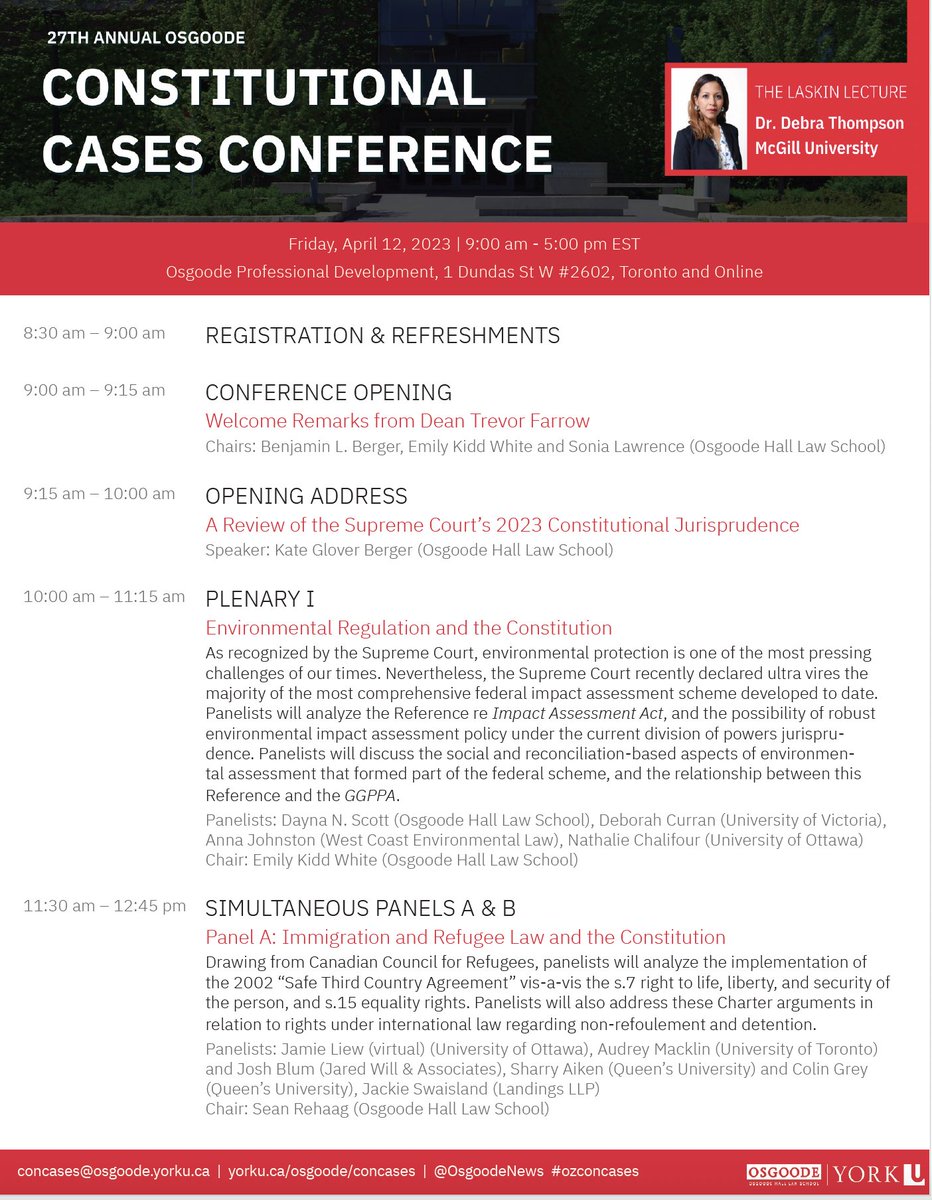
Osgoode's 27th Constitutional Cases Conference is on April 12th.
We are honoured to have @debthompsonphd Professor & Canada Research Chair in Racial Inequality in Democratic Societies @mcgillu deliver our annual Laskin Lecture on "Race, Democracy & Politics without Guarantees".
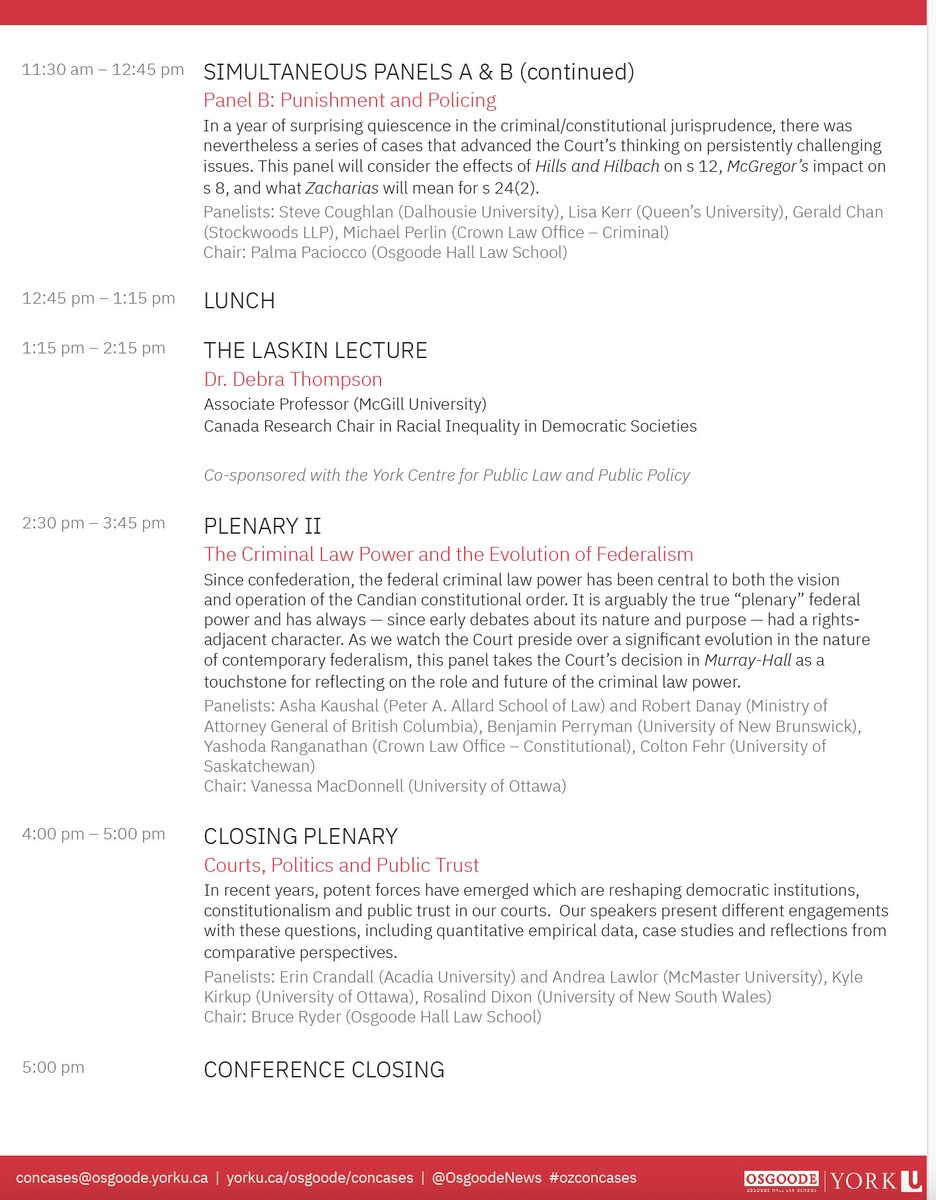
Please join us (in-person or online) on April 12 at the 27th @OsgoodeNews Constitutional Cases Conference.
We're gathering a remarkable group of constitutional law scholars to critically unpack the year's decisions.
Kindly share: https://t.co/VPSDq4dg2d
@sonialawprof@blberger
Excited that registration for the 27th Annual Osgoode Constitutional Cases Conference is now open. Check out the program & please join @emilykiddwhite, @sonialawprof and me for a day of unapologetically unrestrained con law enthusiasm! https://t.co/BHjEAXCCeX @OsgoodeNews
@OsgoodeNews@RabiatAkande@samuelmoyn To keep apprised of events in the Osgoode Colloquium on Law, Religion & Social Thought — or to watch past events — visit us at https://t.co/3jRtu18QL7.
Thanks also to @samuelmoyn and @giazilo for spending time with our PhD students. It was wonderful to hear them and our GPD Susan Drummond speak about the challenges and joys of academic writing @GLSAatOsgoode@OsgoodeNews
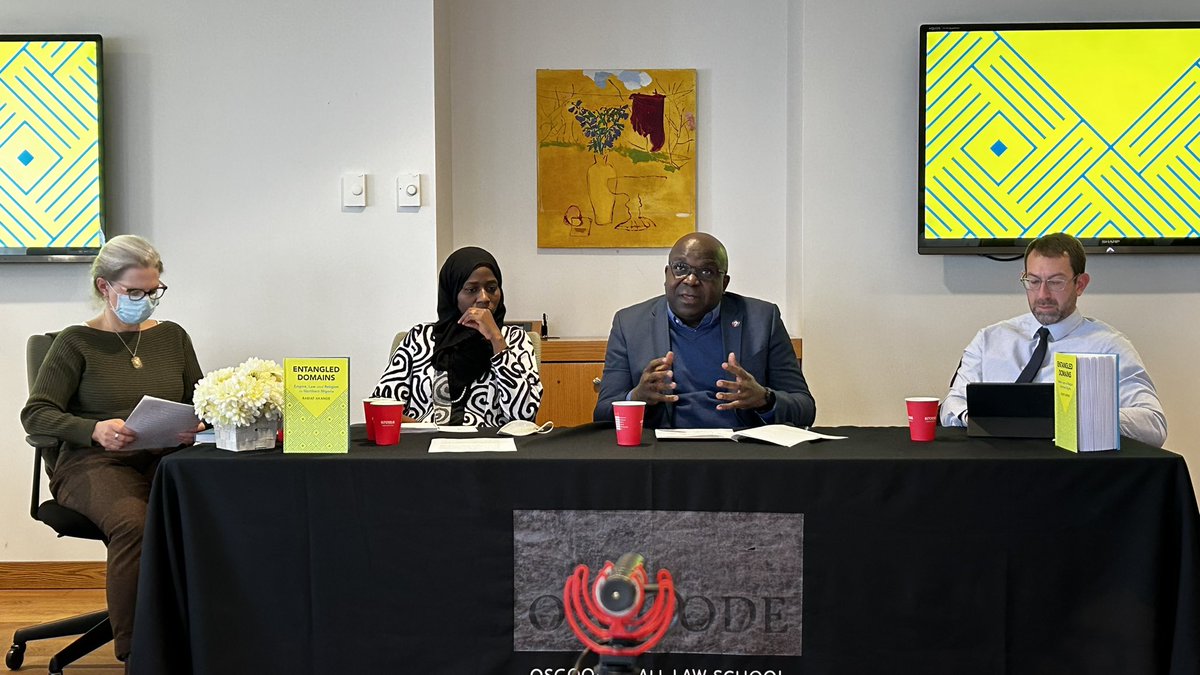
Heartfelt thanks to @samuelmoyn, @giazilo and @peklassen for their generous and brilliant comments at the Osgoode Colloquium on Law, Religion & Social Thought and book launch for my colleague @RabiatAkande’s superb volume Entangled Domains @OsgoodeNews https://t.co/3jRtu18QL7