On the night of June 5, 1944, Eisenhower stood on a tarmac in England and watched 13,000 paratroopers board their planes.
He already knew what Air Marshal Leigh-Mallory had told him in private: up to half of them might not survive the night. 6,500 men. Dead before a single soldier touched the beach. Eisenhower had approved the mission anyway, called the decision "soul-wracking," and said nothing to the men.
Instead he drove out and visited them.
He chatted. Laughed. Asked where they were from. Shook hands. Cracked jokes. Not one of them knew their general had just signed what might be their death warrant.
When the last plane disappeared into the dark sky, his driver Kay Summersby looked over at him.
There were tears running down his face.
He drove back to Telegraph Cottage in silence. Then he sat down, picked up a pencil, and wrote a note he prayed no one would ever read.
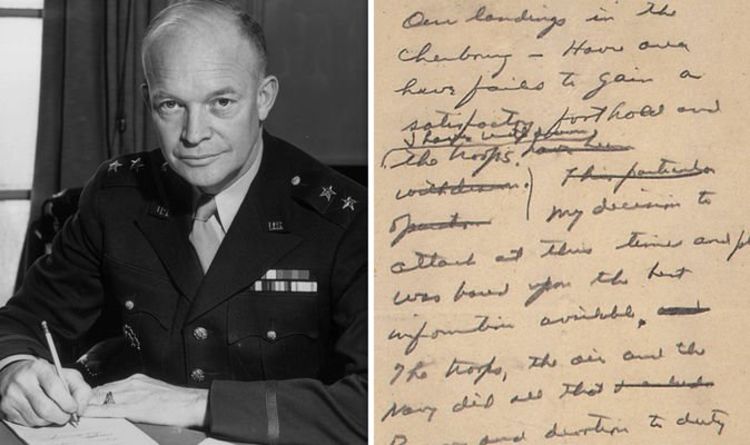
"Our landings in the Cherbourg-Havre area have failed to gain a satisfactory foothold and I have withdrawn the troops. My decision to attack at this time and place was based upon the best information available. The troops, the air and the Navy did all that bravery and devotion to duty could do. If any blame or fault attaches to the attempt it is mine alone."
Look at what he edited.
He had first written "This particular operation." He crossed it out and replaced it with "My decision to attack." Then he pressed the pencil down hard and drew a long, firm line under the words "mine alone."
He misdated it July 5 instead of June 5.
He was so consumed with dread he had forgotten what month it was.
He folded the note and put it in his wallet. He carried it there as 156,000 men stormed the beaches of Normandy. When word came back that the beachhead had held, he took it out, crumpled it, and threw it in the trash.
An aide quietly pulled it out and saved it.
That note is now behind glass at the Eisenhower Presidential Library in Abilene, Kansas. You can still see where the pencil pressed hardest.
Right under the words "mine alone."
82 years ago tonight.
5 June 1968. Robert F Kennedy (aged 42) was shot 3 times, once in the head, while walking through the kitchen of the Ambassador Hotel, Los Angeles, USA at 12:15 AM. He was rushed to hospital, but died at 1:44 AM on 6 June 1968 without ever regaining consciousness.
General Eisenhower's June 5, 1944, note for the message he would issue if the D-Day invasion failed the next day. He said that if there was any blame, "it is mine alone."
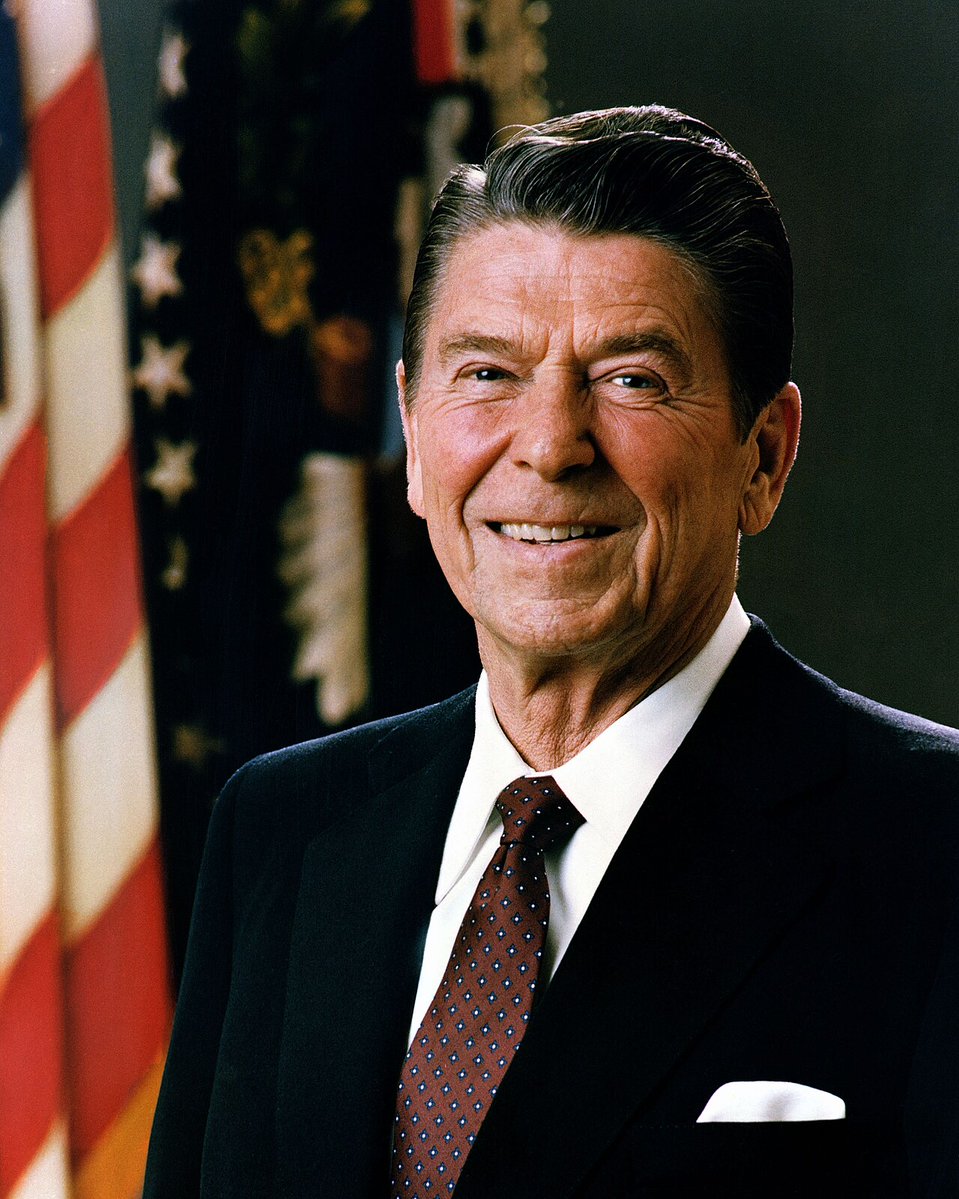
5 June 2004: #Republican President Ronald Wilson Reagan, the 40th president of the United States, who served from 1981 through 1989, dies in Los Angeles, #California at the age of 93. He was born on February 6, 1911 in Tampico, Illinois. #History#OTD#RIP#ad https://t.co/suo8VSXZgJ
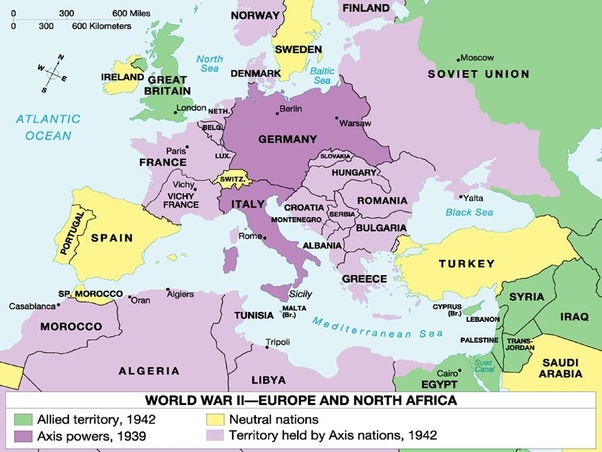
5 June 1942: During World War II, the U.S. declares war on #Axis countries Bulgaria, #Romania and Hungary. They had declared war on the U.S. days earlier. #WWII#WW2#History#ad https://t.co/2emKhwpD4w
5 June 1931 | A French Jewish girl, Madeleine Driay, was born in Paris.
She arrived at #Auschwitz on 2 June 1944 in a transport of 1,000 Jews deported from Drancy. She as among 627 of them murdered in a gas chamber after the selection.
#OTD 1913: Suffragette #EmilyDavison walked out in front of King George V's horse at the Epsom Derby. She died from her injuries four days later. https://t.co/92rmrmIT1I… #WomensHistory
82 years ago today, my grandfather, Bernard Merson, was preparing to land with the 29th Infantry in the first waves onto Omaha Beach. They faced some of the heaviest resistance and highest casualties of D-Day.
I can only imagine the thoughts running through his mind. 🇺🇸
Alice-Jacqueline Luzgart | Died Auschwitz, April 1944
1933/1934 – 1944
Alice-Jacqueline was 10 years old.
She was one of the 44 children sheltered at Maison d’Izieu.
Arrested in the Gestapo raid of 6 April 1944. Held at Montluc prison, transferred to Drancy on 7 April,
84 years ago today, the most important Japanese admiral in the Pacific sailed into a fog bank he could not see out of, carrying secret orders he believed were known to no one on earth.
The Americans had read them three weeks ago.
In May 1942, Admiral Isoroku Yamamoto had a plan to end the war in the Pacific in 30 days. He would draw the surviving US Navy carriers into a trap near a tiny atoll called Midway, 1,300 miles northwest of Hawaii, and destroy them with the largest naval force ever assembled. 200 ships. 700 aircraft. 100,000 men. Four heavy carriers under Vice Admiral Chuichi Nagumo would lead the strike. The American fleet, which had only three serviceable carriers left after the Coral Sea, would be annihilated. Then Hawaii would fall. Then the US would sue for peace.
The plan was perfect.
It was also compromised.
In a basement in Pearl Harbor, a small team of cryptanalysts under Commander Joseph Rochefort had broken the Japanese naval cipher JN-25 in the spring of 1942. They were reading roughly 20 percent of every Japanese signal in real time, and educated guesswork filled in the rest. By mid-May they knew the target was somewhere referred to only as "AF." But where was AF?
Rochefort had a hunch. He sent a signal in the clear from Midway saying their water distillation plant had broken down. Two days later, Japanese intercepts mentioned that "AF" was running short of fresh water. Bingo.
By May 27 Admiral Chester Nimitz knew the date of the Japanese attack, the composition of the Japanese force, the route Nagumo would take, and roughly the time he would launch his first strike. He pulled every American carrier to a point northeast of Midway called "Point Luck" and waited. The trap had been set for him. He set a trap inside the trap.
On June 2, Nagumo's four carriers approached Midway through the worst fog any of them had ever seen. Visibility dropped below 600 yards. His ships could barely see each other. He held radio silence to protect his approach. He believed he had complete surprise. He believed the American carriers were thousands of miles away in the South Pacific. He believed he was about to win the war.
Yamamoto, on the battleship Yamato 600 miles behind him, had intelligence that the American carriers might in fact be at sea. He chose not to break radio silence to warn Nagumo. He assumed Nagumo had the same intelligence. Nagumo did not.
At 4:30 AM on June 4, Nagumo launched 108 aircraft against Midway from a position the Americans had been waiting for him to reach.
By sunset, three of his four carriers were burning hulks. The fourth would sink the next morning. Japan lost 3,057 men, 248 aircraft, and the four best carriers of the Pacific War in a single day. Japanese naval aviation never recovered. The war was decided in six minutes between 10:22 and 10:28 AM on June 4.
The whole disaster traced back to one decision on June 2: a Japanese admiral sailing into fog, trusting that nobody knew where he was going.
Did you know? President McKinley was the last Civil War veteran in the White House and the only one who started as a private and rose to brevet major.
He enlisted in the 23rd Ohio Volunteer Infantry and showed notable bravery at the Battle of Antietam in 1862. Under heavy fire, he drove a supply wagon loaded with food and coffee to the front lines for his troops, earning a battlefield promotion to second lieutenant.
As President, he led America to swift victory in the Spanish-American War by ordering a naval blockade of Cuba. U.S. forces destroyed the Spanish fleets in Manila Bay and Santiago, seized key territories, and established America as a global power.
A true patriot.
12-year-old Xavier Taylor from Maple Shade, NJ, remains in extremely critical condition on a ventilator after a heartbreaking freak accident on May 26. ⚾💔
While warming up before a youth baseball game at Fellowship Columbia Bank Field, Xavier — a passionate pitcher/shortstop who lives for the game — was walking back to the dugout when an errant throw from a teammate struck him in the neck. He collapsed and went into cardiac arrest. His dad (a retired firefighter) rushed to him, and Xavier was airlifted to Cooper University Hospital.
His father, Greg Taylor, has stressed it was a complete **freak accident with no one to blame**. Xavier, known for writing Bible verses on his hats and playing on multiple teams, is fighting hard. The family is holding onto faith and miracles.
The community has rallied with prayer vigils, “Bats Out for X,” #6 shirts, and massive support. Videos of the vigils, father’s emotional updates, and local news coverage are circulating widely on TikTok — search #XavierStrong for raw community moments.
**A prayer shared for Xavier & his family:**
“Heavenly Father, we lift up Xavier Taylor to You. You know every detail of his life. Before he needed a miracle, he followed You, prayed to You, and wore Your Scriptures. Surround his family with peace. Lord, we ask for a miracle. In Jesus’ name, Amen.” 🙏
Prayers up for full recovery, strength for the Taylors, and the whole Maple Shade baseball family. He will play again.
#XavierStrong #PrayForXavier #MapleShade
On the eve of World War II, approximately 1300 Jews lived in Moletai, Lithuania, comprising 75% of the town’s population. Most of the Jews in the town worked in trade and various crafts.
This photograph of the eleventh graduating class of the school along with their teachers was taken towards the end of the school year #OTD 2 June 1936.
In August 1941, most of the town's Jews were murdered by the Germans.
Learn more: https://t.co/olOpFdAXhI
3 June 1989: #China sends troops to oust pro-Democracy protesters from #Tiananmen Square after the protestors had occupied the square for seven weeks. Estimates range from 100s of protesters killed to ~10,000. #Martial law is also established in parts of Beijing as a result. #History #OTD #ad https://t.co/heeRF3NGvs