Asking bioarchaeological Qs using skeletal remains 🦴 and the genomes 🧬 they harbor 🦠 Formerly @StoneLab_ASU | Currently @WhatIsInAHouse postdoc | she/her
The first paper of my PhD is out and #openaccess:
Structural Violence and Physical Death at Tlatelolco:
Selecting the Chronically Malnourished for Sacrifice at a Late Postclassic Mesoamerican City (1300–1521 CE)
https://t.co/bpjsJDuU5i
1/7
Review: Ancient DNA insights into diverse pathogens and their hosts by @Blevinske, María C. Ávila-Arcos, Verena J. Schuenemann & Anne C. Stone https://t.co/xNDwF5SCMD
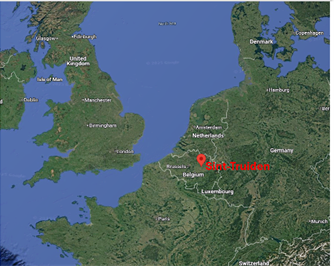
Discover our results of the largest ancient DNA study ever conducted on a single burial site 🧬: 400 skeletons from the Belgian city Sint-Truiden (8th–18th century). A unique glimpse into 1000 years of genetic history. (1/9) @CHG_CME@KU_Leuven
#WithoutNSF my lab won’t receive the critical funding it needs to continue studying how ancient pathogens adapted to human hosts. #NSF supports our country's leadership in science and innovation. #SupportNSF#SaveNSF https://t.co/NaHpex4pYu
#MetagenomicsMonday🧬 Exploring the dominant Streptococcus phylogenetic clades in samples from multiple oral sites and from ancient and modern-day humans and non-human primates!
https://t.co/lrMAV843V1
Did you get a chance to read the thread on our new @NatureHumBehav paper on SES yet?
If not, don't worry, I have something better for you!
Check out this comic by the amazing @Lizah_Aart
The complete comic here: https://t.co/t8lcL0JCbQ
You can also scroll this thread 👇🏾
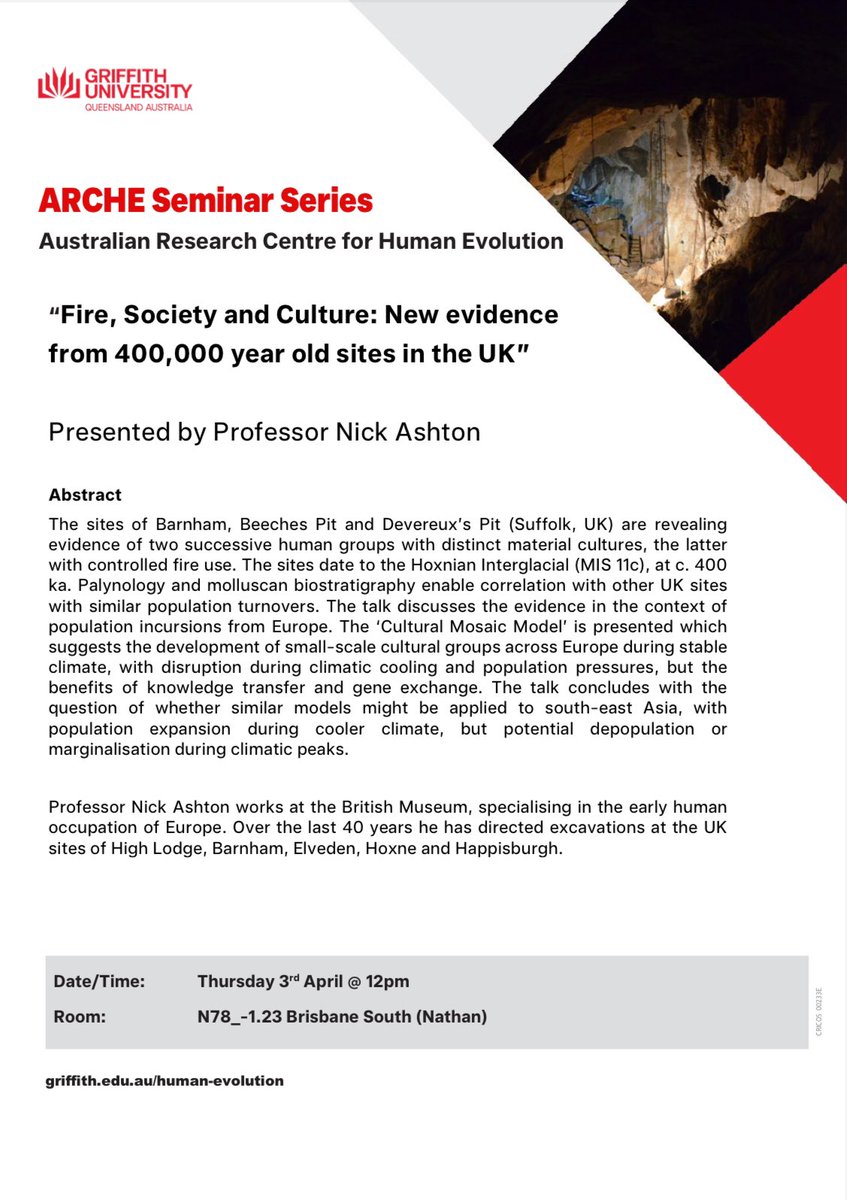
Next week, the @ARCHE_Griffith Seminar Series is continuing with "Fire, Society and Culture: New evidence from 400,000 year old sites in the UK"
Presented by Professor Nick Ashton.
Date: Thursday 3rd April
Time: 12pm
Room: N78_-1.23 Brisbane South (Nathan)
I wrote about how population stratification in genetic analyses led to a decade of false findings and almost certainly continues to bias emerging results. But we are starting to have statistical tools to sniff it out. A 🧵:
In a new paper, colleagues and I raise concerns about the conclusions and data from Zhang et al 2022, a paper which reported that they obtained DNA from a 14-thousand-year-old individual from Red Deer Cave in Yunnan China referred to as ‘Mengzi Ren’ (MZR)
(Zhang et al Fig 1)
1/15
aDNA/aeDNA folks: tired of eyeballing hundreds of damage plots? I am excited to introduce AdDeam—a tool to rapidly generate damage profiles, cluster them, and spot outliers. https://t.co/O87oFP6iL6
In every civilization, people end up sorted into levels of socio-economic status (SES). We explore the history, present, and future of scientific research on the complicated relationship between SES and DNA in @NatureHumBehav 💰🧬🎓
Link: https://t.co/Q5wAbt2B46
Thread below 👇🏽
Excited to share our recent preprint on quantifying pandemic potential from experimental transmission studies, spearheaded by grad student Elizabeth Somsen in my group and in collab with Troy Sutton & lab at Penn State and Anice Lowen at Emory: https://t.co/pOGBZqi4Ki.
Attention ancient environmental DNA folks. In our recent preprint, we provide coordinates of microbial-like regions (contaminated or evolutionary conserved or convergent) for 4,294 eukaryotic reference genomes.
New paper! In the Cambridge Archaeological Journal we present a fresh analysis of the spectacular Bronze Age cemetery at Başur Höyük and its implications for “early state formation” -
open-access, #aDNA, ritual killings, teenagers, and “cosmopolitics” ����
https://t.co/2ktGajQOwm
#Bioinformatics is a powerful tool for #biologists working with #GenomicsData🧬
Our free online courses on bioinformatics workflows are available on demand until February 2026.
From 10-30 March 2025, join our educators for a limited facilitation period in the comments 🔽
In case you missed this remarkable archaeological news from earlier this week: Track marks beside footprints show that some of the earliest known people in the Americas were constructing and dragging travois.
https://t.co/FTgBP89f7s