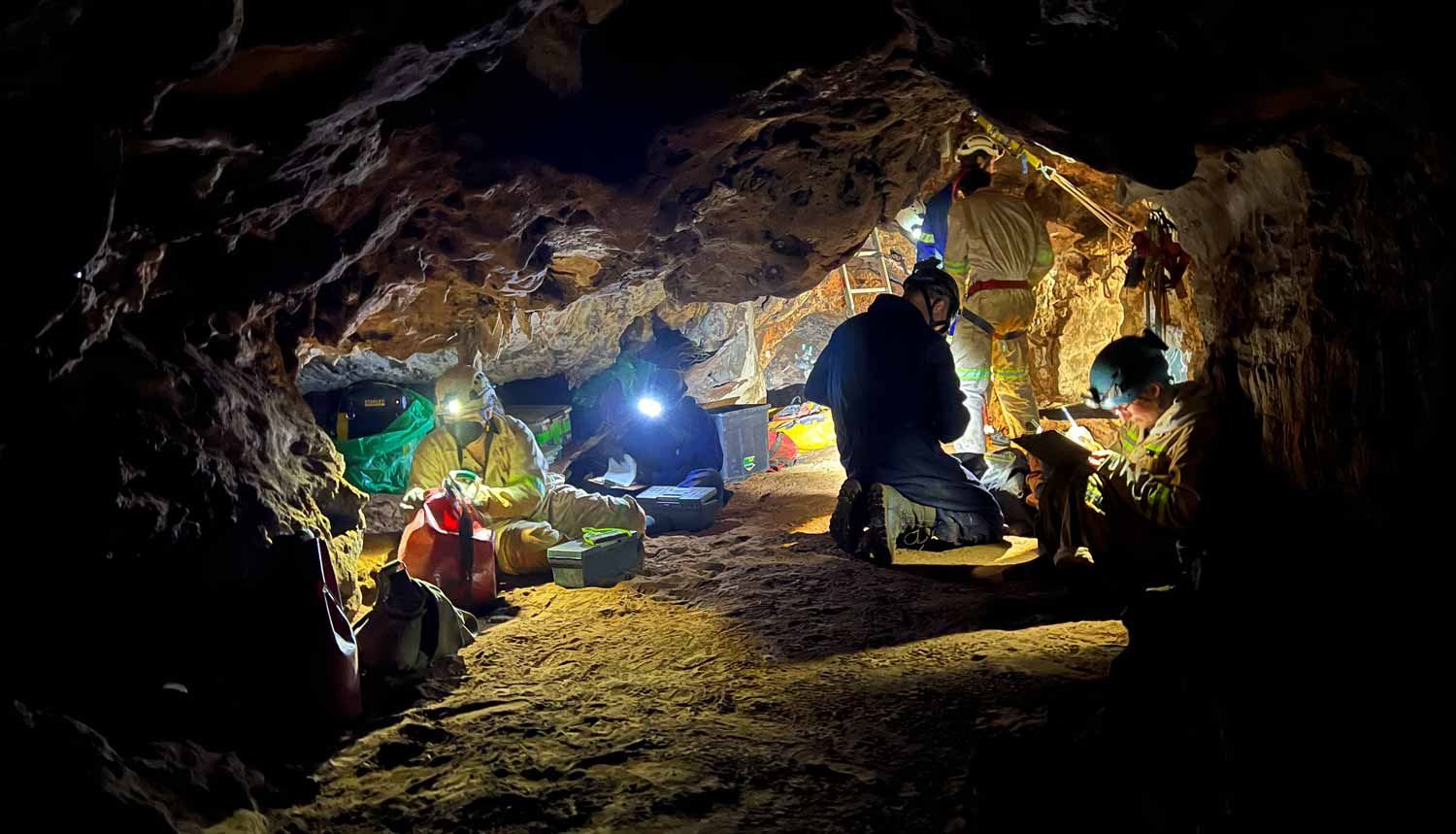
“It’s probably just chance — when the climate was nice enough, they could make it there,” Dr. Hawks said. “They kept trying, again and again, and to me that’s the bottom line of humans, that throughout the Pleistocene, we just kept coming.”
https://t.co/8rWd4moUTz
Everything at the end will look like a Nature/PNAS paper: a quick 6-pager for humans, and a humongous 150-page supplement with all possible experiments and analyses (mainly for the machines to read and review). Together with an automatic verification/reproducibility package that ensures that whatever the paper says is verifiable.
And at the end everything will seem like before, but underneath everything will have changed.
The use of AI in research is producing three tribes.
The gatekeepers — the Pangramiani — care about provenance: research is a profession, authorship matters, and AI should be banned, discouraged, or marked through disclosure.
The AI cultists care about results: if knowledge advances, who cares whether it came from a human, a machine, or both? Pangram delenda est.
And now a third tribe is emerging: the curators/storytellers. As AI starts cracking increasingly hard mathematical proofs, discovery itself becomes less scarce. The human role shifts to understanding the result, judging its importance, connecting it to what we know, and explaining it to everyone else.
Anthropologists have often assumed hunting was a male activity for hominin relatives. New research adds strong support to the data for female hunting dominance in bonobos. Is this a better model than the male-dominated chimpanzees for ancient hominins?
https://t.co/fyasyrvJtC
@trevorcousins_@RegevSchweiger@richard_durbin Thanks again! On the fossil side a sort of ring-species idea with geographic/morphological intermediates able to interbreed both directions might make the high level of intermixture seem more plausible.
The evolution of cattle and their relatives is such a fascinating story. It’s great to see some of the same sites in the Altai providing information about unexpected bovines, after already highlighting the unexpected diversity of human ancestors.
https://t.co/0ALdgSKwL5
Vanguard Cave, Gibraltar, is known today for Neanderthal behavioral evidence, including a remarkable controlled hearth for production of pitch from gum rockrose. In 2021, the team discovered a chamber sealed for more than 40,000 years, results to come!
https://t.co/YGOolPTGFi
From 50-year behavioral archives at Gombe to multi-site studies across Africa, primatologists are uncovering how maternal attachment, social risk, and cognitive awareness shape responses to loss in wild populations.
https://t.co/53MfuQ3sjO
Always happy to add new Denisovans. This is quite a record now from ancient proteins, five sites that span a geographic area encompassing all of China. These people had remarkable stories we are starting to understand how to tell.
https://t.co/YhX0y2EDla
@Travellingtooks Grinding specifically is hard to recognize on a small scale. Pounding traces are a lot easier to see, and similar rounded cobbles were used for pounding, grinding, and mashing. Large mano-matate or quern-style grinding stones were mainly much later, just pre-agriculture.
@99sillywalks The Neanderthal range was larger in the east-west direction, but was tighter in the north-south dimension. That may help explain why the Denisovan lineages had deeper splits, ecological differentiation by latitude.