In this tutorial, I show how to use Unreal's PCG to render grass efficiently. This method uses a compute shader on the GPU to place grass instances and I show several ways to control the density and distance that the grass renders.
https://t.co/Goi9444yDu
If you’re wondering whether procedural knurls will affect edge wear or masks, the answer is yes, they will!
With sync points, added detail contributes to the AO, curvature, and height map bakes, so any mask effects or smart materials you build will be aware of the knurl detail.
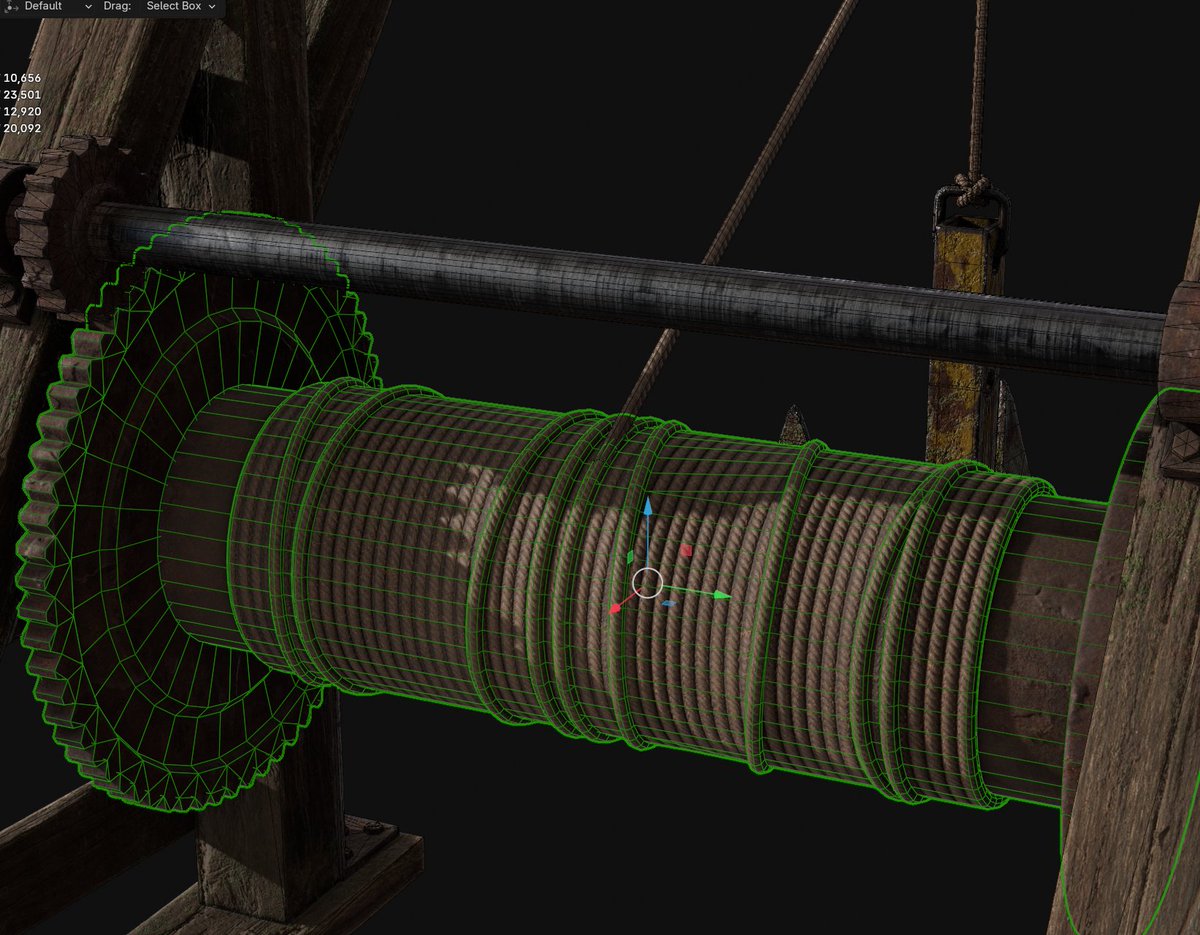
Sure thing. I baked the rope down to the reel, leaving a few detail loops. The rope that connects the anchor to the reel is separate and blends in with the reel rope texture. This lets me map it to the bottom of the UVs, make it tileable, and apply a scrolling offset to just that section so it can be timed with the reel's rotation to look like it's unwinding from the reel.
Lerp is used everywhere in games. It’s simple, but combined with a few small tricks it becomes incredibly powerful.
This thread is full of visual examples.
One of the easiest things you can do to stand out as a 3D artist is to acquire a vague understanding of real-time rendering.
This especially applies if you are already in a production environment.
Game development is a team sport. Don't pigeonhole yourself as a "artsy artist who makes art and expects others to make it work".
At least try to make your colleagues' life easier.
The best part is that you don't have to become a Tech Artist. It's enough to know what questions to ask a Tech Artist.
— "Should I map this kit onto a single 2K texture or several 512? Here's how it will be used."
— "Hey I'm making this asset that is sensitive to texture compression. DXT doesn't work here, how should I approach it?"
— "I have a task to scatter these props here, should I merge them into a single actor to cut drawcalls or is it better to bake them into a decal?"
— "How many LOD levels can we have for this type of assets?"
Now you are not just a machine that converts concept art into 3D meshes, but a valuable asset. Your lead will trust you and give you more autonomy. Tech Artists will take you seriously. Pipeline Engineers will share their knowledge.
Of course, this is not the only path to success. You can be detached from production and still be a vital team member. You can be a world class sclupltor/hard-surface designer and thrive as a freelancer. You can be a lightning fast modeler/texturer and be a successful outsourcing contractor.
You don't have to be a T-shaped specialist to survive in the industry. I-shaped pros are a vital part of every studio. But being curious and not seeing the game engine as a magic black box will give your career a big boost. Especially if you are just starting out and need to establish your competence.
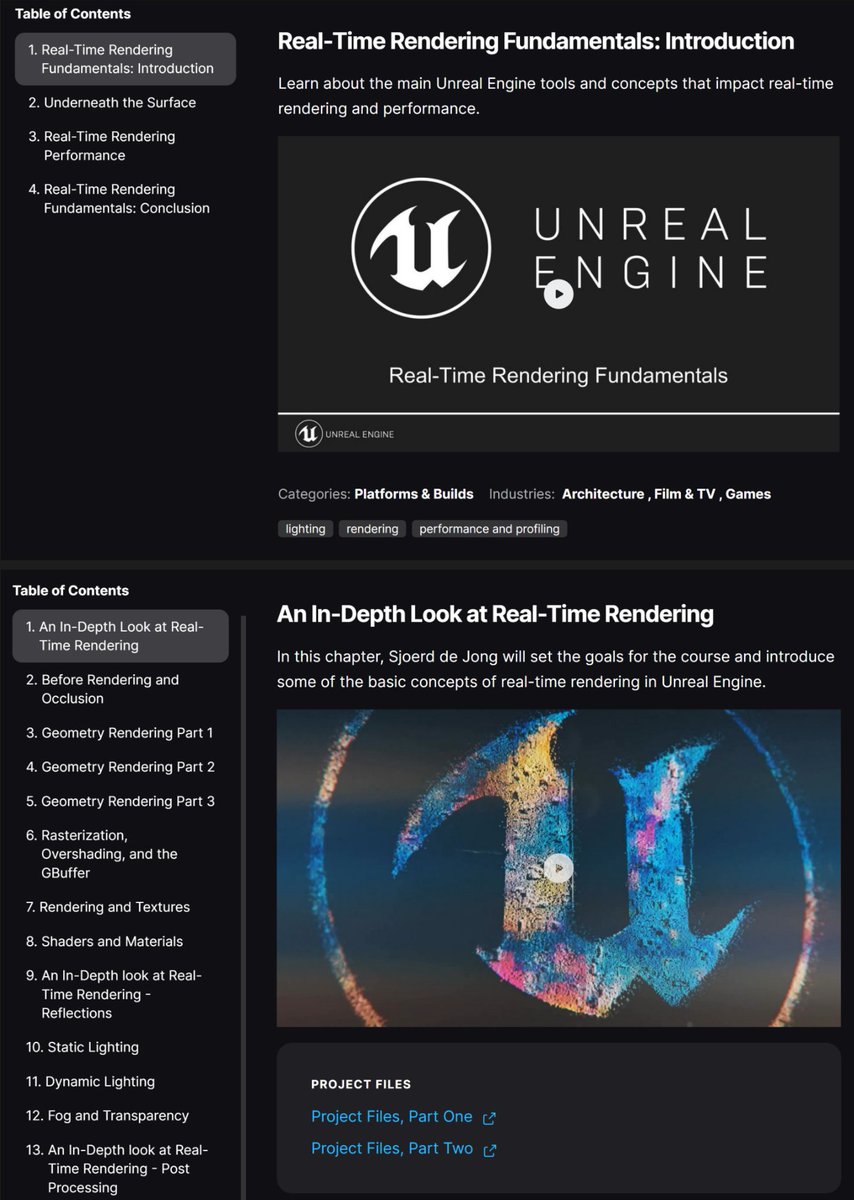
Start with:
"Real-Time Rendering Fundamentals",
"An In-Depth look at Real-Time Rendering" by Epic Games
and let your curiosity lead you further.
If you are an aspiring 3D environment/prop artist, it's very important that you understand the scarcity of texture memory. Production artists go to great lengths to squeeze the most from the least possible amount of textures.
If you are building a portfolio, include pieces that showcase:
- trim sheets,
- vertex paint masks,
- utilization of multiple UV sets,
- tiling textures and how you hide their repetition.
These works won't get you hundreds of likes, but they'll show that you have the right sensibilities. You don't have to be a tech artist and build an entire pipeline. Just showing that you are aware of those concepts is a strong signal to your future lead.
You do need pretty renders and hero props to get likes, establish your name and attract recruiters.
But don't ignore the biggest pain point of every single graphics-heavy production.
My favorite resources on the topic:
- The Ultimate Trim: Texturing Techniques of Sunset Overdrive — Morten Olsen (Insomniac Games)
Elegant and lightweight pipeline, almost an art form in itself.
- Behind the Art of Battlefield and Battlefront — Joel Zakrisson (DICE)
My personal favorite. Love the double UVs and the detail normals. Revisited this article many times over the years.
- Cyberpunk 2077: A World Full of Substance — Krzysztof Krzyścin (CDPR)
The gargantuan scale of CP2077, vast sightlines, high detail density — CDPR created a miracle.
- Driving Innovation: A New Vehicle Pipeline for 'The Last of Us: Part II' — Matthew Johns (Naughty Dog)
Helps drive home the actual sizes of used textures.
- Building the World of 'The Ascent' — Tor Frick (Neon Giant)
Teaches you what does and doesn't matter in production. Shows you how much data you can squeeze from an asset (color masks, mesh maps).
- Seaside Town UE4 — Vytautas Katarzis
All-time classic. Hyper-optimized doesn't mean ugly.
- Old Freight Car — Aleksandr Silantev
Very thorough breakdown that takes you deep behind the scenes.
- Modular Wood-Shack Kit: Insurgency Sandstorm — Vuk Banovic
Beautiful little example of how far you can take a single texture set.
What are poles in 3D modeling? 🤔
There are two common types of poles, N-poles & E-poles.
Poles help control and the flow of topology and distributed edge loops to enable better control of the placement of support loops. 😁
#Blender3D#BlenderModeling#HardSurfaceModeling
effort = 10%
Result = 10000%
Amazing breakdown of wind Fx by displacing the vertex by Bobby Donald, use just the texture to get smooth flag animation in games. #UnrealEngine#VFX#GameDev#screenshotsaturday
All done! And it looks so satisfying 😍
It turned out to be really simple once you handle the strings in segments instead of being one whole object.
Just have the controllers to polish and some clean-up to do and that's a wrap! I'm so pleased :)
#blender#rigging#rig
There's a really powerful brush in Zbrush that you should all be utilizing - it's awesome. It's called the 'History Recall Brush' and here's how it works.
It's amazing for selectively restoring details in your sculpt.
In this video, I explain how the graphics pipeline works and where potential slow-downs can happen. I also cover the difference between forward and deferred renderers and the strengths and weaknesses of each.
https://t.co/mPuZP0eZrU