2025: “Just Google it.”
2026: “Just ask the AI.”
Alphabet lost ~$500B after admitting AI Mode eats the ad clicks that paid for everything. They said they “feel very good about our trajectory.”
HyperFrames turns HTML into MP4 for agents.
Write a page. Render deterministic video. No React required.
- Scaffold with skills
- Preview and lint
- Render local or cloud
82k stars in 8 months. One review clocked a 1-min 1080p in 43s with zero watermark.
Anthropic’s agents logged 6× the hours of the humans.
Junior tech hires fell from 27% to 9%.
Meanwhile half the office is still pasting ChatGPT emails that take longer to fix than to write.
The productivity tools are working. Just not for the people still pretending to have jobs.
Law professor asks Claude to fix the page numbers in his lecture notes, then goes to lunch. Comes back to find Claude has performed a full-year cleanup: every con law note and the syllabus, deleted.
Claude’s reply: “You’re right to be angry.”
Nothing like an AI that vaporises your work and then gently validates your emotions about it.
Anthropic’s new Claude just spun up 1,000 agents and formalized Fermat’s Last Theorem in 30 hours.
At the company, the agents already log more work hours than the humans. The humans spend about a fifth of their day babysitting them.
The rest of us just rewrite the output so it doesn’t sound like the model when it hits Slack.
Alibaba open-sourced the code reviewer they ran internally for two years.
alibaba/open-code-review — 49.7k stars, Apache-2.0.
It is a hybrid CLI: deterministic pipelines pick and bundle files, match rules (NPE, XSS, SQL injection), then an LLM agent reads full context and pins comments to exact lines. Same model as a general agent, it uses roughly 1/9 the tokens and finishes faster, with higher precision and F1 on their AACR-Bench (200 real PRs, 80+ engineers).
Most AI review is a noisy slot machine. This is a pipeline that prefers not to spam you.
Internal numbers and the public benchmark back the precision claim. On the other side, recall is deliberately lower, so real issues can slip through. GitHub issues show Windows extension spawn failures, file_read hallucinating paths that force partial status, and code_search caps that blow context on minified files
White-collar workers are quitting because they fear AI will take their jobs.
The ones who stayed are now drowning in the AI workslop their bosses ordered them to generate.
The AI didn’t replace the job. It just made the job so unreadable that people left for poetry degrees.
How many robot emails did you delete unread this week?
Someone open-sourced a browser an agent can actually drive without burning the context window.
vercel-labs/agent-browser — \~47k stars, Apache-2.0.
Native Rust CLI. Snapshot returns a compact accessibility tree with short refs (@e1). Agent clicks, fills, screenshots via one-liners. Works with Claude Code, Codex, Cursor, Gemini, any shell-capable agent. Skills ship with the CLI so instructions stay in sync.
Most browser tools dump the whole DOM or force an MCP round-trip. This is a pipeline of short commands that keep the browser open.
Users on HN called it faster than Playwright MCP for agent loops. Docs and write-ups cite \~93% less context than full page dumps.
Tradeoff is real. Daemon and socket state can stick after interrupted sessions (issue #1118 — manual kill + rm socket). On macOS a run of press commands has silently swapped the browser to about:blank and dropped cookies (#2079). Parallel agents still fight over focus or the default session unless you isolate them. Open issues stay high and the npm package ships every platform binary.
@__reico Yes, the floor already blocks invented facts so "10x faster" or empty "trusted by" lines don't ship bu default. The rest of lint still focus on visaul tells.
Someone open-sourced a design skill that stops coding agents from shipping the usual AI landing page.
Nutlope/hallmark — \~50k stars, MIT.
It gives Claude Code, Cursor, Codex a floor of rules: no eyebrow labels, no invented numbers, real credited photos, and it lints the page in a browser.
Most agents paint purple gradients and Inter. This forces a theme and a job-first layout.
Users on GitTested and AI Parabellum say the pages lose the small-caps labels and empty placeholders, and look finished instead of generated.
Anthropic’s agents are logging 6 hours for every 1 human hour.
Junior technical hires just dropped from 27% to 9%.
The machines are grinding so hard the company stopped needing the entry-level people who used to do the grinding.
Meanwhile the people already cut by AI are taking a month longer to find the next job.
Productivity is up. Employment is a lagging indicator with worse marketing.
How long until human attention is the bottleneck just means the humans left?
The productivity tool just hired you as its unpaid janitor.
Glean’s Work AI Index: workers spend 6.4 hours a week “botsitting” AI and cleaning what it spit out. 69% admit they ship the mess anyway.
Your job is now supervising the bot that was supposed to do your job.
How many hours this week did you spend fixing AI slop instead of the actual work?
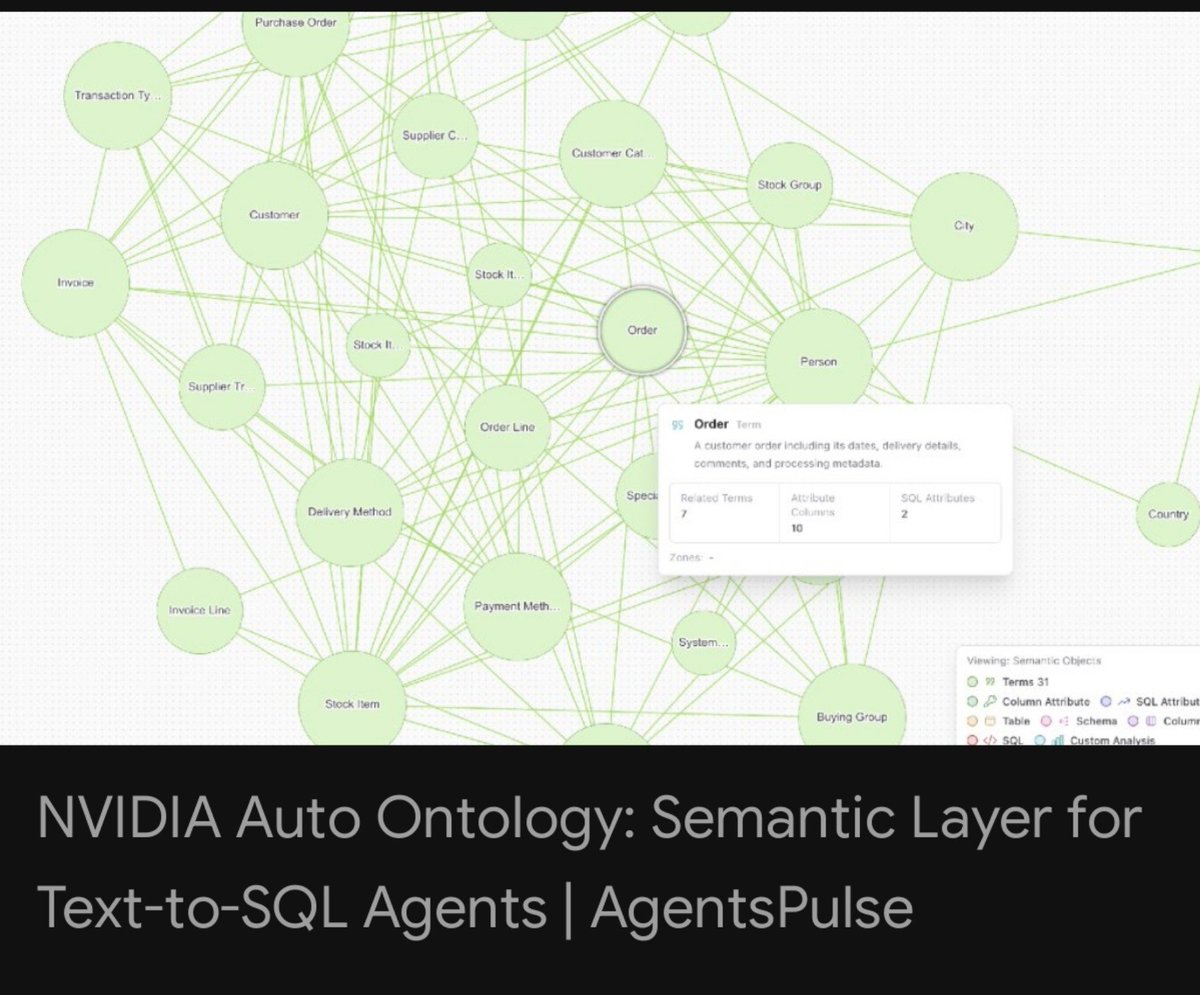
Someone open-sourced a semantic layer so agents stop guessing what "revenue" means.
NVIDIA/auto-ontology — \~8k stars, Apache-2.0. It builds a graph from enterprise metadata (Databricks, Postgres, Snowflake, DuckDB), reconciles definitions, then exposes it via MCP, CLI, and API so agents write grounded SQL with provenance.
Most text-to-SQL is still a slot machine. This is a catalog you certify.
One Reddit user said it generated their ontology in minutes versus the manual version they were already building — saved real time. HN noted the README was hard to parse at first.
Vercel Labs just open-sourced the computer-use layer most agents still fake with screenshots.
vercel-labs/agent-desktop — \~16k stars, Apache-2.0.
It reads the OS accessibility tree as JSON with a stable ref for every element. Your agent clicks or types the ref, snapshots again, and verifies. No model inside the tool. The loop stays in the agent. Headless by default.
Most computer use is “guess the pixel, hope the vision model is right.” This is a parts list.
People testing it like the deterministic refs and the token cut on dense apps (self-reported 78-96% less). It works across macOS, Windows, Linux via npm.
Open issues show the catch: Windows still fights missing VC runtime, deep trees, and UWP apps. Linux is thinner. Apps with weak accessibility support simply disappear. Snapshots can leak private desktop content.
This site was being built on localhost:3000, three models already turned the same "raw" footage into three different "real" versions. Client picked the cheapest one and never asked who made it.
Awards section now reads like a prompt leaderboard. "From raw to real" used to mean craft. Now it means the model finished before the coffee cooled.
@bighead_datou Tying notes to a commit is the cleanest fix. Without that anchor the agent can treat an observation from three days ago as still true after the file was rewritten. That gap is still open.
Coding agents still start every session from zero.
thedotmack/claude-mem — 112k stars, Apache-2.0.
It hooks the agent, captures what it did, compresses observations, and injects only the relevant ones next time. Works across Claude Code, OpenCode, and more.
Most "memory" is just the last few messages. This searches for what actually matters.
Users who ran it for weeks in production said semantic injection cut corrections to zero where native context stripping left subagents blind.
One user watched it burn 649 million tokens on full-file forwards and unbounded observer sessions before noticing. Setup once uploaded 30 days of prompts to their cloud without asking (fixed in 15.8.3). Windows hooks still fight path and permission issues.
@dunnohten Stale injection is the real risk with any hook-based memory. Once an observation is compressed and injected, the agent has no built-in signal that the underlying code or context already changed. Visibility into what got injected is still thin.
Goldman measured the extra month.
The model that took the job is now ranking the 400 applications it helped write and drafting the rejection that no human will read.
The algorithm is just arguing with itself in the inbox.
How many of those extra weeks are pure slop latency?