The True Pioneers of Pop Art
Britain’s Forgotten Vanguard: How a Ragtag Group of London Intellectuals Invented the Future of Art – a decade before New York took the credit
Long before Andy Warhol silkscreened his first Campbell’s soup can, before Roy Lichtenstein borrowed the grammar of comic books, and long before “Pop Art” entered the cultural lexicon as shorthand for a brash American phenomenon, a group of British artists, architects, and critics were huddled in the basement of the Institute of Contemporary Arts in London, arguing furiously about the meaning of jet engines, pulp magazines, and Hollywood film posters. It was here, in the austere, bomb-scarred city of postwar Britain, that Pop Art was truly born ..
Go to article -> https://t.co/pAeKwh9es0
#artmagazine #popart #arthistory #artmagazines #artworld
Painting the Nation: The Rise of Nationalism in Art
From the sublime landscapes of the Romantic era to the contested monuments of the present, how artists have constructed, weaponised, and dismantled the idea of national identity. A four part article : ( 1. Romanticism and the Birth of National Art,
2. Monuments, Memory, and the Making of National Myth,
3. The State as Muse: Art Under Totalitarianism,
4. Postcolonial and Contemporary Resistance. )
Go to article -> https://t.co/lZtU4xt09l
#nationalism #artmagazine
#contemporaryart #artworld #arthistory
On Kitsch, Its Seductions, and the Con of Manufactured Depth.
There is a balloon dog the size of a small car, forged in mirror-polished stainless steel, reflecting the crowd that gathered to admire it. It costs somewhere north of $50 million. The crowd, educated, sophisticated, aware loves it without embarrassment, which is precisely what its maker intended. Jeff Koons has never hidden what he is doing. The problem is that much of the art world has pretended, for decades now, that what he is doing is something else entirely.
This is the central deception of contemporary kitsch: not that it is pleasurable, but that pleasure has been dressed in the borrowed clothes of criticality and passed off as intellectual seriousness. To understand why this matters, we first need to understand what kitsch actually is…
#artmagazine #artists #contemporaryartmagazine #contemporaryart #kitsch
Go to article -> https://t.co/92dlY2c8dw
The Silent War Between Graffiti and Street Art
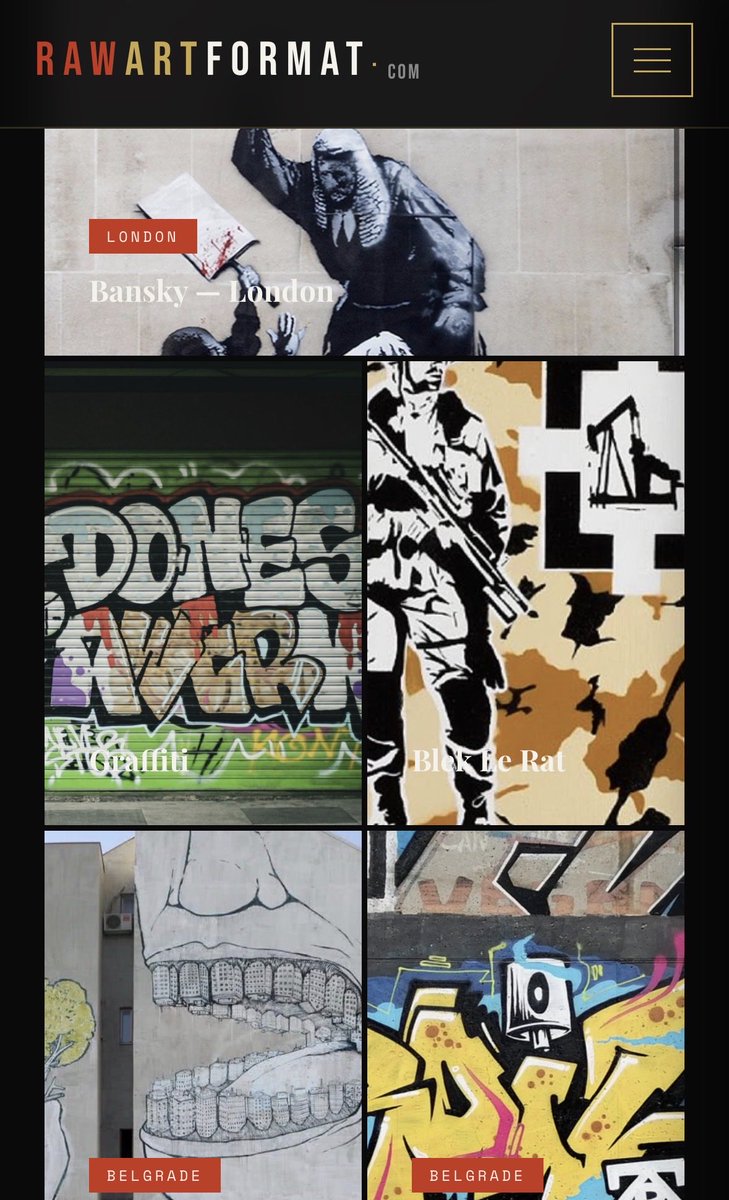
Walk through any major city and you’ll see it unfolding in plain sight: a name scrawled high on a train bridge, a towering mural wrapping around a building, a stencil tucked into a doorway. To the untrained eye, it’s all the same, paint on public space. But beneath the surface lies a long-running, often unspoken tension: the quiet rivalry between graffiti and street art. They share walls, tools, and urban DNA. Yet their histories, intentions, and relationships to the public couldn’t be more different. Go to article -> https://t.co/2bNsZQPPMz
#graffiti #streetart #artmagazine #artists #contemporaryartmagazine
How Instagram killed the ratio.
A century of photographic tradition — from Oskar Barnack’s Leica to the Hasselblad on the moon — dismantled by a Silicon Valley app and a generation raised on smartphone screens.
#artmagazine#art#photography#artmagazines#visualhistory
Giotto, The Man Who Reshaped Western Art
In the history of Western art, few revolutions announce themselves quietly. Most are loud, polemical, and documented in manifestos and counter-manifestos. But the revolution that Giotto di Bondone unleashed upon the world in the early fourteenth century was about painting human figures that seemed alive.
Read Article —>
https://t.co/tTfv1h6aU3
@Dwisecryp@adam79977 reality:
they let you “appear” smarter, you loose them you become “ignorant “ again.
Appears to help your memory, in fact it will over time slow you down becuase your brain Will no longer put an effort to memorize things, simply because it doesn’t need to.