Not your firmware? Not your keys.
Not your OS? Not your keys.
Not your silicon? Not your keys.
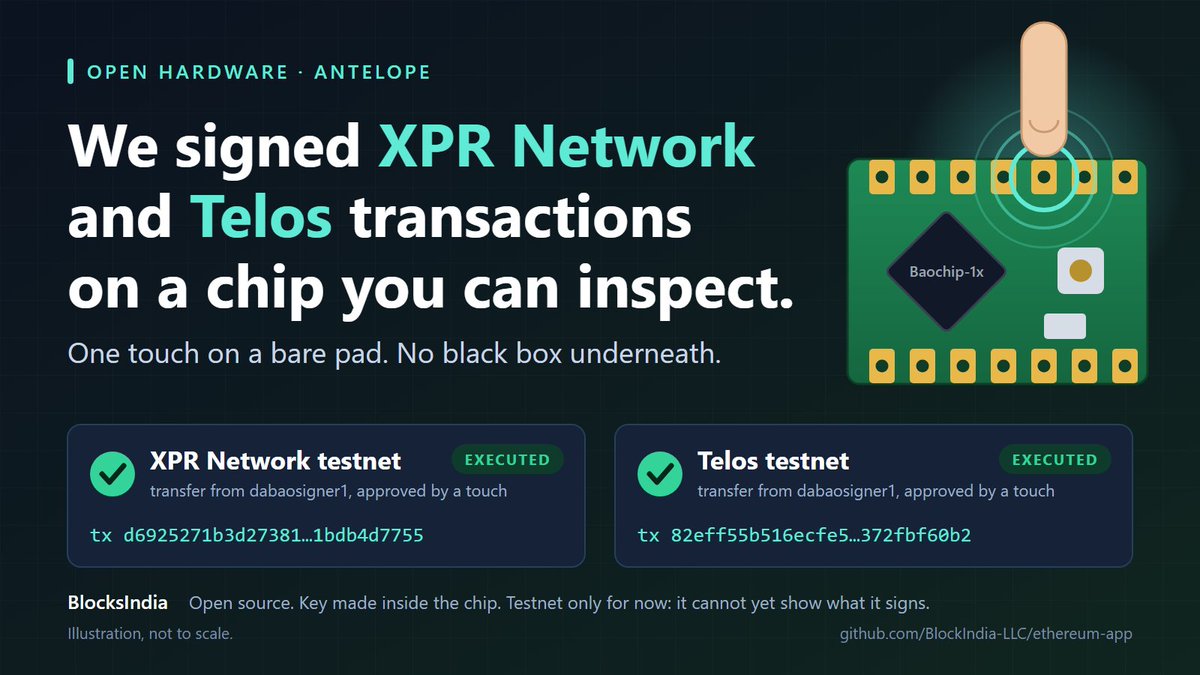
We built an an open-hardware signer for @XPRNetwork where every layer is open: Baochip-1x + Xous.
More details https://t.co/FzEguTLUQQ
#OpenHardware#OpenSilicon#OpenSource
3D-printed a snap-fit case for the Baochip-1x Dabao board
• PROG + RESET press through the lid
• Open slot for the touch pad
• Two parts, no supports, no screws
Designed from the open board files. Free STL files coming soon on MakerWorld.
#Baochip#3DPrinting#OpenHardware
@execution_layer major government agencies and tech leaders have set formal migration targets converging between 2029 and 2035.
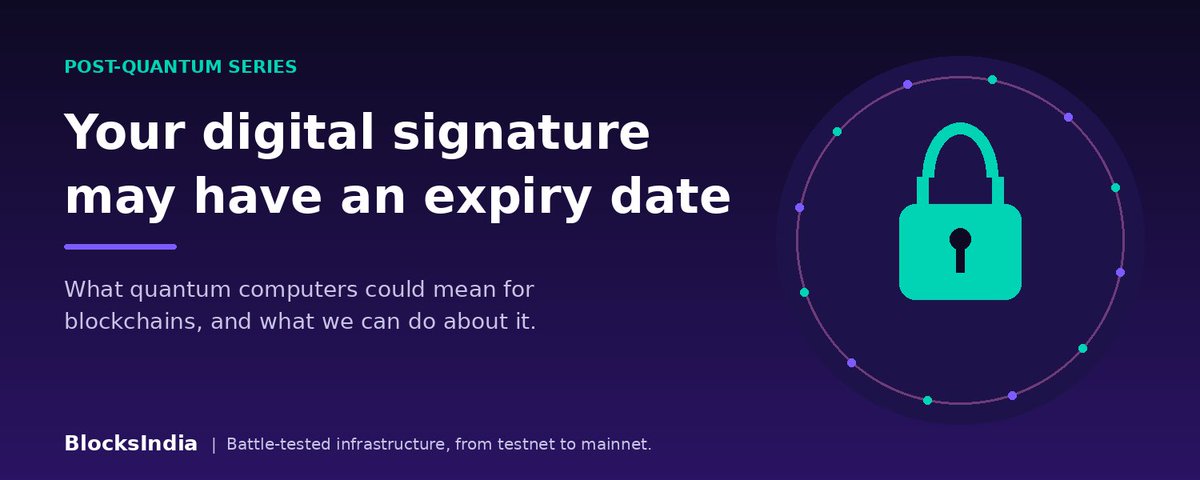
The arrival of a cryptographically relevant quantum computer ("Q-Day") is not fixed to a calendar date, though many experts project it in the 2030s.
@protonind@XPRNetwork@telosindiabp@HelloTelos@MarshallHayner@infinitybloc 2/ The chip is the Baochip-1x, on a Dabao board. Its design source is published and its OS (Xous) is open and written in Rust. Hardware wallets usually ask you to trust a chip you cannot inspect. This one you can check.
Quantum computers could one day derive private keys from public keys. Every chain will face this. The ones that prepare early win.
As a block producers, we think about this a lot: security is not a feature you add later.
https://t.co/C3B3qxbj5J
#PostQuantum#Blockchain#Web3
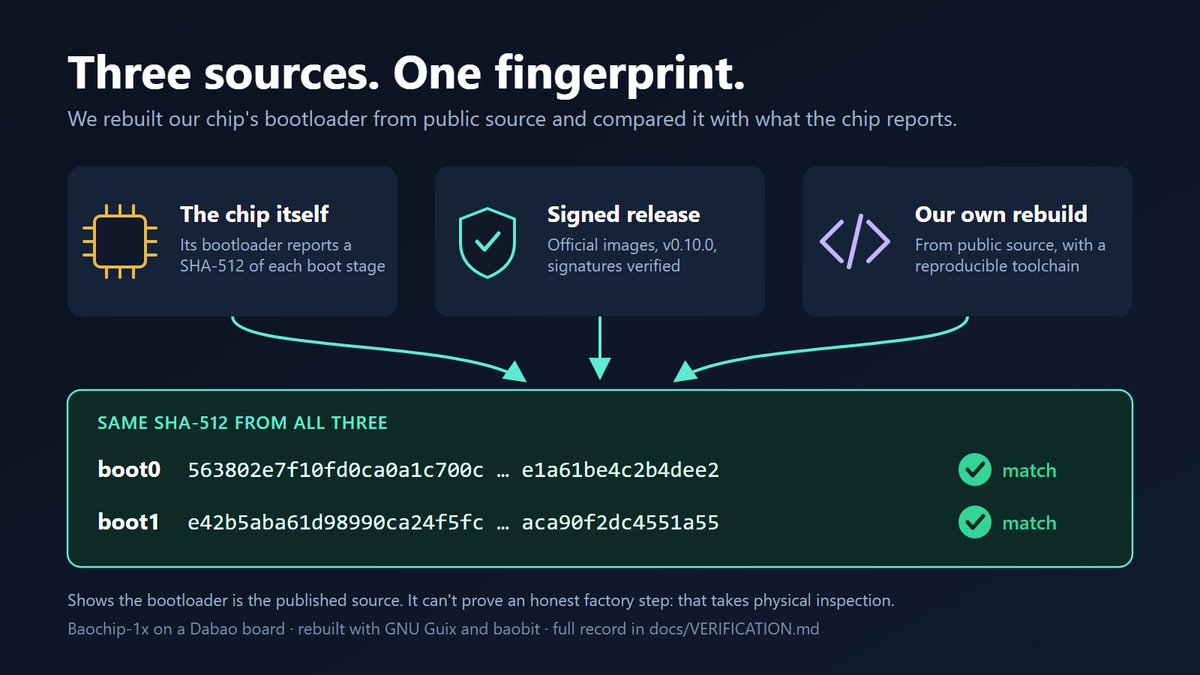
We rebuilt our chip's bootloader from public source and got the same SHA-512 the chip reports. Board audit, signed release and our build all agree.
Toolchain: baobit by @sbellem. Chip made with @crossbar_inc@BTChip
Record and caveats:
https://t.co/gBRu5rrcQW
We audit wallet code line by line, then run it on chips no one can inspect.
Building on Baochip-1x (published chip design, inspectable silicon): an Ethereum signer that only signs when you touch the board.
Live on Sepolia testnet.
https://t.co/nMjjv1vjDy