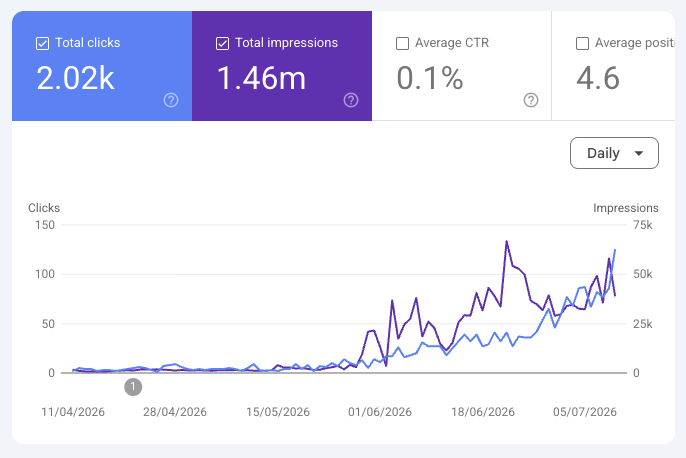
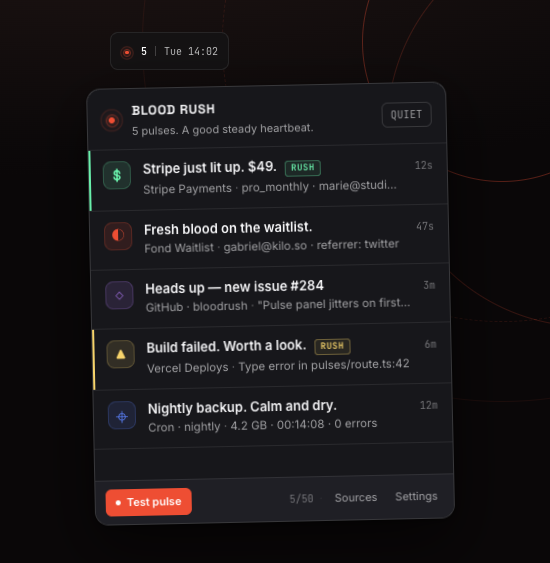
Give a coding agent a list of 100 SEO pages and it will happily write all 100.
Then you get to review them.
I'm building Contentbit to give the agent a page brief, then check the finished Markdown against the same rules.
"Looks plausible" shouldn't be the definition of done.
The @fond_kitchen website is now running on my lib, ContentBit.
I’m preparing a programmatic SEO starter template with everything ready for your agent to generate clean, structured content.
V1 is coming. Polishing the DX now.
All free.
Updated the contentbit landing page as I work toward v1.
The project is evolving from typed Markdown components into a programmatic SEO toolkit for coding agents.
The goal: help agents plan, write, validate, and link large content sites without creating a Markdown mess.
gm, what are you cooking today?
I’m about to release ContentBit Studio.
The goal is to turn ContentBit into the toolkit for clean, predictable programmatic SEO: every content page packed with stats, internal links, keyword data, and validation signals you can feed straight back into your prompts.
A companion to today’s SEO agent skills, built to make sure hundreds of generated pages don’t break, drift, or forget how they connect to each other.
All open source.
Broken internal links don't crash a build. They just rot until a reader hits a 404 you shipped months ago.
contentbit 0.3.0: links live in frontmatter, backlinks are derived, and bad ones fail CI.
Next we're focusing on DX + onboarding.
contentbit 0.2.0: your coding agent now writes the content.
init installs skills + AGENTS.md instructions.
Ask for a blog post, and the agent fetches the live authoring guide, writes, validates, and fixes its own diagnostics until exit 0.
No schemas in the skills. Everything reads from the CLI at runtime, so custom blocks just work and prompts never drift.
Also new:
- contentbit stats: audit your content dir as JSON
- @contentbit/astro: renderer-only, with invalid blocks failing the build
Try it:
npx contentbit@latest init
built contentbit: open source schema-validated content blocks for Markdown.
LLMs write content that looks done but breaks at the edges: fake components, drifting props, almost-valid tables.
contentbit validates with file:line:col errors and gives the model hints to fix itself.
the same registry generates the LLM authoring guide, so prompts and schemas stay in sync.
npx contentbit@latest init
MIT. @shadcn registry. llms.txt.
video made with @Remotion, which was extremely fun to try.
The hardest part of building an AI cooking app is not the chat interface.
It is ingredients.
One recipe says “1/2 onion.” another says "1 chopped onion".
A meal plan needs quantity, category, pantry state, duplicates, substitutions, and grocery list merging.
That gap looks small.
It is basically the whole product.
Most AI cooking apps start with the wrong problem.
They try to generate more recipes.
But most people already have too many recipes.
The real problem is turning messy food intent into action:
what can I cook?
what do I need?
what step am I on?
what can I substitute?
That is the part I care about.
trying to find more active builders on X
if you’re building SaaS, AI tools, shipping in public, or just figuring things out in real time...
drop what you’re working on
I want to follow more people actually making stuff 👋
This is the meal plan app we all deserve.
One click. A full week. Built by August, our little AI chef.
Not random. Every recipe is vectorized and deeply tagged, then matched to your taste. Optimize for ingredient overlap, cost, health, whatever matters to you, the plan adapts in seconds.
Here's the "manual" mode. 👇